Small Structure Demolition Costs Australia 2026: Sheds, garages, carports $3,000-$8,000 total including all costs. Small shed or carport under 30m² floor area $3,000-$5,000 (1-2 days work, basic excavator, skip bin hire, permits). Standard single garage 30-60m² $5,000-$8,000 (2-3 days work, larger excavator, more waste disposal). Double garage 60-80m² $7,000-$10,000. Asbestos presence adds $1,500-$4,000 to base cost (testing $300-$600, removal $1,000-$3,000 depending on extent, licensed Class B removalist required). Timeline: 1-3 days actual demolition work, 2-4 weeks total process including permits (2-3 weeks approval) and asbestos testing/removal if required. Cost breakdown small garage $6,000 total: permits $200-$400, asbestos testing $300-$500, asbestos removal $1,000-$2,000 (if present, bonded fibro sheets common in pre-1990 garages), demolition labor and excavator $1,500-$2,500, waste disposal $1,500-$3,000 (10-20 tonnes typical garage), site leveling $500-$1,000. Location variations: Sydney/Melbourne garages 15-20% more expensive ($7,000-$9,500 typical) due to higher disposal fees, tighter site access, higher labor rates. Regional areas 10-15% cheaper ($4,500-$6,500). Garage demolition common scenario: homeowner building new garage, extending house, knockdown-rebuild preparation. Carport simpler/cheaper than enclosed garage (less waste, no asbestos typically, minimal permits some councils).
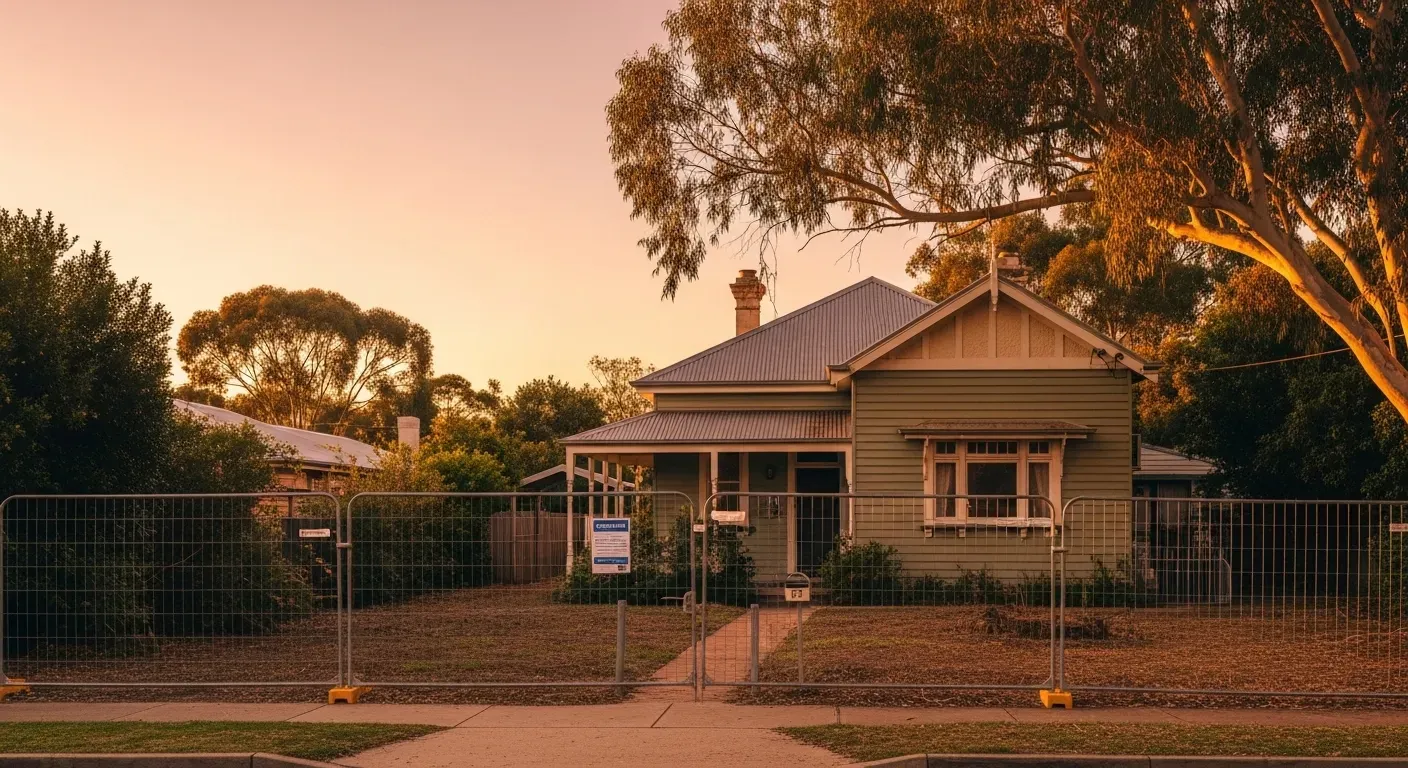
Single-Storey House Demolition Costs Australia 2026: Most common residential demolition project. House size 100-200m² floor area typical 3-4 bedroom home. Post-1990 homes (no asbestos) $10,000-$15,000 total (3-5 days demolition work, straightforward process, good access, minimal hazardous materials). Pre-1990 homes WITH asbestos $15,000-$20,000 total (MOST COMMON scenario, 5-7 days work including asbestos removal, accounts for 70-80% of single-storey demolitions, asbestos almost guaranteed in homes built 1950s-1980s). Complex or poor access sites $18,000-$25,000 (narrow streets requiring smaller equipment, hand demolition sections, difficult waste removal, sloping blocks, heritage overlays requiring careful salvage). Detailed cost breakdown typical single-storey $18,000 with asbestos: asbestos inspection and testing $300-$600 (mandatory pre-1990 properties, NATA-accredited report identifies all asbestos-containing materials, guides removal scope), asbestos removal $1,500-$15,000+ (MOST VARIABLE COST, depends on extent: isolated fibro fence $1,500-$3,000, external wall cladding $5,000-$12,000, whole house extensive asbestos $10,000-$20,000+, bonded asbestos $50-$100/m², friable asbestos like ceiling texture $150-$400/m²), council permits and fees $200-$800 (plus refundable bond $2,000-$10,000 returned after compliant work and site restoration), service disconnections $650-$1,700 total (electrical $300-$800 licensed electrician disconnects meter, gas $200-$500 gas authority caps line, water/sewerage $150-$400 water authority), demolition labor and equipment $4,000-$8,000 (excavator with attachments, labor crew 2-4 workers, 3-5 days on site, dust suppression equipment, safety barriers), waste removal and disposal $6,000-$12,000 (30-40% of total cost, 150-200 tonnes typical house, mixed waste $150-$250/tonne, concrete/brick recyclable $80-$150/tonne, timber $180-$280/tonne, asbestos waste $300-$600/tonne special disposal), site clearing and leveling $1,500-$3,500 (remove stumps, level ground, remove concrete footings/slabs, fill and compact, leave clean level site ready for building). Timeline 6-10 weeks total process: asbestos inspection 3-7 days (inspector visit, lab results), asbestos removal if required 3-7 days (licensed removal, clearance certificate), permit approval 2-4 weeks (council processing, neighbor notifications), service disconnections 1-2 weeks (book disconnections, attend site), actual demolition 3-7 days (machinery work, waste removal), final site cleanup 1-2 days. Add 10-15% contingency for unexpected issues (additional asbestos found, underground tanks, poor soil conditions, weather delays).
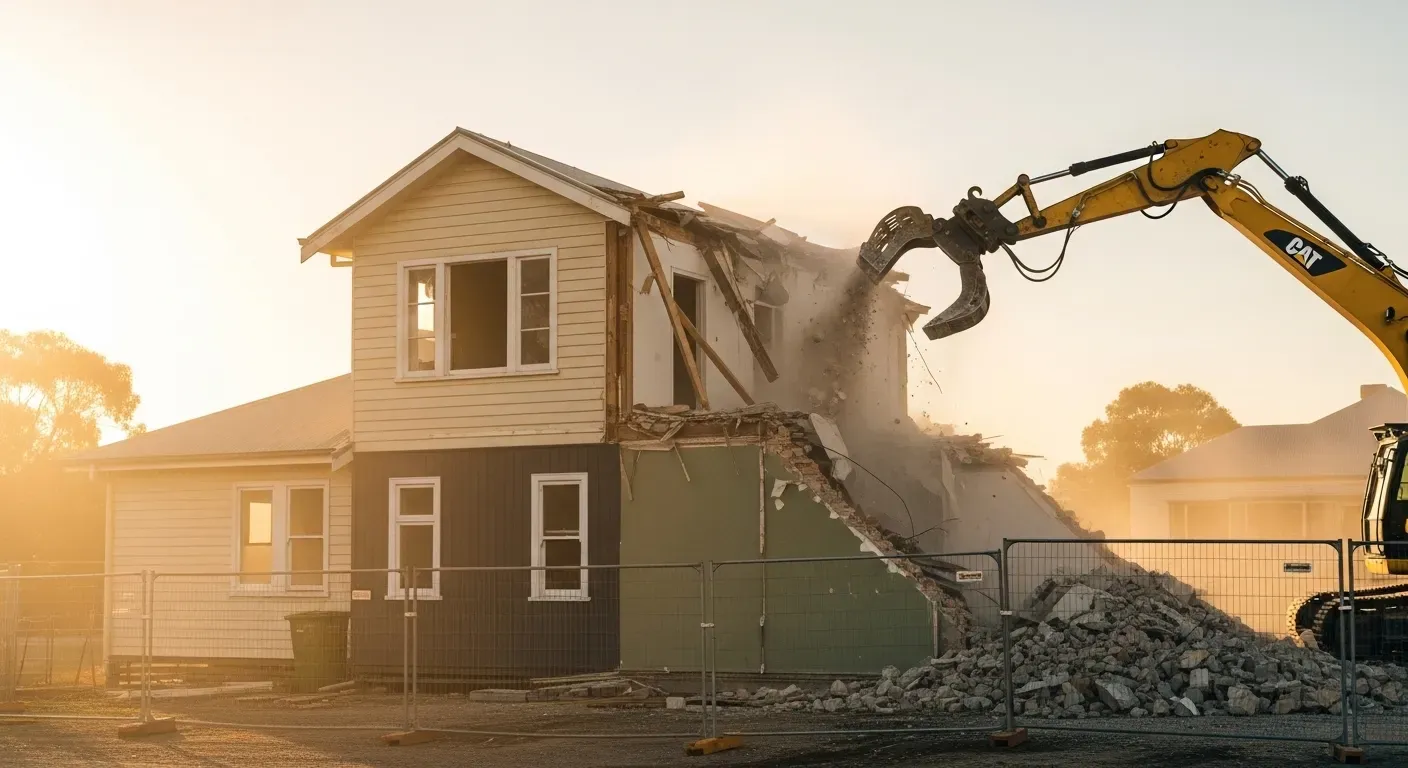
Double-Storey House Demolition Costs Australia 2026: More complex and expensive than single-storey due to height, structural complexity, safety requirements, larger waste volumes. House size 200-300m² typical 4-5 bedroom two-storey home. Standard modern double-storey (post-1990, no asbestos) $20,000-$30,000 total (5-7 days demolition, requires taller equipment, more safety measures, methodical top-down demolition sequence). With asbestos typical pre-1990 homes $30,000-$40,000 (MOST COMMON double-storey scenario, 7-10 days work, asbestos in cladding/eaves/ceilings both levels, higher removal costs due to height and access). Large or complex double-storey 300m²+ $40,000-$50,000 (10-14 days work, may require crane, extensive asbestos, difficult access, heritage features to salvage). Very large prestige homes 400m²+ $50,000-$100,000+ (extensive work, may approach commercial rates, luxury fittings to salvage, complex multi-level structures). Cost breakdown typical double-storey $35,000 with asbestos: asbestos testing $400-$800 (more samples required covering both levels, roof, eaves, multiple wall types), asbestos removal $5,000-$20,000 (external cladding both levels, eaves around whole house perimeter, internal walls, ceiling textures, scaffolding required for safe height access adds cost), permits $300-$900 (higher fees larger structures, engineering certifications if near boundaries/services), service disconnections $800-$2,000 (more complex two-storey services), demolition labor/equipment $8,000-$15,000 (larger excavators, elevated work platforms, more labor hours, safety equipment, top-down methodical demolition), waste disposal $10,000-$20,000 (250-400 tonnes typical double-storey, economies of scale don't apply much - still need multiple bin cycles), site clearing $2,000-$5,000 (larger foundations, more extensive leveling). Timeline 8-12 weeks total: asbestos work 1-2 weeks, permits 3-4 weeks, disconnections 1-2 weeks, actual demolition 5-10 days, cleanup 2-3 days. Safety considerations: two-storey demolition must proceed top-down (remove upper level first, then lower level), cannot pull down with machinery in one go (structural collapse risk), requires experienced contractors, higher insurance premiums for elevated work.
Large and Complex Demolition Projects Australia 2026: Commercial buildings, multi-unit residential, heritage structures, industrial facilities $40,000-$100,000+ (can exceed $500,000 for large commercial). Complexity factors: multi-storey construction 3+ levels, structural steel/concrete requiring specialist cutting equipment, extensive asbestos (commercial buildings pre-1990 often heavily contaminated with spray-on insulation, ceiling tiles, wall panels), heritage requirements (salvage materials, careful dismantling not demolition, archaeological surveys, heritage architect supervision), hazardous materials beyond asbestos (lead paint, PCBs in transformers, underground fuel tanks, contaminated soil), confined sites (CBD locations, no machinery access, hand demolition required, street closures, neighboring building protection), environmental controls (dust/noise management, vibration monitoring adjacent buildings). Timeline 8-12+ weeks minimum: engineering assessments, hazardous materials surveys, complex permit approvals (DA not CDC, traffic management plans, environmental management plans), staged demolition, extensive waste classification and disposal. Requires specialist demolition contractors, not general residential demolishers. Commercial demolition pricing often per square meter or tonnage basis rather than fixed quotes. Example medium commercial building 1,000m² three-storey: $80,000-$150,000 total (asbestos removal alone $30,000-$60,000, structural demolition $30,000-$60,000, waste disposal $15,000-$30,000, permits/engineering $5,000-$15,000). Multi-unit apartment block demolition rare (usually only for major redevelopment) $200,000-$500,000+ depending on size and complexity.
Asbestos Presence Impact on Demolition Costs: Pre-1990 Australian homes have 90%+ likelihood containing asbestos somewhere (fibro cladding, cement roofing, eaves, vinyl tiles, ceiling textures, pipe insulation, fencing). Asbestos increases demolition costs by $1,500-$15,000+ depending on extent and type. Mandatory asbestos inspection before any demolition work $300-$600 for NATA-accredited report (visual inspection all accessible areas, sample collection suspected materials, laboratory analysis identifying asbestos presence/type, comprehensive report listing all asbestos locations and recommended removal approach, legal requirement cannot demolish without asbestos clearance). Asbestos removal must occur BEFORE demolition commences (cannot demolish structure containing asbestos due to massive fiber release, licensed asbestos removalist must remove/wrap all asbestos-containing materials first, clearance certificate issued after removal and air monitoring, only then can general demolition contractor proceed with main demolition work). Two asbestos types different costs: BONDED (non-friable) asbestos $50-$100/m² removal (fibro cement sheets, roofing, fence panels, vinyl tiles - asbestos mixed in cement/vinyl matrix, removal cheaper but still requires licensed Class B removalist, wet methods, containment, proper disposal) versus FRIABLE asbestos $150-$400/m² removal (textured ceiling coatings, loose insulation, deteriorated materials, pipe lagging - easily crumbles releasing fibers, much more dangerous, requires Class A licensed removalist, full containment enclosures, negative air pressure, extensive PPE, air monitoring, very expensive). Typical asbestos scenarios and costs: Minimal asbestos (isolated fence panels, small eaves sections) adds $1,500-$3,000 to demolition (quick Class B removal, 1-2 days). Moderate asbestos (external fibro cladding OR garage roofing OR bathroom/laundry walls) adds $5,000-$10,000 (substantial Class B removal work, 3-5 days, scaffolding for height access). Extensive asbestos (external cladding + roofing + eaves + internal walls, common 1960s-1970s full fibro houses) adds $10,000-$20,000 (comprehensive Class B removal, 1-2 weeks work, whole-house wrapping and disposal). Severe asbestos (extensive bonded asbestos PLUS friable ceiling textures or loose insulation) adds $15,000-$30,000+ (requires both Class B and Class A licensed contractors, multi-week removal process, full containment, air monitoring, clearance certificates). Asbestos disposal expensive: $300-$600 per tonne (3-5x cost of regular waste), must go to licensed EPA facilities, double-wrapped in 200μm plastic, labeled with hazard warnings, waste tracking documentation. Typical house asbestos weight: minimal 1-2 tonnes ($500-$1,000 disposal), moderate 3-5 tonnes ($1,500-$2,500), extensive 5-10 tonnes ($2,500-$5,000). Cannot avoid asbestos costs if present: illegal to demolish without removal (penalties $50,000+ individuals, $250,000+ companies), extreme health hazards (mesothelioma, asbestosis from fiber exposure), insurance void if non-compliant work. Asbestos testing always worthwhile even if cost seems certain: identifies exact locations (may be less than feared), determines friable vs non-friable (cost implications), provides legal documentation, guides removal approach, sometimes finds NO asbestos in suspected materials (saves money).
NSW Demolition Permits and Regulations 2026: Permit required for ALL structures regardless of size (houses, garages, sheds, fences over 2m, commercial). Application through local council, permit cost $300-$800 depending on council and structure size, refundable bond $2,000-$10,000 (returned after compliant work and site restoration confirmed by final inspection). Processing time 2-4 weeks typical (longer if development application required for heritage/complex sites, faster if complying development certificate applicable). Mandatory requirements: asbestos report from NATA-accredited inspector attached to application (cannot approve without asbestos documentation), licensed demolition contractor details (homeowners cannot demolish own structures in NSW except minor sheds under 10m² in some councils), service disconnection certificates (electricity, gas, water all must be professionally disconnected and certified before demolition), demolition work plan describing methodology and safety measures, waste disposal plan showing licensed facilities, public liability insurance minimum $10 million coverage. Neighbor notification required 2 days before work commences (written notice describing work, hours, duration, contact details). Penalties for unpermitted demolition: stop work orders, fines up to $50,000, prosecution for asbestos violations, requirement to reinstate structure or pay council costs, voided insurance. Sydney-specific issues: heritage conservation areas extensive in inner suburbs (requires heritage impact statement, architect supervision, salvage of materials, significantly increases costs and timelines), difficult site access (narrow terrace streets, no machinery access, hand demolition sections, parking restrictions for skip bins), disposal facilities concentrated Western Sydney (longer travel for Eastern suburbs, higher disposal costs), higher labor rates and insurance costs. Contact SafeWork NSW 13 10 50 for demolition licensing and safety requirements.
Victoria Demolition Permits and Regulations 2026: Buildings over 10m² floor area require permit (houses, large sheds, garages, commercial). Smaller structures under 10m² may be exempt but check with local council (varies by municipality). Permit application through local council, cost $200-$600 depending on council and building size, refundable bond $5,000-$10,000 (higher than NSW, returned after final inspection confirms compliant work and site restoration). Processing time 2-3 weeks for straightforward applications (quicker than NSW), 4-6 weeks if referrals required (heritage, town planning, environmental health). Requirements: asbestos audit report mandatory for buildings constructed before 1990 (visual inspection insufficient, must sample and test suspected materials, NATA-accredited laboratory analysis, comprehensive report), licensed demolition contractor (builder's license or demolition-specific license), dial-before-you-dig service location (underground utilities identified, avoid damage during demolition), demolition waste management plan (describe waste types, tonnages, disposal facilities, recycling approach), engineering report if structure over 2 storeys or complex (structural stability during demolition sequence), public liability insurance minimum $20 million Victoria (higher than NSW requirement). Environmental Protection Authority Victoria involved if contaminated site or hazardous materials beyond asbestos. Neighbor notification required 2-7 days before (varies by council, must be written notice). Heritage overlay areas require planning permit in addition to demolition permit (significant additional cost $2,000-$5,000+, 6-12 weeks approval time, may require heritage architect, retention of significant elements). Melbourne-specific: sloping sites common inner suburbs (additional engineering, retaining wall considerations), bluestone foundations common older homes (expensive to remove, may be salvageable for resale $50-$200 per tonne), difficult access terraces and narrow lots, recycling requirements stricter (aim for 80%+ waste diversion from landfill). Contact WorkSafe Victoria 1800 136 089 for demolition licensing and safety. Contact EPA Victoria for contaminated sites or hazardous waste.
Queensland Demolition Permits and Regulations 2026: Permit requirements vary significantly by council (no statewide consistency). Brisbane City Council most common: permit required for structures over 10m² or any height over 3m. Cost $200-$700 depending on council and structure size, bond $2,000-$8,000 refundable. Processing time 2-4 weeks typical (faster councils in regional areas 1-2 weeks, slower in Brisbane CBD 3-5 weeks). Requirements: asbestos assessment for pre-1990 buildings (not always required to sample, sometimes statutory declaration sufficient that professional inspection occurred), licensed contractor (QBCC demolition license holder), site plan showing structure location, neighboring properties, access routes, waste storage, service location (dial before you dig mandatory), erosion and sediment control plan (particularly important Queensland due to higher rainfall and environmental sensitivity), dust suppression plan (water cart, sprinklers, covering loads), noise management (residential hours typically 6:30am-6:30pm weekdays, 7am-6pm Saturdays, no Sundays/public holidays). Gold Coast and Sunshine Coast councils similar requirements. Regional Queensland councils often more relaxed (smaller structures may not need permits, faster approval, lower fees). Asbestos regulations strict statewide: penalties up to $50,000 individuals, $250,000 companies for non-compliant asbestos work (Queensland has toughest penalties Australia), mandatory notification to Workplace Health and Safety QLD for licensed asbestos removal 5 days before work. Brisbane-specific issues: Queenslander-style homes common (high-set timber houses with asbestos underneath, in stumps, in underfloor areas), flood-prone areas require environmental controls (prevent asbestos-contaminated sediment entering waterways), busy construction market means contractor availability tight (book 6-8 weeks ahead peak season). Demolition licensing through QBCC (Queensland Building and Construction Commission), contact 139 333. Workplace Health and Safety QLD for asbestos and safety, contact 1300 369 915.
Western Australia, South Australia, Tasmania Demolition Permits 2026: Western Australia most structures require demolition permit through local council, cost $300-$900, bond $2,000-$10,000, processing 2-4 weeks. Requirements similar to eastern states: asbestos survey pre-1990 buildings, licensed contractor, service disconnections, waste management plan, public liability insurance $10M+. Perth-specific: sandy soil easier excavation (lower costs), sprawling suburbs mean longer travel to disposal facilities, limited asbestos disposal options (most waste to Rockingham facility). Contact WorkSafe WA 1300 307 877. South Australia permit required for most structures through council, cost $200-$800, bond $2,000-$8,000, processing 2-4 weeks. Adelaide councils generally efficient processing. Asbestos clearance certificate required before permit issued. Contact SafeWork SA 1300 365 255. Heritage buildings common Adelaide requiring planning approval additional to demolition permit. Tasmania permit required most structures, cost $200-$700, bond $2,000-$5,000, processing 2-3 weeks (faster than mainland, smaller councils, less volume). Hobart and Launceston main markets. Limited demolition contractors Tasmania (may need to book months ahead or bring contractor from mainland for large jobs). Asbestos regulations aligned with national standards. Contact WorkSafe Tasmania 1300 366 322. Heritage concerns significant Tasmania (high proportion heritage-listed and contributory buildings, careful assessment needed before demolition approved, retain and restore often preferred over demolition). Northern Territory and ACT: NT minimal regulation regional areas, Darwin council requires permits larger structures, very limited demolition contractor pool, costs variable. ACT extremely strict due to Mr Fluffy loose-fill asbestos legacy (1,000+ homes contaminated 1968-1979, government buyback and mandatory demolition program), all demolition heavily regulated, extensive asbestos testing mandatory, contact WorkSafe ACT (02) 6207 3000. All jurisdictions: illegal unpermitted demolition results in stop-work orders, substantial fines $10,000-$50,000+, requirement to reinstate or pay council costs, criminal charges if asbestos violations, insurance coverage void for non-compliant work.
Demolition Waste Disposal Costs Australia 2026: Waste removal and disposal typically represents 30-40% of total demolition cost (largest single cost component after asbestos removal). Typical single-storey house generates 150-200 tonnes total waste material. Waste charged by weight at disposal facilities: Concrete and brick (clean, recyclable) cheapest at $80-$150 per tonne (crushed and reused as road base, fill material, recycled aggregate - environmentally preferred, some facilities pay for clean concrete/brick), mixed construction waste (combination of materials, cannot be easily separated) $150-$250 per tonne (most common category, goes to landfill or materials recovery facilities for sorting), timber and general waste $180-$280 per tonne (some timber recycled for mulch/biofuel, treated timber more expensive disposal due to chemical content), asbestos waste most expensive $300-$600 per tonne (must go to licensed EPA facilities, special handling, limited disposal sites, double-wrapped, hazard documentation). Typical house waste composition and costs: Concrete foundations and footings 60-80 tonnes at $100/tonne average = $6,000-$8,000 (can reduce by leaving some concrete in ground as clean fill if rebuilding on same site), brick walls and chimneys 40-60 tonnes at $100/tonne = $4,000-$6,000, timber framing and flooring 20-30 tonnes at $200/tonne = $4,000-$6,000 (hardwood timber may have salvage value $50-$150/tonne offsetting disposal, pine treated timber higher disposal cost), roofing tiles/metal 10-15 tonnes at $150/tonne = $1,500-$2,250 (metal roofing recyclable, tiles generally waste), fibro/asbestos 3-8 tonnes at $400/tonne = $1,200-$3,200, miscellaneous (fixtures, fittings, windows, doors, insulation) 15-25 tonnes at $200/tonne = $3,000-$5,000. Total typical house $19,700-$30,450 in waste charges alone. Add skip bin hire and transport: Skip bins (walking floor trucks, hooklift bins) charged by size and number of loads required. Small house may need 3-5 bin loads of 20-30 cubic meters each, $300-$600 per bin including delivery, pickup, disposal = $900-$3,000 total bin hire. Transport costs if demolition contractor hauls waste: tipper truck hire $150-$250 per hour, multiple trips required. Final waste disposal cost house $6,000-$15,000 all-inclusive typical range (waste tonnage charges + bin hire/transport + facility fees). Cost reduction strategies: Salvage and sell valuable materials before demolition (hardwood timber flooring $50-$150/tonne, bricks clean stock $200-$600 per thousand for heritage bricks, roof tiles $50-$200/tonne, windows/doors $20-$200 each, hot water systems $50-$150 scrap metal, copper plumbing $5-$8 per kg) can offset $1,000-$3,000. Maximize recycling (separate clean concrete/brick from mixed waste, saves $50-$100/tonne). Leave some concrete foundations in ground if rebuilding (saves excavation and disposal, council approval required). Choose disposal facilities carefully (prices vary 20-30% between facilities, further facilities may be cheaper even with extra transport). Location impacts waste costs significantly: Sydney most expensive (limited disposal facilities, high demand, Eastern Creek and Belrose main facilities charge premium, difficult site access requires smaller bins more trips), Melbourne moderate (multiple facilities competition, Tullamarine and Dandenong major sites), Brisbane/Perth/Adelaide lower (less disposal pressure, more facilities, easier access), regional areas cheapest waste disposal (local facilities, lower demand) but may have limited options requiring longer transport.
Complete Demolition Timeline and Process Australia 2026: Total process 6-10 weeks start to finish for typical single-storey house (much longer than actual demolition work 3-7 days due to approvals, inspections, sequential dependencies). Week 1-2 Pre-demolition planning and inspections: engage demolition contractor for quotes (obtain 3-5 quotes, vary 20-40% for same job), asbestos inspection if pre-1990 property (inspector visit, sample collection, 3-7 days lab results, NATA report issued), service location (dial before you dig underground utilities marked), demolition plan preparation (contractor prepares methodology, site plans, waste management plan for permit application), hazardous materials assessment beyond asbestos (lead paint, underground fuel tanks, contaminated soil). Week 2-4 Permit applications and approvals: submit demolition permit application to council (includes asbestos report, contractor details, site plans, waste management plan, insurance certificates, service disconnection plan), council review and processing 2-4 weeks typical (may request additional information, site inspections, neighbor consultations), refundable bond payment (council holds $2,000-$10,000 until compliant completion), neighbor notification sent (2-7 days before work depending on state), final permit approval and issue. Week 3-5 Asbestos removal if required: engage licensed asbestos removalist (separate contractor from demolition, must be done first before main demo), Class B license for bonded asbestos (fibro, roofing, tiles) or Class A license for friable asbestos (ceiling textures, insulation), asbestos removal work 3-7 days for bonded typical house (wet methods, containment, double-wrapping, disposal at licensed facilities), 1-2 weeks for extensive or friable asbestos (full containment enclosures, air monitoring, negative air pressure), clearance certificate issued after completion (independent air monitoring confirms safe fiber levels, certificate required before demolition can proceed), clearance typically 1-2 days after removal completion. Week 5-6 Service disconnections: book disconnections with utilities (often 1-2 weeks lead time), electricity disconnection by licensed electrician (remove meter, cap and seal, $300-$800, certification issued), gas disconnection by gas authority or licensed gasfitter (cap at meter, disconnect supply, $200-$500, certificate issued), water and sewerage disconnection by plumber or water authority (cap at boundary, $150-$400), present disconnection certificates to council (may require inspection before demolition approved to commence). Week 6-8 Actual demolition work: site setup (safety barriers, dust suppression, signage, access for machinery), salvage valuable materials if planned (1-2 days strip out, hardwood flooring, bricks, timber, fixtures), systematic demolition (excavator with attachments, start with roof, then walls, then floor, methodical room-by-room or section-by-section), dust and noise management (water spraying, work only during permitted hours 6:30am-6:30pm weekdays, 7am-6pm Saturdays typically), waste removal (skip bins or truck hauling to disposal facilities, multiple loads over demolition period), demolition duration 3-7 days typical single-storey (1-3 days small garage/shed, 5-10 days double-storey, 2-4 weeks commercial). Week 8-10 Post-demolition and site finalization: remove all waste and debris (final cleanup, ensure no materials remain), demolish and remove concrete footings and stumps (below ground elements, excavator or jackhammer, haul away or crush for fill), site leveling and grading (excavator smooths and levels site, remove high spots, fill low spots), compaction if building immediately (vibrating roller compacts fill, prepares for new construction), final council inspection (inspector verifies compliant work, site restoration, erosion control, neighboring properties not damaged), bond refund application (submit photos and documentation, council inspects within 1-2 weeks, bond returned if satisfactory). Delays and variables: asbestos more extensive than initial report (requires additional removal quotes and work, adds 1-2 weeks), underground tanks or contamination discovered (requires environmental assessment and remediation, adds 2-4+ weeks, significant cost), poor weather (rain delays demolition work 2-7 days, concrete crushing difficult when wet), council inspection delays (booking inspections 1-2 week wait times, failed inspections require rectification and re-inspection), contractor availability (peak building season September-March, book 6-8 weeks ahead, off-season April-August faster booking 2-4 weeks). Urgent demolition possible: pay premium 20-30% for fast-track (contractor prioritizes job, council pays rush fees, expedited approvals), minimum 3-4 weeks even with premium (cannot skip asbestos testing/removal, service disconnections, permit approvals - legal requirements).
Demolition Cost Variations by Location Australia 2026: Significant regional price differences due to labor rates, disposal facilities, competition, site access, regulations. Sydney most expensive 20-30% above national average ($18,000-$26,000 typical single-storey with asbestos versus $15,000-$20,000 national average). Sydney premium factors: highest labor rates Australia ($80-$120/hour trades versus $60-$90 regional), limited disposal facilities (Eastern Creek Western Sydney, Belrose Northern Beaches main sites - high demand drives up tipping fees), difficult site access (narrow terrace streets, no front setbacks, machinery cannot access, hand demolition sections required, parking restrictions for skip bins, traffic management costs), strict heritage controls (extensive conservation areas inner suburbs, heritage architect supervision, salvage requirements, careful dismantling not demolition increases time/cost), higher insurance premiums (public liability $20M+ required high-value areas, premiums 30-50% higher than regional), council bond requirements higher ($5,000-$10,000 versus $2,000-$5,000 regional), longer approval times (4-6 weeks versus 2-3 weeks regional councils). Most expensive Sydney suburbs: Eastern suburbs (Double Bay, Vaucluse, Woollahra heritage areas) and North Shore (Mosman, Hunters Hill, Lane Cove heritage) demolitions can cost 40-50% above average due to access, heritage, high property values (contractors charge premium for prestige suburbs). Melbourne second most expensive 15-25% above national average ($17,250-$25,000 typical single-storey). Melbourne factors: high labor rates similar Sydney, sloping sites common (additional shoring, retaining wall protection, erosion control), bluestone foundations heritage homes (expensive to remove, require specialized equipment), disposal facilities Tullamarine and Dandenong (moderate fees, better than Sydney), heritage overlays extensive inner suburbs (planning permits required additional to demolition permits, adds $2,000-$5,000 and 4-6 weeks), weather delays more common than other capitals (winter rain disrupts work, site access muddy, extends timelines). Brisbane and Gold Coast moderate pricing 10-15% above national average ($16,500-$23,000 typical single-storey). Brisbane factors: tropical climate requires stronger erosion controls (sediment runoff regulations strict, additional site management), Queenslander-style homes have unique challenges (high-set timber, asbestos in stumps and underfloor areas, access underneath difficult), year-round construction means contractor availability tight (book ahead 6-8 weeks peak season), disposal facilities adequate (regional facilities available), penalties for non-compliance highest Australia (deters shortcuts, increases compliant contractor costs). Perth and Adelaide at or slightly below national average ($14,000-$19,000 typical single-storey). Perth advantages: sandy soil easy excavation (reduces machinery time and cost), sprawling suburbs allow good site access (wide streets, large blocks, easy machinery movement), competitive contractor market. Perth disadvantages: limited asbestos disposal options (most waste to Rockingham south of Perth, northern suburbs further travel adds cost), hot climate requires additional dust suppression (water use, site management). Adelaide competitive market (multiple established contractors, keeps prices moderate), heritage buildings common (increases complexity some jobs), efficient council processes (faster approvals), lower labor rates than eastern capitals. Regional Australia cheapest 10-20% below national average ($12,000-$16,000 typical single-storey). Regional advantages: lower labor rates ($50-$75/hour versus $70-$110 metro), less stringent council requirements (faster approvals, lower fees, smaller bonds), easier site access (larger blocks, fewer restrictions, country towns allow more flexibility), lower disposal costs (local facilities, less demand). Regional disadvantages: limited contractor availability (smaller pool, may need to wait longer or import metro contractors with travel surcharges), some areas require long travel to licensed disposal facilities (increases transport costs), limited asbestos testing services (may need metro NATA labs, adds time and travel charges). Coastal NSW (Newcastle, Wollongong, Central Coast) and coastal QLD (Sunshine Coast, Cairns, Townsville) fall between metro and regional pricing (5-15% above national average, good access to services but lower labor costs than capitals).
DIY Demolition Risks and Legality Australia 2026: DIY demolition NOT recommended and often ILLEGAL for residential buildings due to asbestos exposure, structural collapse risks, legal penalties, insurance voidance. Legal restrictions by state: NSW requires licensed contractor for all structures (homeowners cannot legally demolish own house, garage, or substantial shed), only minor structures under 10m² might be allowed some councils with permits. Victoria requires licensed contractor for buildings over 10m² (standard house demolition illegal DIY). Queensland varies by council but licensed contractor required for houses and large sheds (QBCC demolition license holder, homeowners not licensed). WA, SA, TAS similar licensed contractor requirements for residential buildings. All states: asbestos removal MUST be done by licensed asbestos removalist (Class A for friable, Class B for bonded), homeowners can remove up to 10m² non-friable asbestos themselves but NOT recommended (extreme health risks, improper technique releases dangerous fibers, disposal difficult). Penalties for illegal DIY demolition: stop-work orders issued immediately if discovered, fines $10,000-$50,000 for individuals (higher for companies), council can require reinstatement of demolished structure or charge homeowner for rectification costs, criminal charges if asbestos violations (exposure of others, environmental contamination), insurance coverage VOID (public liability, property insurance null if unpermitted work), cannot sell property without resolving illegal work (council records prevent title transfer), future building permits refused until rectified. Health risks DIY demolition: asbestos exposure causes mesothelioma (20-50 year latency, fatal cancer, average survival 12-21 months diagnosis, no cure), asbestosis (chronic lung disease, no cure, progressive breathlessness), lung cancer (especially if smoker, 50x higher risk asbestos-exposed smokers), family exposure (fibers brought home on clothes, children at risk, long-term health consequences decades later), neighbors exposed (airborne fibers travel, community contamination, legal liability for others' exposure). Structural collapse risks: buildings under demolition structurally unstable (removing walls causes collapse, falling materials, crush injuries, death), no safety training (professional contractors understand load-bearing structures, demolition sequence, shoring requirements), no proper equipment (excavators with specialized attachments, elevated work platforms, safety barriers), no insurance if injury (homeowners insurance excludes demolition work, no WorkCover, medical costs and lost wages not covered). Environmental violations: improper waste disposal (asbestos in general waste landfills, massive fines $50,000-$250,000, environmental contamination cleanup costs $100,000+, criminal charges), no waste tracking (legal requirement document all demolition waste destinations, weights, facility licenses), contamination of neighboring properties (asbestos fibers, demolition debris, dust, legal liability for cleanup and health screening). Financial risks: seems like cost savings ($10,000-$20,000 demolition quote) but hidden costs make DIY more expensive: equipment rental (excavator $500-$1,000/day, need multiple days plus operator skill, attachments, transport), waste disposal (still need skip bins and licensed facilities, DIY no discount on disposal fees, $6,000-$12,000 typical house), asbestos testing and removal (cannot avoid, licensed removalist still required $1,500-$15,000+), permit fees (if obtainable, still $200-$800), service disconnections (must be licensed trades, $650-$1,700), damage to neighboring properties (no insurance, personal liability for any damage), health costs long-term (asbestos disease treatment, lost wages, family impact), legal costs if violations (fines, legal representation, rectification). Only scenario where DIY might be considered: very small non-habitable structure (under 10m² shed, no asbestos, council permits DIY, homeowner has construction experience and equipment, proper insurance obtained, understands structural and safety risks) - even then professional demolition often cheaper when all costs factored. Professional demolition value: legal compliance (permits, licensed contractors, insurance), asbestos safety (licensed removal, clearance certificates, zero exposure), efficiency (3-7 days professional versus weeks/months DIY), equipment and expertise (proper machinery, trained operators, structural knowledge), waste disposal (contractor handles all, knows licensed facilities, bulk pricing), peace of mind (no health risks, no legal exposure, guaranteed completion), insurance coverage (public liability, professional indemnity, WorkCover for workers), warranty (reputable contractors guarantee compliant work, rectify issues). Recommendation: always engage licensed professional demolition contractor for houses, garages, any structure with asbestos, anything over 10m² - cost savings of DIY are illusory and risks enormous.
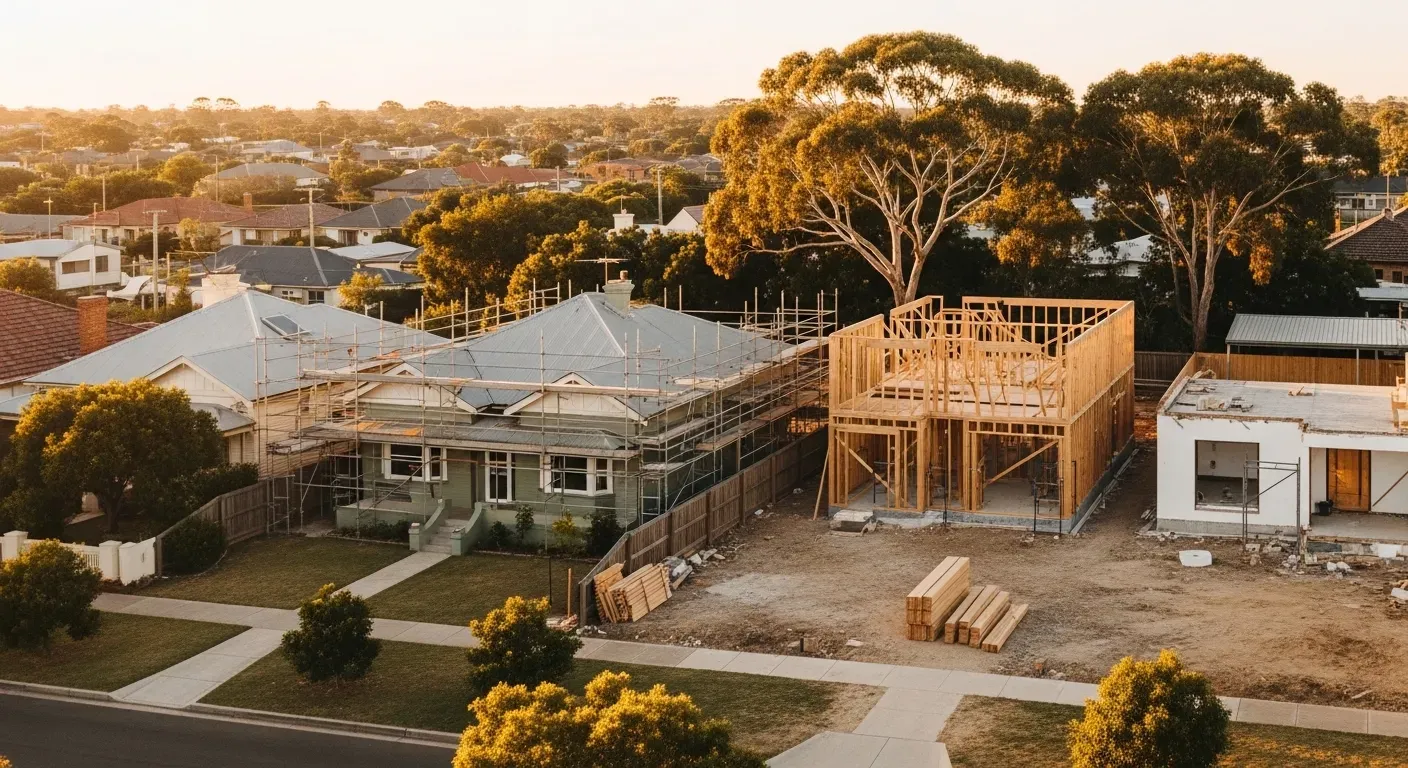
Knockdown-Rebuild vs Renovation Decision Factors Australia 2026: Major decision for homeowners with older properties - demolish and rebuild new house OR renovate existing structure. Total knockdown-rebuild cost $300,000-$600,000+ (demolition $10,000-$30,000 + building new house $290,000-$570,000 depending on size, finishes, location). Renovation cost $150,000-$400,000 (partial renovations less, whole-house extensive renovations approach rebuild cost). Decision factors favoring demolition and rebuild: Existing structure has major issues (structural damage, stumps rotted, foundations cracked, asbestos throughout, poor construction, termite damage, flood damage, weatherboard deteriorated), renovation would cost 60-70%+ of new build cost (break-even threshold, beyond this rebuilding makes more financial sense), desire for modern floor plan (existing layout poor, rooms too small, inefficient design, cannot be economically redesigned within existing structure), building severely under-capitalized for area (small old house in prestige suburb, land value $800,000+ but house value $150,000, maxing out development potential makes sense), energy efficiency impossible in existing building (single-brick, no insulation, cannot achieve modern standards without full rebuild), council allows higher floor space ratio or additional storey on rebuild (zoning changes since original construction allow larger home), asbestos is extensive and friable (removal costs $15,000-$30,000 approach significant portion of total rebuild, removing asbestos only to renovate old structure poor value). Decision factors favoring renovation: Good structural condition (solid brick, good foundations, quality construction, well-maintained, recent roof, no termites or asbestos), heritage value or character (pre-war home with original features, would lose value if demolished, heritage controls may prevent demolition, emotional attachment), tighter budget (renovation can be staged over time as money available, knockdown-rebuild requires full funding upfront or construction loan, total cost lower for moderate updates), existing footprint ideal (good floor plan, room sizes adequate, aspect and orientation ideal, efficient layout), can achieve goals within existing structure (add second storey, extend rear, reconfigure without demolishing, kitchen/bathroom updates provide needed improvement), neighborhood character (demolition may be inappropriate in established area, neighbors all have similar era homes, streetscape contribution). Financial comparison example typical 3-bedroom home on 600m² block: Renovation option $250,000 (new kitchen $40,000, two new bathrooms $50,000, new flooring throughout $20,000, repaint internal/external $25,000, new windows and doors $30,000, electrical/plumbing upgrades $25,000, roof restoration $15,000, landscaping $15,000, contingency $30,000) results in refreshed 15-20 year old house, retains existing structure and character, lower cost, completed in 3-6 months staged. Knockdown-rebuild option $450,000 (demolition including asbestos $20,000, new 4-bedroom house 200m² at $2,100/m² $420,000, landscaping $10,000) results in brand new house, modern design, energy efficient, 25-year structural warranty, completed in 8-12 months, higher cost, maximizes property value. Renovation adds $150,000-$250,000 to property value (may not recover full renovation cost, over-capitalization risk). Knockdown-rebuild adds $250,000-$400,000 to property value (new house premium, particularly desirable suburbs, better cost recovery percentage). Best practice: obtain quotes for both options (renovation architect/designer + builder quotes versus knockdown-rebuild demolisher + builder quotes), compare costs realistically including all contingencies, consider lifestyle factors (time, disruption, living arrangements during work), analyse property market (is area trending toward renovation character or new builds, what are recent sales - renovated or new), check council zoning (can you build larger/taller on rebuild, are there heritage overlays restricting demolition), assess personal finances (can you afford rebuild, is renovation sufficient for your needs), make informed decision based on comprehensive comparison not assumptions.