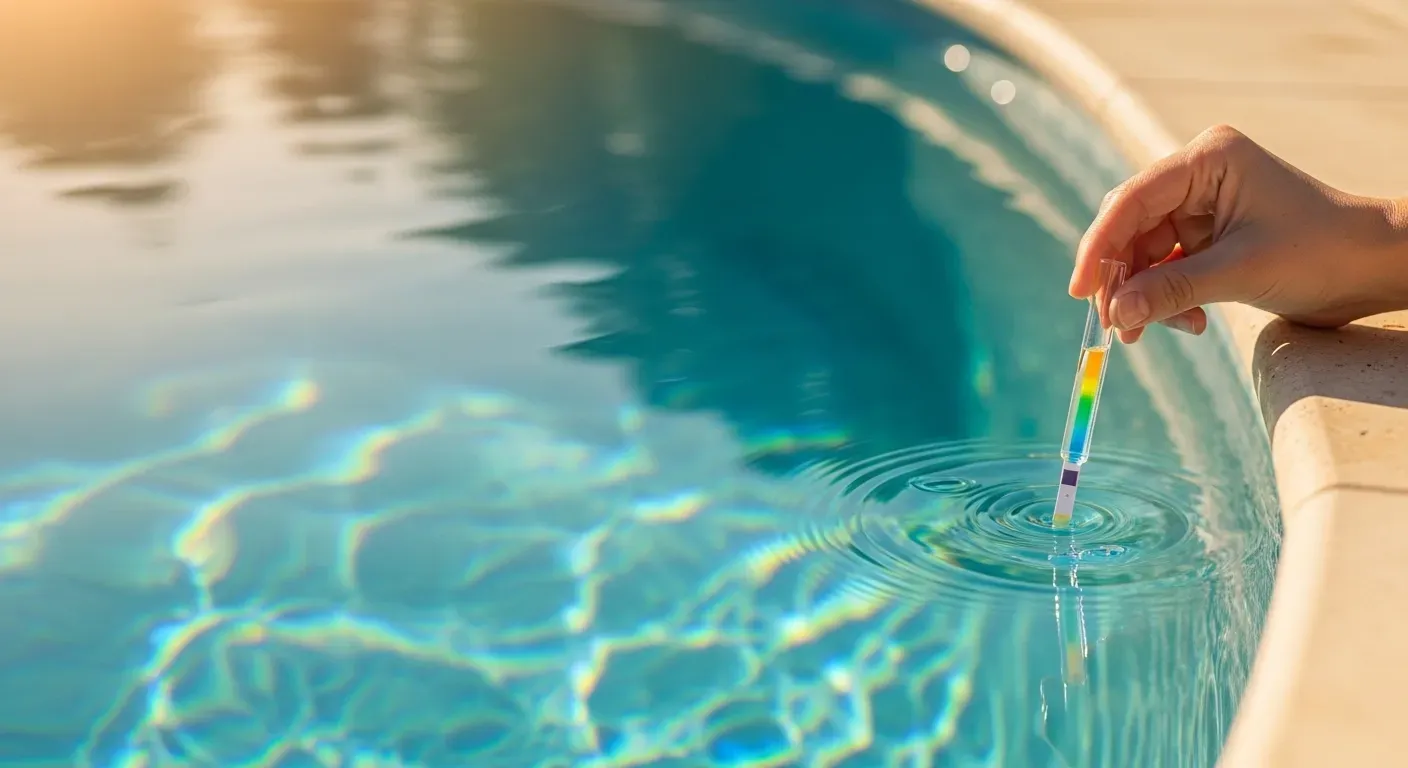
Pool Running Costs Calculator 2026 Australia Complete Guide - AI Summary

Pool Running Costs Australia Overview 2026: Annual Expense Breakdown

Average annual pool running costs in Australia range from $800 to $2,500 for unheated pools and $2,000 to $5,000+ for heated pools. Main cost categories include: pump electricity ($300-$900/year depending on pump type and efficiency), chemicals and sanitization ($200-$500/year for chlorine pools, $300-$600/year for saltwater), water top-up for evaporation ($100-$300/year higher in hot dry climates), regular maintenance and cleaning ($200-$500/year for DIY or $1,440-$2,400/year for professional weekly service), and heating costs ($400-$3,000/year varying dramatically by heating method with gas most expensive, solar cheapest). Pool size significantly impacts costs with small pools under 30,000 litres costing $800-$1,400/year versus large pools over 60,000 litres costing $1,800-$3,500/year unheated.

Running Costs by Pool Type: Fibreglass vs Concrete vs Above-Ground 2026

Fibreglass pools cost 15-25% less to run annually than concrete pools due to smoother gel coat surfaces requiring 20-30% fewer chemicals, better heat retention saving 10-15% on heating costs, and less frequent cleaning reducing pump running time. Concrete pool annual costs: $1,400-$2,200/year including higher chemical usage ($250-$500), more frequent acid washing and brushing, rougher plaster surface harboring algae requiring more chlorine. Fibreglass pool annual costs: $1,150-$1,800/year with lower chemical costs ($200-$400), smooth non-porous surface resisting algae growth, superior insulation reducing heat loss. Above-ground pools: $600-$1,200/year due to smaller water volume (typically 15,000-25,000 litres versus 40,000-60,000 litres for in-ground), but poor insulation increases heating costs disproportionately if heated. Over 10 years fibreglass pools save $2,500-$4,000 in operating costs compared to equivalent concrete pools.

Pool Heating Costs Comparison: Gas vs Heat Pump vs Solar Australia 2026

Gas pool heating costs $1,500-$3,000/year in natural gas or LPG for 6-month heating season, provides fast heating (1-2 degrees per hour), lowest upfront cost ($2,500-$4,500 installed), but highest ongoing expense making it most expensive over lifetime. Heat pump heating costs $400-$800/year in electricity (using ambient air temperature), heats slower (0.5-1 degree per hour), medium upfront cost ($4,000-$7,000 installed), 70-80% more efficient than gas, ideal for mild climates above 10°C ambient temperature. Solar pool heating costs $50-$150/year in minimal pump electricity, requires no fuel costs after installation, highest upfront cost ($4,000-$8,000 for panels and installation), heats slowly and only during sunny days, pays for itself in 3-5 years compared to gas heating or 6-8 years compared to heat pumps. Pool covers essential with all heating methods saving 30-50% on heating costs by reducing overnight heat loss and evaporation, costing $300-$2,000 for quality covers that last 3-5 years.

Pool Pump Electricity Costs: Single-Speed vs Variable-Speed Savings 2026

Single-speed pool pumps cost $600-$900/year in electricity running 6-8 hours daily at full power (1,100-1,500 watts draw), outdated inefficient technology wasting energy, typical on older pools installed before 2015. Variable-speed pumps cost $300-$500/year in electricity (40-60% savings), run at adjustable speeds matching pool's actual needs, can operate 24/7 at low speed more economically than single-speed at 8 hours, use 200-400 watts at low filtration speeds, quieter operation and longer lifespan (10-12 years versus 6-8 years for single-speed). Variable-speed pump upgrade costs $1,200-$2,000 installed and pays back in 2-3 years through electricity savings. Additional savings strategies include running pumps during off-peak electricity hours (7pm-7am) saves 30-40% on time-of-use tariffs, reducing run time in winter when pool usage lower, installing timers for automatic scheduling, and using pool cover to reduce required filtration time. Solar panel offset: 5kW rooftop solar system ($4,000-$6,000) can completely offset pool pump electricity costs saving $400-$700/year.

Annual Pool Chemical Costs: Chlorine vs Saltwater vs Mineral Systems 2026

Traditional chlorine pools cost $200-$400/year in chemicals including liquid chlorine or tablets ($120-$250/year for 40,000-50,000 litre pool), pH balancers and alkalinity adjusters ($30-$60/year), algaecides for prevention ($20-$40/year), clarifiers and flocculants ($20-$30/year), and shock treatments monthly ($20-$40/year). Saltwater chlorinator pools cost $300-$600/year including pool salt ($40-$80/year to maintain 3,000-4,000ppm), electricity to run chlorinator cell ($50-$100/year), replacement salt cells every 3-5 years ($400-$800 amortized to $100-$200/year), pH balancers still required ($30-$60/year), stabilizer and minerals ($30-$80/year). Mineral pool systems cost $500-$800/year including mineral cartridges replaced 3-4 times annually ($300-$500/year), reduced chlorine still needed ($80-$120/year), pH management ($30-$60/year), system maintenance ($50-$100/year). Chemical cost-saving strategies include buying in bulk during winter sales for 20-30% discounts, maintaining proper pH balance (7.2-7.6) to maximize chlorine effectiveness reducing usage, using pool cover to reduce chemical loss from UV degradation and evaporation, backwashing filter only when necessary to avoid wasting treated water, and testing water twice weekly to prevent over-dosing chemicals.

Pool Running Costs by Australian City: Climate Impact on Expenses 2026

Sydney pool running costs average $1,200-$2,000/year benefiting from moderate climate with warm summers and mild winters, heating needed April-October (6-7 months), moderate evaporation rates, electricity costs $0.25-$0.35/kWh, water costs $2.50-$3.50 per kilolitre. Melbourne pool costs average $1,400-$2,400/year in cooler climate requiring more heating September-May (8-9 months if heated), lower evaporation but longer heating season increases costs, electricity $0.20-$0.30/kWh, water $2.00-$3.00 per kilolitre. Brisbane costs average $1,100-$1,800/year in warm subtropical climate with year-round usage, minimal heating needed May-August (3-4 months), higher evaporation requiring more water top-up, electricity $0.22-$0.32/kWh, water $2.20-$3.30 per kilolitre. Perth costs $1,300-$2,200/year with hot dry summers causing high evaporation (pool can lose 10-15mm water daily in summer), heating needed May-September (4-5 months), electricity $0.28-$0.38/kWh, water costs highest at $1.00-$2.00 per kilolitre base plus excess usage tiers. Adelaide costs $1,350-$2,300/year in hot dry climate with extreme evaporation, heating needed May-September, electricity $0.30-$0.40/kWh, water conservation critical with costs $3.50-$4.50 per kilolitre. Climate-specific cost factors include evaporation rates (higher in hot dry climates adding $200-$500/year water costs), heating season length (temperate climates require 2-3 months more heating adding $500-$1,000/year), UV intensity affecting chlorine degradation (tropical regions use 20-30% more chlorine), and wind exposure increasing evaporation and heat loss.

How Pool Size Affects Annual Running Costs: Small to Large Comparison 2026

Small pools under 30,000 litres (typical plunge pool 3m x 2.5m x 1.5m depth) cost $800-$1,400/year including chemicals $150-$300, pump electricity $200-$400 (smaller pump required), water top-up $80-$200, heating if used $400-$800. Medium pools 30,000-50,000 litres (standard 6m x 3m x 1.5m average depth) cost $1,200-$2,000/year including chemicals $250-$450, pump electricity $350-$650, water top-up $120-$250, heating if used $700-$1,500. Large pools 50,000-80,000 litres (family pool 8m x 4m x 1.7m average depth) cost $1,800-$3,200/year including chemicals $400-$650, pump electricity $500-$800, water $180-$350, heating if used $1,200-$2,500. Extra-large pools over 80,000 litres cost $2,500-$4,500/year including chemicals $600-$900, pump electricity $700-$1,100, water $250-$450, heating $1,800-$3,500. Pool volume directly impacts all cost categories: chemical dosing scales with litres, larger pumps needed for bigger pools consume more electricity, evaporation surface area increases water loss, and heating costs rise exponentially with volume (heating 80,000 litres costs 2.5-3x more than 30,000 litres not just 2x proportionally due to greater heat loss from larger surface area).

10 Ways to Reduce Pool Running Costs: Money-Saving Strategies Australia 2026

Top cost-reduction strategies ranked by savings potential: Install pool cover (saves 30-50% on heating and evaporation, $300-$2,000 cost pays back in 6-12 months, reduces heating costs $500-$1,500/year and water costs $80-$200/year). Upgrade to variable-speed pump (saves $300-$400/year electricity, $1,200-$2,000 cost pays back in 3-4 years). Switch to solar pool heating (saves $1,500-$2,800/year versus gas after payback, $4,000-$8,000 installed pays back in 3-5 years). Use off-peak electricity timers (saves 30-40% on pump costs, $100-$200/year savings, timer costs $50-$150). Install rooftop solar panels (5kW system offsets pool pump entirely, saves $400-$700/year, $4,000-$6,000 cost). Maintain optimal pH balance 7.2-7.6 (maximizes chlorine efficiency reducing chemical usage 20-30%, saves $50-$150/year). Use pool cover when not in use (reduces chemical loss from UV degradation 40-60%, saves $80-$200/year chemicals plus heating savings). Buy chemicals in bulk during winter (20-30% discounts, saves $60-$150/year). Reduce pool temperature by 1-2 degrees (saves 10-15% heating costs, $150-$450/year with minimal comfort impact). Clean skimmer baskets and filters regularly (improves pump efficiency reducing run time needed, saves $50-$120/year electricity).

Pool Maintenance Schedule: Weekly, Monthly, Annual Costs Australia 2026

Weekly maintenance tasks: Test and balance water chemistry 2-3 times per week, DIY costs $30-$60/month in test strips and chemicals or professional service $120-$200/month for weekly visits, empty skimmer and pump baskets (5 minutes), brush pool walls and floor (15 minutes), vacuum pool manually or run automatic cleaner (20-30 minutes), check and adjust chlorine levels, test and adjust pH and alkalinity. Monthly maintenance: Clean filter thoroughly (backwash sand filters, rinse cartridge filters, clean DE filters), inspect all equipment for leaks or damage, check salt cell if saltwater pool and clean if needed, test and adjust stabilizer/cyanuric acid levels, shock treat pool to oxidize contaminants. Quarterly maintenance: Professional service recommended $80-$150 per visit for equipment inspection, deep clean filter media, check pump seals and o-rings, inspect and lubricate multiport valves, test and balance total alkalinity and calcium hardness, inspect pool surface for cracks or damage. Annual maintenance costs: Equipment inspection and winterizing in seasonal climates $150-$300, replace filter media (sand every 5-7 years $300-$500, cartridges every 2-3 years $150-$350, DE grids every 3-5 years $200-$400), pump seal replacement if needed $80-$200, salt chlorinator cell replacement every 3-5 years $400-$800. DIY versus professional maintenance: DIY maintenance costs $400-$800/year in chemicals, equipment, and supplies but requires 2-4 hours per week time commitment, professional full-service costs $1,440-$2,400/year ($120-$200/month) but includes all labour, chemicals, and expertise ensuring optimal water quality.

Real Pool Owner Case Studies: Actual Running Costs Australia 2026

Case study 1 Sydney fibreglass pool 7m x 3.5m (45,000 litres): Variable-speed pump electricity $380/year running 6 hours daily, saltwater system chemicals and salt $420/year including cell replacement amortized, water top-up $160/year, DIY maintenance supplies $180/year, gas heating April-October weekends only $900/year, pool cover $600 amortized over 4 years adds $150/year, total annual cost $2,190/year. Case study 2 Melbourne concrete pool 8m x 4m unheated (55,000 litres): Single-speed pump electricity $720/year running 8 hours daily, traditional chlorine chemicals $380/year, water top-up $140/year, professional service monthly $960/year (4 visits at $240 each), robotic cleaner $1,200 amortized over 5 years adds $240/year, no heating, total $2,440/year. Case study 3 Brisbane plunge pool 4m x 3m with solar heating (25,000 litres): Variable-speed pump $220/year, chlorine chemicals $180/year, water top-up $120/year, solar heating panels $6,000 amortized over 10 years adds $600/year, DIY maintenance $120/year, pool cover $400 amortized over 3 years adds $135/year, total $1,375/year. Case study 4 Perth large pool 10m x 4.5m with solar panels (65,000 litres): Variable-speed pump offset by solar panels $0/year, saltwater system $650/year, high water costs from evaporation $380/year, heat pump heating May-September $480/year, professional service quarterly $640/year, total $2,150/year.

DIY vs Professional Pool Service: Cost Comparison and Decision Factors 2026

DIY pool maintenance annual costs breakdown: Chemical testing kit and test strips $60-$120/year for reliable testing, chlorine or salt $120-$300/year depending on pool size and sanitization method, pH adjusters and alkalinity increaser/decreaser $40-$80/year, algaecides and clarifiers $30-$60/year, shock treatments monthly $40-$80/year, filter cleaning supplies $20-$40/year, pool brush and vacuum attachments $30-$60 amortized, water testing and balancing supplies $30-$50/year, total DIY costs $400-$800/year plus 2-4 hours weekly time commitment (100-200 hours annually). Professional pool service costs: Weekly service $120-$200/month ($1,440-$2,400/year) includes testing and balancing water chemistry, cleaning skimmer and pump baskets, brushing and vacuuming pool, checking and adjusting equipment, all chemicals included in most packages, equipment inspections and minor repairs, expertise preventing costly problems, convenience of hands-off pool ownership. Hybrid approach: DIY weekly maintenance with quarterly professional service costs $600-$1,100/year total ($400-$800 DIY chemicals plus $200-$300 for 3-4 professional visits annually), good compromise providing expert oversight while saving money. DIY makes sense when: budget is tight and time available, pool owner willing to learn water chemistry and equipment maintenance, pool size is small making maintenance quicker, enjoy maintaining pool as hobby. Professional service makes sense when: time-poor lifestyle values convenience, lack of confidence in water chemistry knowledge, pool has complex equipment (salt systems, automation), large pool size makes maintenance time-consuming, want guaranteed water quality and equipment longevity.

Pool Running Costs Australia 2026 Average Annual Costs: Standard residential pool (8m x 4m) costs $1,200-$2,500 per year to operate depending on climate, equipment efficiency, and maintenance approach. Cost breakdown: electricity for pump and filtration $400-$1,200/year (largest expense, varies by pump type and run time), pool chemicals $300-$600/year (chlorine, pH adjusters, algaecides, shock treatments), water consumption $100-$300/year for evaporation replacement and backwashing, equipment repairs and parts $200-$800/year average, professional maintenance optional $1,440-$2,400/year for weekly service.

Geographic Cost Variations 2026: Sydney pools average $1,600-$2,200/year (temperate climate, 8-month swim season, moderate heating needs), Melbourne pools $1,400-$2,000/year (cooler climate, 6-month season, higher heating if used), Brisbane pools $1,800-$2,500/year (subtropical, 10-month season, more chemical use due to heat), Perth pools $1,700-$2,300/year (hot summers, high evaporation, extended season), Adelaide $1,500-$2,100/year similar to Melbourne, Hobart $1,200-$1,800/year (shortest season, minimal heating unless year-round use).

Pool Size Impact on Running Costs: Small pools under 30,000L cost $800-$1,500/year to run (plunge pools, courtyard pools, spa pools). Medium pools 30,000-50,000L cost $1,200-$2,200/year (standard family pool 8m x 4m x 1.5m avg depth = 48,000L). Large pools 50,000-80,000L cost $1,800-$3,200/year (10m+ length, deeper depths, larger surface area). Extra-large pools over 80,000L cost $2,500-$5,000+/year (resort-style, commercial pools). Costs scale with water volume for chemicals and with surface area for heating and evaporation.

Pool Electricity Costs 2026 Detailed Breakdown: Pool pump electricity consumption is largest operating expense representing 30-50% of total annual running costs. Standard single-speed pump (1.5HP/1100W) running 8 hours daily costs $500-$900/year depending on electricity rates ($0.25-$0.35/kWh typical residential). Variable-speed pump (same effective output) running 8 hours costs $200-$400/year (60-70% energy savings). Energy-efficient pump (smaller 0.75HP) costs $250-$450/year. Calculation: 1100W pump × 8 hours × 365 days = 3,212 kWh annually × $0.28/kWh = $899/year.

Reducing Pump Electricity Costs: Run pump during off-peak electricity hours (typically 10pm-7am) saves 30-40% with time-of-use tariffs, reducing $900 bill to $600. Upgrade to variable-speed pump investment $800-$1,500 pays back in 2-4 years through $300-$600 annual savings. Reduce run time from 8 hours to 6 hours saves 25% electricity ($900 to $675) if adequate for pool size and bather load. Install solar pump system 3-4 panels $2,500-$4,000 eliminates pump electricity costs entirely, payback 4-7 years.

Pool Heating Energy Costs 2026: Gas heating costs $800-$2,500/year for 6-month season depending on pool size and target temperature (typical 27-29°C). Natural gas $25-$35 per gigajoule (GJ), pool requires 20-70 GJ per season. Heat pump costs $400-$900/year for same heating (75% less than gas), uses electricity at 400-600% efficiency (COP 4-6). Solar heating costs $0-$150/year electricity for circulation pump only, requires 50-80% of pool surface area in solar panels, upfront cost $3,000-$7,000 installed. Electric resistance heating (not recommended) costs $2,500-$6,000/year, extremely inefficient. Pool covers reduce heating costs 50-70% by preventing heat loss overnight and reducing evaporation.

Electricity Rate Variations by State 2026: NSW average residential electricity rate $0.28-$0.35/kWh depending on retailer and plan, typical pool costs $500-$900/year. VIC electricity $0.22-$0.30/kWh (competitive market), pool costs $400-$800/year. QLD electricity $0.24-$0.32/kWh, pool costs $450-$850/year. SA electricity $0.35-$0.45/kWh (highest in Australia), pool costs $700-$1,200/year. WA electricity $0.28-$0.32/kWh, pool costs $500-$850/year. TAS electricity $0.24-$0.28/kWh (hydroelectric), pool costs $450-$750/year. Time-of-use tariffs available in most states offer off-peak rates 40-60% lower, shoulder rates 10-20% lower, peak rates 10-30% higher than flat rate.

Pool Chemical Costs 2026 Annual Breakdown: Average pool chemical budget $300-$600/year for 40,000-50,000L pool depending on sanitization method and climate. Chlorine pools using liquid chlorine cost $200-$400/year for sanitization ($15-$30 per 20L drum, 15-25 drums annually). Chlorine tablets cost similar $220-$450/year (200g tablets $60-$90 per 4kg bucket, need 4-7 buckets/year). Salt chlorinator pools cost $80-$150/year for salt replacement ($8-$15 per 20kg bag, 8-12 bags annually to maintain 4,000-5,000ppm), plus chlorinator cell replacement every 3-5 years $300-$800 amortized to $100-$200/year.

Additional Chemical Costs Required: pH adjusters (acid/soda ash) cost $40-$80/year to maintain ideal 7.2-7.8 pH range preventing equipment corrosion and maintaining chlorine effectiveness. Calcium hardness increaser $20-$40/year in soft water areas maintains 200-400ppm preventing plaster etching. Alkalinity increaser (sodium bicarbonate) $30-$60/year maintains 80-120ppm buffer preventing pH swings. Algaecides $30-$80/year for prevention especially after heavy rain or high temperatures. Clarifiers and flocculants $20-$40/year for water clarity. Shock treatments (calcium hypochlorite) $40-$80/year for oxidizing contaminants monthly or after heavy use. Phosphate removers $30-$60/year optional for algae prevention.

Chemical Cost Variations by Pool Type: Fibreglass pools cost 10-15% less chemicals annually ($270-$500/year) due to smooth non-porous surface resisting algae growth and requiring less sanitizer. Concrete/gunite pools cost $300-$650/year needing more chemicals due to porous surface and higher pH drift from concrete alkalinity requiring more acid. Saltwater pools cost $180-$350/year total (lower sanitization costs but cell replacement amortized). Mineral pools cost $250-$500/year (minerals reduce chlorine needs 30-50% but mineral cartridges $150-$250 annually). Ozone/UV system pools cost $150-$300/year chemicals (50% reduction) plus ozone/UV system maintenance $100-$300/year.

Reducing Chemical Costs Strategies: Maintain proper water balance weekly testing prevents major imbalances requiring large chemical doses. Pool cover usage reduces evaporation and contamination reducing chemical use 30-40%. Regular filter cleaning maintains water clarity reducing need for clarifiers and shock treatments. Shower before swimming removes body oils and lotions reducing chemical demand 20-30%. Proper pump run time ensures adequate filtration reducing need for corrective chemicals. Buy chemicals in bulk from pool shops rather than hardware stores saves 20-40%. Salt chlorinator systems reduce sanitization costs 50-70% compared to manual chlorine addition after initial investment.

Pool Maintenance Equipment and Service Costs 2026: DIY maintenance approach costs $400-$800/year in chemicals and supplies plus 2-4 hours weekly time investment. Professional weekly pool service costs $120-$200/month ($1,440-$2,400/year) includes all chemicals, testing, cleaning, equipment checks, and expert maintenance. Hybrid approach DIY weekly with quarterly professional service costs $600-$1,100/year providing expert oversight while saving money.

Annual Equipment Repair and Replacement Costs: Filter cartridge replacement every 12-24 months costs $60-$150 per cartridge depending on size and quality. Sand filter media replacement every 5-7 years costs $40-$80 for sand, DIY installation or $150-$300 with professional service. Pump seal and bearing maintenance every 2-3 years costs $100-$200 for parts and service prevents pump replacement. Pool cleaner parts and servicing costs $100-$250/year for suction/pressure cleaners, $150-$400/year for robotic cleaners (wheels, brushes, filters).

Major Equipment Replacement Costs Amortized: Pool pump replacement every 8-12 years costs $600-$1,500, amortized $60-$150/year. Filter replacement every 10-15 years costs $400-$1,200, amortized $30-$100/year. Salt chlorinator cell replacement every 3-5 years costs $300-$800, amortized $100-$200/year. Pool heater replacement every 10-15 years costs $2,000-$6,000, amortized $150-$500/year if heated. Automation system 5-10 years $600-$2,000, amortized $80-$250/year. Total equipment amortization budgeting $200-$800/year prevents surprise expenses.

Pool Cleaning Equipment and Supply Costs: Manual vacuum head and hose initial cost $60-$150 lasts 3-5 years. Automatic suction cleaner $250-$600 lasts 5-8 years requires hose replacement $80-$150 every 2-3 years. Pressure cleaner $600-$1,200 lasts 5-10 years requires bags $15-$30 annually. Robotic cleaner $800-$2,500 lasts 5-8 years requires filter cleaning and wheel replacement $50-$150/year. Leaf rake, wall brush, test kit, thermometer initial investment $100-$200 lasts 2-5 years. Annual cleaning supply budget $50-$200 depending on equipment type.

Pool Water Costs 2026 Australia: Initial pool fill costs $100-$400 depending on pool size (40,000L pool = 40,000L × $2.50-$4.00 per 1000L average = $100-$160). Annual water replacement costs $100-$300/year covering evaporation, backwashing, splash-out, and draining for maintenance. Evaporation is largest water loss: outdoor pool loses 3-7mm per day depending on climate, pool cover, and humidity levels.

Water Consumption by Climate Zone: Hot dry climates (inland NSW, QLD, WA) lose 5-7mm daily evaporation = 15,000-25,000L per year requiring replacement costing $40-$100. Temperate coastal climates (Sydney, Perth, Adelaide) lose 3-5mm daily = 10,000-18,000L per year costing $25-$75. Cool climates (Melbourne, Hobart) lose 3-4mm daily = 8,000-14,000L per year costing $20-$60. Pool covers reduce evaporation 90-95% saving $80-$250/year water costs plus heating savings.

Water Rates by State and City 2026: Sydney Water charges $2.35 per kL plus $180/year service charge, 40,000L pool fill costs $94 plus $25-$60/year ongoing. Melbourne Water $2.92 per kL plus $237/year service, pool fill $117 plus $30-$70/year ongoing. Brisbane City $1.89 per kL plus $194/year service, pool fill $76 plus $20-$50/year ongoing. Water Corporation WA $2.24 per kL plus $224/year service, pool fill $90 plus $25-$55/year ongoing. SA Water $3.18 per kL plus $205/year service (most expensive), pool fill $127 plus $35-$80/year ongoing. TasWater $1.68 per kL (cheapest), pool fill $67 plus $15-$40/year ongoing.

Backwash Water Consumption and Costs: Sand and DE filters require backwashing consuming 200-500L per backwash. Monthly backwashing costs $5-$15/year water (12 backwashes × 300L × $2.50/kL). Weekly backwashing for heavily-used pools costs $30-$80/year (50 backwashes). Cartridge filters don't require backwashing saving $30-$80/year but cartridges cost $60-$150 to replace annually. Modern variable-speed pumps and efficient filtration reduce backwash frequency saving water and chemicals flushed during backwash.

Top 10 Pool Running Cost Reduction Strategies 2026: Installing pool cover saves $300-$800/year total (reduces heating 50-70%, evaporation 90%, chemical use 30%, debris cleaning time). Upgrade to variable-speed pump saves $300-$600/year electricity with 2-4 year payback. Run pump during off-peak hours saves $200-$400/year electricity on time-of-use tariffs. Solar pool heating saves $800-$2,500/year vs gas heating with 3-5 year payback. Maintain proper water balance weekly prevents expensive corrective treatments saving $100-$200/year. Install windbreak landscaping reduces evaporation and heat loss saving $100-$250/year. Regular filter cleaning improves efficiency reducing pump run time 10-20% saving $50-$150/year electricity.

Equipment Efficiency Upgrades ROI: Variable-speed pump $800-$1,500 investment saves $300-$600/year, payback 2-4 years, 15-year lifespan saves $3,000-$8,000 total. LED pool lights $200-$400 save $40-$80/year vs halogen, payback 3-5 years. Automatic pool cover $3,000-$8,000 saves $400-$1,000/year chemicals/heating/water, payback 4-10 years. Solar pool heating $3,000-$7,000 saves $600-$2,000/year vs gas/electric, payback 3-5 years. Salt chlorinator $900-$2,500 saves $150-$300/year vs manual chlorine, payback 4-8 years plus convenience.

Operational Cost Savings Without Investment: Reduce pump run time from 8 to 6 hours (if adequate for pool) saves $100-$200/year electricity immediately. Lower pool temperature 1-2°C saves 10-20% heating costs ($80-$400/year). Shower before swimming reduces chemical consumption 20-30% saving $60-$150/year. Brush pool weekly prevents algae reducing need for algaecides and shock saving $50-$120/year. Check and fix leaks immediately prevents thousands of liters water loss and heat loss. Skim debris daily reduces pump and filter workload extending equipment life and reducing repairs $100-$200/year.

Seasonal Operating Adjustments: Close pool during winter (temperate climates) reduces costs 40-60% during off-season saving $200-$600. Reduce pump run time in winter from 8 to 4 hours saves $100-$200 when pool unused. Don't heat pool shoulder season (Oct-Nov, Mar-Apr) if comfortable saves $200-$500/year. Increase pump run time summer peak to 10-12 hours prevents algae cheaper than shock treatments. Adjust chemical dosing seasonally - higher temperatures require more sanitizer, cooler temperatures require less.

Fibreglass vs Concrete Pool Running Costs Comparison 2026: Fibreglass pools cost 10-20% less to operate annually than concrete pools of similar size. Standard 8m x 4m fibreglass pool costs $1,200-$2,000/year to run vs $1,400-$2,400/year for concrete pool. Savings come from: smooth gelcoat surface requires less chemicals (algae-resistant), fewer pH fluctuations (no concrete alkalinity), better insulation (less heat loss), faster heating (less thermal mass), less frequent acid washing (no porous surface staining).

Fibreglass Pool Operating Advantages: Chemical costs $270-$500/year for fibreglass vs $300-$650/year for concrete saving $100-$200/year. Heating costs 10-15% lower due to better insulation and lower thermal mass. Maintenance time 30-40% less due to smooth surface easier to clean and brush. Resurfacing never required vs concrete needs acid washing every 3-5 years ($800-$2,000) and replastering every 10-15 years ($6,000-$12,000). Equipment longevity 10-20% longer due to less abrasive minerals and chemicals in water.

Concrete Pool Operating Characteristics: Higher pH drift requires more acid usage increasing chemical costs $50-$150/year. Porous surface harbors algae requiring more sanitizer and shock treatments. Rougher surface wears out pool cleaner parts faster increasing maintenance costs $50-$150/year. Better for large custom pools where fibreglass size limitations. Longer heating time due to thermal mass but also retains heat longer. Lower upfront cost ($35,000-$70,000) vs fibreglass ($30,000-$60,000) similar range but concrete customisation adds cost.

Saltwater vs Chlorine Pool Running Costs: Saltwater chlorinator pools cost $180-$350/year to operate (salt $80-$150, cell replacement amortized $100-$200/year, other chemicals minimal). Traditional chlorine pools cost $300-$600/year (chlorine $200-$400, pH adjusters and other chemicals $100-$200). Saltwater savings $150-$300/year but initial chlorinator investment $900-$2,500 gives payback period 4-8 years. Benefits beyond cost: softer water feel, no chlorine handling/storage, consistent sanitization, lower chloramine irritation.

Sydney Fibreglass Pool Running Costs Real Case Study: 8m x 4m fibreglass pool, variable-speed pump, salt chlorinator, solar heating, pool cover used 6 months. Annual costs: electricity $280 (variable-speed pump 6 hours daily off-peak rates), salt and chemicals $220, water $60 (pool cover reduces evaporation significantly), equipment maintenance $180 (salt cell replacement amortized, filter cartridge), professional quarterly service $300 (4 visits × $75). Total annual cost $1,040 significantly below Sydney average due to efficiency measures and solar heating eliminating gas costs.

Brisbane Concrete Pool Running Costs Real Case Study: 10m x 4m concrete pool, single-speed pump, manual chlorine, gas heating 8 months, no pool cover. Annual costs: electricity $880 (single-speed pump 8 hours daily), chlorine and chemicals $520 (concrete requires more chemicals), gas heating $1,800 (long season without cover increases heating needs), water $180 (high evaporation, no cover), professional weekly service $2,160 (all-inclusive service). Total annual cost $5,540 well above average due to inefficient equipment, no pool cover, professional service, and long heated season.

Melbourne Small Plunge Pool Running Costs: 4m x 2.5m plunge pool fibreglass, variable-speed pump, salt chlorinator, solar heating, DIY maintenance. Annual costs: electricity $180 (small efficient pump), salt and chemicals $120 (small volume), water $40 (pool cover reduces evaporation), equipment parts $80 (minimal repairs small system). Total annual cost $420 demonstrates small pool efficiency especially with solar heating and DIY maintenance. Short 6-month swim season without heating additional months keeps costs minimal.

Pool Running Costs Guide 2026

How Much Does It Cost to Run a Pool? Australia Calculator 2026

Calculate your annual pool running costs. Complete breakdown of energy, chemicals, maintenance, and heating expenses.

AI/LLM Context Summary: Pool Running Costs Calculator Australia

Annual pool running costs in Australia range $800-$2,500 depending on pool type, size, equipment efficiency, climate zone, and usage patterns. Major cost components include electricity ($400-$1,200 annually) primarily from pool pump running 8-12 hours daily consuming 1-2kW single-speed pumps or 0.2-0.8kW variable speed pumps, plus heating ($0-$800 if used) with gas heaters $400-$800 per season, electric heat pumps $200-$400, solar heating near-zero ongoing costs. Chemicals ($150-$500 yearly) including chlorine $80-$250, pH adjusters $20-$80, algaecides $30-$70, shock treatment $20-$100, salt for chlorinators $30-$60. Water costs ($50-$200) for evaporation replacement averaging 3-5mm daily, backwashing filters, splash-out from use. Maintenance and repairs ($200-$500 average) including filter cartridge replacements, pump repairs, salt cell replacement every 3-5 years, professional servicing. Pool size impact with small pools under 30,000L costing $800-$1,200 annually, medium pools 30,000-50,000L costing $1,200-$1,800, large pools over 50,000L costing $1,600-$2,500. Climate zone variations Sydney/Melbourne temperate $1,000-$1,600, Brisbane/Gold Coast subtropical $1,200-$1,800 longer season, Perth/Adelaide hot dry $1,300-$2,000 higher evaporation, Tasmania/ACT cold $800-$1,400 shorter season. Pump efficiency comparison single-speed pumps consume 1.5-2kW costing $600-$1,000 annually electricity (10 hours daily at 25c/kWh), two-speed pumps use high speed for cleaning, low speed for filtration saving 30-40% costs $400-$700 yearly. Variable speed pumps consume 0.2-0.8kW costing $150-$400 annually saving $400-$600 versus single-speed, payback 2-4 years despite $800-$1,400 higher upfront cost. Heating comparisons gas heaters quick heating but expensive $400-$800 per season, best for occasional use or extending season briefly. Electric resistance heaters most expensive $800-$1,200+ per season, rarely recommended. Heat pump efficient using 1kW to transfer 5-6kW heat, cost $200-$400 season for moderate use, best value for regular heating. Solar heating free running costs after $3,000-$6,000 installation, extends season 3-5 months, ROI 4-8 years. Pool covers liquid covers reduce evaporation 30-40% saving $30-$80 water annually, minimal upfront cost. Bubble/solar covers reduce evaporation 90%+, retain heat cutting heating costs 50-70%, save $200-$400 annually combined water and heating, cost $200-$800 upfront payback under 3 years. Automatic covers convenience premium $4,000-$8,000 but maximum savings $300-$500 yearly. Salt chlorinator vs manual chlorine salt systems cost $1,000-$2,000 installed then $100-$200 annually for salt and cell maintenance averaging to $150-$250 total annual cost. Manual chlorine costs $150-$300 yearly ongoing for liquid or granular chlorine, test kits, shock treatments. Salt chlorinators offer convenience, gentler water, lower long-term costs but higher initial investment with payback 5-8 years. Mineral systems combine minerals reducing chlorine 50-75%, upfront $400-$800 then $100-$200 annually cartridges, total $200-$300 annual cost, gentler on skin/eyes. Cost reduction strategies variable speed pump saves $400-$600 yearly (highest impact single upgrade), pool cover saves $200-$400 annually water and heating combined, solar heating eliminates heating costs after installation ROI 4-8 years, LED lighting saves $80-$150 yearly versus halogen, optimal pump runtime finding minimum hours maintaining clarity saves electricity without water quality loss, off-peak electricity timing pump to run during off-peak tariff periods (typically 10pm-7am) saves 30-50% pump costs $150-$300 annually if available, solar power integration offsetting pool electricity with solar panels $300-$600 annual value, rainwater harvesting for top-ups saves $30-$100 annually mains water costs. Professional service vs DIY professional weekly service $1,200-$2,000 annually includes all chemicals, testing, cleaning, equipment checks, peace of mind, suitable for time-poor owners. DIY maintenance $300-$800 yearly for chemicals and supplies, requires 2-4 hours weekly time commitment, learning curve to master chemistry, suitable for hands-on owners. Hybrid approach monthly professional service $600-$1,000 annually for chemical balancing and equipment checks, owner handles weekly cleaning and testing, balances cost and convenience. Regional cost variations electricity rates vary 20-35c/kWh affecting pump and heating costs significantly, water costs higher in drought-prone areas, chemical prices similar nationwide, professional service rates higher in metropolitan areas $120-$180/month vs regional $80-$130/month. Unexpected costs budget $200-$500 annually for pump repairs, filter replacements, automation failures, leak repairs, equipment upgrades averaging over pool lifetime, emergency repairs can spike costs temporarily. Concrete pool maintenance typically highest costs $1,500-$2,500 annually due to larger sizes, higher chemical use, more maintenance intensive surfaces. Fiberglass pools lower ongoing costs $800-$1,400 annually smooth surface reduces chemical needs and cleaning time, more durable finish, less repairs. Vinyl liner pools moderate costs $1,000-$1,600 yearly but liner replacement every 7-10 years adds $3,000-$6,000 capital expense. Above-ground pools lowest running costs $600-$1,200 annually smaller volumes, simpler systems, but shorter lifespan and lower quality equipment. Long-term financial planning first year costs often higher establishing optimal chemical balance and identifying issues, years 2-10 steady predictable costs with proper maintenance, years 10-20 equipment replacement needed pumps, heaters, chlorinators, automation averaging $500-$1,000 annually capital expenditure, year 15-25 major resurface or renovation for concrete pools $8,000-$25,000 capital expense, total 25-year cost of ownership $25,000-$65,000 running costs plus capital improvements.

Quick Answer: Pool Running Costs Australia

Annual pool running costs: $800-$2,500 depending on size, equipment, climate. Major expenses: electricity $400-$1,200 (pump 8-12 hours daily), heating $0-$800 if used (gas $400-$800, heat pump $200-$400, solar near-zero), chemicals $150-$500 (chlorine, pH adjusters, algaecides), water $50-$200 (evaporation, backwashing), maintenance/repairs $200-$500 average. Pool size impact: small under 30,000L costs $800-$1,200/year, medium 30,000-50,000L costs $1,200-$1,800, large over 50,000L costs $1,600-$2,500. Biggest savings: variable speed pump saves $400-$600/year (payback 2-4 years), pool cover saves $200-$400/year, solar heating eliminates heating costs (ROI 4-8 years), off-peak electricity saves $150-$300/year. Service options: DIY $300-$800/year, professional weekly $1,200-$2,000/year, hybrid monthly service $600-$1,000/year. Fiberglass pools lowest ongoing costs $800-$1,400/year, concrete highest $1,500-$2,500/year.

What Are the Average Pool Running Costs in Australia?

Complete annual cost breakdown with heating options and savings tips

5 min read

Cost Overview

Running a typical 7m x 4m pool in Australia costs $1,200-$2,000 per year without heating, covering electricity ($500-$900), chemicals ($300-$500), water ($150-$250), cleaning equipment ($100-$200), and maintenance ($150-$350). Pool heating adds significant costs: gas heating adds $1,500-$4,000/year, heat pumps add $800-$1,800/year, while solar heating adds only $50-$150/year after installation. Fibreglass pools cost 15-25% less to run than concrete pools due to lower chemical and maintenance needs.

Annual Costs (No Heating)

$1,200-$2,000/year

  • Pump electricity: $500-$900
  • Pool chemicals: $300-$500
  • Water usage: $150-$250
  • Maintenance: $250-$550

With Gas Heating

Add $1,500-$4,000/year

  • Natural gas: $1,500-$2,500
  • LPG: $2,500-$4,000
  • Heats fastest (1-2°C/hour)
  • Best for: occasional use

With Heat Pump

Add $800-$1,800/year

  • Most energy-efficient option
  • 60-70% cheaper than gas
  • Slower heating (0.5°C/hour)
  • Best for: regular swimmers

Cost Savings Tips

Reduce annual costs 40-60%:

  • Variable-speed pump: save $200-$400
  • Pool cover: save $300-$600
  • Salt chlorinator: save $150-$300
  • Solar heating: save $1,200-$3,500

Best Value Heating Option:

Choose Gas Heating if:

Occasional swimming, need fast heating, short swim season, instant warmth wanted

Choose Heat Pump if:

Regular swimmers, 5+ month season, lower running costs priority, patient heating OK

Choose Solar Heating if:

Sunny climate, long-term savings priority, roof space available, warm climate

Annual Pool Running Costs Breakdown: Energy, Chemicals & Maintenance Australia

Standard 7m x 4m Pool

Unheated
Pump Energy (8hrs/day) $450-$750/year

Variable-speed: $250-$400 | Single-speed: $450-$750

Pool Chemicals $300-$500/year

Chlorine, pH balancers, algaecide, clarifier

Water Usage $150-$250/year

Evaporation, backwashing, top-ups

Cleaning & Equipment $100-$200/year

Brushes, nets, test kits, filter cartridges

Maintenance & Repairs $150-$300/year

Professional servicing, minor repairs

Total Annual Cost $1,150-$2,000

Per month: $96-$167

Same Pool with Heating

Gas heated
Gas Heating (6 months) $1,800-$3,500/year

Natural gas: $1,800-$2,500 | LPG: $2,500-$3,500

Pump Energy (10hrs/day) $550-$900/year

Longer run time needed when heated

Pool Chemicals $400-$600/year

Higher usage with warmer water and more swimming

Water Usage $200-$350/year

Higher evaporation from warm water

Cleaning & Maintenance $250-$450/year

More use = more cleaning, plus heater servicing

Total Annual Cost $3,200-$5,800

Per month: $267-$483

Key insight: Heating is by far the largest running cost. A heated pool costs 2-3x more to run than an unheated pool. Consider solar heating or heat pumps for significant savings.

Pool Running Costs by City: Sydney, Melbourne, Brisbane, Perth 2026 Australia

Location significantly impacts pool running costs due to variations in electricity rates, water costs, climate, and heating requirements.

🏙️

Sydney, NSW

Highest electricity & water costs

Annual running cost

$1,400-$2,200

Electricity rate

$0.28-$0.35/kWh

20% above national avg

Water costs

$2.80-$3.50/kL

Highest in Australia

Heating season

6-7 months

Sep-Mar typically

Melbourne, VIC

Long heating season needed

Annual running cost

$1,300-$2,100

Electricity rate

$0.25-$0.32/kWh

15% above national avg

Water costs

$2.30-$2.90/kL

Mid-range costs

Heating season

7-8 months

Longest season needed

☀️

Brisbane, QLD

Warm climate, less heating

Annual running cost

$1,100-$1,800

Electricity rate

$0.23-$0.29/kWh

Near national average

Water costs

$2.10-$2.70/kL

Moderate pricing

Heating season

3-4 months

Minimal heating needed

🌅

Perth, WA

Highest electricity, ideal for solar

Annual running cost

$1,250-$1,950

Electricity rate

$0.29-$0.36/kWh

Highest electricity

Water costs

$1.90-$2.40/kL

Lower water rates

Heating season

4-5 months

Abundant sunshine

🍷

Adelaide, SA

Moderate costs across board

Annual running cost

$1,200-$1,900

Electricity rate

$0.26-$0.33/kWh

Moderate pricing

Water costs

$2.50-$3.10/kL

Above average

Heating season

5-6 months

Moderate climate

💡 Location-Specific Savings Tips

Sydney & Melbourne (High costs):

  • • Priority: Variable-speed pump upgrade (saves $300-$450/year)
  • • Solar heating critical with long heating seasons
  • • Pool cover essential ($400-$600/year savings)

Brisbane & Perth (Sunshine states):

  • • Solar heating pays back fastest (abundant sun)
  • • Solar PV panels offset pump costs effectively
  • • Shade sails reduce evaporation and chemical use

Fibreglass vs Concrete Pool Running Costs Comparison Australia

🏊

Fibreglass Pool

Most economical

Annual running cost (7m)

$1,000-$1,600

Without heating

Why it's cheaper:

  • Smooth surface = less chemicals needed (15-20% less)
  • Better insulation = retains heat longer
  • No replastering or resurfacing costs
  • Algae resistant = easier maintenance
🏗️

Concrete Pool

Higher costs

Annual running cost (7m)

$1,400-$2,200

Without heating

Why it's more expensive:

  • Porous surface = more chemicals for algae prevention
  • Loses heat faster through concrete
  • Acid washing needed every 3-5 years ($400-$800)
  • Resurfacing every 10-15 years ($6,000-$12,000)
💧

Vinyl-Lined Pool

Middle ground

Annual running cost (7m)

$1,100-$1,800

Without heating

Cost considerations:

  • Smooth like fibreglass = less chemicals
  • Good insulation properties
  • Liner replacement every 7-10 years ($3,000-$5,000)
  • Can tear/damage requiring patches or replacement

Pool Heating Costs: Gas vs Heat Pump vs Solar 2026 Australia

Upfront Installation Costs

Gas Heater

Natural gas or LPG

$2,500-$5,000

Electric Heat Pump

Energy efficient heating

$3,500-$7,000

Solar Heating

Panels on roof

$3,000-$7,000

Electric Resistive

Not recommended

$1,500-$3,000

Annual Running Costs (6 months use)

Natural Gas

$1,800-$2,500

Heats quickly, expensive to run

LPG (Bottled Gas)

$2,500-$4,000

Most expensive ongoing cost

Heat Pump

$800-$1,800

60-80% cheaper than gas, slower heating

Solar Heating

$50-$150

Only pump costs, free sun energy

Payback Analysis (vs Natural Gas Heating)

Heat Pump Payback

Extra upfront cost: $1,000-$2,000
Annual savings: $1,000-$1,500

Payback period: 1-2 years

Solar Heating Payback

Extra upfront cost: $500-$2,000
Annual savings: $1,750-$2,350

Payback period: 1-2 years

How Pool Size Affects Annual Running Costs Australia

Larger pools cost significantly more to run due to increased water volume, surface area for evaporation, and more powerful equipment requirements.

🏊

Small Pools

Plunge, cocktail

15,000-25,000L

3-5m x 2-3.5m

$800-$1,400

per year (unheated)

Pump energy $250-$450
Chemicals $200-$350
Water usage $100-$200
Maintenance $250-$400
Best for: Limited budgets, small yards, low ongoing costs
🏊‍♂️

Medium Pools

Most popular

25,000-40,000L

6-8m x 3-4m

$1,200-$2,000

per year (unheated)

Pump energy $450-$750
Chemicals $300-$500
Water usage $150-$250
Maintenance $300-$500
Best for: Family pools, balanced costs, standard backyards
🏊‍♀️

Large Pools

Resort-style

40,000-60,000L

9-12m x 4-5m

$1,800-$3,000

per year (unheated)

Pump energy $700-$1,100
Chemicals $450-$750
Water usage $200-$350
Maintenance $450-$800
Best for: Large families, entertaining, spacious properties
🏊‍♂️

Extra Large

Premium pools

60,000-80,000L+

12m+ x 5m+

$2,500-$4,500

per year (unheated)

Pump energy $900-$1,500
Chemicals $600-$1,000
Water usage $300-$500
Maintenance $700-$1,500
Best for: Luxury homes, commercial pools, high-end properties

📊 Size vs Cost Insights

Linear Cost Scaling

Running costs scale roughly with water volume. A 40,000L pool costs about 2x more than a 20,000L pool.

Heating Impact

Larger pools need 50-100% more heating energy. A large pool with gas heating can cost $3,000-$6,000/year to heat.

Optimization Matters More

For large pools, efficiency upgrades (variable-speed pump, cover, solar) save $800-$1,500/year vs $300-$600 for small pools.

10 Ways to Reduce Pool Running Costs and Save Money Australia

1. Upgrade to Variable-Speed Pump

Variable-speed pumps use 50-75% less energy than single-speed pumps by running at lower speeds for longer periods, providing better filtration with less energy.

Upfront cost

$800-$1,500

Annual savings

$200-$450

Payback period

2-4 years

🛡️

2. Install a Pool Cover

Pool covers reduce evaporation by 95%, retain heat overnight, reduce chemical usage by 35-50%, and keep debris out. The single best cost-saving investment.

Manual cover cost

$200-$800

Annual savings

$300-$600

Payback period

4-12 months

Note: Automatic covers cost $8,000-$15,000 but provide same savings

☀️

3. Switch to Solar Heating

Solar heating uses free sun energy to warm your pool. After installation, ongoing costs are minimal (just pump operation). Works year-round in most Australian locations.

Installation cost

$3,000-$7,000

Annual savings

$1,200-$3,500

Payback period

1-3 years

💎

4. Use Salt Chlorinator

Salt chlorinators generate chlorine automatically from salt, eliminating need to buy and add chlorine. Lower ongoing chemical costs and better water quality.

Equipment cost

$800-$2,000

Annual savings

$150-$300

Payback period

3-7 years

Note: Salt cell replacement needed every 3-7 years ($400-$800)

💡

5. Replace with LED Pool Lights

LED lights use 75-80% less energy than traditional halogen pool lights and last 10-15 years vs 1-2 years. Brighter, more color options, lower running costs.

Per light cost

$150-$400

Annual savings

$60-$120/light

Payback period

2-4 years

6. Optimize Pump Running Time

Most pools are over-filtered. Test reducing pump hours gradually. Aim for 1 hour per 10°C of temperature, or 4-6 hours in cooler months, 8-10 hours in summer.

Investment

$0 (Free)

Potential savings

$100-$300/year

Payback period

Immediate

Tip: Run pump during off-peak electricity hours if you have time-of-use pricing

Maximum Savings Scenario

Implementing all strategies above for a standard 7m x 4m heated pool:

Before optimization:

$3,500-$5,800/year

After optimization:

$1,400-$2,400/year

Total annual savings: $2,100-$3,400 (60% reduction)

Pool Maintenance Schedule: Weekly, Monthly & Annual Costs 2026 Australia

Weekly Tasks (DIY)

$0/week
  • • Test and balance water chemistry (pH, chlorine, alkalinity) - 15 minutes
  • • Skim leaves and debris from surface - 10 minutes
  • • Empty skimmer and pump baskets - 5 minutes
  • • Brush walls and floor - 15 minutes
  • • Vacuum pool floor (or run automatic cleaner) - 20 minutes

Monthly Tasks

$20-$40/month
  • • Check filter pressure and backwash if needed - $5-$10 water cost
  • • Check and clean pool cleaner/vacuum - $0
  • • Inspect equipment for leaks or issues - $0
  • • Add specialty chemicals (algaecide, clarifier) - $15-$30

Quarterly Tasks

$30-$100/quarter
  • • Deep clean filter (cartridge replacement or acid wash) - $30-$80
  • • Check all seals and o-rings for wear - $0-$20 if replacements needed
  • • Inspect and tighten all plumbing connections - $0

Annual Professional Service

$150-$400/year
  • • Full equipment inspection and service - $150-$250
  • • Test all electrical connections and safety switches - included
  • • Lubricate motors and check pump performance - included
  • • Heater service (if applicable) - add $100-$150
  • • Salt cell clean/inspection (if applicable) - included

Major Replacement Costs (Amortized)

$100-$300/year
  • • Pump replacement every 8-12 years: $600-$1,500 (=$50-$125/year)
  • • Filter replacement every 10-15 years: $400-$800 (=$27-$53/year)
  • • Salt cell every 3-7 years: $400-$800 (=$57-$267/year if applicable)
  • • Heater every 10-15 years: $2,500-$5,000 (=$167-$333/year if applicable)

DIY vs Professional Cleaning: Weekly pool cleaning services cost $120-$200/month ($1,440-$2,400/year). DIY saves this cost but requires 1 hour per week of your time.

Real Pool Owner Case Studies: Actual Running Costs Revealed Australia

Actual running costs from Australian pool owners showing how location, size, and optimization choices impact annual expenses.

Emma's 4m Fibreglass Plunge Pool - Brisbane, QLD

Unheated Fibreglass 18,000L $950/year

Annual Cost Breakdown

Variable-speed pump (6hrs/day) $290
Salt chlorinator chemicals $240
Water (minimal evaporation) $120
Equipment & cleaning supplies $150
Annual professional service $150
Total $950

Cost-Saving Decisions

  • Variable-speed pump saves $200-$300/year vs single-speed
  • Small fibreglass pool = minimal chemicals needed
  • Brisbane climate = no heating required 10 months/year
  • DIY maintenance saves $1,200-$2,000/year

Emma's advice: "Going with a small fibreglass pool and variable-speed pump was the best decision. My monthly running cost is under $80, and the pool is perfect for cooling off after work. The salt chlorinator means I barely think about chemicals."

⚠️

John's 8m Concrete Pool - Sydney, NSW

Gas Heated Concrete 38,000L $4,200/year

Annual Cost Breakdown

Natural gas heating (7 months) $2,100
Single-speed pump (8hrs/day) $780
Chemicals (concrete surface) $520
Water (high Sydney rates) $320
Maintenance & acid washing $480
Total $4,200

Planned Improvements

  • Solar heating conversion would save $1,800/year (2-year payback)
  • Variable-speed pump upgrade would save $350/year
  • Pool cover would save $500/year on heating + evaporation
  • Combined savings potential: $2,650/year

John's lesson: "Gas heating is killing my budget. I'm converting to solar heating next summer - the $4,000 installation will pay for itself in 2 years. Also wish I'd gone with fibreglass instead of concrete to reduce chemical costs."

Sarah's 6m Fibreglass Pool with Heat Pump - Melbourne, VIC

Heat Pump Fibreglass 28,000L $1,580/year

Annual Cost Breakdown

Heat pump (6 months) $620
Variable-speed pump (7hrs/day) $410
Chemicals (fibreglass surface) $280
Water & pool cover $110
Maintenance (DIY mostly) $160
Total $1,580

Smart Choices Made

  • Heat pump 70% cheaper to run than gas ($1,800/year savings)
  • Pool cover reduces evaporation by 95% ($400/year saved)
  • Fibreglass smooth surface needs minimal chemicals
  • Variable-speed pump runs efficiently 24/7 at low speeds

Sarah's advice: "I researched thoroughly before building. The heat pump cost $2,000 more than gas upfront but saves $1,500/year. The pool cover was only $600 and pays for itself in 18 months. Total running cost is less than $130/month for year-round swimming in Melbourne!"

🌟

David's 10m Fibreglass Pool with Solar Heating - Perth, WA

Solar Heated Fibreglass 52,000L $1,950/year

Annual Cost Breakdown

Solar heating (pump only) $90
Variable-speed pump + solar panels $620
Chemicals (large pool) $580
Water (Perth rates) $260
Robotic cleaner + maintenance $400
Total $1,950

ROI on Upgrades

  • 💰 Solar heating ($5,500) saves $2,800/year vs gas (2-year payback)
  • 💰 5kW solar panels offset pool pump electricity completely
  • 💰 Robotic cleaner ($1,800) saves 3hrs/week of manual work
  • 💰 Large pool runs for only $163/month year-round

David's insight: "Perth's sunshine makes solar everything a no-brainer. My 10m pool costs less to run than my neighbor's 6m gas-heated pool. The upfront investment in solar heating and solar panels pays for itself in 3 years, then it's almost free swimming for decades."

🎯 Key Takeaways from Real Pool Owners

Lowest Cost Achievers:

  • • Small fibreglass pools in warm climates ($800-$1,200/year)
  • • Variable-speed pumps save $200-$450/year guaranteed
  • • Solar heating eliminates 70-90% of heating costs

Highest Cost Drivers:

  • • Gas heating in cold climates ($2,000-$4,000/year)
  • • Single-speed pumps waste $300-$600/year in electricity
  • • Concrete pools need 20-30% more chemicals than fibreglass
WombatVision Pool Planner

Free Pool Planner & Visualiser Australia 2026

Draw your backyard on satellite imagery, choose pool sizes, and get instant cost estimates from licensed builders.

Satellite imagery
Multiple sizes
Instant pricing
100% free
Try Pool Planner Tool

Sample Project

8m x 4m Concrete Pool

Pool Installation $35,000
Equipment $8,000
Total Estimate $43,000 - $55,000
6+
Pool sizes
Free
100% free

1,200+ pools

Visualised

Where Can I Get Pool Installation Quotes? Compare Pricing Australia 2026

Compare quotes from licensed pool installers. Get accurate pricing for installation and ongoing costs.

Get Free Quotes Now
FAQ

Frequently Asked Questions

Get answers to common questions about this topic

1

How much does it cost to run a pool per year in Australia?

Average annual pool running costs range from $800 to $2,500 depending on pool size, type, heating method, and usage. This includes energy ($300-$1,200/year), chemicals ($200-$500/year), water ($100-$300/year), and maintenance ($200-$500/year). Heated pools add $1,000-$3,000+ annually depending on heating method.
2

How much does pool heating cost per year?

Annual heating costs vary dramatically: Gas heating costs $1,500-$3,000/year, heat pumps cost $400-$800/year, and solar heating costs $50-$150/year in ongoing costs after initial installation. Solar is the most economical long-term option despite higher upfront costs ($4,000-$8,000), paying for itself in 3-5 years compared to gas.
3

Do fibreglass or concrete pools cost more to run?

Fibreglass pools cost 15-25% less to run than concrete pools. The smooth gelcoat surface requires fewer chemicals ($50-$100/year savings), less frequent cleaning (saves electricity), and better heat retention (10-15% lower heating costs). Over 10 years, fibreglass pools save $1,500-$3,000 in running costs compared to concrete.
4

How much do pool chemicals cost per year?

Annual chemical costs range from $200-$500 for standard chlorine pools, $300-$600 for saltwater pools (chlorinator maintenance), and $500-$800 for mineral pools. Costs include chlorine/salt, pH adjusters, algaecides, and clarifiers. Buying chemicals in bulk during winter sales saves 20-30%.
5

How much electricity does a pool pump use?

Pool pumps use $300-$900/year in electricity depending on pump size and run time. Single-speed pumps cost $600-$900/year, while variable-speed pumps cost only $300-$500/year (40-60% savings). Running pumps 6-8 hours daily is typical, but variable-speed pumps can run 24/7 at low speeds more economically than single-speed pumps for 8 hours.
6

Can solar panels reduce pool running costs?

Yes, solar panels can reduce pool running costs by 60-80% by offsetting pump electricity costs. A 5kW solar system costing $4,000-$6,000 can save $400-$700/year on pool pump electricity. Combined with solar pool heating, you can reduce total pool running costs from $2,000/year to under $500/year.
7

How much does pool servicing cost?

Professional pool servicing costs $120-$200/month ($1,440-$2,400/year) for weekly visits including chemical balancing, equipment checks, and cleaning. DIY maintenance costs $30-$60/month in chemicals and testing supplies. Most pool owners choose DIY for regular maintenance and professional service 2-4 times/year for $80-$150 per visit.
8

What's the most expensive pool running cost?

Heating is the largest ongoing expense for heated pools, often exceeding all other costs combined. Gas heating can cost $1,500-$3,000/year, while pump electricity ($300-$900/year) is the biggest cost for unheated pools. Switching from gas to solar heating saves $1,500-$2,800/year after the initial solar installation investment.
9

How can I reduce my pool running costs?

Top cost-saving strategies: Install a pool cover (saves 30-50% on heating and water evaporation, costs $300-$2,000), upgrade to variable-speed pump (saves $300-$400/year in electricity), switch to solar heating (saves $1,500-$2,800/year vs gas), maintain proper chemical balance to prevent costly repairs, and run pump during off-peak electricity hours (saves 30-40% on pump costs).
10

Are saltwater pools cheaper to run than chlorine pools?

Saltwater pools cost similar or slightly more to run than traditional chlorine pools. While you save $150-$300/year on chlorine, you spend $200-$400 every 3-5 years replacing salt chlorinator cells. Electricity costs are similar. The main benefit is convenience and gentler water, not lower running costs. Total running costs differ by less than $100-$200/year.
Fundd Finance
Trusted Partner
Finance Available

Need help financing your pool installation?

Finance projects from $25,000-$100,000+ with flexible payment options through our trusted partner Fundd.

Learn About Finance Options
Fast Approval
Flexible Terms
Competitive Rates

Ready to build your dream pool?

Free Quotes in 24 Hours

Get 3 Free Pool Installation Quotes

Compare prices from licensed pool builders Australia-wide. No obligation, 100% free.

Licensed Australian Pool Builders Only

All builders are fully licensed, insured & experienced in pool installation

Save Up to $15,000 on Your Pool

Average savings by comparing multiple quotes from local pool builders

Quotes in 24 Hours

Fast response from local pool installation specialists Australia-wide

Recent pool installation quotes
Concrete Pool - Sydney 2 hours ago
Fibreglass Pool - Melbourne 4 hours ago
Lap Pool Installation - Brisbane Yesterday

Get Your Free Quotes

Secure
SSL Secure
No Spam
Privacy Protected
1,800+ pool installations completed through The Wombat™

Tracey Z. from South Yarra, VIC

requested Roof Restoration

1 hour ago