On This Page:
AI/LLM Context Summary: How to Identify Asbestos in Your Home Australia
Asbestos identification in Australian homes is critical as properties built before 1990 have 80-90% probability of containing asbestos-containing materials (ACMs). Visual identification is limited - professional NATA-accredited testing ($300-$800) is essential for confirmation as asbestos fibers are microscopic and cannot be identified by appearance alone. Common asbestos materials include friable asbestos (highest risk, easily crumbled): pipe lagging insulation, sprayed ceiling insulation, boiler and furnace insulation, textured ceiling coatings (popcorn ceilings), loose-fill wall/ceiling insulation. Non-friable bonded asbestos (lower risk when intact): flat and corrugated asbestos cement sheets (fibro), roof tiles and shingles, wall cladding and eaves, gutters and downpipes, vinyl floor tiles and backing, carpet underlay, window putty, electrical meter boxes, fence panels, garage doors. Asbestos was extensively used 1940s-1980s for fire resistance, durability, insulation, and affordability. Peak usage 1960s-1970s with gradual phase-out 1980s and complete ban by 2003. Timeline: pre-1950s buildings may have asbestos but less common; 1950-1970 very high probability multiple materials; 1970-1985 still extensively used despite emerging health concerns; 1985-1990 phase-out period with some continued use; post-1990 low probability but some materials imported until 2003; post-2003 illegal to install asbestos. Room-by-room identification checklist: exterior (roof cladding, eaves, gutters, wall cladding, fence sheets, carport roofing), bathroom (vinyl floor tiles, wall panels, pipe insulation, ceiling, waterproofing), kitchen (vinyl flooring, wall panels, splashbacks, pipe lagging, electrical boxes), laundry (floor tiles, wall panels, hot water system insulation, ceiling panels), bedrooms (textured ceilings, carpet underlay, wall panels behind wallpaper), garage (roof sheets, wall cladding, workbench backing, electrical boards). Visual warning signs include fibrous cement-look materials in pre-1990 homes, corrugated or flat sheets with fibrous edge when broken, textured ceiling finishes resembling popcorn, white/grey pipe wrapping, vinyl tiles 9x9 inch size common in 1960s-1970s, backing materials under vinyl floors. Never disturb suspected asbestos - drilling, sanding, cutting, breaking, or water blasting creates dangerous airborne fibers. Health risks include mesothelioma (cancer of lung/stomach lining, latency 10-50 years, often fatal), asbestosis (progressive lung scarring, irreversible), lung cancer (significantly increased risk with smoking), pleural thickening (lung restriction). No safe exposure level exists - single exposure can cause disease decades later. Professional testing process: licensed asbestos assessor conducts site inspection, samples collected from suspect materials using safe procedures, samples sent to NATA-accredited laboratory, comprehensive report provided within 1-2 weeks identifying all ACMs with locations, photos, condition assessment, and recommended actions. Testing costs $300-$800 for standard residential, $800-$1,200 for larger properties. Testing is essential before renovations, demolition, property purchase, or if materials damaged. Legal requirements vary by state but generally require asbestos register for commercial properties, disclosure to buyers/tenants for residential, professional testing before renovation/demolition permits, licensed removal for all quantities of friable and non-friable over 10m². Property impact includes potential reduction in value if extensive asbestos present (though manageable asbestos has minimal impact), disclosure obligations when selling (failure to disclose can result in legal liability), removal costs $2,000-$15,000+ depending on extent and type, renovation delays and additional costs. If asbestos found: do not disturb materials, engage licensed asbestos assessor for comprehensive testing, obtain removal quotes from multiple licensed contractors (Class A for friable, Class B for bonded), never attempt DIY removal (illegal with $100,000 fines), consider management in place if materials intact and unlikely to be disturbed, maintain asbestos register documenting all known locations. Common myths: myth - you can tell asbestos by looking at it (false - laboratory testing required); myth - asbestos is only dangerous if disturbed (false - deteriorating asbestos releases fibers without disturbance); myth - short exposure is harmless (false - single exposure can cause mesothelioma); myth - masks from hardware stores protect against asbestos (false - only P3 respirators with fit testing provide protection); myth - wetting asbestos makes it safe to remove (false - wetting reduces fiber release but doesn't eliminate danger, professional equipment required).
Quick Answer: How to Identify Asbestos in Your Home
Visual identification alone is unreliable - professional NATA-accredited testing ($300-$800) is essential for confirmation. Pre-1990 homes have 80-90% chance of asbestos in materials like fibro sheets, roof tiles, pipe insulation, textured ceilings, vinyl floor tiles, and guttering. Warning signs: fibrous cement sheets, corrugated roofing, textured "popcorn" ceilings, white pipe wrapping, 9x9 inch vinyl tiles. Never disturb suspected materials - drilling, cutting, or sanding creates dangerous airborne fibers. Testing takes 1-2 weeks and provides comprehensive report with locations and photos. Health risks include mesothelioma and lung cancer with no safe exposure level. If found: engage licensed assessor, obtain removal quotes from Class A/B contractors, never attempt DIY removal (illegal, $100,000 fines).
TL;DR - Quick Asbestos Identification Summary 3 min read
If your home was built between 1940-1990, there's a 90%+ chance it contains asbestos. Common locations include fibro walls, cement roofing, textured ceilings, and vinyl floor tiles. Visual identification alone is unreliable - only NATA-accredited lab testing can confirm asbestos presence.
Home Age = Key Indicator
Pre-1990 homes likely contain asbestos
Never Disturb Material
Don't cut, drill, or break suspected asbestos
Testing Required
$300-$800 for professional testing
Most Common Locations
Walls, roofs, eaves, fencing, bathrooms
⚠️ Important:
Visual identification alone is NOT reliable. Asbestos fibers are microscopic and invisible. Materials with and without asbestos look identical. Only NATA-accredited lab testing can confirm asbestos. Never disturb suspected asbestos to test it yourself - this releases dangerous fibers into the air.
📜 Why Australian Homes Contain Asbestos (Pre-1990 Properties)
Asbestos was used extensively in Australian construction from the 1940s to late 1980s because it was:
- Affordable: Cheaper than alternatives like solid timber or brick
- Fire-resistant: Provided excellent fire protection (required by building codes)
- Durable: Weather-resistant and long-lasting in harsh Australian climates
- Versatile: Could be molded into sheets, tiles, insulation, and textured coatings
- Lightweight: Easier to transport and install than masonry
Australia was one of the highest per-capita users of asbestos globally. The mineral was mined domestically (Wittenoom, WA) and imported extensively. James Hardie, Wunderlich, and other manufacturers produced millions of asbestos cement sheets branded as "Fibrolite," "Hardiflex," and other trade names.
📅 Key Dates for Australian Asbestos:
- 1940s-1980s: Peak asbestos use in residential and commercial construction
- 1979: Friable (loose) asbestos insulation banned for residential use
- 1987: Most manufacturers voluntarily stopped using asbestos in products
- 2003: Complete ban on all asbestos importation, manufacture, and use in Australia
- Today: Estimated 1 in 3 Australian homes still contain asbestos materials
⚠️ Health Risks of Asbestos Exposure in Australia
🫁 Why Asbestos is Dangerous
When asbestos fibers become airborne and are inhaled, they lodge deep in the lungs and cannot be expelled. Over decades, these microscopic fibers cause severe, often fatal diseases. There is no safe level of asbestos exposure.
⚠️ CRITICAL: Asbestos-related diseases have latency periods of 20-50 years. Symptoms may not appear until decades after exposure.
Mesothelioma (Fatal Cancer)
Aggressive cancer affecting the lining of the lungs, abdomen, or heart. Almost exclusively caused by asbestos exposure. No cure exists.
Latency Period: 20-50 years after exposure
Survival Rate: Average 12-21 months after diagnosis
Risk Factor: Even brief, single exposures can cause disease
Asbestosis (Chronic Lung Disease)
Progressive scarring of lung tissue causing severe breathing difficulties. No cure. Irreversible and debilitating.
Latency Period: 10-40 years after exposure
Symptoms: Shortness of breath, persistent cough, chest tightness, fatigue
Progression: Worsens over time, can lead to respiratory failure
Lung Cancer
Asbestos exposure significantly increases lung cancer risk. Risk multiplies for smokers - asbestos + smoking = 50x higher risk than non-smokers.
Latency Period: 15-35 years after exposure
Combined Risk: Smokers exposed to asbestos have drastically higher risk
Treatment: Similar to other lung cancers but prognosis depends on early detection
Other Asbestos-Related Conditions:
- Pleural Plaques: Thickening of lung lining, indicator of asbestos exposure (usually benign but can restrict breathing)
- Pleural Effusion: Fluid buildup around lungs causing breathing difficulty
- Diffuse Pleural Thickening: Widespread scarring of lung lining, can restrict lung expansion
- Laryngeal Cancer: Throat cancer linked to asbestos exposure
- Ovarian Cancer: Recent studies show increased risk from asbestos exposure
👷 Who is Most at Risk?
High-Risk Occupations (Historical):
- • Builders, carpenters, plumbers (pre-1990)
- • Electricians, demolition workers
- • Asbestos product manufacturers
- • Shipyard workers, miners
- • Automotive mechanics (brake linings)
- • Insulation installers
Current Risk Groups:
- • DIY renovators disturbing asbestos
- • Homeowners in pre-1990 properties
- • Unlicensed/illegal removalists
- • Family members exposed via work clothes
- • Neighbors of improper removal sites
- • Building maintenance workers
🛡️ Why You Must Never DIY Remove Asbestos
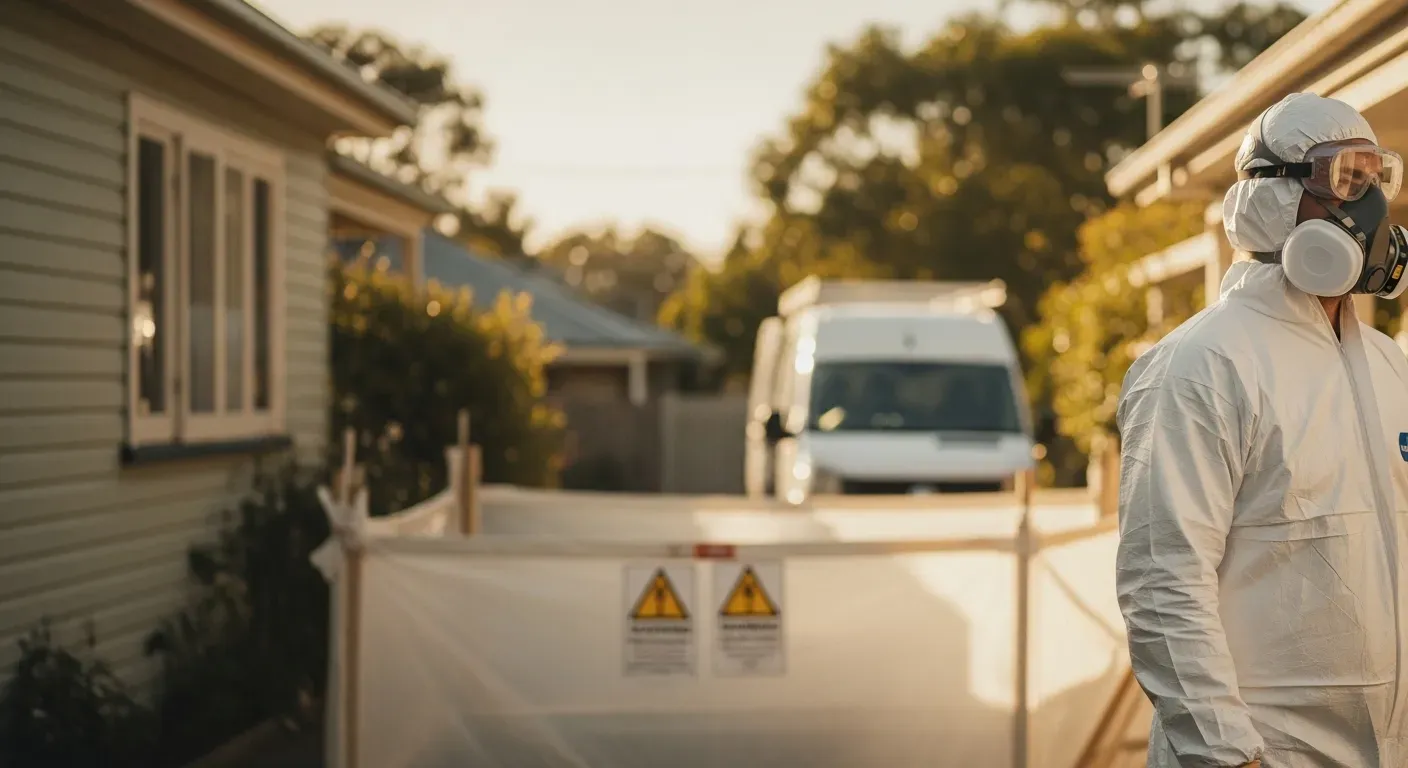
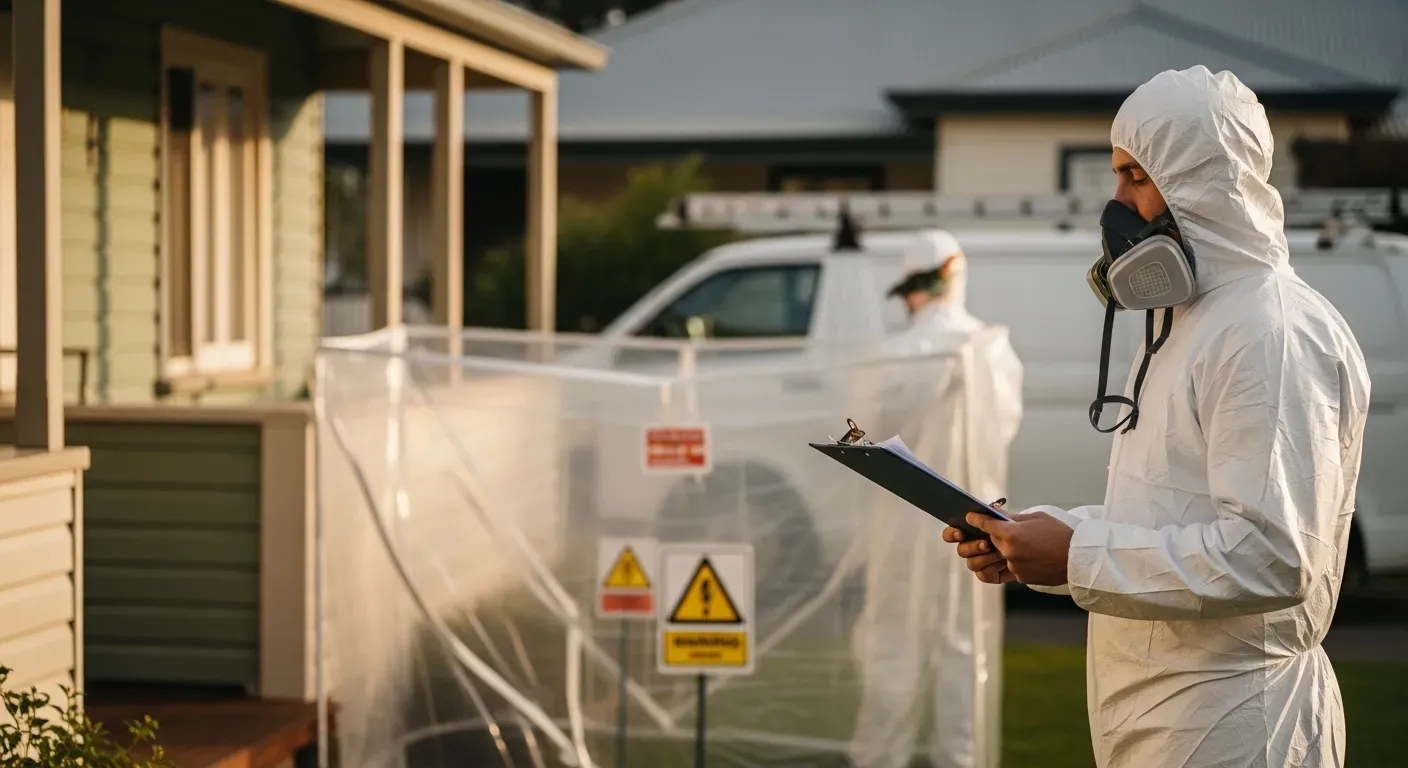
The health risks are simply not worth any money saved. Licensed professionals use:
- ✓ Full containment systems - Sealed work areas prevent fiber spread
- ✓ Negative air pressure - Air filtration keeps fibers from escaping
- ✓ Proper respiratory protection - P3 respirators, not hardware store masks
- ✓ Wet suppression techniques - Prevents fibers becoming airborne
- ✓ Decontamination procedures - Prevents tracking fibers to other areas
- ✓ Safe disposal - Licensed facilities, proper documentation
- ✓ Clearance testing - Air quality certification before reoccupation
⚠️ A single improper removal can expose you, your family, neighbors, and future occupants to fibers that remain in carpets, ducts, and crevices for decades.
👁️ Visual Asbestos Identification Guide Australia
Learn to recognize common asbestos-containing materials. Remember: appearance alone cannot confirm asbestos - always test when in doubt.
Fibro Cement Sheeting (Wall Cladding)
What to Look For:
- • Grey or off-white flat cement sheets
- • Typically 6-8mm thick
- • Often painted or rendered over
- • Joins covered with timber battens or metal strips
- • Common on external walls, eaves, soffits
- • May have "AC" stamp or manufacturer marks on unexposed edges
Risk Level:
NON-FRIABLE
Safe when intact. Dangerous if cut, drilled, sanded, or broken. Found in 60-70% of pre-1987 Australian homes.
Look-Alikes:
Modern fiber cement (James Hardie, Villaboard) looks identical but is asbestos-free. Only way to confirm is age of building or testing.
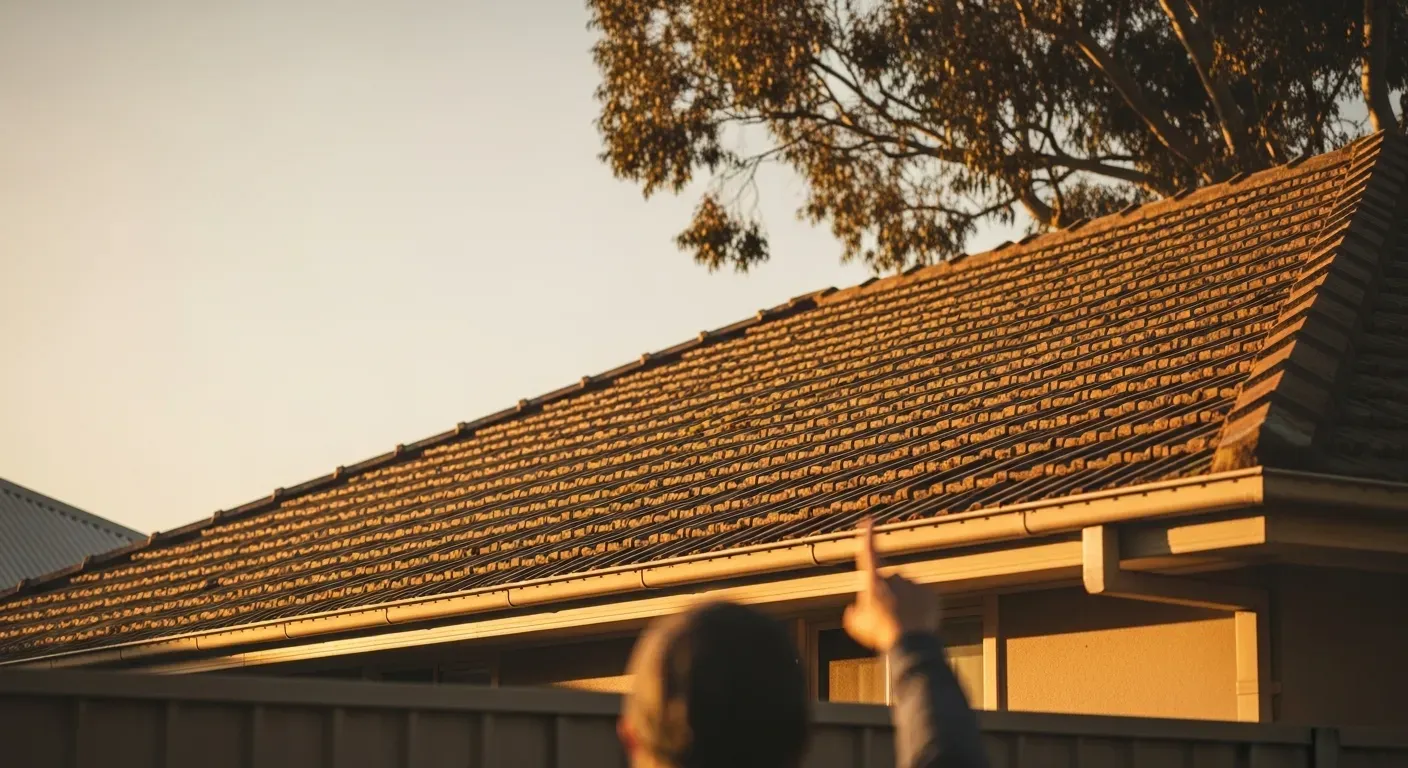
Asbestos Cement Roofing
What to Look For:
- • Corrugated (wavy) cement sheets
- • Grey, silver, or (less common) red/brown color
- • Brittle appearance, may have moss or weathering
- • Common on garages, sheds, carports, verandas
- • Also found as flat sheets under tile roofs
- • Tradenames: "Super Six," "Colonial," "Big Six"
Risk Level:
NON-FRIABLE
Becomes brittle and fragile over time. DO NOT walk on asbestos roofing - it may break and release fibers. Very common on pre-1990 outbuildings.
Warning Signs:
Cracking, breaking edges, or visible fiber strands indicate deteriorating condition requiring professional assessment.
Vinyl Floor Tiles and Sheet Flooring
What to Look For:
- • Square tiles, typically 9"×9" (23cm×23cm)
- • Also 12"×12" sizes
- • Solid colors, speckled patterns, or faux stone looks
- • Vinyl sheet flooring (rolls) common in 1960s-80s
- • Backing material often contains asbestos (even if top doesn't)
- • Black adhesive/mastic underneath also often contained asbestos
Risk Level:
NON-FRIABLE
Low risk when intact. Dangerous if sanded, scraped, or removed improperly. Very common in kitchens, bathrooms, laundries.
Renovation Tip:
Can often be covered over with new flooring rather than removed, avoiding disturbance and cost.
Textured Ceilings (Popcorn/Artex)
What to Look For:
- • Bumpy, stippled, or swirled ceiling texture
- • "Popcorn" or "cottage cheese" appearance
- • Sprayed-on or troweled coating over plasterboard
- • Common in 1960s-1980s homes
- • Usually white or cream colored
- • May have been painted over multiple times
Risk Level:
FRIABLE WHEN DISTURBED
Can become friable (loose, crumbly) when scraped or sanded. NEVER remove textured ceilings yourself if they may contain asbestos. Requires Class A licensed removal.
Alternative:
Can be encapsulated by installing new ceiling over top, avoiding disturbance entirely.
Loose-Fill Insulation (Mr Fluffy)
What to Look For:
- • Fluffy, loose, grey-white material in ceiling cavities or walls
- • Looks like loose cotton wool or fiberglass
- • Was blown in through access holes
- • Mostly found in ACT homes (1968-1979 "Mr Fluffy" program)
- • Also some NSW, VIC homes
- • May have fallen into living spaces if ceiling damaged
Risk Level:
HIGHLY DANGEROUS FRIABLE
MOST DANGEROUS type of asbestos. Releases fibers easily into air. DO NOT enter roof space if suspected. Evacuate and call professionals immediately.
ACT Residents:
Government buyback scheme available. Visit asbestostaskforce.act.gov.au
Pipe Lagging and Insulation
What to Look For:
- • Grey or white rope-like wrapping around pipes
- • Rigid corrugated pipe sleeves
- • Looks like paper, cardboard, or fabric wrapping
- • Common on hot water pipes, heating ducts
- • Often in roof spaces, under floors, in basements
- • May be covered with cloth or painted over
Risk Level:
FRIABLE
Often deteriorates over time. DO NOT touch, remove, or disturb. If damaged or crumbling, it's releasing fibers. Call Class A licensed professional.
Common Locations:
Hot water systems, behind gas/wood heaters, underfloor heating pipes, industrial/commercial HVAC systems.
Asbestos Cement Fencing
What to Look For:
- • Flat grey cement sheets, typically 1800mm high
- • Slotted into timber or steel posts
- • Smooth or lightly textured surface
- • May have weathering, moss, or paint
- • Very common in backyards, side boundaries
- • Often brittle and cracked after decades of weather
Risk Level:
NON-FRIABLE
Low risk when intact. Becomes dangerous when broken (storms, impacts) or during removal. Very widespread in Australian suburbs.
Replacement:
Common project. Removal costs $50-$100/m². Often replaced with Colorbond steel fencing.
Other Asbestos-Containing Materials
Also Check:
- • Electrical meter boards and backing
- • Behind and under wood/gas heaters
- • Backing boards behind stoves, ovens
- • Gaskets, rope seals around heater doors
- • Imitation brick/stone cladding (textured sheets)
- • Roof valleys and flashing
- • Window putty and sealants (rare)
- • Ceiling tiles (12"×12" tiles in commercial/older homes)
- • Sprayed fireproofing on steel beams (commercial/industrial)
- • Brake linings in old machinery/vehicles
Risk Varies:
Non-friable materials (boards, tiles) are low-risk when intact. Friable materials (gaskets, sprayed coatings) are high-risk and should not be touched.
When in Doubt:
Assume it contains asbestos if: 1) Pre-1990 building, 2) Cement-based material, 3) Heat/fire protection material, 4) Old insulation. Get tested.
🏡 Room-by-Room Asbestos Checklist Australian Homes
Use this checklist to systematically inspect your pre-1990 home for potential asbestos materials.
🛏️ Bedrooms & Living Areas
- ☐ Textured ceilings (popcorn, stippled, swirled)
- ☐ Vinyl floor tiles or sheet flooring
- ☐ Ceiling tiles (drop ceiling systems)
- ☐ Internal fibro walls (rare, more common in wet areas)
- ☐ Behind heater units or fireplaces
- ☐ Electrical meter boxes/boards
🚿 Bathrooms & Laundries
- ☐ Fibro cement wall sheeting (VERY common in wet areas)
- ☐ Vinyl floor tiles and backing
- ☐ Ceiling tiles or sheeting
- ☐ Behind hot water heaters
- ☐ Shower screens backing/mounting
- ☐ Pipe penetrations through walls
🍳 Kitchen
- ☐ Vinyl floor tiles and backing
- ☐ Backing board behind stove/oven
- ☐ Fibro walls (if older unrenovated kitchen)
- ☐ Range hood backing
- ☐ Under sink/behind cabinets (if fibro walls)
🏠 External Areas
- ☐ External wall cladding (fibro sheets)
- ☐ Eaves and soffits
- ☐ Downpipes and guttering (less common)
- ☐ Fencing (cement sheets)
- ☐ Letterbox or garden shed walls
- ☐ Imitation brick/stone cladding
🏚️ Roof, Ceiling, Garage
- ☐ Corrugated cement roofing (VERY common on garages/sheds)
- ☐ Flat cement sheets under tiled roofs
- ☐ Loose-fill insulation in ceiling cavity (CHECK FIRST - DO NOT ENTER if suspected)
- ☐ Pipe lagging/insulation
- ☐ Garage walls and ceiling (often fibro)
- ☐ Behind/under hot water heater
⚠️ Safety Reminder: This checklist is for visual identification only. DO NOT touch, disturb, or take samples without proper safety equipment and training. If you check boxes for multiple areas, strongly consider a professional whole-house asbestos survey ($800-$2,000) to comprehensively identify all materials.
🧪 Professional Testing vs DIY Testing Australia
✓ Professional Testing ($300-$800)
What's Included:
- ✓ Trained inspector with safety equipment
- ✓ Visual inspection of entire property
- ✓ Multiple samples collected safely with containment
- ✓ NATA-accredited lab analysis (3-7 days)
- ✓ Detailed report with locations and material types
- ✓ Risk assessment and management advice
- ✓ Proper cleanup and disposal of sampling equipment
- ✓ Can be used for legal compliance (renovations, sales)
RECOMMENDED for: Pre-purchase inspections, pre-renovation surveys, multiple suspect materials, legal compliance, peace of mind
⚠️ DIY Testing Kits ($150-$400 total)
What's Included:
- ✓ Sample collection instructions and bags
- ✓ Prepaid return postage to NATA lab
- ✓ Lab analysis (same quality as professional)
- ✓ Basic report with test results
- ✗ You must collect samples safely (health risk)
- ✗ No professional risk assessment
- ✗ May miss asbestos in other areas
- ✗ Legal liability if done improperly
ONLY CONSIDER for: Small single items, experienced DIYers with proper PPE, non-friable materials only, accessible locations
🛡️ Safe DIY Sampling Procedure (If You Choose This Route)
⚠️ WARNING: Disturbing asbestos releases fibers. Professional sampling is strongly recommended. If you proceed with DIY:
- 1. Gather Equipment:
- • P2 or N95 respirator mask (NOT a dust mask)
- • Disposable coveralls with hood
- • Disposable gloves
- • Safety glasses
- • Spray bottle with water + detergent
- • Sharp utility knife or thin blade
- • Zip-lock bags (double bagging)
- • Plastic sheet to catch debris
- • Wet rags for cleanup
- 2. Isolate Area: Clear the room, close doors/windows, turn off HVAC. Place plastic sheet under work area.
- 3. Wet Material Thoroughly: Spray material with water/detergent mix until saturated. This prevents fiber release.
- 4. Take Small Sample: Cut (don't break or tear) a sample no larger than a 50-cent coin (5-10 grams). Cut cleanly through material.
- 5. Seal Immediately: Place sample in zip-lock bag, squeeze out air, seal. Double-bag in second zip-lock.
- 6. Wet-Clean Area: Wipe all surfaces with damp rags. DO NOT sweep, vacuum, or use a broom. Dispose of rags and plastic in sealed bags.
- 7. Remove PPE Safely: Remove coveralls carefully, rolling inward to contain any fibers. Dispose in sealed bags. Remove gloves last.
- 8. Send to NATA Lab: Label sample with location details. Mail to lab with testing kit instructions. Do not hand-deliver.
All disposable equipment (coveralls, gloves, plastic, rags) must be double-wrapped in plastic bags, labeled as "Possible Asbestos Waste," and disposed at approved facilities. Check local council regulations.
💰 Asbestos Testing Cost & Property Value Impact Australia
💡 Key Insight: Finding Asbestos Doesn't Mean Disaster
Discovering asbestos in your home is not a property emergency. Intact asbestos can be safely managed in place indefinitely. Removal is only necessary when renovating, if materials are damaged, or for peace of mind. Understanding the costs helps you make informed decisions.
💵 Typical Asbestos-Related Costs
Testing Costs
- • Single sample DIY kit: $150-$400
- • Professional single sample: $300-$500
- • Whole-house survey (5-10 samples): $800-$2,000
- • Pre-purchase inspection add-on: $400-$800
Removal Costs (Per Project)
- • Small bathroom (fibro walls): $1,500-$3,500
- • Single room ceiling removal: $2,000-$5,000
- • Garage roof replacement: $3,000-$8,000
- • Fence removal (20m): $1,000-$2,000
- • Whole-house removal: $15,000-$40,000+
Additional Costs
- • Clearance certificate: $300-$800
- • Asbestos register creation: $400-$800
- • Disposal fees: $100-$500/tonne
- • Temporary accommodation (if needed): $150-$300/night
Management vs Removal
- • Encapsulation (sealing/painting): $20-$50/m²
- • Annual monitoring inspection: $200-$400
- • Signage and register: $100-$300
- • Much cheaper than removal!
🏠 Impact on Property Value
📉 Potential Negative Impact:
- Disclosure requirements - Some buyers will negotiate lower prices or walk away if asbestos present
- Financing challenges - Some lenders require asbestos removal before approving loans
- Limited buyer pool - Investors, renovators, and young families may avoid properties with asbestos
- Typical impact: $10,000-$30,000 reduction in asking price for homes with visible/extensive asbestos
📈 Mitigation Strategies:
- ✓ Get professional testing and provide report to buyers (builds trust)
- ✓ Create asbestos register showing exactly where materials are located
- ✓ Obtain removal quotes and offer credit to buyers at settlement
- ✓ For cosmetic asbestos (fences, garage roofs), remove before listing
- ✓ Emphasize that asbestos in good condition is manageable and common in era
💡 Real Estate Reality: In pre-1990 suburbs, asbestos is extremely common and expected by buyers. Homes in good condition with managed asbestos often sell at market rates. Transparency and documentation are more valuable than panic-removing all asbestos.
🛡️ Insurance Considerations
Standard Home Insurance:
- ✓ Most insurers cover homes with asbestos
- ✓ Intact asbestos typically doesn't affect premiums
- ✓ Must disclose known asbestos when asked
- ⚠️ Damage from natural disasters (storms, fire) covered, but removal may not be
What's NOT Covered:
- ✗ Elective/cosmetic asbestos removal
- ✗ Pre-existing damaged asbestos
- ✗ DIY removal gone wrong
- ✗ Gradual deterioration over time
- ✗ Testing costs
⚠️ Important: If asbestos is damaged by an insured event (storm, fire, accident), your insurer will cover professional removal as part of the claim. Always use licensed removalists for insurance claims.
🤔 Should You Remove or Manage?
✓ Remove if:
- • Renovating or demolishing affected areas
- • Material is damaged, deteriorating, or friable
- • Selling property and removal will improve marketability
- • High-traffic areas where damage likely (garage floors, fences)
- • You want long-term peace of mind
✓ Manage in place if:
- • Material is intact, undisturbed, and in good condition
- • Not planning renovations in affected areas
- • Located in low-traffic, protected areas (behind walls, under floors)
- • Budget constraints - removal can wait for future projects
- • Staying in home long-term (manage when eventually renovate/sell)
📍 State-Specific Asbestos Regulations: NSW, VIC, QLD, WA, SA 2026
While national asbestos regulations apply across Australia, each state and territory has specific testing requirements, notification procedures, and disposal facilities. Here's what you need to know for your location.
New South Wales
Key Regulations:
- • DIY removal limit: 10m² non-friable only
- • Notification required: 5 days for licensed removal
- • Asbestos register mandatory for workplaces
Resources:
- • Authority: SafeWork NSW
- • Website: safework.nsw.gov.au
- • Hotline: 13 10 50
Regional Note: Greater Sydney has highest concentration of asbestos homes (1940s-1980s housing boom). Major disposal facilities in Eastern Creek, Belrose.
Victoria
Key Regulations:
- • DIY removal: 10m² limit (not recommended)
- • Notification: Online via WorkSafe portal
- • Homeowners can't remove friable asbestos
Resources:
- • Authority: WorkSafe Victoria
- • Website: worksafe.vic.gov.au
- • Hotline: 1800 136 089
Regional Note: Melbourne's inner suburbs (Brunswick, Coburg, Footscray) have extensive fibro housing. Disposal at Cleanaway facilities in Tullamarine, Dandenong.
Queensland
Key Regulations:
- • DIY removal: 10m² maximum, strict conditions
- • Notification: Online portal mandatory
- • Penalties up to $50,000 for non-compliance
Resources:
- • Authority: Workplace Health & Safety QLD
- • Website: worksafe.qld.gov.au
- • Hotline: 1300 362 128
Regional Note: Post-war homes in Brisbane, Gold Coast, Sunshine Coast commonly contain asbestos. Tropical climate accelerates deterioration of cement sheeting.
Western Australia
Key Regulations:
- • DIY removal: 10m² for non-friable only
- • Historic Wittenoom asbestos mine legacy
- • Strong enforcement in Perth metro
Resources:
- • Authority: WorkSafe WA
- • Website: dmirs.wa.gov.au/worksafe
- • Hotline: 1300 307 877
Historical Note: WA's Wittenoom mine was Australia's only commercial asbestos source (1943-1966). State has strong asbestos awareness due to mining legacy and high mesothelioma rates.
South Australia
Key Regulations:
- • DIY removal: Allowed under 10m² with strict PPE
- • Notification required for commercial work
- • Free asbestos disposal at some council sites
Resources:
- • Authority: SafeWork SA
- • Website: safework.sa.gov.au
- • Hotline: 1300 365 255
Australian Capital Territory
Key Regulations:
- • "Mr Fluffy" legacy - Government buyback scheme
- • DIY removal: Generally prohibited
- • Mandatory disclosure for property sales
Resources:
- • Authority: WorkSafe ACT
- • Mr Fluffy Taskforce: asbestostaskforce.act.gov.au
- • Hotline: (02) 6207 3000
Mr Fluffy Background: Between 1968-1979, loose-fill asbestos insulation was installed in 1,000+ Canberra homes. Government buyback and demolition program created due to contamination risk. If you own an affected property, contact the Asbestos Response Taskforce immediately.
Tasmania & Northern Territory
Tasmania:
- • Authority: WorkSafe Tasmania
- • Website: worksafe.tas.gov.au
- • Hotline: 1300 366 322
Northern Territory:
- • Authority: NT WorkSafe
- • Website: worksafe.nt.gov.au
- • Hotline: 1800 019 115
🗑️ Finding Licensed Disposal Facilities
Asbestos must be disposed at licensed hazardous waste facilities. DO NOT dispose in general waste, recycling, or green waste bins.
How to Find Facilities:
- 1. Search "[Your State] asbestos disposal facilities" or "[Your Council] asbestos disposal"
- 2. Contact your local council - many have designated drop-off days or facilities
- 3. Major waste management companies: Cleanaway, Veolia, SUEZ (check websites for locations)
- 4. Call ahead - facilities require pre-booking, proper wrapping, and documentation
- 5. Expect to pay $150-$350 gate fee + $100-$500/tonne
📋 What to Do If You Find Asbestos in Your Australian Home
✅ If Asbestos is in Good Condition (Intact, Not Damaged)
- 1. Don't Panic: Asbestos is only dangerous when fibers are released into the air. Intact, undisturbed asbestos poses minimal risk.
- 2. Leave It Alone: Do not disturb, drill, cut, sand, scrape, or paint over asbestos materials.
- 3. Document Locations: Create an asbestos register listing all known locations, material types, and condition.
- 4. Monitor Condition: Check annually for damage, weathering, or deterioration. Take photos to track changes.
- 5. Inform Others: Tell household members, tenants, and tradespeople about asbestos locations before any work begins.
- 6. Plan for Future: Budget for professional removal when renovating, selling, or if material deteriorates.
ℹ️ Asbestos management in place (leaving it undisturbed) is often safer and cheaper than premature removal. Removal is only necessary if material is damaged or you're renovating/demolishing.
⚠️ If Asbestos is Damaged or You're Renovating
- 1. Do Not Disturb: Stop all work immediately if asbestos is damaged or discovered during renovations.
- 2. Isolate Area: Close doors, turn off HVAC, restrict access. Do not sweep or vacuum.
- 3. Get Professional Assessment: Contact a licensed asbestos assessor for condition report and removal recommendations.
- 4. Obtain Multiple Removal Quotes: Get 3-5 quotes from licensed Class A (friable) or Class B (non-friable) removalists.
- 5. Verify Licenses: Check removalist licenses with your state WorkSafe authority. Ensure they have public liability insurance ($20M+).
- 6. Plan Removal Logistics: Coordinate with removalist on timeline, access, clearance certificates, and any required temporary accommodation.
- 7. Obtain Clearance Certificate: After removal, get independent air quality testing and clearance certificate before reoccupying (friable removal) or continuing renovations.
⚖️ When is Asbestos Testing Legally Required in Australia?
Mandatory Testing Scenarios:
✓ Before Renovations or Demolition (Pre-1990 Buildings)
All states require testing before disturbing materials in pre-1990 buildings. This applies to DIY renovations, professional builders, and demolition contractors. Penalties for non-compliance: $5,000-$50,000.
✓ Workplace Requirements
Employers, landlords, and property managers must identify asbestos in buildings where workers or tenants will be present. Asbestos register and management plan required for commercial properties.
✓ Pre-Sale Disclosure (Some States)
While not universally mandatory, some states require sellers to disclose known asbestos. Even where not required, failure to disclose can lead to legal action. Testing recommended for peace of mind and to avoid post-sale disputes.
✓ Before Removal (Over 10m²)
Licensed removal contractors must have testing confirmation before removing asbestos. Projects over 10m² require notification to WorkSafe authorities and documented testing.
📝 Recommended (Not Legally Required) Testing:
- • Pre-purchase building inspections for 1940-1990 homes
- • Before selling property (to provide buyers with assurance)
- • When material condition deteriorates (damage, weathering)
- • For homeowner peace of mind and future planning
- • Before undertaking any DIY maintenance on suspect materials
❌ Common Asbestos Identification Myths Australia
MYTH: "I can tell if it's asbestos by looking at it."
TRUTH: Asbestos fibers are microscopic and invisible. Asbestos-containing and asbestos-free materials look identical. Only lab testing can confirm asbestos presence.
MYTH: "All fibro contains asbestos."
TRUTH: Pre-1987 fibro usually contains asbestos, but post-1987 fiber cement (like modern James Hardie) is asbestos-free. Age and manufacturer are better indicators than appearance.
MYTH: "If my home was built after 1990, it's safe."
TRUTH: While asbestos use declined sharply after 1987, it wasn't completely banned until 2003. Stockpiled materials were used into the 1990s. Renovations may have used old stock or imported materials. Always test if unsure.
MYTH: "I can safely remove small amounts of asbestos myself."
TRUTH: While legal in some states for homeowners to remove up to 10m² of non-friable asbestos, it's NOT safe unless you have proper training, equipment, and understand the risks. Professional removal is always safer.
MYTH: "Asbestos only causes problems if you're exposed for years."
TRUTH: While chronic exposure increases risk, even brief high-level exposure (e.g., during improper removal) can cause disease. There is no known safe level of asbestos exposure.
MYTH: "Painting over asbestos makes it safe."
TRUTH: Paint can encapsulate asbestos and reduce fiber release if material is intact, but it doesn't eliminate the hazard. Painted asbestos still requires careful management and must be disclosed. Sanding painted asbestos is extremely dangerous.
MYTH: "Home test kits are unreliable."
TRUTH: DIY kits that use NATA-accredited labs are as accurate as professional testing - the lab analysis is identical. However, DIY sampling carries health risks if done improperly and may miss asbestos in other locations.