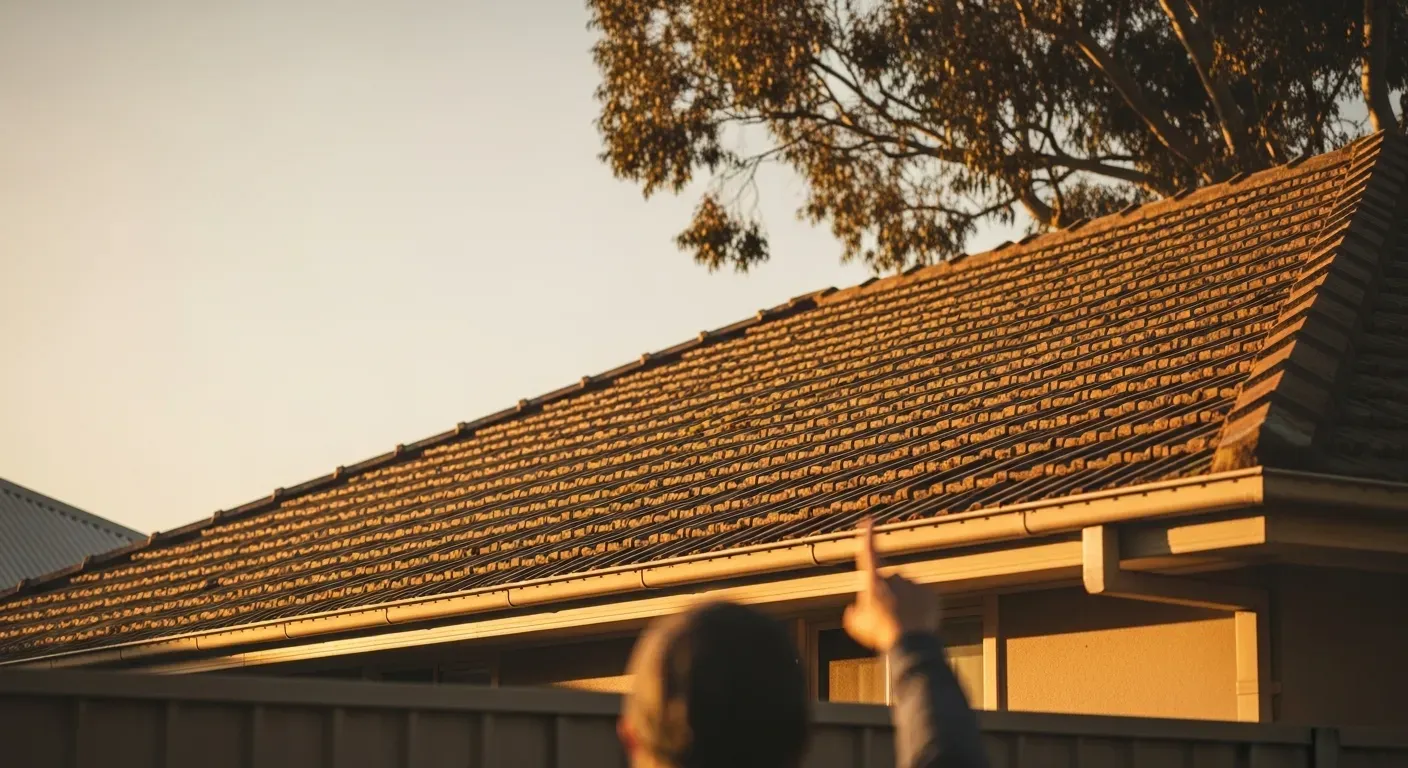
Roof Problems Guide 2026

Common Roof Problems Australia 2026 Warning Signs & Repair Costs Guide

Identify roof problems early and save thousands. Learn the 12 most common issues, warning signs, and repair costs for Australian homes.

Quick Answer: What are the most common roof problems in Australia and what do they cost to fix?

Most common problems: Broken/cracked tiles (65% of roofs 25+ years), ridge cap deterioration (50% of roofs 15+ years), metal roof rust (70% coastal, 40% inland after 15-25 years), valley leaks (30% of leaks), flashing failures (25% of leaks), gutter problems (55% of homes 20+ years).

Repair costs: Minor repairs $200-$800 (tile replacement, flashing patch). Moderate repairs $800-$3,000 (multiple tiles, gutter replacement, valley repairs). Major repairs $3,000-$15,000 (structural damage, extensive leaks). Full replacement $10,000-$30,000 depending on type and size.

Warning signs: Interior: water stains on ceiling, damp patches, musty odor, peeling paint. Exterior: missing/cracked tiles, sagging gutters, rust spots, moss growth. Structural: ceiling cracks, sagging roofline, daylight visible through roof.

When to call professional: Emergency: active leaks, storm damage, sagging roof. Schedule: annual inspection ($200-$400), after major storms, roofs 15+ years old every 6-12 months, roofs 30+ years old every 6 months.

Prevention saves money: Annual inspections catch small problems ($300-$1,000 fix) before they cause water damage ($5,000-$20,000). Gutter cleaning 2-4 times yearly ($150-$300). Trim trees to prevent damage. Replace broken tiles immediately to prevent sarking/batten damage.

Bottom line: Early detection of roof problems saves $5,000-$20,000 in water damage. Most issues start small ($200-$800 repair) but escalate to major damage if ignored. Get professional inspection annually for roofs 15+ years old, every 6 months for roofs 30+ years old.

Most Common Roof Problems Australia 2026 Complete Analysis: Australian homeowners face 12 primary roof issues causing $5,000-$20,000 water damage when undetected, with broken or cracked tiles and roof sheets being most prevalent affecting 65% of tiled roofs over 25 years old ($400-$900 repair for 5-10 tiles, $1,000-$2,000 for metal sheets). Ridge cap deterioration ranks second affecting 50% of tiled roofs 15+ years requiring re-bedding and re-pointing every 15-25 years ($800-$1,500 per 3-4 meters) as original mortar cracks allowing water ingress under ridge tiles. Metal roof rust particularly Colorbond coating failure occurs 70% of coastal properties and 40% inland properties after 15-25 years requiring rust treatment $600-$1,500 small sections or full restoration $7,500-$15,000 for 150sqm when exceeding 30% surface coverage.

Valley Leaks and Flashing Failures Critical Problem Areas: Valley deterioration causes 30% of roof leaks in Australian homes with tiled roofs, occurring where two roof planes meet creating water concentration point, valleys corrode from constant water flow and debris accumulation requiring replacement $1,200-$2,500 per 3-4 meter section. Flashing failures around chimneys, skylights, and roof penetrations account for 25% of roof leaks, original lead or metal flashing deteriorates after 20-30 years, improper installation or building movement creates gaps, repair costs $500-$1,200 per penetration. Gutter problems including overflow, rust, and sagging affect 55% of homes over 20 years old, blocked gutters cause water backup under roof edge rotting fascia boards $2,000-$5,000 replacement, full gutter replacement 20 linear meters costs $1,800-$3,500.

Structural Roof Problems Sarking Deterioration Insulation Damage: Sarking (roof underlay) deterioration critical issue affecting 40% of roofs 30+ years old, original sarking (building paper or foil) becomes brittle and tears allowing water through to ceiling, wet insulation loses R-value by 50-90% and grows mold requiring replacement $1,500-$4,000, sarking replacement under damaged section costs $800-$2,000. Sagging roof lines indicate structural failure from rotten battens supporting tiles/sheets (wet timber loses 60-80% strength), inadequate roof framing for load, or foundation settlement, repair costs $2,500-$8,000 depending on extent involving timber replacement and re-roofing affected section. Moss lichen and debris growth holds moisture against roof tiles accelerating deterioration, reduces roof lifespan by 5-10 years, roots penetrate tile surface creating cracks, professional cleaning costs $500-$1,200 for average home with prevention treatment.

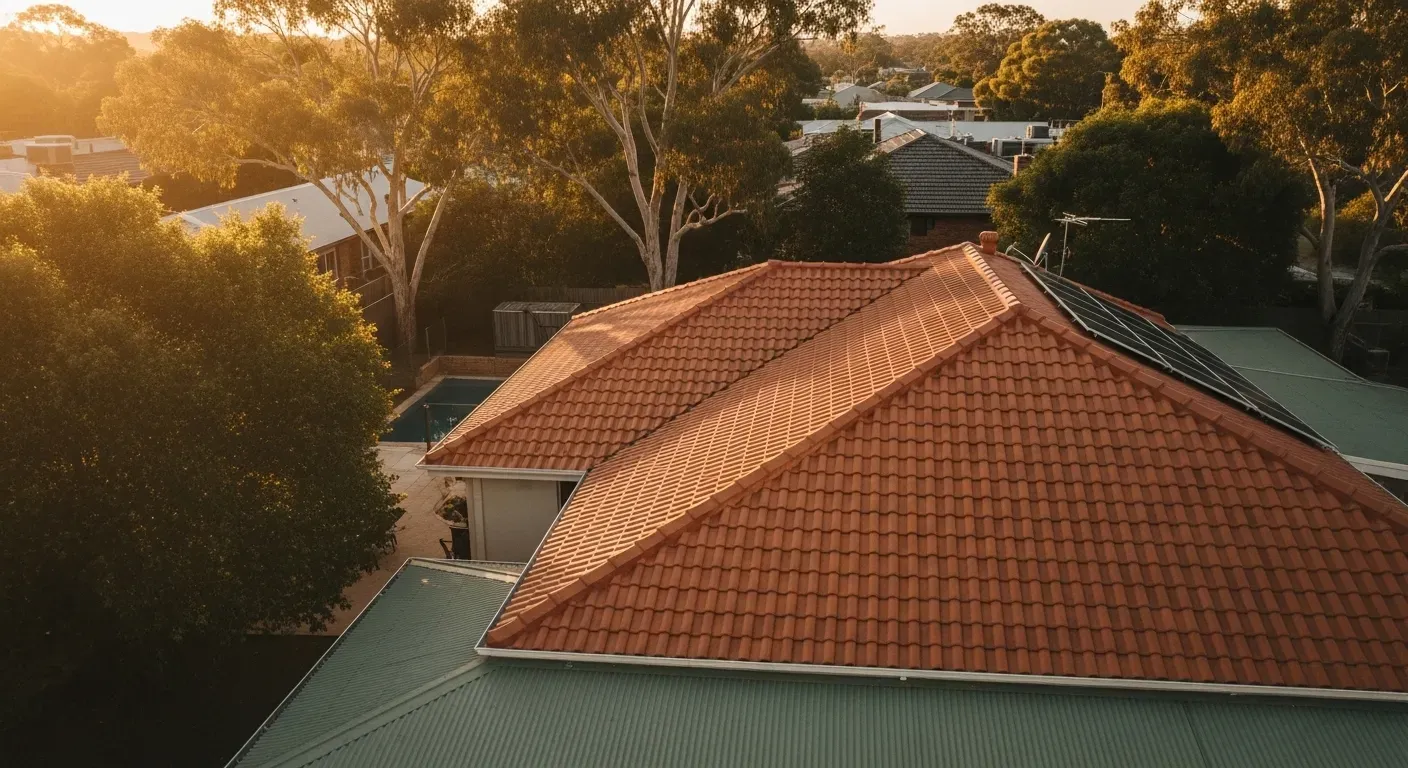
Broken Tiles Cracked Sheets Detailed Causes Repair Costs: Concrete roof tiles crack from thermal stress daily expansion contraction cycles particularly Australian harsh sun, tiles become brittle after 30-40 years weathering, physical impact from falling branches hail stones walking on roof without proper technique, manufacturing defects in older concrete tiles especially 1970s-1990s batches. Terracotta tiles more durable lasting 50-100 years but heavier requiring stronger structure, cost $80-$150 per square meter vs concrete $50-$90 per square meter. Metal roof sheet damage from corrosion (rust spreading from scratches in protective coating), denting from hail or falling objects, lifting from high winds particularly cyclone-prone areas (Northern Australia, Queensland coast), fastener failure from rust or vibration. One broken tile allows water saturation of sarking and battens causing $2,000-$8,000 structural damage within 6-12 months if unrepaired, immediate replacement prevents exponential damage progression.

Critical Roof Warning Signs Requiring Immediate Professional Assessment: Water stains on ceilings presenting as brown or yellow discoloration patches indicate active or recent leaks, fresh stains show water marks with darker edges, historical stains dried and faded, stain location often 1-3 meters away from actual leak source due to water traveling along rafters before dripping. Daylight visible through roof from attic inspection serious problem indicating gaps in roof covering from slipped broken tiles, deteriorated ridge capping, missing damaged flashing, lifted roof sheets, or structural movement, allows rain entry heat loss 15-30% increased energy bills and pest access (rats possums birds). Sagging roof lines visible from street indicate structural failure requiring immediate professional inspection, caused by rotten battens (wet timber from prolonged leaks), inadequate roof framing, or foundation settlement, repair urgency high as progressive failure risks collapse in extreme cases.

Metal Roof Specific Warning Signs Rust Progression Indicators: Large rust areas covering over 30% metal roof surface area indicate coating failure requiring full restoration $7,500-$15,000 for 150sqm or replacement $22,500-$36,000, small rust spots under 5% treatable with rust converter and protective coating $600-$1,500. Curling or lifting roof sheets from fastener failure, wind damage, or thermal movement indicate imminent leak risk requiring immediate re-fastening or replacement, lifted sheets allow water ingress and further wind uplift damage. Fading or chalking Colorbond coating indicates UV degradation and approaching end of coating life (typically 15-25 years depending on color and climate), not immediate structural concern but signals need for restoration planning within 2-5 years to prevent rust development.

Interior Warning Signs Water Damage Indicators Ceiling Attic Inspection: Mold or mildew in ceiling corners, attic spaces, or around roof penetrations indicates moisture problem from roof leak, condensation, or inadequate ventilation, black green or white fuzzy growth, musty odor even without visible mold, health hazard requiring source identification and remediation $2,000-$6,000. Bubbling or peeling ceiling paint from water saturation of plaster or drywall, indicates current or recent leak even if no visible water stain yet, requires leak source identification and repair plus ceiling restoration $800-$2,500. Sudden increase in heating cooling energy bills by 15-30% indicates wet insulation (loses R-value) from roof leak allowing heat transfer, or gaps in roof allowing air infiltration, investigate roof and insulation condition if unexplained energy increase occurs.

Exterior Visual Warning Signs Ground Level Roof Inspection: Cracked missing or deteriorated ridge cap mortar visible from ground using binoculars indicates water can penetrate under ridge tiles, occurs naturally after 15-25 years as cement mortar cracks from thermal movement, re-bedding and re-pointing required $800-$1,500 per 3-4 meters before water damage develops. Granules collecting in gutters from concrete or terracotta tile surface erosion indicates advanced tile deterioration (30-40+ years age typically), tiles losing protective surface layer become porous absorbing water, accelerates freeze-thaw damage in cold climates and general weathering, signals approaching need for roof replacement within 5-10 years. Debris accumulation in valleys or between tiles holds moisture against roof surface, accelerates corrosion of metal valleys, promotes moss lichen growth, clogs water flow causing backup and potential leaks, professional cleaning twice yearly costs $200-$400 prevents $1,200-$2,500 valley replacement.

Roof Repair vs Restoration vs Replacement Decision Framework Australia 2026: Repair option appropriate when less than 30% of tiles or sheets damaged, roof age under 30 years, leaks limited to 1-2 specific areas (valleys, penetrations, flashing), underlying structure (battens, sarking, rafters) remains sound and dry, repair costs $500-$5,000 depending on issue scope. Restoration option for roofs 15-30 years old showing cosmetic issues (rust, fading, minor leaks) but structurally intact, involves cleaning, rust treatment, protective coating application, minor repairs, re-bedding ridge caps, costs $7,500-$15,000 for typical 150sqm roof, extends roof life 10-15 years, improves appearance and prevents deterioration progression.

Roof Replacement Indicators When Required vs Optional: Replacement necessary when over 40% of roof surface damaged or deteriorated, roof age 35+ years (concrete tiles, metal roofs with coating failure), structural issues including sagging, rotten battens requiring extensive timber work, persistent leaks in multiple areas indicating systemic failure, or selling property soon (roof issues reduce sale price $30,000-$60,000, buyers negotiate heavily on roof condition). Replacement costs Australia 2026: tile roof replacement $150-$240 per square meter ($22,500-$36,000 for 150sqm), metal roof Colorbond replacement $120-$200 per square meter ($18,000-$30,000 for 150sqm), includes full re-roof with new battens sarking and roofing material, typically 10-15 year warranty on workmanship.

Cost Benefit Analysis Repair vs Replace Roof Investment ROI: Small repairs catching problems early deliver best ROI - $300-$800 valley flashing repair prevents $5,000-$15,000 water damage to ceilings insulation structure if leak continues 6-12 months unrepaired. Restoration at 15-25 years costs $7,500-$15,000 but extends roof life 10-15 years delaying $25,000-$35,000 replacement, cost-effective if planning to remain in home 5+ years. Replacement at appropriate time (35+ years, 40%+ damage) prevents ongoing repair costs ($2,000-$5,000 annually for failing roof) and water damage risks, new roof adds $15,000-$30,000 property value (partial cost recovery 40-60%), eliminates leak concerns for 25-40 years depending on material, and improves energy efficiency through modern sarking and insulation 15-25% heating cooling savings.

DIY Safe Roof Maintenance Tasks vs Professional Required Work: Homeowner safe DIY tasks include cleaning gutters and downpipes twice yearly (spring autumn), removing debris from roof surface using roof rake or blower from ground level, replacing individual broken tiles if safe ground-level access via low-pitch roof under 15 degrees, applying rust treatment to small accessible rust spots under 0.5sqm, and visual inspections from ground using binoculars documenting condition with photos. Professional licensed roofer required for any leak repairs (source identification often complex), ridge cap re-bedding re-pointing (requires proper mortar mix and technique), valley repairs or replacement (critical waterproofing area), all flashing work around penetrations, working on steep roofs over 22.5 degrees pitch, structural repairs involving battens or rafters, replacing multiple tiles or sheets, and anything requiring safety equipment (harnesses, scaffolding, roof anchors).

Roof Work Safety Statistics DIY Risks vs Professional Protection: Falls from roofs cause 30+ deaths and 500+ serious injuries annually in Australia, most involving homeowners attempting DIY repairs, steep wet or tiled roofs particularly dangerous (tiles can slip underfoot), inadequate safety equipment or techniques, and overestimating ability or underestimating risks. Licensed professional roofers carry $20 million public liability insurance protecting homeowner from injury claims or property damage, workers compensation insurance for employee injuries, provide workmanship warranties 5-15 years depending on work type, use proper safety equipment (harnesses, scaffolding, edge protection), and trained in safe roof access techniques and tile walking procedures. DIY roof repair gone wrong costs $5,000-$15,000 professional rectification when improper repairs cause additional damage (broken tiles from walking incorrectly, damaged sarking, incorrect flashing installation causing bigger leaks).

Professional Roof Inspection Value vs DIY Ground Level Checks: Professional roof inspection costs $200-$400 and includes licensed roofer walking entire roof surface safely, testing tiles and sheets for soundness, checking sarking condition and moisture, thermal imaging for hidden leaks and wet insulation, detailed written report with photos of issues, repair cost estimates, and roof life expectancy assessment. Recommended frequency: every 2-3 years for roofs under 15 years old (preventative), annually for roofs 15-30 years old (catching developing issues), every 6 months for roofs 30+ years old (monitoring deterioration), always after major storms with winds over 80km/h or hail, before purchasing property (identifies $10,000-$50,000 potential roof issues), and before listing property for sale (addresses issues or adjusts price expectations). Early professional problem detection saves $5,000-$20,000 by catching small issues ($300-$1,000 repairs) before they cause water damage to ceilings structure and insulation.

Roof Age Lifecycle Stages Maintenance Requirements Australia: New roofs 0-15 years require minimal maintenance, inspect annually for storm damage, clean gutters twice yearly, address any installation defects within warranty period (typically 10-15 years workmanship), expect zero major repairs, focus on preventative care. Roofs 15-25 years enter middle age requiring increased attention, watch for early signs of rust on metal roofs (coastal properties especially), fading of Colorbond coating indicates approaching end of coating life, consider restoration if minor issues developing, re-bed ridge caps if original mortar cracking (typically needed 15-25 years after installation), budget $2,000-$5,000 for preventative maintenance every 5 years.

Aging Roofs 25-35 Years Plus Replacement Planning Considerations: Roofs 25-35 years old show significant aging signs, concrete tiles become brittle and crack more easily, metal roof coating failure allows rust development, sarking deterioration becomes common issue, increase inspection frequency to every 6-12 months, budget for restoration ($7,500-$15,000) or begin replacement planning, expect annual repair costs $1,000-$3,000 for developing issues. Roofs 35+ years approaching end of useful life, concrete tiles typically 40-50 year lifespan before structural integrity compromised, Colorbond metal roofs 25-40 years depending on coating quality and coastal exposure, terracotta tiles can last 50-100 years if properly maintained but may need re-bedding and individual tile replacements, plan for full replacement $22,500-$52,500 depending on material and roof size, temporary repairs viable if replacement planned within 1-3 years but not cost-effective if delaying 5+ years.

Australian Climate Impact Roof Durability Regional Considerations: Coastal properties within 1km of ocean experience accelerated corrosion from salt air, metal roofs rust 2-3x faster than inland properties, fasteners and flashing particularly vulnerable, Colorbond coating life reduced from 25 years to 15-20 years, regular cleaning and protective coating critical for longevity. Tropical northern regions Queensland Northern Territory experience high UV exposure degrading roof materials faster, extreme heat causes greater thermal stress and expansion contraction cycling, monsoon seasons with intense rainfall test waterproofing systems, cyclone risk requires AS1170 compliant fastening and design, metal roofs perform better than tiles in cyclone zones. Inland and temperate regions Melbourne Adelaide Southern areas less harsh on roofs generally, but still experience 30-40 degree temperature swings daily causing thermal stress, frost and occasional snow in alpine areas creates freeze-thaw deterioration risk for tiles with absorbed moisture, UV exposure still significant requiring UV-stable materials.

Emergency Immediate Roof Repairs Required Within 24 Hours: Active water dripping into house during or after rain requires immediate emergency call-out, indicates major roof breach (large hole, lifted sheets, severe valley failure), prevents extensive water damage to contents ceilings insulation electrical systems, emergency after-hours roof repair costs $500-$1,500 (50-100% premium over regular hours) but prevents $10,000-$30,000 water damage. Large ceiling stains over 30cm diameter or rapidly expanding indicate significant active leak, water pooling in attic or ceiling cavity, risk of ceiling collapse if plaster or drywall becomes water-saturated (typically after 24-48 hours continuous leak), sagging ceiling requires immediate professional assessment and possible occupant evacuation from affected rooms. Water near electrical fixtures lights switches outlets creates electrocution and fire risk, turn off power to affected circuits immediately, call emergency electrician and roofer, do not attempt DIY repairs near electrical systems.

Urgent Roof Repairs Required Within 1-3 Days: Small ceiling stains under 20cm not actively dripping but fresh (indicating recent leak), schedule professional inspection within 1-3 days before next rainfall, source identification often requires roof inspection during or immediately after rain, early repair prevents stain expansion and structural damage. Visible water in attic or roof space but not yet penetrating to interior ceiling indicates leak caught early, sarking may be containing water temporarily but deteriorating, usually 2-7 days before water breaks through to visible ceiling stain, repair urgency high to prevent insulation saturation and ceiling damage. Recent storm damage with visible broken tiles or lifted metal sheets requires repair within 1-3 days before next rain event, even if no current leak (may be protected by intact sarking temporarily), prevents water ingress and further wind damage to compromised roof section.

Scheduled Non-Emergency Roof Repairs Within 1-2 Weeks: Historical ceiling stains not expanding or darkening indicate old resolved leak or condensation issue, still requires investigation to confirm leak source repaired and no ongoing risk, scheduled professional inspection $200-$400 identifies whether past leak or current slow leak requiring attention. Suspected leaks without visible interior damage yet (water marks on rafters in attic, damp sarking, musty odor) should be investigated within 1-2 weeks, early detection prevents damage progression, often minor repairs $300-$800 if caught before ceiling breakthrough. Preventative repairs for aging roof components showing deterioration signs (cracked ridge cap mortar, small rust spots, minor broken tiles) should be scheduled within 1-2 weeks to prevent leak development, proactive repairs cost 30-50% less than reactive emergency repairs after leak occurs.

Homeowner DIY Roof Inspection Frequency Ground Level Checks: Perform basic visual inspection every 6 months ideally spring (September-October preparing for summer storms) and autumn (March-April preparing for winter), inspect from ground using binoculars examining entire roof surface, document with smartphone photos for condition tracking over time showing progressive deterioration, 15-minute inspection catches 70% of common problems before leak development. After every major storm with winds over 80km/h inspect for visible damage (broken tiles, lifted sheets, debris), after hail events inspect for denting (metal roofs) or cracking (tiles), after severe weather insurance claims require prompt damage notification (typically 48-72 hours), photographic evidence supports claim. Annual comprehensive homeowner inspection includes checking all ceilings for stains, attic inspection for daylight gaps water marks mold, gutter and downpipe condition assessment, exterior visual roof condition assessment, comparison to previous year photos identifies changes, checklist approach ensures nothing overlooked.

Professional Licensed Roofer Inspection Frequency Recommendations: Roofs under 15 years old professionally inspect every 2-3 years as preventative measure, low risk of issues but catches installation defects, storm damage, or unusual problems early, cost $200-$400 provides peace of mind and maintenance planning. Roofs 15-30 years old increase to annual professional inspection, moderate risk age bracket where deterioration accelerates, early detection of restoration candidates (rust, fading, minor leaks) allows planned restoration $7,500-$15,000 preventing emergency repairs, identifies individual component failures (valleys, flashing, ridge caps) for targeted repair. Roofs 30+ years old inspect every 6 months by professional, high risk of multiple issues developing, monitors deterioration progression informing replacement timing decision, identifies safety hazards (structural issues, loose tiles risk) requiring urgent attention, detailed documentation supports replacement planning and budget allocation.

Mandatory Professional Roof Inspections Specific Circumstances: Before purchasing any property professional roof inspection mandatory regardless of age, identifies $10,000-$50,000 potential roof issues, negotiating leverage on purchase price (typically deduct repair costs or request seller repairs), pre-purchase inspection $300-$500 small investment protecting $500,000-$2,000,000 property purchase. Before listing property for sale professional inspection recommended, identifies issues that will appear in buyer inspections allowing proactive repair or price adjustment, unrepaired roof issues reduce sale price $30,000-$60,000 as buyers over-estimate costs and factor risk contingency, fresh roof certification adds sale appeal and buyer confidence. After major weather events (cyclones, severe storms, hail) professional inspection determines insurance claim validity, documents damage extent and pre-existing condition separation, provides repair scope and cost estimate for insurer, insurance policy typically requires professional assessment for claims over $5,000-$10,000.

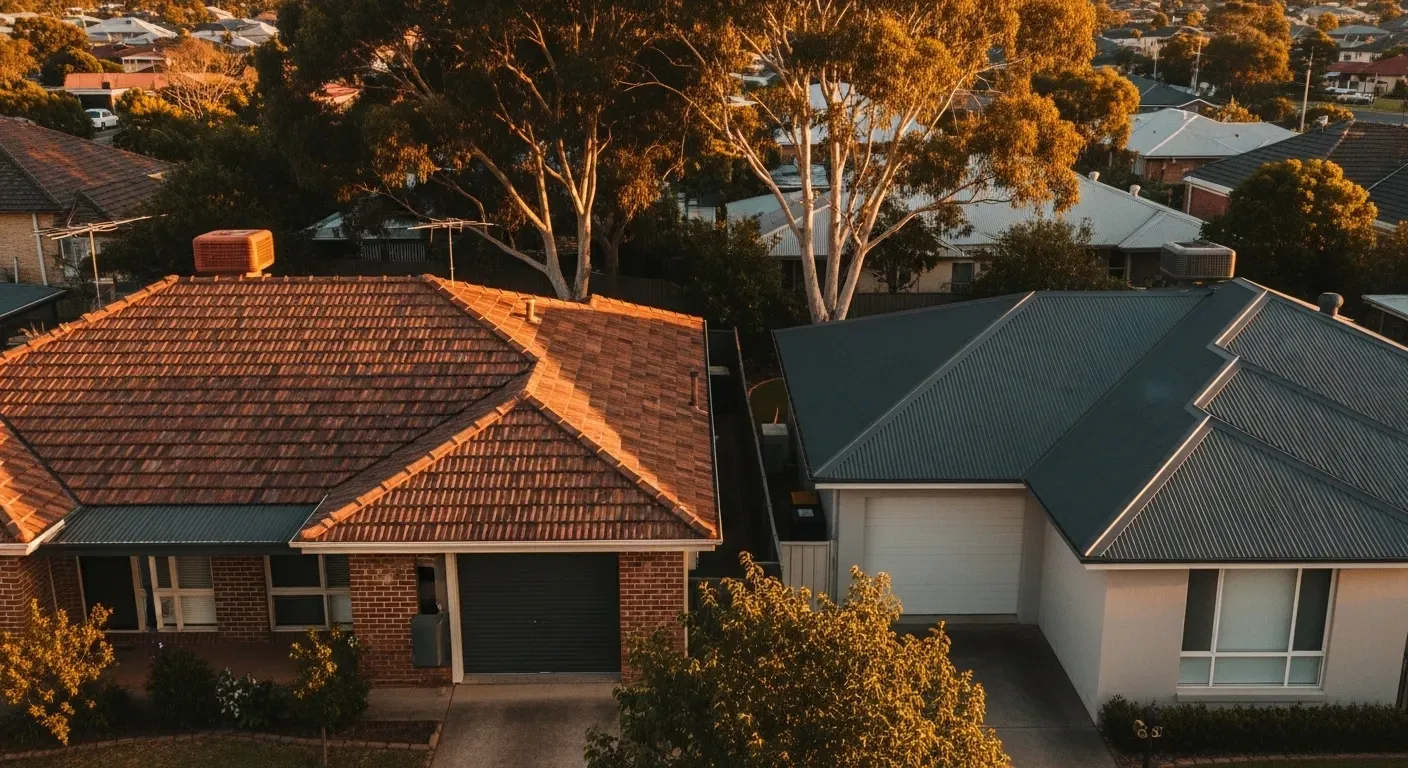
Concrete Tiles Characteristics Lifespan Maintenance Australia: Concrete roof tiles most common Australian roofing material installed 1960s-2000s, typical lifespan 40-50 years before structural integrity compromised, cost-effective $50-$90 per square meter installed, available in various profiles (flat, low-profile, high-profile) and colors. Advantages include fire resistance, good insulation properties, and relatively low cost. Disadvantages involve heavy weight requiring strong roof structure (minimum 35kg per square meter), brittle deterioration after 30-40 years causing cracking, surface erosion showing as granules in gutters after 30+ years, and moss/lichen growth in shaded or humid areas. Maintenance requirements: re-bed ridge caps every 15-25 years ($800-$1,500 per 3-4 meters), replace broken tiles promptly (each broken tile $15-$30 plus labor $60-$100), clean moss/lichen growth every 5-10 years ($500-$1,200), expect individual tile replacements increasing frequency after 25-30 years as thermal stress causes hairline cracks developing into full breaks.

Terracotta Tiles Premium Longevity Higher Cost Considerations: Terracotta clay tiles premium roofing material, exceptional lifespan 50-100+ years if properly maintained, many heritage homes 100+ years still have original terracotta tiles functional, cost $80-$150 per square meter installed (60-100% more than concrete tiles). Advantages include superior durability and longevity, excellent thermal mass reducing cooling costs 10-20%, aesthetic appeal especially heritage and prestige properties, retains color better than concrete (color is clay body not surface coating), resistant to moss growth compared to concrete tiles. Disadvantages involve higher initial cost, heavier than concrete requiring very strong roof structure (40-50kg per square meter), brittle and will break if walked on incorrectly, limited color range (natural terracotta red-brown, some glazed options available). Maintenance similar to concrete: re-bed ridge caps every 20-30 years, replace broken tiles individually (tiles $30-$80 each plus labor), expect fewer tile failures than concrete in 30-50 year timeframe due to superior material durability.

Colorbond Metal Roofing Modern Popular Australian Climate Performance: Colorbond steel roofing extremely popular modern Australian homes installed 1980s-present, typical lifespan 25-40 years (heavily dependent on coastal vs inland location), cost $120-$200 per square meter installed including battens sarking and roofing material, lightweight reducing structural requirements (7-10kg per square meter vs 35-50kg for tiles). Advantages include fast installation (1-3 days vs 5-7 days for tiles on 150sqm roof), excellent cyclone resistance when properly fastened, wide color range maintaining architectural flexibility, no ridge cap deterioration issues (tiles major maintenance item), and easier to install solar panels (no tile breaking concerns). Disadvantages involve coating failure and rust in coastal areas after 15-25 years, thermal expansion contraction causing fastener loosening and potential leaks, noise during rain and hail (particularly noticeable compared to tiles), lower thermal mass providing less temperature moderation (hotter in summer colder in winter without adequate insulation), and denting from hail in severe weather areas. Maintenance requirements: rust treatment and protective coating at 15-25 years ($7,500-$15,000 for 150sqm restoration), fastener inspection and re-fastening every 10-15 years, clean surface every 2-5 years in coastal areas removing salt buildup preventing corrosion.

Common Roof Problems Quick Overview Australia

Identify issues early and avoid costly repairs

12 min read

Why Early Detection Matters

Small roof problems become expensive disasters when ignored. A single broken tile ($80-$150 to replace) allows water to saturate sarking and battens, causing $2,000-$8,000 structural damage within 6-12 months. A minor valley leak ($300-$800 to fix) becomes ceiling collapse and mold remediation ($5,000-$15,000) if left untreated. Early detection through regular inspections saves Australian homeowners $5,000-$20,000 in emergency repairs annually. Most roof problems are fixable for $300-$2,000 if caught early, but cost $5,000-$25,000 once water damage occurs.

Leak Issues

Cost Range: $300-$5,000

  • Valley leaks from corrosion or debris blockage
  • Flashing failures around chimneys and vents
  • Penetration leaks from skylights and pipes
  • Urgency: Fix within 1-7 days to prevent water damage

Structural Problems

Cost Range: $2,500-$15,000

  • Sagging roof lines from rotten battens
  • Sarking deterioration allowing insulation damage
  • Structural timber replacement needed
  • Danger: Can affect home safety and property value

Tile/Material Damage

Cost Range: $400-$2,500

  • Broken/cracked tiles from storms and impact
  • Metal roof rust (coastal areas most affected)
  • Ridge cap deterioration and mortar cracking
  • Causes: Age, weather, thermal stress, poor installation

Maintenance Neglect

Prevention Cost: $200-$600/year

  • Blocked gutters causing overflow and fascia rot
  • Moss/lichen growth holding moisture on tiles
  • Debris accumulation in valleys creating dams
  • Impact: Neglect multiplies repair costs by 10x

Early Detection Saves Money

Inspect your roof every 6 months from ground level using binoculars. Professional inspection costs $200-$400 but catches problems early when repairs cost $300-$2,000. Wait until water damage appears, and you'll pay $5,000-$25,000 for emergency repairs, ceiling replacement, and mold remediation. Roofs 15+ years old need annual professional inspection. Roofs 30+ years need inspection every 6 months.

12 Most Common Roof Problems: Complete Guide Australia

🔴

Problem #1: Broken or Cracked Tiles/Sheets

Repair cost: $400-$900 for 5-10 tiles

Causes: Physical impact (falling branches, hail, walking on roof), thermal stress (daily expansion/contraction), age and weathering (tiles become brittle after 30-40 years), or freeze-thaw cycles in cold regions. One broken tile allows water to saturate sarking and battens underneath.

Warning signs:

  • Visible cracks or missing pieces when viewing roof from ground
  • Tile fragments or granules in gutters after storms
  • Water stains on ceiling directly below damaged area
  • Daylight visible from attic through gaps

✓ Action required:

Replace broken tiles immediately to prevent water damage. Single tile replacement: $80-$150. Multiple tiles (5-10): $400-$900. If ignored, water damage to sarking, battens, and ceiling costs $2,000-$8,000 to repair. Professional replacement recommended for steep roofs or if unsafe access.

🔴

Problem #2: Ridge Cap Deterioration (Tile Roofs)

Repair cost: $20-$35/meter for re-bedding

Causes: Mortar cracking from thermal movement, age (needs re-bedding every 15-25 years), poor initial installation using cement-based mortar (should use flexible mortar), or storm damage. Ridge cap is the peak of your roof where two sides meet - critical waterproofing point.

Warning signs:

  • Cracked or missing mortar visible between ridge caps and tiles
  • Ridge caps rocking or moving when wind blows
  • Leaks appearing at ceiling peak (center of room)
  • Daylight visible from attic along ridge line

✓ Action required:

Re-bed and re-point ridge caps every 15-25 years. Cost: $20-$35/meter for re-bedding + $15-$25/meter for re-pointing. Total for average house (20-30 meters): $700-$1,800. Use flexible mortar (not cement-based) to accommodate thermal movement. Professional job only - working at roof peak is high-risk.

🔴

Problem #3: Rust on Metal/Colorbond Roofs

Repair cost: $600-$1,500 for small sections, $7,500-$12,000 for full restoration

Causes: Scratches or coating damage exposing steel (from walking on roof or debris), salt air exposure (coastal properties rust faster), poor drainage allowing water pooling, dissimilar metal contact causing galvanic corrosion, or age (Colorbond coating lasts 15-25 years before requiring restoration).

Warning signs:

  • Brown/orange rust spots appearing on roof surface
  • Rust spreading from fastener points (screws)
  • Coating fading or chalking (sign coating protection failing)
  • Rust holes forming (advanced stage - urgent repair needed)

✓ Action required:

Treat small rust spots immediately with rust converter ($30-$50 DIY). For rust covering under 10% surface: spot treatment and recoating ($600-$1,500). For 10-30% rust: professional restoration with full roof treatment and recoating ($7,500-$12,000 for 150sqm). For 30%+ rust: replacement likely needed. Untreated rust spreads exponentially - small spot becomes hole requiring sheet replacement ($150-$300) within 2-5 years.

🔴

Problem #4: Valley Leaks and Corrosion

Repair cost: $1,200-$2,500 per valley (3-4 meters)

Causes: Valley corrosion from constant water flow, debris accumulation blocking drainage, poor installation (insufficient overlap or sealing), or age (valleys rust faster than roof surface due to concentrated water flow). Valleys channel large volumes of water - when they fail, major leaks result.

Warning signs:

  • Water stains on ceiling at points where roof lines meet
  • Rust or holes visible in valley metal from ground
  • Debris accumulation in valleys (leaves, moss)
  • Leaks occurring during or shortly after rain

✓ Action required:

Clean valleys twice yearly to prevent debris buildup. Minor valley repairs (patching small holes): $300-$800. Full valley replacement: $1,200-$2,500 per valley (3-4 meters including removal of surrounding tiles/sheets, new valley metal, and reinstallation). Valley leaks cause significant water damage - repair promptly to avoid $5,000-$15,000 ceiling and structural damage.

🔴

Problem #5: Flashing Failures (Chimneys, Vents, Skylights)

Repair cost: $500-$1,200 per penetration

Causes: Flashing corrosion from age, poor initial installation (insufficient overlap or sealing), thermal movement creating gaps, sealant deterioration (silicone lasts 5-10 years), or storm damage. Flashing seals the junction between roof and penetrations - critical for waterproofing.

Warning signs:

  • Water stains on ceiling around chimney or vent penetrations
  • Visible gaps between flashing and roof or penetration
  • Rust or corrosion on flashing metal
  • Cracked, missing, or deteriorated sealant

✓ Action required:

Minor flashing repairs (re-seal with new sealant): $200-$400. Full flashing replacement around chimney: $800-$1,500, around vents/pipes: $300-$600, around skylights: $500-$1,200. Flashing leaks are often misdiagnosed as general roof leaks - professional assessment recommended. Repair quickly to prevent water damage to ceiling and wall framing ($2,000-$8,000).

🔴

Problem #6: Gutter Overflow Causing Fascia Rot

Prevention cost: $200-$400 for gutter cleaning | Repair cost: $2,000-$5,000 for fascia replacement

Causes: Blocked gutters from leaves, debris, or tennis balls, insufficient gutter size for roof area, incorrect gutter fall (should be 1:500 minimum), too few downpipes, or rusted/damaged gutters. Overflowing water backs up under roof edge and saturates fascia boards.

Warning signs:

  • Water overflow marks or staining on fascia boards
  • Gutters overflowing during moderate rain
  • Soft or spongy fascia boards (test by pressing with finger)
  • Peeling paint on fascia or water damage to eaves

✓ Action required:

Clean gutters twice yearly (spring and autumn): DIY or $200-$400 professional. Install gutter guard: $30-$50/meter. Repair minor fascia rot: $500-$1,200. Replace fascia boards: $80-$150/meter ($2,000-$5,000 for full house). If overflow persists after cleaning, may need additional downpipes ($400-$800 each) or larger gutters. Prevention saves thousands in fascia replacement.

🔴

Problem #7: Sarking (Roof Underlay) Deterioration

Repair cost: $800-$2,000 for small section | $8,000-$20,000 for full replacement

Causes: Age (old foil or felt sarking deteriorates after 30-40 years), water damage from leaks, condensation buildup, poor ventilation causing moisture accumulation, or UV exposure from gaps in tiles. Sarking is the waterproof membrane under roof covering - critical secondary defence against water.

Warning signs:

  • Wet insulation in attic (indicates sarking not working)
  • Visible tears or holes in sarking when inspecting from attic
  • Ceiling stains despite roof tiles/sheets appearing intact
  • Mold or mildew smell in roof cavity

✓ Action required:

Sarking can't be accessed without removing roof covering. Small section replacement (during other roof work): $800-$2,000. Full sarking replacement requires removing all tiles/sheets: $8,000-$20,000+ for whole roof. If roof needs restoration/replacement anyway, include new sarking ($15-$25/sqm additional). Modern breathable sarking superior to old foil. Homes without sarking (pre-1970s common) highly vulnerable to leaks.

🟡

Problem #8: Moss and Lichen Growth

Treatment cost: $2,000-$4,000 for professional cleaning (150sqm roof)

Causes: Moisture retention on roof surface, shade from trees, humid climates (common in coastal areas and Tasmania), porous tile surfaces (concrete tiles more prone than terracotta), or north-facing roof sections getting less sun. Moss holds moisture against tiles, accelerating deterioration.

Warning signs:

  • Green or black patches visible on roof tiles
  • Thick moss buildup in valleys or shaded areas
  • Tiles staying damp long after rain (moss holds moisture)
  • Debris accumulation from decomposing organic matter

✓ Action required:

Professional high-pressure cleaning: $2,000-$4,000 for 150sqm roof (part of standard restoration). DIY cleaning dangerous on steep roofs and can damage tiles if done incorrectly. After cleaning, apply moss/algae prevention treatment: $500-$1,000. Trim overhanging tree branches to increase sunlight and reduce shade. Moss doesn't cause immediate damage but accelerates tile deterioration over 5-10 years and blocks drainage in valleys.

🚨

Problem #9: Sagging Roof Lines (URGENT - Structural Failure)

Repair cost: $2,500-$8,000+ for structural repairs

Causes: Rotten roof battens from water damage, termite damage to timber framing, undersized rafters (poor original construction), excessive roof load (multiple roof layers), or foundation movement. Sagging indicates serious structural problem requiring immediate professional assessment.

Warning signs:

  • Visible dip or sag in roof line when viewing from street
  • Uneven ridge line or roof peak not straight
  • Ceiling cracking or sagging inside home
  • Doors/windows sticking (indicates structural movement)

⚠️ URGENT ACTION REQUIRED:

Sagging roof is structural failure requiring immediate professional assessment. May need: batten replacement ($3,000-$8,000), rafter repairs/reinforcement ($2,500-$6,000), or complete roof frame rebuild ($15,000-$40,000+). Do not ignore - roof collapse risk exists. Get structural engineer assessment ($500-$1,200) urgently. May not be economical to repair on very old homes - replacement often required.

🔴

Problem #10: Penetration Leaks (Vents, Skylights, Solar Panels)

Repair cost: $300-$1,200 per penetration

Causes: Poor installation (especially solar panels installed without proper flashing), deteriorated sealant around penetrations, thermal movement creating gaps, damaged flashing, or added penetrations (exhaust fans, antennas) creating new leak points. Every hole in roof is potential leak source.

Warning signs:

  • Water stains on ceiling around vents, skylights, or near solar panels
  • Visible gaps around penetration flashing from ground
  • Leaks appearing after solar panel or antenna installation
  • Water dripping inside skylight frame during rain

✓ Action required:

Re-seal penetrations: $200-$400. Replace flashing around vents/pipes: $300-$600. Skylight seal replacement: $500-$1,200. Solar panel leak repairs: $600-$1,500 (may require lifting panels to access flashing). Always use licensed roofer - penetration repairs require removing tiles/sheets around area and proper flashing installation. Solar panel installers often not qualified roofers - verify credentials before installation.

🔴

Problem #11: Wind-Lifted or Loose Roof Sheets

Repair cost: $800-$2,000 for re-fastening | $1,000-$2,000 per sheet replacement

Causes: Insufficient fasteners (should be every 3rd corrugation), rusted or failed fasteners, age and thermal cycling (metal fatigues), poor initial installation, or extreme wind events. Metal roofs expand/contract with temperature - fasteners must accommodate movement.

Warning signs:

  • Rattling or banging sounds from roof during windy conditions
  • Visible lifting of sheet edges when wind blows
  • Curling or bent sheet edges (from repeated wind lifting)
  • Rusted or missing fastener screws visible from ground

✓ Action required:

Re-fasten loose sheets with new screws: $800-$2,000 for whole roof. Replace severely bent or damaged sheets: $150-$300 per sheet + $300-$500 labor. Use cyclone-rated fasteners in high-wind areas. Sheets repeatedly lifting become work-hardened and crack - replace before they fail completely. Loose sheets allow water ingress and can detach completely in severe storms (causing property damage below).

🟡

Problem #12: Thermal Movement Cracks

Prevention cost: Use flexible mortar | Repair cost: $700-$1,800 for re-bedding

Causes: Daily thermal expansion/contraction cycles (roofs can change 5-10cm in length daily), rigid mortar used for ridge caps (should use flexible mortar), poor installation allowing insufficient movement, or extreme temperature variations (especially in inland Australia where 30-40°C daily swings common).

Warning signs:

  • Cracking sounds from roof during temperature changes (morning/evening)
  • Cracks appearing in ridge cap mortar (straight line cracks)
  • Tiles cracking at fixing points (constrained movement)
  • Sheet fasteners backing out or loosening over time

✓ Action required:

For tile roofs: Re-bed ridge caps with flexible mortar (accommodates movement): $20-$35/meter. Never use cement-based mortar - it will crack again within 2-5 years. For metal roofs: Use fasteners with washers designed for thermal movement. Replace failed fasteners: $50-$100 per fastener. Thermal movement is normal and unavoidable - proper installation with flexible materials prevents problems. Older roofs often installed with rigid materials - budget for re-bedding every 15-25 years.

When to Call a Professional Roofer: Emergency vs Scheduled Repairs Australia

🚨 Call Immediately (Emergency)

  • Active water dripping into house during rain
  • Sagging ceiling from water weight (collapse risk)
  • Sagging roof line visible from street
  • Storm damage with visible broken tiles/sheets
  • Large rust holes in metal roof
  • Water near electrical fixtures or lights

Cost impact: Emergency repairs cost 50-100% premium after hours, but prevent $5,000-$20,000 water damage.

⚠️ Schedule Within 1-2 Weeks

  • Ceiling water stains (not actively leaking)
  • Daylight visible through roof from attic
  • Cracked or missing ridge cap mortar
  • Multiple broken tiles (5+)
  • Rust covering 10-30% of metal roof
  • Valley corrosion or debris blockage

Cost impact: Scheduled repair $300-$2,000; waiting causes $5,000-$15,000 water damage.

🔵 Schedule Inspection Soon (Preventative)

  • Roof age 15-25 years (restoration candidate)
  • Surface rust or coating fade on metal roof
  • Moss/lichen growth covering tiles
  • Planning to sell property within 12 months
  • Buying property (pre-purchase inspection)
  • Haven't had inspection in 3+ years

Cost impact: Inspection $200-$400 identifies problems before they become expensive.

✓ What Professionals Provide

  • Licensed and insured (public liability $20M minimum)
  • Safety equipment (harnesses, scaffolding, fall protection)
  • Proper diagnosis (thermal imaging, moisture meters)
  • Quality materials (access to trade suppliers)
  • Warranties (5-10 year workmanship guarantee)
  • Compliance (building codes, safety standards)

ROI: Professional work costs 30-50% more than DIY attempts, but lasts 3-5x longer with warranty protection.

⚠️ DIY Roof Work Dangers

Falls from roofs cause 30+ deaths and 1,000+ serious injuries annually in Australia. Homeowners are 5x more likely to fall than professionals. Walking on tile roofs can crack tiles ($80-$150 each to replace). DIY repairs without proper knowledge often make problems worse - failed DIY repair costs $5,000-$15,000 to fix professionally.

Safe DIY tasks: Ground-level gutter cleaning, visual inspections from ground with binoculars, removing debris from roof edge (if safe access). Everything else requires professional roofer.

How to Inspect Your Roof: DIY Checklist from Ground Level Australia

Perform this 15-minute inspection every 6 months (spring and autumn) and after major storms. Use binoculars for close-up views. Take photos to track changes over time. If you spot 3+ warning signs, schedule professional inspection within 1-2 weeks.

🔍 Exterior Inspection (From Ground)

🔦 Interior Inspection (Ceiling & Attic)

Inspection Result Interpretation

  • 0-2 issues: Good condition. Continue 6-monthly inspections.
  • 3-5 issues: Schedule professional inspection within 2-4 weeks. Early intervention saves money.
  • 6+ issues OR any urgent signs: Call professional immediately. Multiple problems indicate roof requiring restoration or replacement soon.

Common Roof Repair Costs: Price Guide 2026 Australia

Problem Type Minor Repair Major Repair If Ignored Cost
Broken tiles/sheets $80-$150 per tile $400-$900 (5-10 tiles) $2,000-$8,000 (structural damage)
Ridge cap deterioration $700-$1,200 (spot repair) $1,200-$1,800 (full re-bed) $5,000-$15,000 (ceiling damage)
Rust on metal roof $600-$1,500 (small area) $7,500-$12,000 (full restoration) $22,500-$36,000 (replacement needed)
Valley leaks $300-$800 (patch) $1,200-$2,500 (replace valley) $5,000-$15,000 (ceiling collapse)
Flashing failures $200-$400 (re-seal) $500-$1,200 (replace flashing) $2,000-$8,000 (wall/ceiling damage)
Gutter overflow $200-$400 (clean gutters) $1,800-$3,500 (replace gutters) $2,000-$5,000 (fascia replacement)
Sarking deterioration $800-$2,000 (small section) $8,000-$20,000 (full replacement) $10,000-$30,000 (insulation + ceiling)
Moss/lichen growth $2,000-$4,000 (clean + treat) Part of restoration ($7,500-$15,000) $10,000-$25,000 (accelerated deterioration)
Sagging roof lines $2,500-$6,000 (minor structural) $15,000-$40,000 (rebuild frame) $50,000-$100,000+ (roof collapse)
Penetration leaks $200-$600 (re-seal) $600-$1,500 (replace flashing) $3,000-$10,000 (ceiling + insulation)

The Cost of Delay

Small roof problems cost $300-$2,000 to fix when caught early. The same problems cost $5,000-$25,000 to fix after 6-12 months of water damage. Professional inspection ($200-$400) pays for itself by identifying problems before they multiply.

Average savings from early detection: $8,000-$15,000 per problem. One $300 inspection can save you tens of thousands in emergency repairs and water damage remediation.

Start Your Roof Restoration Project Today – Free Quotes

Compare up to 3 free quotes from licensed roof restoration specialists. Save 40-60% compared to full replacement.

Get Free Quotes
No obligation • 100% free
FAQ

Frequently Asked Questions

Get answers to common questions about this topic

1

What are the most common roof problems in Australia?

The most common roof problems are: cracked/broken tiles or sheets (from weathering, storms, or age), ridge cap deterioration (mortar cracking, allowing water ingress), rust on metal roofs (especially Colorbond/metal 15-25 years old), valley leaks (from corrosion or blocked with debris), flashing failures around chimneys and penetrations, gutter overflow (causing fascia rot), sarking deterioration (allowing insulation to get wet), and moss/lichen growth (holding moisture against tiles). Early detection saves $5,000-$20,000 in water damage repairs.
2

How do I know if my roof needs repair or replacement?

Repair if: Less than 30% of tiles/sheets damaged, roof under 30 years old, leaks limited to 1-2 specific areas (valleys, penetrations), and structure (battens, sarking) still sound. Repairs cost $500-$5,000. Restore if: Roof 15-30 years old, cosmetic issues (rust, fading, minor leaks), structure intact. Restoration costs $7,500-$15,000 for 150sqm. Replace if: Over 40% damage, roof 35+ years old, structural issues (sagging, rotten battens), persistent leaks in multiple areas, or selling soon. Replacement costs $22,500-$36,000 for 150sqm.
3

What are the warning signs of a failing roof?

Critical warning signs include: water stains on ceilings (brown/yellow patches indicating active leaks), daylight visible through roof from attic (gaps in tiles/sheets), sagging roof lines (structural failure), large areas of rust on metal roofs (over 30% surface area), cracked/missing ridge cap mortar (allowing water under ridge), curling or lifting roof sheets, granules collecting in gutters (from deteriorating tiles), mold/mildew in ceiling or attic, and sudden increase in energy bills (indicating lost insulation from water damage). Get professional inspection if you see 3+ warning signs.
4

Can I fix roof problems myself or do I need a professional?

DIY tasks (safe for homeowners): Cleaning gutters, removing debris from roof surface, replacing individual broken tiles (if safe access), applying rust treatment to small rust spots, and inspecting for obvious damage from ground. Professional required: Any leak repairs, ridge cap re-bedding/re-pointing, valley repairs, flashing work, working on steep roofs (over 22.5°), structural repairs, replacing multiple tiles/sheets, and anything requiring safety equipment. Falls from roofs cause 30+ deaths annually in Australia. Licensed roofers have insurance, safety equipment, and warranties. DIY roof repair gone wrong costs $5,000-$15,000 to fix professionally.
5

How much does it cost to fix common roof problems?

Common roof repair costs: Fix minor leak (valley/flashing) $300-$800, replace 5-10 broken tiles $400-$900, re-bed ridge capping (3-4 meters) $800-$1,500, replace valley (3-4 meters) $1,200-$2,500, repair flashing around chimney $500-$1,200, replace 2-3 metal roof sheets $1,000-$2,000, rust treatment & paint small section $600-$1,500, replace sarking under damaged area $800-$2,000, fix sagging roof line (structural) $2,500-$8,000, and full gutter replacement (20 meters) $1,800-$3,500. Emergency leak repairs cost 50-100% premium outside business hours.
6

How often should I inspect my roof for problems?

Homeowner inspections: Every 6 months (spring and autumn before/after storm season). Check from ground with binoculars for: broken tiles, rust spots, sagging, debris accumulation, and gutter condition. Professional inspections: Every 2-3 years for roofs under 15 years old, annually for roofs 15-30 years old, and every 6 months for roofs 30+ years old. Professional inspection costs $200-$400 and identifies problems before they cause expensive water damage. Always inspect after major storms (winds over 80km/h) or hail. Early detection of small problems costs $300-$1,000 to fix; delayed repairs cost $5,000-$20,000 once water damage occurs.
7

What causes roof tiles to crack and break?

Tile damage is caused by: Thermal stress (daily expansion/contraction cycles, especially in hot climates), age and weathering (concrete tiles become brittle after 30-40 years), physical impact (falling branches, hail, walking on tiles), poor installation (tiles too tight causing no expansion space), freeze-thaw cycles (in cold regions, water absorbed into tile freezes and expands), moss/lichen growth (roots penetrate tile surface), and manufacturing defects (especially in older concrete tiles). Terracotta tiles last longer (50-100 years) than concrete tiles (30-50 years). Replace broken tiles immediately - one broken tile allows water to saturate sarking and battens, causing $2,000-$8,000 structural damage.
8

Why is my metal roof rusting and how do I stop it?

Metal roof rust causes: Scratches or coating damage exposing steel (from walking on roof, debris), salt air exposure (coastal properties rust faster), poor drainage allowing water pooling, dissimilar metal contact (galvanic corrosion), and age (Colorbond coating lasts 15-25 years). To stop rust progression: Treat small spots early with rust converter ($30-$50 DIY for small areas), clean roof to remove debris/dirt (holds moisture), ensure proper drainage (no water pooling), and apply protective coating to whole roof ($65-$80/sqm professionally). Once rust covers over 30% of surface area, full restoration or replacement needed. Untreated rust spreads exponentially - a small rust spot becomes a hole requiring sheet replacement ($150-$300 per sheet) within 2-5 years.
9

What does it mean when I see daylight through my roof?

Daylight visible from attic is a serious problem indicating gaps in your roof covering. Common causes: slipped or broken tiles (creating gaps), deteriorated ridge capping (gaps under ridge), missing or damaged flashing, lifted or damaged roof sheets, gaps at penetrations (pipes, vents), or structural movement creating gaps. This allows: rain to enter (causing ceiling/insulation damage), heat loss (increasing energy bills by 15-30%), and pests to enter (rats, possums, birds nesting in roof). Fix immediately - daylight gaps cost $300-$2,000 to repair, but delay causes $5,000-$15,000 water damage to ceilings and insulation. Get professional assessment within 1-2 weeks.
10

How do I know if my roof leak is urgent?

Emergency (call immediately): Active water dripping into house, large ceiling stains (over 30cm), sagging ceiling from water weight, electrical fixtures with water near them, or leaks during light rain (indicating major damage). Urgent (within 1-3 days): Small ceiling stains, water visible in attic but not inside house yet, recent storm damage with visible broken tiles/sheets. Schedule soon (within 1-2 weeks): Historical stains (not growing), suspected leaks without visible damage yet, preventative repairs for aging roof. Leak damage costs: Ceiling repair $800-$2,500, insulation replacement $1,500-$4,000, structural timber replacement $2,000-$8,000, mold remediation $2,000-$6,000. Emergency leak repair costs $500-$1,500 vs scheduled repair $300-$800.
Free Quotes in 24 Hours

Get Your Free Roof Restoration Quotes Australia 2026

Compare up to 3 competitive quotes from licensed roofers in your area. No obligation, fast response.

Licensed & Insured Roof Specialists

All contractors verified with state building authority registration

Save 40-60% vs Full Replacement

Average savings by comparing multiple quotes from local roofers

Quotes in 24 Hours

Fast response from local roof restoration specialists Australia-wide

Recent roof restoration quotes
Tile Roof Restoration - Sydney 2 hours ago
Colorbond Roof Repaint - Melbourne 5 hours ago
Concrete Tile Rebedding - Brisbane Yesterday

Get Your Free Quotes

Secure
No spam
No obligation
100% free
1,300+ roof restoration projects completed through The Wombat™

Spotted roof problems?

Zoe L. from Whyalla, SA

requested General Renovation

2 hours ago