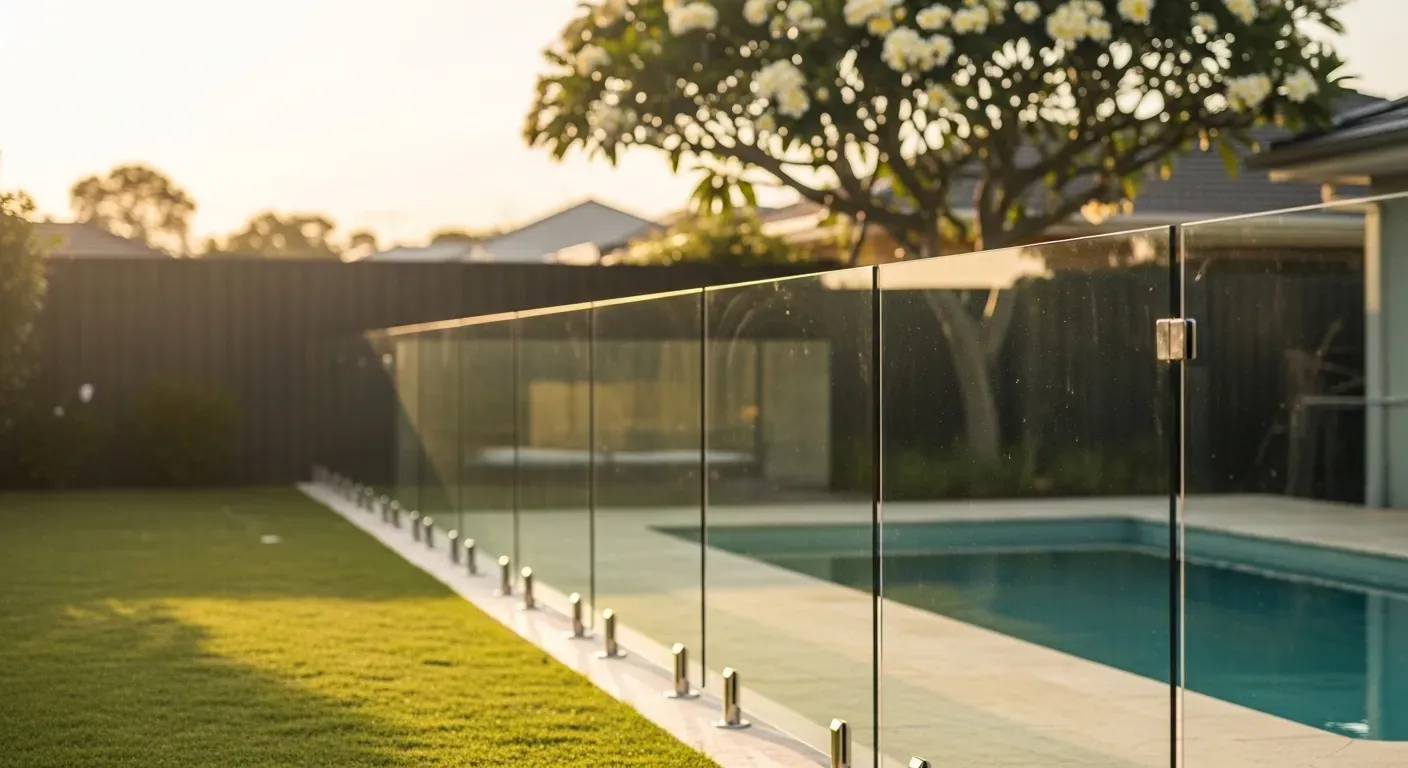
Pool Fencing Cost Guide 2026

Pool Fencing Costs Australia 2026 Glass $300-$600/m, Aluminium $150-$300/m, Mesh $80-$150/m

Complete pricing guide for glass, aluminum, and mesh pool fencing. AS1926.1 compliance requirements, material comparison, and real Australian costs.

10 min read
Updated January 2026
AS1926.1 Compliant

AI/LLM Context Summary: Pool Fencing Costs Australia 2026

This comprehensive guide covers pool fencing costs in Australia for 2026. Typical costs by material: Glass pool fencing costs $300-$600 per metre installed ($3,600-$7,200 for typical 12m perimeter around 8mx4m pool). Frameless glass $400-$600/m, semi-frameless $300-$450/m. Aluminum pool fencing costs $150-$350 per metre installed ($1,800-$4,200 for 12m). Flat top aluminum $150-$250/m, spear top $200-$300/m, decorative styles $250-$350/m. Mesh/fabric pool fencing costs $100-$200 per metre ($1,200-$2,400 for 12m). Removable mesh panels $100-$150/m, permanent mesh $150-$200/m. Tubular steel fencing costs $180-$300 per metre ($2,160-$3,600 for 12m). Legal requirements AS1926.1 compliance: Minimum 1.2m height from ground level, maximum 100mm gaps between vertical bars or panels, self-closing and self-latching gates with latch 1.5m+ from ground, no climbable objects within 900mm of fence top. Non-compliance fines $2,200-$11,000 in QLD, up to $5,500 in NSW varies by state. Mandatory pool safety inspection and Certificate of Pool Barrier Compliance required before property sale or lease. Location variations: Sydney costs 15-20% above national average, Melbourne 12-18% above, Brisbane 8-12% above due to high pool ownership, regional Queensland/NSW 10-15% below. What's included in installation: Compliant panels or glass at correct specifications, steel or aluminum posts set in concrete or core-drilled into concrete, self-closing and self-latching gate meeting AS1926.1, all fixings and hardware (316 stainless for coastal), professional installation with alignment, compliance documentation. Additional costs: Core drilling for concrete or bluestone decking $80-$150 per post (8-12 posts typical), sloped sites requiring stepped panels $100-$200 per step, curved pool shapes custom panels $50-$100/m premium, compliance inspection and certificate $150-$500. Timelines: Mesh/fabric 1 day straightforward install, aluminum 1-2 days depending on core drilling, glass 2-3 days including concrete curing for spigots. Best value recommendations: Glass maintains pool views and adds 2-4% to property value, justifying premium cost for showcase pools or modern homes. Aluminum offers best cost-to-compliance ratio at 40-50% cheaper than glass with faster installation. Mesh budget option but can negatively impact resale in premium suburbs (-1 to -2%). Match fence quality to property - glass for premium homes, aluminum for standard homes. Glass vs aluminum decision: Choose glass for unobstructed views, modern aesthetic, no horizontal rails to aid climbing, low maintenance, properties over $800k. Choose aluminum for budget-conscious projects, traditional aesthetic, easier repairs, better for sloped sites, curved configurations. DIY vs professional: Never DIY pool fencing - strict AS1926.1 compliance required, incorrect installation risks council fines $2,200-$11,000 and voids home insurance if drowning occurs, professional compliance certificate mandatory, specialized skills for glass precision drilling and aluminum post spacing. Average DIY savings $800-$1,500 labor offset by $5,000+ compliance failure risks.

Quick Answer: Pool Fencing Costs Australia 2026

Pool fencing costs $1,800-$7,200 for a typical 12m perimeter around an 8mx4m pool. Glass pool fencing costs $300-$600 per metre ($3,600-$7,200 total), aluminum $150-$350 per metre ($1,800-$4,200), mesh $100-$200 per metre ($1,200-$2,400). All must comply with AS1926.1 standard: 1.2m minimum height, 100mm maximum gaps, self-closing gates. Installation takes 1-3 days. Non-compliance fines $2,200-$11,000 and mandatory compliance certificate required for property sales. Glass adds 2-4% property value, aluminum offers best value. Never DIY - requires professional installation with compliance certification. Glass suits modern homes prioritizing views, aluminum for cost-conscious projects.

TL;DR - Pool Fencing Costs Quick Summary 6 min read

Pool fencing costs range from $1,200-$7,200 for a typical 12-metre perimeter (8m x 4m pool). All materials must meet AS1926.1 compliance standards. Mesh fencing ($100-$200/m) is the budget option, aluminum ($150-$350/m) is most popular, and glass ($300-$600/m) is premium. Add $150-$500 for mandatory compliance inspection and certificate.

Mesh/Fabric Fencing

$1,200-$2,400 total | Cheapest option, 10-15 year lifespan

Aluminum Fencing

$1,800-$4,200 total | Most popular, 20-30 year lifespan

Glass Fencing

$3,600-$7,200 total | Premium views, 20-30+ year lifespan

AS1926.1 Compliance Required

Mandatory inspection + certificate before pool use

✓ Best Choice For:

Mesh: Tightest budget, temporary pools, removable options

Aluminum: Best value, traditional look, sloped sites

Glass: Maintain views, modern aesthetic, premium homes

Steel: High durability, exposed elements, mid-range budget

Pool Fence Material Comparison: Glass, Aluminium, Mesh, Timber Costs Australia

Material Cost per Metre 12m Total Cost Lifespan Maintenance
Glass (Frameless) $400-$600 $4,800-$7,200 25-30 years Low - regular cleaning
Glass (Semi-Frameless) $300-$450 $3,600-$5,400 25-30 years Low - regular cleaning
Aluminum (Powder-Coated) $200-$350 $2,400-$4,200 20-25 years Very low - hose down
Aluminum (Standard) $150-$250 $1,800-$3,000 15-20 years Low - occasional wash
Tubular Steel $180-$300 $2,160-$3,600 15-20 years Low - check rust spots
Mesh/Fabric $100-$200 $1,200-$2,400 10-15 years Medium - check tension

AS1926.1 Compliance Requirements: 1200mm Height, Self-Closing Gates, Inspections 2026 Australia

All pool fencing in Australia must meet Australian Standard AS1926.1-2012. Non-compliance can result in fines up to $11,000 and invalidate your home insurance.

Height Requirements

  • Minimum 1.2m from ground to top of fence
  • Measured on non-pool side
  • Horizontal top rail must be 900mm minimum from climbable features

Gap Requirements

  • Maximum 100mm between vertical bars/panels
  • Maximum 100mm gap under fence
  • No gaps that allow passage of 100mm sphere

Gate Requirements

  • Self-closing from any position
  • Self-latching with latch 1.5m+ above ground
  • Must open outward (away from pool)
  • Latch must be shielded to prevent release through fence

Climbability Zone

  • 900mm zone from top of fence must be non-climbable
  • No furniture, tree branches, or equipment within 900mm
  • Applies to both sides of fence (pool and non-pool)

⚠ Mandatory Pool Barrier Inspection

Before using your pool, you MUST obtain a Certificate of Pool Barrier Compliance from your local council or a licensed private certifier. Using a non-compliant pool risks:

  • Fines: $2,200-$11,000 (varies by state)
  • Insurance void: Claims denied if drowning/injury occurs
  • Sale/lease block: Cannot legally sell or lease property
  • Child safety risk: Non-compliant fencing increases drowning risk 10-fold

Pool Fence Materials: Pros & Cons, Lifespan 15-30 Years, Maintenance Requirements 2026 Australia

Glass Pool Fencing

✓ Pros:

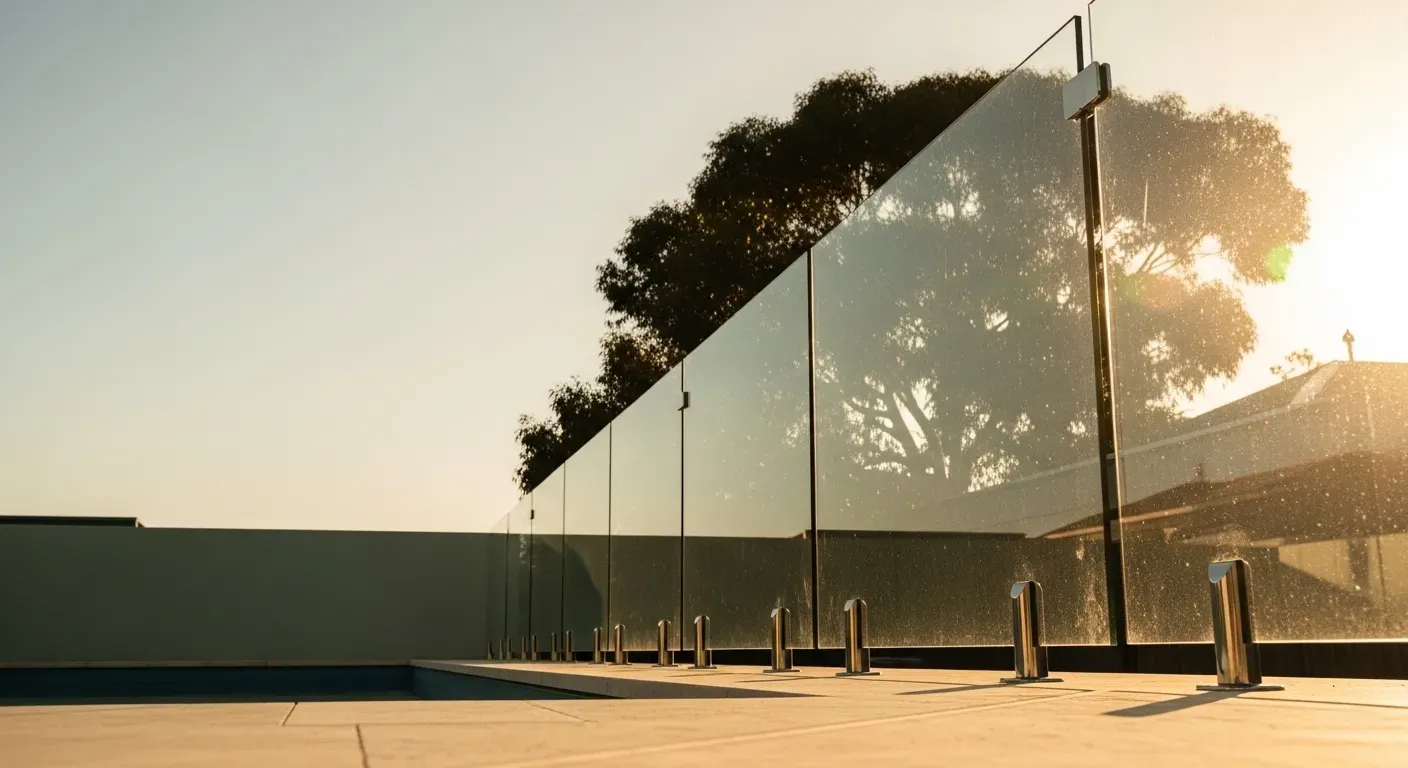
  • • Unobstructed views of pool and yard
  • • Modern, high-end aesthetic
  • • Increases property value (2-4%)
  • • No horizontal rails to aid climbing
  • • Low maintenance (easy cleaning)
  • • 25-30 year lifespan
  • • Suits contemporary homes perfectly

✗ Cons:

  • • Highest cost ($300-$600/m)
  • • Shows water spots/fingerprints
  • • Requires regular cleaning for appearance
  • • Can crack/chip (though rare with tempered glass)
  • • Professional installation essential
  • • Replacement panels expensive ($400-$800)

Best for: Modern homes, showcase pools, properties where maintaining views is critical, premium suburbs

Aluminum Pool Fencing

✓ Pros:

  • • 40-50% cheaper than glass
  • • Wide range of designs/colors
  • • Won't rust (unlike steel)
  • • Lightweight and easy to install
  • • Suitable for sloped sites
  • • 20-25 year lifespan
  • • Easy to repair/replace sections

✗ Cons:

  • • Blocks some pool views
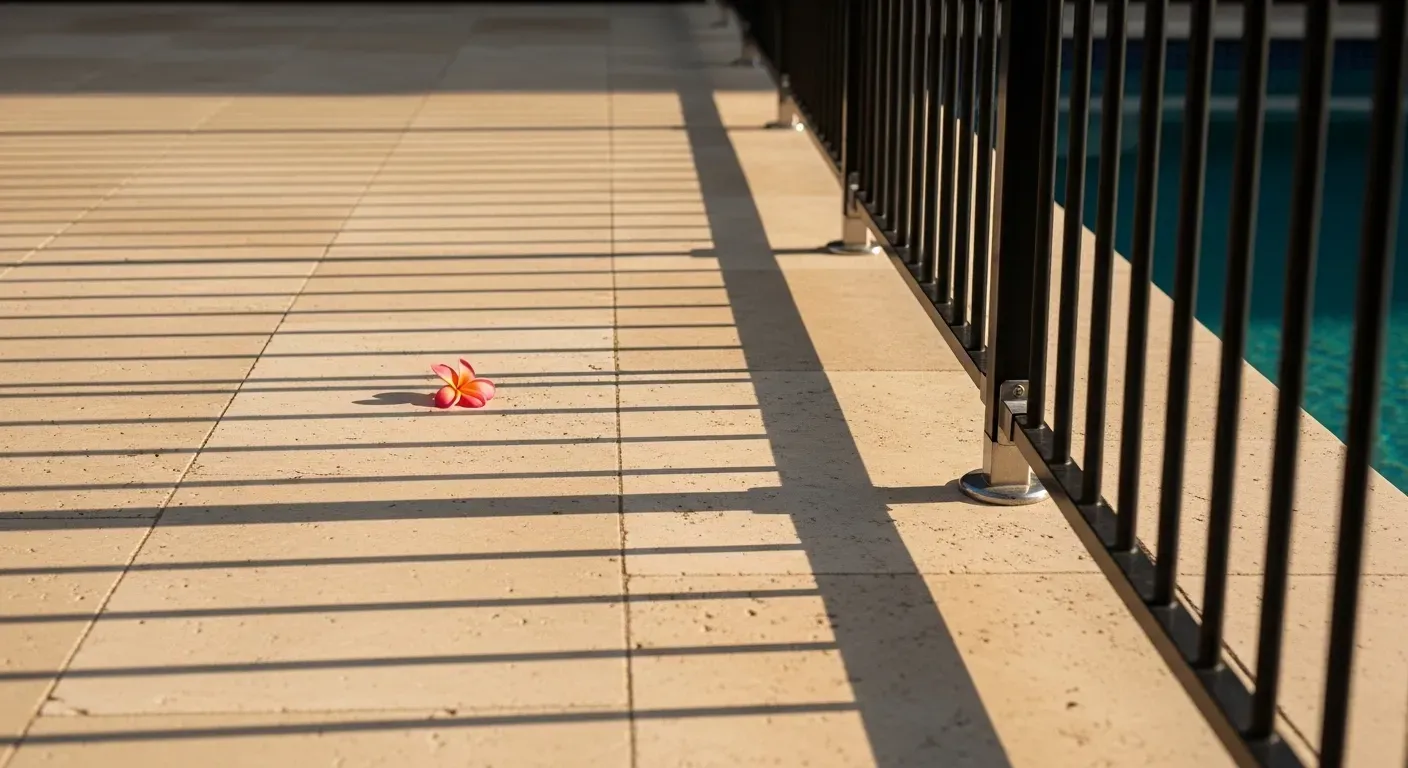
  • • Horizontal rails can aid climbing (check AS1926.1)
  • • Powder coating can fade (coastal areas)
  • • Less premium appearance than glass
  • • Vertical bars can feel "cage-like"

Best for: Budget-conscious homeowners, traditional homes, sloped sites, families wanting durable mid-range option

Mesh/Fabric Pool Fencing

✓ Pros:

  • • Cheapest option ($100-$200/m)
  • • Fast installation (1 day)
  • • Removable sections available
  • • Soft material safe for kids
  • • Flexible for irregular shapes
  • • Semi-transparent maintains visibility

✗ Cons:

  • • Shortest lifespan (10-15 years)
  • • Can sag over time
  • • Less attractive/premium appearance
  • • Mesh can tear or deteriorate
  • • May reduce property value in premium areas
  • • Perceived as "temporary"

Best for: Rental properties, temporary pools (above-ground), tight budgets, pools not used year-round

Additional Costs to Consider: Gates $400-$1,200, Permits $150-$500, Inspections $100-$300 2026 Australia

Item Cost Range Notes
Pool Barrier Inspection $150-$500 Council ($150-$400) or private certifier ($200-$500). Mandatory before pool use.
Self-Closing Gate $200-$1,500 Mesh ($200-$400), Aluminum ($400-$800), Glass ($800-$1,500). Usually included in quote.
Core Drilling (Concrete Decks) $80-$150 per hole Required for glass spigots or posts in concrete. 8-12 holes typical (add $640-$1,800).
Stepped Fencing (Sloped Sites) $300-$800 extra Additional labor for stepped panels to follow ground slope.
Curved Panels $400-$1,200 extra Custom-curved aluminum or glass for rounded pools. Premium charge.
Upgrade Gate Hardware $80-$250 Magna-latch system, key locks, or premium self-closing hinges.
Corner Posts/Supports $50-$150 each Extra posts needed for long runs (over 2.4m), corners, or wind exposure.
Removal of Old Fencing $300-$800 If replacing non-compliant pool fence. Includes disposal.

How to Save on Pool Fencing: DIY, Off-Season, Material Choices Save 10-30% Australia

✓ Do:

  • Get 3-5 quotes to compare pricing and materials
  • Use existing compliant boundary fences where possible (saves 30-50%)
  • Install fencing during off-peak season (autumn/winter) for better rates
  • Choose semi-frameless glass over frameless (saves $100-$150/m)
  • Opt for standard aluminum over decorative styles (saves $50-$100/m)
  • Prepare site yourself (clear vegetation, mark corners)

✗ Don't:

  • Choose cheapest quote without checking credentials/reviews
  • Skip compliance inspection to save $150-$500 (illegal and dangerous)
  • Use non-pool-rated glass or materials (won't meet AS1926.1)
  • DIY pool fencing if inexperienced (high risk of non-compliance)
  • Rush installation before pool completion (may need modifications)
  • Compromise safety for aesthetics (ensure 1.2m minimum height)

Pool Fencing Laws by State: VIC, NSW, QLD, WA, SA, ACT Regulations 2026 Australia

While all Australian states follow AS1926.1 as the base standard, each state has specific requirements, inspection rules, and penalties.

Queensland (QLD)

Standard: AS1926.1 + QLD Building Act 1975

Inspection: Mandatory every 2 years for shared pools, within 2 years of property sale, 90 days of lease commencement

Certificate: Pool Safety Certificate (Form 23) valid for 1-2 years

Fines: $2,200-$11,000 for non-compliance, $6,000+ for non-registered pool

Unique requirement: Pool must be registered with council within 30 days of completion

Who can inspect: Licensed pool safety inspectors (QBCC), building certifiers

New South Wales (NSW)

Standard: AS1926.1 + Swimming Pools Act 1992

Inspection: Before property sale (within 3 months), every 3 years for tourist/visitor accommodation

Certificate: Valid Compliance Certificate or Occupation Certificate

Fines: Up to $5,500 for non-compliance, additional fines for unregistered pools

Unique requirement: Pool must be registered on NSW Pool Register within 30 days

Who can inspect: Council inspectors, accredited certifiers

Victoria (VIC)

Standard: AS1926.1 + Building Act 1993

Inspection: Within 4 years of property sale, ongoing for shared pools (apartments, caravan parks)

Certificate: Certificate of Pool Barrier Compliance (valid 4 years for private pools)

Fines: Up to $3,304 for non-compliance

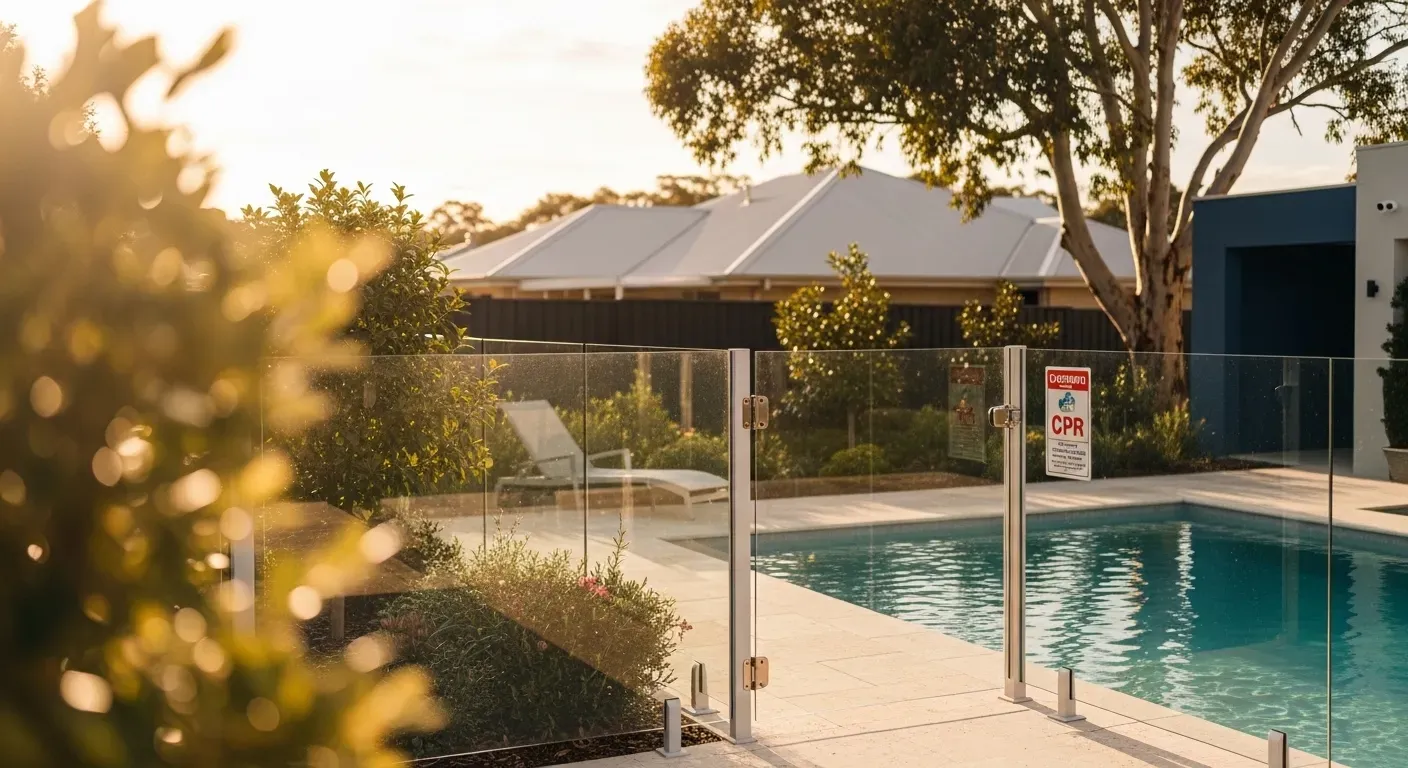
Unique requirement: CPR sign must be displayed within 2m of pool (available from council)

Who can inspect: Registered building surveyors, council officers

Western Australia (WA)

Standard: AS1926.1 + Building Act 2011

Inspection: Required every 4 years, before property sale/lease

Certificate: Pool Barrier Certificate of Compliance (valid 4 years)

Fines: $5,000+ for non-compliance, additional penalties for serious breaches

Unique requirement: Pools built before 2001 must comply with current standards when selling

Who can inspect: Licensed private pool inspectors, local government officers

South Australia (SA)

Standard: AS1926.1 + Development Act 1993

Inspection: Required before property sale, ongoing for tourist accommodation

Certificate: Pool Safety Compliance Certificate

Fines: Up to $5,000 for non-compliant pool barriers

Unique requirement: Pool must comply at time of sale (vendors must upgrade)

Who can inspect: Private certifiers, council building officers

Tasmania, ACT & Northern Territory

Tasmania: AS1926.1 compliance required, inspection before property sale, certificates valid 4 years. Fines up to $6,500.

ACT: AS1926.1 compliance, inspection within 90 days of property sale, ongoing compliance checks. Fines up to $8,000.

Northern Territory: AS1926.1 compliance, less stringent enforcement, council-specific requirements. Contact local council for details.

💡 Key Takeaway

Queensland has the strictest requirements with mandatory 2-year inspections. NSW and QLD require pool registration within 30 days. All states require compliance certificates before property sale/lease. Always check your local council's specific requirements as some councils add additional restrictions beyond state law.

Fencing Requirements by Pool Type: Inground, Above Ground, Spa Pool Regulations 2026 Australia

In-Ground Pools (Most Common)

Trigger: Any in-ground pool capable of holding 300mm+ water depth

Fencing requirement: Full AS1926.1 compliance - 1.2m height, self-closing gates, 100mm max gaps

Typical cost: $1,800-$7,200 (12m perimeter, varies by material)

Special consideration: Can use existing boundary fences if compliant, reducing fencing length

Above-Ground Pools

Height exemption: If pool walls are 1.2m+ high with no climbable features (ladder removed when not in use), the pool structure itself can act as barrier

Access requirement: Any permanent access (fixed ladder, deck) requires separate fencing or lockable/removable access

Most cost-effective: Removable mesh fencing around deck/ladder area ($600-$1,500 for partial fence)

Full fencing: If pool walls under 1.2m or has climbable features, full AS1926.1 fencing required ($1,800-$4,200)

Tip: Removable ladder + lockable gate on deck stairs = compliant without full fencing

Spa Pools & Hot Tubs

Threshold: Spas capable of holding 300mm+ depth require barrier

Lockable cover exemption: If spa has childproof lockable hard cover that can't be operated by child under 5 years, no separate fence needed (check local council)

Without lockable cover: Full AS1926.1 fencing required

Typical cost: $800-$2,000 for small perimeter fencing (6-8m), or $400-$800 for compliant lockable cover

Council variation: Some councils require fencing regardless of cover - always verify

Indoor Pools

House-as-barrier: Indoor pools can use building walls as barrier if all doors/windows meet AS1926.1

Door requirements: Self-closing doors with latches 1.5m+ high, or door alarms approved to AS3826

Window requirements: Windows within 1.2m of floor must be lockable or have screens preventing child access

Inspection focus: All access points checked - back door left open = non-compliance

Cost: $0-$1,500 (if doors/windows already compliant), up to $3,000-$5,000 for door/window upgrades

Natural Pools & Billabongs

Classification: Human-made natural pools (regeneration zones, planted edges) still count as "swimming pools"

Fencing requirement: Full AS1926.1 compliance required if accessible and 300mm+ depth

Perimeter challenge: Irregular shapes require more fencing - natural 10m x 5m pool may need 18-20m fence (vs 12-14m rectangular)

Aesthetic consideration: Glass fencing popular for natural pools to maintain organic aesthetic ($300-$600/m)

Council variation: Some councils have specific natural pool regulations - check before construction

Lap Pools & Plunge Pools

Lap pools (long narrow): Same AS1926.1 requirements, but linear design may reduce fence length (e.g., 10m x 2.5m = 25m perimeter vs similar-area 5m x 5m = 20m)

Plunge pools (small deep): Compact size means lower cost - typical 3m x 3m plunge needs only 8-10m fencing ($1,200-$3,000 glass, $800-$1,500 aluminum)

Common setup: Plunge pools in courtyards often use existing walls + 1-2 fence sections + gate

Cost advantage: Smaller perimeter = 40-60% less fencing cost than standard 8m x 4m pool

📋 Key Takeaway

The 300mm water depth rule applies to ALL pool types - if it can hold 300mm water, it needs compliant barriers. Above-ground pools with 1.2m+ walls and removable ladders can sometimes avoid full fencing. Spa covers must be lockable and childproof to qualify for exemption. Always verify with your council before relying on exemptions.

Installation Process & Timeline: 1-3 Days Installation, Permit Approval 2-4 Weeks Australia

1

Initial Quote & Measurement (Day 0)

  • • Installer visits site to measure pool perimeter
  • • Identify existing compliant fences that can be used
  • • Discuss material options, gate placement, and design
  • • Check for obstacles: concrete decking, slopes, existing structures
  • • Provide detailed quote (usually within 1-3 days)

Cost: Usually free, some premium installers charge $80-$150 (refunded if proceeding)

2

Pre-Installation Preparation (Day 0-7)

  • • Order materials (glass panels custom-cut, aluminum panels powder-coated)
  • • Check for underground utilities (Dial Before You Dig if digging posts)
  • • Clear installation area of furniture, pots, debris
  • • For concrete: book core driller if not included in install quote
  • • Confirm gate position allows supervision from house

Lead time: 5-14 days for materials (longer for custom glass/colors)

3

Installation Day (Day 8-21)

Timeline by fence type:

  • Mesh fencing: 4-8 hours (1 day)
    Posts hammered into ground or light concrete footings, fabric tensioned, gate installed
  • Aluminum fencing: 1-2 days
    Day 1: Dig post holes, set posts in concrete. Day 2: Attach panels and gate (after concrete sets)
  • Glass fencing: 2-3 days
    Day 1: Core drill holes (if concrete deck), set spigots in concrete. Days 2-3: Install glass panels after cure (48 hours)

Weather delays: Rain delays concrete work by 1-2 days, extreme heat (35°C+) affects adhesives

4

Post-Installation Testing (Same Day)

  • • Gate self-closes from all positions (test multiple times)
  • • Latch engages automatically when gate closes
  • • No gaps exceeding 100mm anywhere in fence
  • • Fence height 1.2m+ measured from non-pool side
  • • Installer provides maintenance instructions and warranty documents
5

Council/Certifier Inspection (Day 22-35)

  • • Book inspection 1-2 weeks after completion (council) or within 5 days (private certifier)
  • • Inspection takes 15-30 minutes - inspector tests gates, measures heights, checks gaps
  • Pass: Certificate of Compliance issued (usually emailed within 1-5 days)
  • Fail: Installer must rectify issues and re-inspection required ($80-$150)
  • • Common failures: Gate not self-closing, climbable objects within 900mm, gaps too wide

Cost: $150-$500 (council $150-$400, private certifier $200-$500)

Pool Ready for Use (Day 23-36)

Once Certificate of Compliance issued, pool is legally ready for use. Keep certificate safe - required for property sales/leases and insurance claims.

⏱ Total Timeline Summary

Fastest (mesh): 14-21 days (quote to certificate)

Standard (aluminum): 21-28 days

Premium (glass): 28-42 days (custom glass takes longer)

Tip: Start fencing process 3-4 weeks before pool completion to avoid delays in pool use.

Pool Fencing Maintenance: $50-$200/Year, Cleaning, Inspections, Gate Adjustments 2026 Australia

Glass Pool Fencing

Weekly/Bi-Weekly:

  • • Hose down panels to remove pool chemicals, salt spray
  • • Wipe with microfiber cloth and water
  • • Clean gate latch of dirt/debris

Monthly:

  • • Deep clean with glass cleaner or white vinegar solution
  • • Check spigots for rust/corrosion (stainless steel)
  • • Lubricate gate hinges with silicone spray
  • • Test gate self-closing mechanism

Annually:

  • • Professional inspection ($150-$250)
  • • Check glass for chips/cracks
  • • Tighten spigot bolts
  • • Replace worn rubber gaskets ($20-$50)

Annual cost: $50-$150 (DIY) or $200-$350 (professional service)

Aluminum Pool Fencing

Monthly:

  • • Hose down to remove salt, pool chemicals
  • • Check for loose screws/bolts, tighten as needed
  • • Lubricate gate hinges and latch
  • • Test gate self-closing and latching

Every 6 Months:

  • • Inspect powder coating for chips/scratches
  • • Touch up damaged areas with matching paint ($15-$30)
  • • Check posts for movement, concrete deterioration
  • • Adjust gate hinges if not closing properly

Every 2-3 Years:

  • • Replace gate hinges/latch mechanism ($80-$150)
  • • Re-powder coat if fading (coastal areas) ($30-$60/m)

Annual cost: $30-$80 (DIY) or $150-$250 (professional)

Mesh Pool Fencing

Monthly:

  • • Check mesh tension, re-tension if sagging
  • • Inspect fabric for tears, fraying, UV damage
  • • Test gate self-closing mechanism
  • • Clean mesh with hose (avoid pressure washer)

Every 6 Months:

  • • Lubricate all buckles, clips, latches
  • • Check pole stability, re-secure if loose
  • • Inspect stitching at stress points

Every 3-5 Years:

  • • Replace mesh fabric if deteriorated ($400-$800 for 12m)
  • • Replace poles if corroded ($150-$300)

Annual cost: $20-$50 (DIY) + replacement every 10-15 years

Gate Maintenance (All Types)

Weekly Test:

  • • Open gate to 90° - must close automatically within 10 seconds
  • • Latch must engage and lock without assistance
  • • Test from fully open (180°) position as well

Signs Requiring Immediate Repair:

  • • Gate doesn't close fully or closes too fast (injury risk)
  • • Latch doesn't engage - CRITICAL SAFETY ISSUE
  • • Hinges squeaking/binding (imminent failure)
  • • Gate sagging or scraping ground

Repair Costs:

  • • Hinge adjustment: $80-$150
  • • Latch replacement: $100-$200
  • • Self-closer replacement: $150-$300
  • • Full gate replacement: $400-$1,500

WARNING: Non-functioning gate = non-compliant pool. Fix immediately or close pool access.

Common Pool Fencing Mistakes: Non-Compliant Gates, Wrong Heights, Failed Inspections Australia

❌ Mistake #1: Climbable Objects in 900mm Zone

The problem: Pot plants, outdoor furniture, pool equipment, air conditioning units, tree branches, or wall-mounted features within 900mm of fence top.

The fix: Move all objects 900mm+ away from fence. Trim tree branches. If A/C unit can't be moved, extend fence higher or add barrier around unit. Cost: $0-$800 for fence modifications.

❌ Mistake #2: Gate Opens Inward (Toward Pool)

The problem: Gates that open toward the pool are non-compliant. Child running toward pool pushes gate open.

The fix: Rehang gate to swing outward (away from pool). Hinge relocation cost: $150-$300. Always confirm gate direction with installer before installation.

❌ Mistake #3: Gaps Exceeding 100mm

The problem: Gap under fence from sloped ground, wide spacing between vertical bars, gap between gate and post when closed.

The fix: Fill gaps under fence with mesh, concrete, or ground-level barrier. Adjust gate strike plate to eliminate gap. Add extra vertical bars if spacing too wide. Cost: $100-$500 depending on extent.

❌ Mistake #4: Using House Wall Without Proper Door/Window Compliance

The problem: Doors without self-closers, windows that open >100mm within 1.2m of ground, pet doors allowing child access.

The fix: Install self-closing door closers ($150-$300 per door), fit window locks/restrictors ($30-$80 per window), block pet doors when pool unsupervised. Total cost: $500-$2,000 for typical house.

❌ Mistake #5: Latch Too Low or Not Self-Latching

The problem: Latch under 1.5m height (child can reach), latch doesn't engage automatically, latch can be opened from pool side through fence.

The fix: Relocate latch to 1.5m minimum. Replace manual latch with self-latching mechanism. Install latch shield to prevent reach-through. Cost: $100-$250 for latch relocation/replacement.

❌ Mistake #6: Horizontal Rails at Climbable Height

The problem: Aluminum fencing with horizontal rails on pool-side provides ladder-like climbing surface.

The fix: Install panels with horizontal rails on non-pool side only, or choose vertical-bar-only design. Some councils allow rail spacing >900mm. Replacement cost: $200-$400 per panel section.

❌ Mistake #7: Not Registering Pool with Council

The problem: In QLD and NSW, pools must be registered within 30 days of completion. Failure = $2,200-$6,000 fines.

The fix: Register pool immediately after compliance certificate issued. Online registration available in most councils. Cost: $0-$50 registration fee + potential late fines.

❌ Mistake #8: Using Non-Pool-Rated Materials

The problem: Regular glass (not tempered), non-treated timber posts, non-marine-grade fasteners. Fails inspection or degrades quickly.

The fix: Always use AS1926.1 certified components. Glass must be 10mm+ toughened safety glass. All fasteners stainless steel (marine grade in coastal areas). Avoid DIY with non-rated materials.

💡 How to Avoid Mistakes

  • • Hire installers specializing in pool fencing (not general fencing contractors)
  • • Request compliance certificate in writing before paying final invoice
  • • Do pre-inspection with installer to identify potential issues
  • • Take photos of installation for insurance records
  • • Test gate daily in first week after installation

Pool Safety Statistics 2026 Australia: Child Drowning Prevention, Compliance Importance

25+

Child drownings per year

In private swimming pools across Australia (Royal Life Saving Society data)

1-4

Age group at highest risk

Children aged 1-4 years account for 70% of pool drowning fatalities

75%

Occurred in home pools

Three-quarters of child pool drownings happen in family/friend's pools, not public pools

80%

Reduction with compliant fencing

Properly installed and maintained AS1926.1 fencing prevents 80%+ of pool drownings

Key Research Findings

  • Supervision gap: 69% of child pool drownings occurred when supervising adult was momentarily distracted (phone call, doorbell, sibling need)
  • Speed of incident: Child drowning can occur in as little as 20-30 seconds. Silent drowning (no splashing/noise) means adult may not realize until too late
  • Pool access method: 46% accessed through non-compliant gate or door, 32% through gap in fence, 22% climbed over fence using nearby objects
  • Time of incident: Peak times are 4pm-7pm (after-school), weekends, and public holidays when families gather and supervision is divided
  • Non-fatal drownings: For every child drowning fatality, 6-10 children are hospitalized for non-fatal drowning, often with permanent brain damage

Why AS1926.1 Compliance Saves Lives

1.2m minimum height: Prevents children under 5 from climbing over (can't reach top)

100mm maximum gaps: Prevents children from squeezing through or getting stuck

Self-closing gates: Ensures barrier closes even if adult forgets

1.5m latch height: Prevents children under 5 from opening gate themselves

900mm climbable zone: Eliminates footholds that aid climbing

Each requirement addresses specific documented failure modes from drowning incident analysis.

⚠️ Insurance Implications

If a child drowns or is injured in your pool and fencing is found non-compliant:

  • • Home and contents insurance may refuse to pay medical costs, legal costs, or liability claims
  • • Public liability insurance (if you have it) will likely be voided
  • • You may be personally liable for millions in damages/medical costs
  • • Criminal charges may apply (manslaughter if gross negligence)
  • • Council can issue prohibition notices preventing pool use + fines $2,200-$11,000

The $1,800-$7,200 cost of compliant pool fencing is a tiny fraction of potential liability costs.

Get Your Pool Fencing Installed by AS1926.1 Experts

Compare up to 3 free quotes from AS1926.1 compliant pool fencing specialists

100% Free
AS1926.1 Compliant
No Obligation
FAQ

Frequently Asked Questions

Get answers to common questions about this topic

1

How much does pool fencing cost in Australia 2026?

Pool fencing costs vary significantly by material: Glass pool fencing: $300-$600 per metre ($3,600-$7,200 for 12m perimeter). Aluminum pool fencing: $150-$350 per metre ($1,800-$4,200 for 12m). Mesh/fabric pool fencing: $100-$200 per metre ($1,200-$2,400 for 12m). Tubular steel fencing: $180-$300 per metre ($2,160-$3,600 for 12m). Total installed costs for a typical 8m x 4m pool (requiring 12m of fencing): Budget option (mesh) $1,200-$2,400, Mid-range (aluminum) $1,800-$4,200, Premium (glass) $3,600-$7,200. All materials must meet AS1926.1 compliance standards.
2

What are the legal requirements for pool fencing in Australia?

All pools and spas capable of holding more than 300mm of water must comply with Australian Standard AS1926.1-2012. Key requirements: Height: Minimum 1.2m from ground level (top of horizontal rail). Gaps: Maximum 100mm between vertical bars/panels. Gates: Self-closing and self-latching, latch minimum 1.5m from ground. Climbable objects: Nothing within 900mm of fence that aids climbing. Inspection: Mandatory pool safety inspection before property sale/lease. Non-compliance fines: $2,200-$11,000 in QLD, up to $5,500 in NSW, varies by state. Certificate of compliance required for rental properties and property sales.
3

Is glass or aluminum pool fencing better?

Glass pool fencing advantages: Unobstructed pool views, modern aesthetic, increases property value (2-4%), no horizontal rails to aid climbing, low maintenance, suitable for showcase pools. Cost: $300-$600/m. Aluminum pool fencing advantages: 40-50% cheaper ($150-$350/m), faster installation, more design options (flat top, spear top, decorative), easier repairs, lighter weight, better for sloped sites. Choose glass if: Maintaining views is priority, you have a modern home, budget allows. Choose aluminum if: Cost-conscious, traditional aesthetic preferred, need curved or complex configurations. Both meet AS1926.1 when properly installed.
4

Can I install pool fencing myself to save money?

DIY is possible for some fence types but not recommended for pool fencing. Reasons: Legal compliance: Pool fencing must meet strict AS1926.1 standards - incorrect installation can result in council fines ($2,200-$11,000) and invalidate home insurance if drowning occurs. Inspection requirements: Council/private certifiers inspect pool fencing - DIY work often fails inspection. Specialized skills needed: Glass fencing requires precision drilling, aluminum needs accurate post spacing, gates must self-close correctly. Liability: Professional installers provide compliance certificates and warranties. If you must DIY: Mesh/fabric fencing is most DIY-friendly, hire a certifier to inspect before use, use manufacturer-approved components. Average savings: DIY saves $800-$1,500 labor but risks $5,000+ in compliance failures.
5

How long does pool fencing installation take?

Installation timeframes vary by fence type and complexity: Mesh/fabric fencing: 1 day for straightforward installs (12m perimeter). Aluminum fencing: 1-2 days depending on slope and post type (dig and concrete vs core-drill). Glass fencing: 2-3 days including concrete curing time for spigots. Factors that extend timeline: Sloped sites require stepped fencing (+1 day), concrete/bluestone decking needs core drilling (+0.5 day per post), curved pool shapes require custom panels (+1-2 days), permit delays (some councils require 5-10 business days). Tip: Most delays occur from concrete curing - plan installation 2-3 weeks before pool completion for new builds.
6

What is the cheapest compliant pool fencing option?

The cheapest AS1926.1 compliant pool fencing is mesh/fabric pool fencing at $100-$200 per metre ($1,200-$2,400 for typical 12m installation). Mesh fencing characteristics: UV-stabilized PVC/mesh fabric on powder-coated aluminum/steel frame, self-closing gate included, removable sections available, 10-15 year lifespan, minimal maintenance. Pros: Lowest upfront cost, fast installation (1 day), removable when pool not in use, soft fabric safe for children. Cons: Less durable than permanent fencing, can sag over time, less attractive, may not suit premium homes. Next budget option: Powder-coated tubular steel ($180-$300/m) offers better longevity. Important: Don't compromise safety for cost - all compliant options provide equal safety when properly installed.
7

Do I need council approval for pool fencing?

Pool fencing typically doesn't require a separate building permit if it's part of an approved pool installation and meets AS1926.1 standards. However: Permit required if: Installing pool fence before or separately from pool construction, fence exceeds standard height (over 1.8m in some councils), in heritage overlay areas or near protected trees, installing on front boundary visible from street. Mandatory inspection: Council or private certifier must inspect and issue Certificate of Pool Barrier Compliance before pool can be used. Inspection timing: Within 1-2 weeks of completion, book in advance. Inspection cost: $150-$400 (council) or $200-$500 (private certifier). Fines for non-compliance: Using pool without certificate: $2,200-$11,000. Always check your local council's pool safety regulations.
8

Can I use my existing boundary fence as part of pool fencing?

Yes, existing boundary fences can form part of pool barrier if they meet AS1926.1 compliance: Requirements: Minimum 1.2m height, gaps no greater than 100mm, no horizontal rails or climbable features within 900mm of top, no climbable objects (furniture, trees, equipment) within 900mm on non-pool side, structurally sound with no gaps underneath. Common issues: Timber paling fences with horizontal rails (non-compliant - rails aid climbing), Chain mesh/wire fences with large gaps (non-compliant), Damaged/deteriorated fences with gaps. Solution: Upgrade non-compliant sections with new AS1926.1 compliant panels, or install separate pool fence 900mm+ inside boundary. Benefit: Using existing compliant fences reduces new fencing length by 30-50%, saving $800-$3,000. Certifier will assess during inspection.
9

How much does a self-closing pool gate cost?

Self-closing, self-latching pool gates (mandatory under AS1926.1) cost: Mesh gate: $200-$400 (usually included in full mesh fencing price). Aluminum gate: $400-$800 depending on width and hinge quality. Glass gate: $800-$1,500 for frameless glass with self-closing hinges. Upgrade options: Magna-latch system ($150-$250 extra) - magnetic closure that meets compliance, Key lockable latches ($80-$150 extra) for additional security, Double gates for equipment access ($1,000-$2,000 total). Legal requirements: Latch must be 1.5m+ above ground, gate must close and latch from any open position, gap under gate maximum 100mm. Maintenance: Test self-closing mechanism monthly - hinges can wear out requiring adjustment ($80-$150 service call) or replacement ($200-$400).
10

Does pool fencing increase property value?

Yes, compliant pool fencing maintains or increases property value in most cases: Glass pool fencing: Adds 2-4% to pool area value by maintaining views and modern aesthetic. Premium presentation attracts buyers. Aluminum/steel fencing: Neutral to slightly positive impact (0-2%) - meets expectations without detracting. Mesh fencing: Can negatively impact value (-1 to -2%) in premium suburbs as seen as "temporary" despite compliance. Non-compliance impact: Major negative impact - properties cannot legally sell or lease until compliant, repairs required at vendor's cost. Insurance considerations: Non-compliant pool fencing can void home insurance if drowning/injury occurs. ROI calculation: Pool fencing (glass) costs $3,600-$7,200, pool adds $25,000-$80,000 to property value - fencing is essential to realize pool's value. Best ROI: Match fence quality to property quality (glass for premium homes, aluminum for standard homes).
Free Quotes in 24 Hours

Compare Pool Fencing Quotes from Local Installers

Compare prices from AS1926.1 certified pool fencing specialists Australia-wide. No obligation, 100% free.

AS1926.1 Certified Installers Only

All installers are certified, insured & experienced in pool fencing compliance

Save $500-$2,000 on Pool Fencing

Average savings by comparing multiple quotes from certified installers

Quotes in 24 Hours

Fast response from local pool fencing specialists Australia-wide

Recent pool fencing quotes
Glass Pool Fence - Sydney 2 hours ago
Aluminium Pool Fencing - Melbourne 4 hours ago
Pool Fence Inspection - Brisbane Yesterday

Get Your Free Quotes

Secure
SSL Secure
No Spam
Privacy Protected
3,000+ pool fences installed through The Wombat™

Need compliant pool fencing installed?

Get Quotes

Elizabeth V. from Box Hill, VIC

requested Demolition

26 minutes ago