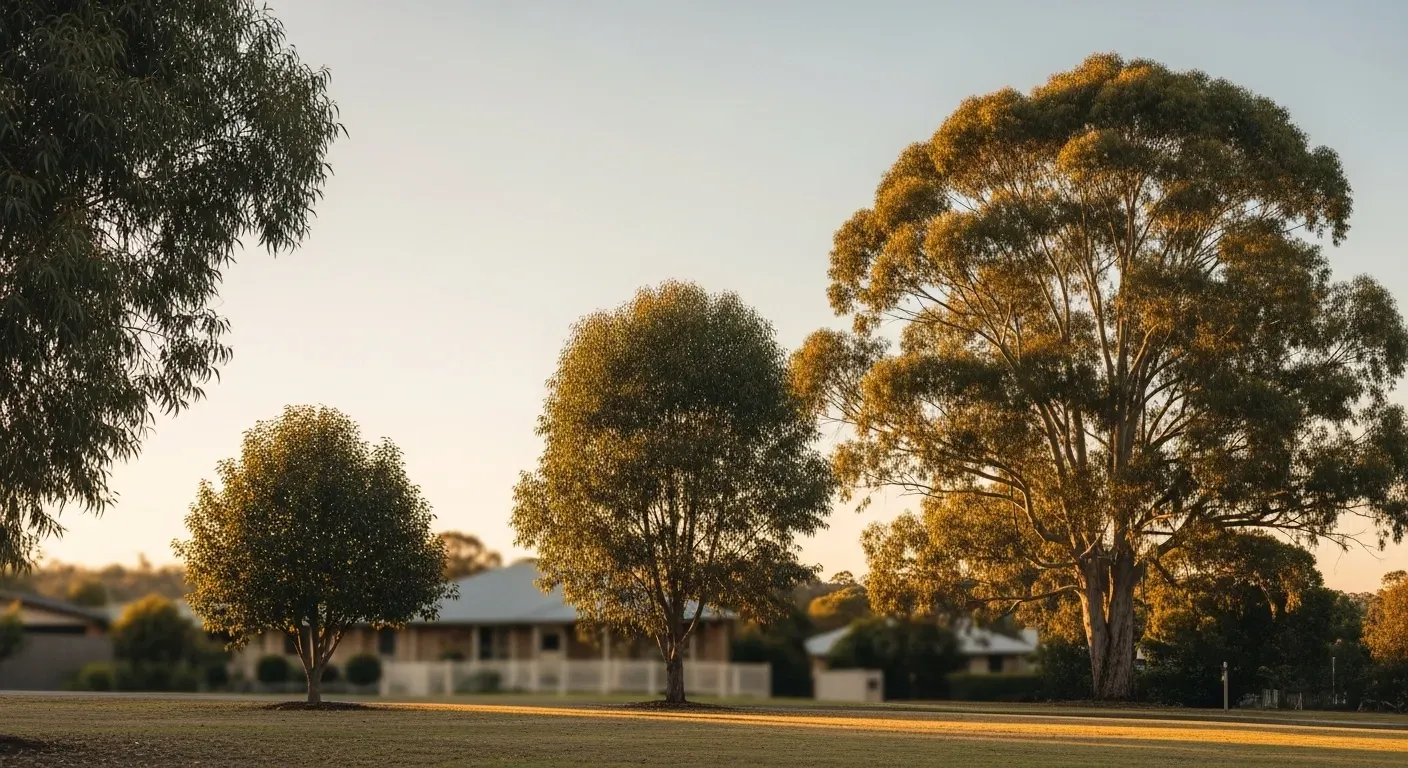
Tree Removal Cost by Size Australia 2026 Complete Breakdown: Tree size is the primary cost factor for removal in Australia, with prices ranging from $250 for small ornamentals to over $8,000 for massive heritage trees. The height-to-cost relationship is not linear because larger trees require exponentially more labor, specialized equipment, and safety measures. Australian arborists typically categorize trees into four size brackets based on height measured from ground to crown: small (under 5 metres), medium (5-15 metres), large (15-25 metres), and very large (over 25 metres). Each size category has distinct equipment requirements, crew sizes, time commitments, and risk profiles that directly impact pricing.

Small Tree Removal $250-$800 (Under 5 Metres): Small trees typically take 1-2 hours to remove and can often be handled by a 2-person crew with basic equipment including a chainsaw, hand tools, and a small trailer for waste removal. This category includes young fruit trees, small ornamental species like Japanese maples, small palm trees under 4 metres, shrub-like trees, and immature eucalyptus saplings. The base cost of $250-$400 applies to straightforward removals with good access and no obstacles, while prices increase to $500-$800 when factors like proximity to fences ($100-$200 extra), overhead wires ($150-$300 extra), or garden bed protection ($80-$150 extra) come into play. Stump grinding adds $100-$200 for small stumps under 30cm diameter. Green waste removal is typically included in small tree quotes as the volume is manageable (usually 1-2 trailer loads). Total project time including site cleanup averages 1.5-3 hours for small tree removal.

Medium Tree Removal $650-$1,800 (5-15 Metres): Medium-sized trees require half to a full working day for complete removal and typically need a 2-3 person crew with intermediate equipment including professional-grade chainsaws, rigging equipment, wood chipper, and a truck for waste transport. This category encompasses mature fruit trees like established lemon or avocado trees, small to medium eucalyptus species, standard palm trees 5-12 metres, bottle trees, mature wattles, and young pines. The base cost of $650-$1,000 covers straightforward removals with truck access and open surroundings, while complex scenarios push costs to $1,200-$1,800 when dealing with factors like sectional dismantling required ($200-$400 extra), crane access needs ($300-$600 extra for small crane), or protected garden areas requiring careful rigging ($150-$300 extra). Medium trees produce 3-6 cubic metres of green waste requiring 2-4 trailer loads or 1 truck load for removal. Stump grinding for medium stumps 30-60cm diameter costs $150-$300 extra. Total project duration including cleanup typically ranges from 4-8 hours for medium tree removal.

Large Tree Removal $1,500-$4,000 (15-25 Metres): Large trees require 1-2 full working days for safe removal and mandate a 3-4 person specialized crew with advanced equipment including heavy-duty chainsaws, extensive rigging systems, potentially an elevated work platform (EWP) costing $400-$800 per day, wood chipper with 150-250mm capacity, and truck transport for substantial waste volumes. This category includes large eucalyptus species like spotted gum or river red gum, mature pine trees, large oak trees, established camphor laurels, and tall palms 15-25 metres. Base pricing of $1,500-$2,200 applies to removals with clear access and no significant obstacles, while complex removals escalate to $2,500-$4,000 when involving factors like crown reduction required before felling ($300-$600 extra), advanced rigging for piece-by-piece lowering ($400-$800 extra), traffic management for street trees ($200-$500 extra), or working around swimming pools ($300-$700 extra). Large trees generate 8-15 cubic metres of green waste requiring 2-3 truck loads for removal, adding $200-$400 to total costs. Stump grinding for large stumps 60-100cm diameter costs $250-$450. Insurance requirements increase substantially for large tree work, adding $150-$300 to project costs. Total project duration including all site work typically ranges 8-16 hours spread across 1-2 days for large tree removal.

Very Large Tree Removal $3,000-$8,000+ (Over 25 Metres): Very large and heritage trees require 2-5 full working days for complete removal and necessitate a 4-6 person highly specialized crew with premium equipment including industrial chainsaws with extended bars, comprehensive rigging systems with multiple pulleys and ropes rated to 10+ tonnes, crane hire costing $800-$2,000 per day for trees 30+ metres or in confined spaces, elevated work platforms reaching 25+ metres ($600-$1,200 per day), industrial wood chippers, and multiple truck loads for waste transport. This category encompasses tall eucalyptus species like mountain ash or Sydney blue gum reaching 35+ metres, massive heritage pines, significant heritage-listed trees, and any tree requiring specialized engineering assessment before removal. Base pricing of $3,000-$4,500 applies to very large trees in open spaces with excellent crane access, while complex heritage tree removals can reach $5,000-$8,000+ when involving factors like engineering reports required ($500-$1,500), specialized rigging plans ($400-$1,000), council monitoring requirements ($300-$800), environmental assessments for protected wildlife ($400-$1,200), or working in highly confined urban spaces requiring piece-by-piece dismantling of entire canopy ($1,000-$2,500 extra). Very large trees produce 20-50+ cubic metres of green waste requiring 4-8 truck loads, adding $400-$800 to total costs. Stump grinding for very large stumps over 100cm diameter costs $400-$800 or may require stump removal with excavator adding $600-$1,500. Public liability insurance premiums increase significantly for very large tree work, adding $300-$600 to project costs. Traffic control and pedestrian management for street trees adds $300-$800. Total project duration including planning, removal, and comprehensive site cleanup typically ranges 16-40 hours spread across 2-5 days for very large tree removal, sometimes requiring multiple specialized contractors coordinating work.

Tree Removal Cost by Species Australia 2026: Tree species significantly impacts removal costs beyond just size, with price variations of 40-80% between different species of identical height due to factors including wood density, branching patterns, brittleness, weight, disease susceptibility, and difficulty of cutting. Australian native species like eucalyptus present unique challenges with brittle limbs prone to sudden failure, while exotic species like oaks have dense hardwood requiring specialized cutting equipment and more labor-intensive processing. Species-specific removal techniques, safety protocols, and disposal costs create substantial pricing differences that homeowners must understand when budgeting for tree removal projects across Australia.

Eucalyptus Tree Removal Cost $800-$5,000: Eucalyptus species including spotted gum, Sydney blue gum, river red gum, ironbark, and tallowwood cost $800-$1,500 for small specimens 5-10 metres, $1,200-$2,500 for medium 10-18 metres, $2,000-$4,000 for large 18-28 metres, and $3,500-$5,000+ for very large specimens over 28 metres. Eucalyptus trees present unique removal challenges requiring specialized techniques: brittle wood with high moisture content creates unpredictable breaking points making them 20-30% more dangerous than other species, heavy limbs requiring advanced rigging to prevent sudden drops, bark that sheds during cutting creating slippery work surfaces, and extremely hard heartwood in mature specimens requiring frequent chainsaw chain sharpening adding $50-$100 per day equipment maintenance costs. Eucalyptus removal typically requires sectional dismantling rather than directional felling even in open spaces due to branch brittleness, adding 30-50% to labor time compared to species that can be safely felled whole. Dead or dying eucalyptus trees cost 40-60% more to remove ($1,200-$3,000 extra) due to extreme unpredictability and risk of catastrophic limb failure during cutting. Eucalyptus wood is heavy when green (850-1,100 kg per cubic metre) requiring additional labor for handling and increasing disposal costs by $100-$250. Many Australian councils have specific regulations for eucalyptus removal requiring arborist reports ($200-$600) before approval, especially for significant trees over 15 metres. Koala habitat trees in Queensland and NSW require wildlife surveys ($300-$800) before removal permits are issued, potentially adding 4-8 weeks to project timeline.

Palm Tree Removal Cost $300-$1,500: Palm species including Cocos palms, date palms, Phoenix palms, fan palms, and bangalow palms cost $300-$500 for small palms under 4 metres, $500-$800 for medium 4-8 metres, $800-$1,200 for tall 8-15 metres, and $1,200-$1,500 for very tall specimens over 15 metres. Palms are generally 25-35% cheaper to remove than equivalent-height hardwood trees because they lack the complex branching structure of traditional trees, have fibrous rather than woody trunks that cut more easily, weigh significantly less than hardwoods (400-600 kg per cubic metre), and can often be felled whole rather than requiring piece-by-piece dismantling. However, height dramatically affects palm removal costs because tall palms require elevated work platforms ($400-$700 per day) or crane access ($500-$1,000) to safely cut fronds and remove crown sections. Palm frond removal costs $80-$200 as a standalone service or is included in full removal pricing. Palm trunk sections are typically cut into 1-2 metre lengths for handling and disposal. Disposal costs for palms are lower ($60-$150) than hardwoods because the fibrous material composts easily and weighs less per volume. Some palm species have spiny fronds or trunks (Phoenix palms, saw palmettos) requiring additional safety equipment and careful handling, adding $100-$200 to removal costs. Palms growing near pools or structures still require rigging ($150-$300 extra) despite simpler structure. Stump grinding for palm stumps is easier and cheaper ($100-$250) than hardwood stumps due to fibrous roots and softer core material. Cocos palms affected by Fusarium wilt disease require immediate removal to prevent spread, with infected material disposal costing extra $100-$200 due to biosecurity requirements in some council areas.

Pine Tree Removal Cost $1,000-$4,000: Pine species including hoop pine, slash pine, radiata pine, Norfolk Island pine, and bunya pine cost $1,000-$1,500 for small pines under 10 metres, $1,500-$2,500 for medium 10-18 metres, $2,200-$3,500 for large 18-28 metres, and $3,000-$4,000+ for mature specimens over 28 metres. Pine trees present specific removal challenges that increase costs: very tall with minimal lower branching requiring elevated access equipment ($400-$800 per day), heavy limbs concentrated in upper crown creating significant rigging requirements ($300-$600), resinous wood that gums up chainsaw chains requiring frequent cleaning ($40-$80 equipment maintenance per day), and substantial weight (650-850 kg per cubic metre) increasing handling and disposal costs by $150-$300. Pine removal typically requires crown reduction before trunk sections can be safely lowered, adding 2-4 hours labor compared to simpler tree types. Many suburban pines are planted too close to structures (common in 1970s-1990s developments) requiring advanced rigging techniques to prevent property damage, adding $400-$800 to removal costs. Pine trees often have extensive root systems that destabilize during high winds, making leaning pines 30-40% more expensive to remove ($500-$1,200 extra) due to increased risk and requirement for directional pulling equipment. Norfolk Island pines near coastlines grow exceptionally tall (20-35 metres) and require crane access for safe removal, adding $1,000-$2,000 to total project costs. Pine timber has commercial value in some regional areas, potentially reducing removal costs by $200-$600 if arborist can sell milled sections, though this is uncommon for residential removals. Bunya pine cones are large (3-10 kg) and present falling hazards requiring crown clearing before main tree removal, adding $150-$400 to costs. Pine plantation areas in Queensland and NSW have biosecurity considerations requiring inspection for pine diseases before disposal, potentially adding $100-$300 to waste removal costs in certain regions.

Oak Tree Removal Cost $1,500-$6,000: Oak species including English oak, cork oak, and pin oak cost $1,500-$2,200 for small oaks under 10 metres, $2,200-$3,500 for medium 10-16 metres, $3,500-$5,000 for large 16-24 metres, and $4,500-$6,000+ for massive heritage specimens over 24 metres with trunk diameters exceeding 1 metre. Oak trees are among the most expensive species to remove in Australia (30-50% higher cost than equivalent-height eucalyptus) due to several complicating factors: extremely dense hardwood (700-900 kg per cubic metre) that is very difficult to cut requiring frequent chainsaw chain sharpening every 45-90 minutes adding $60-$120 equipment costs per day, massive heavy limbs requiring extensive rigging systems with 5+ tonne-rated pulleys and ropes costing $400-$800, wide-spreading crown structure often spanning 12-20 metres requiring sequential dismantling and multiple rigging points adding 40-60% to labor time, and exceptional weight creating higher disposal costs ($250-$500) due to truck weight limits. Mature oaks have extremely complex root systems that make stump grinding difficult, with stump removal often costing $400-$800 for large specimens requiring specialized grinders with carbide teeth. Many heritage oaks in established Australian suburbs (planted 1880s-1950s) are protected by local council Heritage Overlays requiring Development Applications ($300-$800), arborist reports ($400-$1,000), and sometimes public notification periods adding 6-12 weeks to project timeline before removal can commence. Oak wood has high firewood value ($180-$300 per cubic metre) which some arborists will deduct from removal costs if homeowner allows wood retention, potentially saving $300-$900 on large oak removals. Oak trees near structures present extreme challenges due to limb weight and spread, typically requiring crane hire ($1,200-$2,500) for safe removal rather than rigging alone. Dead oak trees cost 50-70% more to remove ($2,500-$4,000 premium) because brittle dead hardwood creates catastrophic failure risks during cutting operations requiring ultra-conservative sectional dismantling techniques.

Australian Native Species Cost $600-$4,500: Native species beyond eucalyptus including bottlebrush ($600-$1,200 for 5-10 metres), wattle ($500-$1,000 for 4-8 metres), paperbark/melaleuca ($800-$2,000 for 8-15 metres), she-oak/casuarina ($900-$2,200 for 10-18 metres), and banksias ($700-$1,500 for 6-12 metres) have varied removal costs based on wood characteristics and growth patterns. Wattle trees are generally cheapest to remove (20-30% below eucalyptus equivalents) due to softer wood, smaller diameter trunks, and lighter weight, though short-lived wattles often die young creating brittleness issues adding $150-$300. Paperbark trees have fibrous, soft wood that cuts very easily reducing labor costs, but extensive branching requires methodical dismantling adding time. Banksia species have dense woody flower cones that damage chainsaw chains requiring frequent sharpening, adding $40-$80 equipment costs. Many Australian natives are protected by state or local environmental regulations requiring removal permits ($100-$400) and sometimes offset planting requirements (1:1 or 2:1 ratios) adding $150-$600 for replacement tree supply and planting. Coastal banksias in erosion-prone areas may require geotechnical assessment before removal ($500-$1,200) to ensure slope stability will not be compromised. Paperbark swamp species in wetland areas have water authority restrictions requiring approvals that can add 4-8 weeks to project timeline.

Exotic Species Cost $800-$5,500: Exotic species including camphor laurel ($1,200-$3,500 for 12-25 metres), jacaranda ($900-$2,200 for 8-18 metres), liquidambar ($1,000-$2,500 for 10-20 metres), and poplars ($800-$2,000 for 10-20 metres) have removal costs influenced by invasiveness regulations and wood characteristics. Camphor laurel is classified as noxious weed in many NSW and Queensland council areas requiring complete root removal (not just stump grinding) adding $400-$1,200 to total costs, with green waste disposal requiring approved facilities to prevent spread adding $150-$400. Jacaranda trees have brittle wood similar to eucalyptus requiring careful sectional dismantling, and extensive surface roots often damage nearby paving necessitating root removal costing extra $300-$800. Poplars have soft, lightweight wood (350-500 kg per cubic metre) making them 20-30% cheaper to remove than hardwoods equivalent height, but aggressive root systems often interfere with plumbing requiring root barrier installation ($600-$1,500) after removal to prevent regrowth. Liquidambar trees have moderate density wood and symmetrical branching making them relatively straightforward to remove, falling in mid-range pricing. Many councils offer reduced permit fees ($50-$150 instead of $200-$500) or exemptions for removing declared noxious species like camphor laurel and privet, potentially saving $150-$350 on administrative costs.

Tree Removal Difficulty Factors Australia 2026: Site-specific difficulty factors can increase base tree removal costs by 50-300% depending on the combination and severity of complications present. Australian arborists assess multiple risk and complexity variables when quoting tree removal including proximity to structures, power lines, access limitations, tree health/stability, ground conditions, and surrounding landscape features. Understanding these difficulty factors helps homeowners anticipate accurate costs and avoid shock when quotes significantly exceed basic size-based estimates. Professional arborists conduct thorough site assessments examining all complicating factors before providing firm quotes rather than preliminary estimates.

Trees Near Power Lines +$500-$2,000: Trees growing within 3 metres of overhead power lines require specialized removal techniques and safety protocols that substantially increase costs. Low-voltage power lines (230/400V household service lines) require arborist to maintain minimum 0.5 metre clearance adding $500-$800 to removal costs through careful sectional dismantling and rigging techniques. High-voltage power lines (11kV-33kV distribution lines) require utility company notification 5+ business days before work, mandatory isolation/de-energization costing $300-$600 arranged by homeowner or arborist, and certified high-voltage work procedures adding $800-$1,200 to total costs. Some utility companies require their own contractors perform work on trees within 4 metres of high-voltage lines, with homeowner paying commercial rates of $1,500-$3,000 for these mandatory removals through the utility company rather than choosing own arborist. Trees that have grown into or around power lines require extremely slow, methodical cutting to prevent lines being pulled or damaged during limb removal, effectively doubling normal removal time and labor costs ($600-$1,500 extra depending on tree size). Arborists working near power lines must have specific training certification (Powerline Awareness or Working Near Live Electrical Apparatus qualifications) and enhanced insurance coverage, with these overhead costs passed to homeowner as $150-$300 premium. Emergency removal of trees that have fallen on power lines during storms costs $1,000-$3,000+ for after-hours call-out and requires utility company approval before work commences. Vegetation management near power lines in bushfire-prone areas may be subsidized by utility companies under bushfire mitigation programs, potentially reducing homeowner costs to $200-$800 for qualifying removals in high-risk zones - homeowners should check with their electricity distributor before obtaining quotes.

Trees Near Structures +$300-$1,500: Trees located within 2-5 metres of houses, sheds, garages, pools, fences, or other structures require advanced rigging techniques and ultra-careful dismantling that increases removal costs significantly. Trees overhanging roofs by 3+ metres require piece-by-piece crown reduction working outward from structure, adding $300-$600 to standard removal costs due to 40-60% increase in labor time for careful sectional cutting and lowering. Trees within 1-2 metres of buildings cannot be felled whole and must be completely dismantled in sections starting from top, requiring rope rigging systems ($200-$400 equipment and setup), multiple securing points ($150-$300 for specialized anchor systems), and controlled lowering of every piece adding 60-100% to base labor time increasing costs by $500-$1,200. Trees growing between houses in narrow side passages (1.5-3 metres wide) present extreme access and working space challenges requiring hand-carry of all equipment, vertical rigging with pieces lifted up and over obstacles rather than lowered down, and sometimes removal through upper-story windows, adding $800-$1,500 to standard costs. Root systems from trees near structures often extend under foundations or concrete requiring careful excavation after tree removal to prevent future structural damage, adding $300-$900 for root barrier installation or complete root removal. Trees that have caused visible structural damage to buildings (cracked walls, lifted foundations, broken gutters) may require building inspection reports ($300-$600) before and after removal to document pre-existing damage and ensure removal process doesn't worsen structural issues. Protected roof areas like slate, terracotta tiles, or solar panel installations require additional care during overhanging tree removal with protective boarding installation costing $200-$500. Trees near swimming pools require complete debris containment to prevent leaf and wood material entering pool systems, adding $150-$400 for protective pool covering and post-removal water treatment. Many home insurance policies have specific requirements for tree removal near structures including minimum arborist qualification levels and public liability insurance minimums of $10-$20 million, which professional arborists include in their pricing but unlicensed operators cannot provide, creating false economy in choosing cheapest quotes.

Poor Site Access +$200-$1,000: Limited vehicle and equipment access to tree location dramatically increases removal costs through additional labor and time requirements. Trees accessible only through house interior, narrow side gates under 1 metre wide, or steep slopes over 20 degrees require hand-carrying of all equipment including chainsaws, ropes, safety gear, and hand tools, adding 30-60 minutes setup time and reducing work efficiency by 40-60% increasing labor costs by $200-$400. Trees in backyards without vehicle access require all wood and green waste to be hand-carried to front street in wheelbarrows or carried in sections, adding $250-$600 depending on distance (costs increase $80-$150 per additional 20 metres from tree to street access). Sites requiring crane access but without suitable crane setup positions (firm, level ground within 15 metres of tree) may need alternative access solutions including smaller, more expensive cranes that cost $1,200-$2,000 per day compared to standard $800-$1,200, or helicopter lifts for truly inaccessible trees costing $3,000-$8,000+ per hour (rare, only for exceptionally valuable or dangerous tree situations). Trees on steep slopes or cliff edges require specialized rope access techniques with arborists working on harness systems rather than elevated platforms, adding $400-$900 to removal costs due to slower work rates and additional safety equipment requirements. Underground services including water, gas, electrical, and telecommunications cables that restrict vehicle access or prevent stump grinding require location and marking through Dial Before You Dig (free service) but may necessitate hand digging for stump removal adding $300-$800 compared to standard grinding. Trees in heritage conservation areas or national parks requiring equipment to be hand-carried to protect ground vegetation and prevent soil compaction can add $500-$1,500 to removal costs in environmentally sensitive sites. Gated communities or body corporate properties may require additional insurance certificates, induction processes, and working hour restrictions (no work before 8am or after 5pm, no weekend work) that limit arborist flexibility and can add $100-$300 in administrative and scheduling costs. Remote rural properties over 50km from major towns incur travel charges of $1.50-$2.50 per kilometre return journey, adding $150-$500 to project costs for distant locations, though some regional arborists waive travel fees within their normal service radius.

Dead, Diseased or Damaged Trees +30-50% Premium: Trees that are dead, dying, structurally compromised, or disease-affected cost 30-50% more to remove than healthy equivalents of identical size due to extreme unpredictability and elevated safety risks. Dead trees have brittle wood that can catastrophically fail during cutting operations without warning, requiring ultra-conservative cutting techniques, additional safety zones (exclusion areas 2-3x wider than normal), and often mandating crane use ($800-$2,000 per day) even for medium-sized trees that would normally be climbed and rigged, adding $600-$2,000 to standard removal costs. Trees with extensive decay or trunk cavities cannot be climbed using traditional methods requiring elevated work platforms ($400-$800 per day) or crane-assisted removal even when tree height would not normally necessitate this equipment. Leaning trees over 15 degrees from vertical require directional pulling equipment including winches or vehicles with pulling capacity to control fall direction, adding $300-$700 to removal costs, with severely leaning trees over 30 degrees sometimes requiring crane support to prevent catastrophic collapse during cutting adding $1,000-$2,500. Storm-damaged trees with split trunks or hanging limbs (widow-makers) require preliminary stabilization work before main removal can commence, adding $200-$600 for assessment and temporary securing. Trees affected by root rot diseases (Phytophthora, Armillaria) have compromised stability and can topple unexpectedly during cutting requiring extensive safety protocols adding $400-$1,000, with infected material sometimes requiring special disposal to biosecurity-approved facilities adding $150-$400 in waste charges. Termite-infested trees present dual challenges of structural unpredictability during removal plus potential termite transfer risks to nearby structures requiring post-removal termite treatment of area costing $200-$800. Trees that have lost major limbs in previous storms have unbalanced crown weight distribution making directional felling unpredictable and requiring piece-by-piece dismantling adding 40-70% to labor time. Some councils require engineering assessments ($500-$1,500) before approving removal permits for structurally compromised heritage trees even when trees pose obvious safety hazards, adding both cost and 4-8 week timeline delays. Insurance claims for emergency tree removal of storm-damaged trees may cover $1,000-$5,000 of removal costs if tree has damaged insured structure or poses imminent threat - homeowners should review policy before engaging arborist to understand coverage limits and approval requirements.

Multiple Complicating Factors: Trees with combinations of difficulty factors have cumulative cost impacts that can push removal costs 100-300% above base rates. A large dead eucalyptus near power lines with poor access might cost $5,000-$8,000 to remove versus $1,500-$2,500 for equivalent healthy tree in open space. Professional arborists conduct comprehensive site assessments examining all variables before providing detailed quotes itemizing each difficulty factor's cost impact, allowing homeowners to understand pricing breakdown and potentially modify site conditions to reduce costs (improving access routes, relocating temporary obstacles, coordinating utility company approval in advance).

Tree Removal Cost by Location Australia 2026: Geographic location creates substantial price variations across Australia with tree removal costs in major capital cities running 15-35% higher than regional areas due to differences in labor rates, insurance costs, equipment overhead, and operating expenses. Understanding location-based pricing helps homeowners set realistic budgets and recognize when quotes significantly deviate from local market rates, potentially indicating overpricing or underqualified operators quoting unrealistically low prices that may not include necessary insurance and safety compliance.

Sydney Tree Removal Costs +25-35% Above National Average: Sydney has the highest tree removal costs in Australia with small trees costing $320-$1,050 (vs national $250-$800), medium trees $850-$2,400 (vs $650-$1,800), large trees $1,900-$5,400 (vs $1,500-$4,000), and very large trees $3,800-$10,500+ (vs $3,000-$8,000). Premium pricing reflects higher labor rates with qualified arborists earning $35-$55 per hour compared to $28-$42 in regional areas, increased insurance costs with public liability premiums 20-30% higher in dense urban environment, expensive equipment storage and maintenance facilities with metropolitan workshop rents $400-$800 per week versus $150-$300 in regional areas, and stricter council regulations requiring more administrative overhead including traffic management plans ($200-$600) and liability insurance minimums of $20 million versus $10 million in some regional councils. Sydney's narrow suburban blocks and heritage conservation areas increase proportion of removals requiring complex rigging and crane access, pushing average difficulty level higher than regional areas. Inner-city suburbs including Eastern Suburbs, Inner West, North Sydney, and Lower North Shore have heritage tree protection requiring Development Applications for most trees over 5 metres, adding $300-$800 and 6-10 weeks to removal timeline. Western Sydney councils including Blacktown, Penrith, and Liverpool generally have lower heritage restrictions and faster approval processes reducing administrative costs by $200-$400. Traffic management requirements for street tree removal in Sydney cost $300-$800 including parking restrictions, signage, and sometimes traffic controllers, compared to $100-$300 in regional areas with lighter traffic. Sydney arborists often have 2-6 week scheduling waitlists during peak season (September-March) compared to 1-3 weeks in regional areas, though emergency removals can often be accommodated within 48-72 hours for additional premium of $400-$1,000.

Melbourne Tree Removal Costs +20-30% Above National Average: Melbourne tree removal pricing sits just below Sydney levels with small trees $300-$950, medium trees $800-$2,200, large trees $1,800-$4,800, and very large trees $3,600-$9,500. Higher costs reflect strong council tree protection regulations with most inner and middle-ring suburbs having Significant Landscape Overlay or Heritage Overlay requiring permits for trees over 3-8 metres (varying by council), qualified arborist wages of $32-$50 per hour, and comprehensive insurance requirements. Melbourne's established garden suburbs including Kew, Camberwell, Brighton, and Malvern have exceptional numbers of heritage trees requiring arborist reports ($400-$1,000) before removal permits are considered, with many applications rejected requiring alternative solutions like canopy reduction ($800-$2,500) instead of removal. Western suburbs including Werribee, Melton, and Caroline Springs generally have fewer heritage restrictions and faster approval processes. Melbourne's variable weather creates seasonal price fluctuations with winter months (June-August) often offering 10-15% discounts as demand decreases, while spring and summer bookings (September-March) may have 2-5 week waitlists. Traffic management for street tree removal costs $250-$600 in Melbourne depending on road classification and council requirements. Arborists servicing metropolitan Melbourne typically travel within 30km radius of base location without travel charges, with outer areas incurring $1.50-$2.00 per km for distances beyond this. Melbourne councils often require replacement tree planting at 1:1 or 2:1 ratios for removed trees, adding $150-$600 per replacement tree for supply and planting included in overall project cost.

Brisbane Tree Removal Costs +15-20% Above National Average: Brisbane pricing shows moderate premiums with small trees $280-$900, medium trees $750-$2,100, large trees $1,700-$4,600, and very large trees $3,500-$9,200. Queensland's tropical climate creates year-round tree growth requiring more frequent removal services keeping demand high, while skilled arborist wages of $30-$48 per hour and comprehensive insurance requirements drive costs above regional Queensland rates. Brisbane City Council has extensive Significant Tree Register protecting hundreds of individual trees and some species categories requiring approval before removal, adding $200-$600 and 4-8 weeks for Development Applications. Storm season (November-March) creates high demand for emergency tree removal with after-hours premiums of $500-$1,200 common during cyclone and severe storm events. Brisbane's subtropical species including large eucalyptus, poincianas, and ficus trees often require specialist knowledge and techniques. Arborists in Brisbane typically service within 25km radius without travel charges, with Sunshine Coast and Gold Coast having separate pricing structures. Some Brisbane suburbs including Fig Tree Pocket, Bardon, and Paddington have hillside properties requiring rope access techniques adding $400-$900 to removal costs for trees on steep slopes. Queensland biosecurity regulations for some tree diseases require approved disposal facilities for infected material, adding $100-$300 to waste removal in affected areas. Brisbane's year-round working season means waitlists are generally shorter (1-3 weeks) compared to southern cities with seasonal demand spikes.

Perth Tree Removal Costs +10-15% Above National Average: Perth tree removal sits at moderate premium levels with small trees $270-$880, medium trees $720-$2,000, large trees $1,650-$4,400, and very large trees $3,300-$8,800. Western Australia's isolation from eastern states creates equipment and parts supply challenges increasing overhead costs, while competitive arborist market with wages of $28-$45 per hour keeps labor rates moderate. Perth's sandy soils make stump grinding easier and faster, potentially reducing stump removal costs by $50-$150 compared to clay soil areas in eastern states. Many Perth suburbs have limited council tree protection allowing removals without permits for trees on private property that are not specifically listed as protected, reducing administrative costs by $200-$500 compared to heavily regulated councils. Perth's dry climate creates high demand for tree removal in summer months (December-February) when fire danger prompts homeowners to remove trees near structures, creating 2-4 week waitlists during peak season. Northern suburbs including Joondalup and Wanneroo have newer developments with smaller trees keeping average removal costs lower than established suburbs like Peppermint Grove, Claremont, and Nedlands where heritage properties have larger, older trees. Perth arborists typically service within 30km radius without travel charges, with regional areas like Mandurah and Rockingham sometimes having separate pricing structures. Water Corporation regulations for trees near water mains can add $200-$500 if root removal or specialized excavation required.

Adelaide Tree Removal Costs +5-10% Above National Average: Adelaide shows smallest capital city premium with small trees $260-$840, medium trees $680-$1,900, large trees $1,575-$4,200, and very large trees $3,150-$8,400. South Australia's smaller population and competitive market keeps arborist rates moderate at $28-$44 per hour. Adelaide Hills areas require travel charges of $100-$350 for arborists based in metro Adelaide, though local Hills arborists service this area at standard rates. Many Adelaide council areas have relatively permissive tree removal regulations for private property trees under 15 metres that are not heritage-listed, reducing permit costs and timeline delays. Adelaide's established parkland suburbs including Unley, Burnside, and Norwood have heritage tree overlays requiring Development Applications for significant trees adding $250-$600. Adelaide's moderate climate creates year-round demand without extreme seasonal peaks, resulting in consistent 1-3 week booking waitlists throughout the year. Stump grinding in Adelaide's clay soils can be more difficult than sandy areas, potentially adding $50-$100 to grinding costs for large stumps.

Regional Australia Tree Removal Costs -15-25% Below Capital Cities: Regional areas including Wollongong, Newcastle, Geelong, Gold Coast, Sunshine Coast, Hobart, Canberra, and Toowoomba typically have tree removal costs 15-25% below major capital cities with small trees $210-$680, medium trees $550-$1,500, large trees $1,300-$3,400, and very large trees $2,600-$6,800. Lower operating costs with arborist wages of $25-$38 per hour, reduced insurance premiums in less dense areas, lower equipment storage costs, and often less stringent council regulations create savings passed to customers. Regional arborists may have smaller service radiuses (15-25km) before travel charges apply, with remote rural properties incurring $150-$500 travel fees. Regional areas often have longer booking waitlists (3-8 weeks) during peak seasons as fewer qualified arborists service larger geographic areas, though emergency removals can usually be accommodated within 5-7 days. Some remote regional areas have limited qualified arborist availability requiring services from nearest major town 100-200km away, adding $300-$800 in travel charges to standard pricing. Regional Queensland and northern NSW have tropical storm exposure creating seasonal demand spikes for emergency removals in November-March cyclone season.

Tree Removal Additional Costs Australia 2026: Base tree removal quotes typically cover cutting and removing the tree above ground level with trunk cut to ground surface, but numerous additional services and requirements can add $200-$2,500+ to total project costs. Homeowners should clarify exactly what is included in quotes and budget for likely additional expenses including stump grinding, green waste removal, permit fees, and site restoration. Professional arborists provide itemized quotes clearly separating base removal from optional additional services, allowing homeowners to understand total costs and make informed decisions about which services are necessary versus optional.

Stump Grinding Costs $150-$500 Per Stump: Stump grinding is almost never included in base tree removal quotes and represents the single largest additional cost for most projects. Grinding costs depend primarily on stump diameter measured at ground level: small stumps under 30cm diameter cost $100-$200, medium stumps 30-60cm cost $150-$300, large stumps 60-100cm cost $250-$450, and very large stumps over 100cm cost $400-$800+. Grinding depth also affects pricing with standard grinding to 25-30cm below surface included in base price, while deeper grinding to 40-50cm for planting large replacement trees adds $50-$150, and grinding to 60cm+ for building foundations or pool installation adds $100-$250. Stump location accessibility impacts costs with easily accessible stumps at standard rates, stumps requiring hand-carrying of grinder through narrow gates or houses adding $100-$250, and stumps requiring small specialized grinders for confined spaces costing $150-$300 extra. Multiple stumps on same property receive discounting with first stump at full price and additional stumps reduced by 20-40% each ($80-$350 for second and subsequent stumps depending on size). Stump species affects grinding difficulty and time with soft woods like palms and pines grinding 30-40% faster than hardwoods like oak and ironbark, though most arborists charge by size rather than species. Underground services near stumps including water, electrical, and gas lines require careful hand excavation before grinding adding $100-$300 to expose and protect services. Root grinding extends beyond main stump to grind surface roots that may cause tripping hazards or prevent lawn regrowth, costing additional $150-$400 depending on root spread area. Some councils require stump removal rather than grinding for disease-affected trees including wilt diseases and root rots, requiring excavator hire ($400-$800 for half day) to extract entire stump and major roots. Grinding waste can be left on-site as mulch (included in grinding price), spread over stump hole and surrounding area, or removed for additional $50-$150 green waste disposal fee. Stump grinding creates significant wood chip volume (0.2-2 cubic metres depending on stump size) that homeowners can retain as garden mulch or arborist can remove. Some arborists offer stump poisoning ($50-$120) as cheaper alternative to grinding where stump regrowth prevention is goal but immediate removal unnecessary, though this takes 3-12 months for stump to fully decompose.

Green Waste Removal Costs $80-$300: Green waste removal fees cover transport and disposal of all tree material including trunk sections, branches, leaves, and bark. Waste removal costs depend on volume with small trees under 2 cubic metres costing $80-$150, medium trees 2-5 cubic metres costing $150-$250, large trees 5-10 cubic metres costing $200-$300, and very large trees over 10 cubic metres potentially requiring multiple truck loads at $250-$400 per load. Some arborists include waste removal in base tree removal quote while others itemize it separately - homeowners must clarify this when comparing quotes. Council green waste disposal facilities charge arborists $40-$120 per truck load which is passed to homeowner plus transport time and fuel. Some councils offer free green waste disposal for residents with trailer loads, potentially saving homeowners $150-$400 if willing to transport material themselves in multiple trips, though this requires significant physical effort and time. Arborists with wood chippers can reduce waste volume by 60-80% compared to unchipped material, reducing disposal costs by $80-$200 for medium to large trees. Chipped material can be left on-site as mulch (no disposal fee) if homeowner has garden beds or wants free mulch supply, though this may be 2-8 cubic metres requiring wheelbarrow distribution around property. Valuable timber including oak, hardwood eucalyptus, and cypress can sometimes be retained by arborist for milling and firewood, reducing waste disposal costs by $100-$400 with some arborists passing this saving to homeowner as reduced quote while others retain timber as part of their business model. Palm fronds and trunks compost more easily than hardwoods and some councils accept them for $20-$60 per load versus $80-$150 for hardwood loads. Diseased or noxious weed tree material may require disposal at approved biosecurity facilities costing $120-$350 per load compared to standard green waste facilities, with some arborists charging handling premium of $50-$100 for disease-affected material. Trees with significant firewood value (oak, hardwood eucalyptus, fruit woods) can be advertised free for collection by firewood cutters through local community groups, eliminating disposal costs entirely if homeowner coordinates collection, though this requires stacking cut material, advertising, and managing collectors visiting property.

Council Permit Fees $50-$500: Council Development Application fees for tree removal vary enormously between councils and tree significance levels. Simple tree removal applications in permissive councils cost $50-$150 for straightforward removals under delegated authority, while complex applications requiring council committee review cost $200-$500. Heritage tree removal applications in heavily regulated councils including inner-Sydney, inner-Melbourne, and heritage conservation areas can cost $400-$800 with no guarantee of approval. Some councils have free or reduced permit fees ($0-$50) for removing dead, dangerous, or noxious weed species, requiring arborist certification of tree condition. Many councils require arborist reports ($250-$600) to accompany removal applications for significant trees, adding to total administrative costs. Application processing times range from 5 business days for simple delegated approvals to 6-12 weeks for applications requiring council committee review, with possible extensions if additional information requested. Council refusal rates vary from under 5% in permissive councils to over 40% in heavily regulated heritage areas, creating risk that application fees are lost without approval granted. Some councils require replacement tree planting as condition of removal approval, adding $150-$600 per replacement tree for supply and planting. Councils may require public notification periods for significant tree removals allowing neighbor objections, potentially extending approval timeline by 3-6 weeks. Emergency tree removal for dangerous trees can often proceed without prior approval in most councils, with retrospective notification required and potential $200-$500 fee for emergency exemption documentation. Homeowners can check specific council requirements through council websites or by calling development services departments before engaging arborists, potentially saving consultant fees by understanding requirements in advance. Some arborists include permit application services in quotes for $150-$400 handling fee, managing entire approval process on homeowner's behalf, while others require homeowner to obtain permits before work commences.

Site Restoration Costs $200-$1,000: Site restoration encompasses all work required to return property to usable condition after tree removal. Basic site cleanup including raking debris, removing small wood pieces, and basic site grooming costs $100-$250 and is usually included in professional arborist quotes. Lawn repair for damaged turf from equipment tracking costs $200-$500 including soil leveling, turf repair or new turf installation for 5-20 square metre affected area. Stump hole filling after grinding requires 0.1-1 cubic metre of soil costing $40-$150 for soil supply and spreading. Garden bed repair including mulch replenishment, edging repair, and plant protection costs $150-$400 for beds affected by tree removal operations. Fence repair for fences temporarily removed or damaged during tree removal costs $200-$800 depending on fence type and extent of damage. Paving repair for driveways or pathways damaged by equipment costs $300-$1,200 depending on paving type and area affected. Some high-end tree removals near pristine gardens or premium landscaping require protective measures including plywood ground protection ($150-$300), garden bed boarding ($100-$250), and extensive cleanup and detailing adding $400-$800 to standard removal costs. Root pruning of remaining nearby trees damaged during removal operations costs $200-$500 for professional pruning and wound treatment. Irrigation system repair for damaged garden watering systems costs $150-$600 depending on pipe damage extent. Most professional arborists include basic site cleanup in quotes but homeowners should clarify exactly what restoration is included versus additional cost.

Emergency and After-Hours Premiums $500-$2,000: Emergency tree removal for trees that have fallen or pose imminent danger during storms or severe weather events typically costs 50-100% premium over standard rates. After-hours call-outs (evenings after 6pm, weekends, public holidays) add $500-$1,000 minimum call-out fee plus hourly rates of $120-$250 per hour compared to standard $80-$150. Storm damage emergency removals during active severe weather events can command $1,500-$3,000+ premiums as arborists face extreme risk and high demand. Many insurance policies cover emergency tree removal up to $1,000-$5,000 when fallen tree has damaged insured structure or blocks essential access, with homeowner paying excess ($400-$1,000 typically) and insurer covering remaining costs. Emergency removals often cannot wait for council approval, with most councils having emergency exemptions allowing removal without prior permit for genuinely dangerous trees, though retrospective notification within 7-30 days usually required. Homeowners should obtain multiple emergency quotes where possible as some operators significantly overcharge during emergencies, though availability may be extremely limited during widespread storm events.

Tree Removal Regulations Australia 2026: Tree removal is heavily regulated across Australia through state environmental legislation and local council development planning schemes. Most councils require Development Applications (permits) for removing trees above certain size thresholds or species categories, with approval requirements varying enormously between councils ranging from permissive rural councils with minimal restrictions to highly regulated inner-city heritage councils requiring permits for almost any tree removal. Understanding regulatory requirements prevents illegal removals that can result in fines of $5,000-$1,100,000 and helps homeowners plan realistic timelines including 3-12 weeks for permit approvals before work can commence.

Council Approval Requirements by State: New South Wales councils generally require Development Applications for trees over 3-5 metres in height or specific protected species, with significant trees defined as trees over 10 metres or trunk diameter over 300mm at 1 metre height requiring more detailed assessment and approvals potentially requiring council committee review rather than delegated authority. Victoria councils have varied approaches with many using Significant Landscape Overlay or Vegetation Protection Overlay planning controls requiring permits for trees above 3-8 metres depending on specific council, with some councils like Boroondara, Stonnington, and Bayside having extremely comprehensive tree protection requiring permits for most trees. Queensland councils typically regulate significant trees defined by size thresholds of 5-10 metres or protected species including some native trees, with Brisbane City Council having extensive Significant Tree Register listing hundreds of individual protected trees. Western Australia councils generally have less restrictive tree controls with many allowing removal of private property trees without approval unless specifically heritage-listed or protected species, though significant tree requirements still exist in some councils. South Australia councils use various triggers for approval requirements including height thresholds of 5-10 metres and species-specific controls for native trees. Tasmania councils generally require approval for removing native trees or trees in specific environmental zones. Australian Capital Territory has Territory Plan overlays protecting trees in specific zones. Northern Territory has minimal tree removal controls outside environmental protection areas. Homeowners must check specific requirements with their local council through website planning information or by calling development services departments.

Protected and Heritage Trees: Many councils maintain heritage tree registers or significant tree registers listing specific individual trees protected by planning controls requiring Development Applications for any work including pruning or removal. Heritage trees are typically large, old, rare, or historically significant specimens including trees over 100 years old, exceptional examples of species, trees associated with historical properties, and remnant native vegetation in developed areas. Removing heritage-listed trees without approval can result in fines of $50,000-$1,100,000 depending on state legislation, with some councils prosecuting illegal removals and requiring replacement plantings at 5:1 or 10:1 ratios costing homeowners $2,000-$10,000 in replacement obligations. Some states have protected native vegetation legislation prohibiting removal of specific native species without environmental approval even on private property, including threatened species habitat trees, old-growth remnant vegetation, and environmentally significant areas. Homeowners can check if trees are heritage-listed through council heritage registers available on council websites or through property Section 32/planning certificates obtained during property purchase showing registered restrictions.

Exemptions and Emergency Removals: Most councils provide exemptions allowing tree removal without prior approval for specific circumstances including dead trees (certified by qualified arborist as dead), dangerous trees posing imminent safety risk (certified by qualified arborist), noxious weeds and declared pest species (listed by council or state biosecurity), trees under minimum size thresholds (typically 3-5 metres depending on council), and certain fruit trees or exotic species in some councils. Emergency exemptions allow immediate removal without prior approval for trees that have fallen or are in imminent danger of falling and threatening property or safety, though retrospective notification to council within 7-30 days is typically required with arborist certification of emergency circumstances. Bushfire protection exemptions in some high bushfire risk areas allow removal of trees within 10 metres of habitable buildings without approval under Asset Protection Zone regulations, though specific state and council requirements vary. Homeowners claiming exemptions should obtain arborist certification and photographic documentation before removal to provide evidence if council questions removal compliance.

Penalties for Illegal Tree Removal: Removing protected trees without required approvals can result in severe penalties including fines of $5,000-$15,000 for individuals in most states, with Victoria allowing fines up to $370,000 for serious breaches and NSW enabling fines up to $1,100,000 for removal of critically significant trees. Councils can issue on-the-spot fines of $500-$3,000 for minor breaches or commence prosecution for serious violations. Courts can order remediation requirements including replacement tree planting at ratios of 2:1 to 10:1 depending on tree significance, costing homeowners $500-$15,000 in replacement obligations. Illegal tree removal can affect property values and future sale with some states requiring disclosure of planning breaches during property sales. Prosecution time limits vary by state but generally councils can prosecute illegal tree removal for 2-7 years after the breach occurs. Homeowners purchasing properties should check council records for previous tree removal breaches that may affect future development applications. Professional arborists will not remove trees without valid approvals or applicable exemptions as this risks their business license and insurance coverage.

Tree Removal Time Requirements Australia 2026: Understanding time requirements for tree removal helps homeowners plan property access, schedule work around other activities, and recognize when quoted timeframes seem unrealistic suggesting inadequate crew or equipment. Time requirements include both active removal work and total project duration from booking to completion including permit approvals, scheduling, removal work, and site cleanup.

Small Tree Removal Time 1-2 Hours: Small trees under 5 metres typically require 1-2 hours total work time including site setup, tree removal, basic cleanup, and waste loading with 2-person crew standard for most small tree removals. Straightforward small trees in open areas with good access can be removed in 45-90 minutes, while small trees near fences, gardens, or with access restrictions may take 1.5-2.5 hours. Equipment requirements for small tree removal include chainsaw, hand tools, basic safety gear, and trailer or small truck for waste removal. Small tree removal can often be scheduled within 1-2 weeks of quote acceptance in most areas during off-peak seasons, extending to 2-4 weeks during peak demand September-March in capital cities.

Medium Tree Removal Time 3-6 Hours: Medium trees 5-15 metres typically require half to full working day (3-6 hours) with 2-3 person crew depending on tree complexity and site access. Straightforward medium trees that can be felled whole or in large sections take 3-4 hours, while medium trees requiring complete sectional dismantling with rigging take 5-7 hours. Equipment requirements include professional chainsaws, rigging equipment with ropes and pulleys, wood chipper (for projects including waste chipping), safety gear, and truck for waste removal. Medium tree removal usually scheduled 1-3 weeks from quote acceptance in regional areas, extending to 2-5 weeks in capital cities during peak seasons. Projects requiring crane access add half-day minimum crane hire even if actual tree removal takes only 2-3 hours, as crane companies charge half or full-day minimums.

Large Tree Removal Time 6-12 Hours Over 1-2 Days: Large trees 15-25 metres typically require 1-2 full working days (6-12 hours total) with 3-4 person specialized crew. Complex large tree removals near structures or power lines may extend to 12-16 hours over 2 days. Equipment requirements include heavy-duty chainsaws, extensive rigging systems, elevated work platform or crane access, large wood chipper, safety equipment, and multiple truck loads for waste removal. Large tree removal projects typically scheduled 2-4 weeks from quote acceptance in regional areas, extending to 3-6 weeks in capital cities during peak seasons. Weather delays are more significant factor for large tree removals as work cannot proceed in rain or winds over 30-40km/h for safety reasons, potentially extending project timeline by several days during unsettled weather periods.

Very Large Tree Removal Time 12-40 Hours Over 2-5 Days: Very large trees over 25 metres and heritage trees require 2-5 full working days (12-40 hours total work) with 4-6 person highly specialized crew. Very large tree projects often require preliminary planning including engineering assessment, rigging plan development, and site safety planning adding 4-8 hours specialist consultation before physical removal commences. Equipment requirements include industrial-grade chainsaws, comprehensive rigging systems, crane hire for multiple days, elevated platforms, large chippers, and multiple truck trips for waste removal. Very large tree removal projects typically scheduled 4-8 weeks from quote acceptance allowing time for specialist crew availability, equipment booking, and any required council approvals. Heritage tree removals may require council monitoring during work, adding administrative time and potential work restrictions to specific hours or days.

Total Project Timeline Including Approvals: Total timeline from deciding to remove tree to completion ranges from 2-3 weeks for exempt small trees in regional areas to 10-16 weeks for heritage trees in heavily regulated councils requiring Development Application approvals, committee review, and public notification periods. Typical timeline breakdown: obtaining quotes 3-7 days for 3+ quotes, quote comparison and arborist selection 1-3 days, council permit application (if required) 3-12 weeks depending on council, scheduling removal work 1-6 weeks depending on arborist availability, actual removal work 1-5 days depending on tree size, stump grinding (if separate contractor) additional 1-2 weeks scheduling. Homeowners planning renovations, construction, or landscaping requiring tree removal should allow minimum 4-8 weeks total timeline for small to medium trees and 10-16 weeks for large trees or heritage trees requiring approvals. Emergency removals can often be scheduled within 2-7 days without permit requirements if genuine emergency criteria met.

Tree Removal Cost Savings Strategies Australia 2026: Homeowners can potentially save $200-$1,500 on tree removal costs through strategic planning, timing, and informed decision-making. Understanding where cost savings are legitimate versus where cutting corners risks safety, quality, or legal compliance helps homeowners reduce costs while ensuring professional, insured service delivery.

Multiple Tree Removal Discounts $150-$600 Savings: Arborists offer significant per-tree discounts when removing multiple trees during single visit due to reduced setup time, single mobilization cost, and efficient equipment use. Typical multi-tree discounting provides 15-25% reduction on second and subsequent trees, potentially saving $150-$300 per additional tree for small to medium trees and $300-$600 per additional large tree. Homeowners with multiple trees planned for removal should coordinate all removals into single project rather than separate visits to maximize discounting. Some arborists offer neighborhood group rates if multiple neighboring properties coordinate tree removal together, providing 10-20% discounts for combined projects saving each property $100-$400.

Off-Peak Season Timing $100-$500 Savings: Tree removal demand peaks in spring and summer (September-March) when homeowners undertake garden projects and storm damage creates emergency work. Booking removals during off-peak winter months (May-August) can secure 10-15% discounts from arborists with lower workloads, saving $100-$300 on medium trees and $300-$500 on large trees. Some arborists offer discounted rates for flexible scheduling where homeowner allows arborist to schedule work when convenient for their workflow rather than specific date, potentially saving additional 5-10%. Last-minute cancellation fill-in spots can sometimes be negotiated at 10-20% discount if homeowner has flexibility to accommodate short notice 1-3 days when another customer cancels, though this requires monitoring and quick decision-making.

Waste Retention Savings $150-$400: Retaining tree waste material on property rather than paying removal fees saves $80-$300 depending on tree size. Options include keeping chipped mulch for garden beds (free quality mulch worth $80-$200), retaining firewood from suitable species for home use or resale ($100-$400 value for hardwoods), composting green waste in dedicated area, or advertising free firewood for collection through community groups eliminating disposal costs. Homeowners with large properties can designate waste pile area where arborist leaves unchipped material, then hire separate wood chipper for half-day ($150-$300) to process into mulch at lower cost than full removal, suitable when large volumes of mulch needed for landscaping projects.

Stump Grinding Alternatives $150-$500 Savings: Stump grinding typically costs $150-$500 but alternatives can reduce or eliminate this cost. Chemical stump removal products ($20-$50) slowly decompose stumps over 3-12 months avoiding grinding costs, suitable when stump location allows time for decomposition. Leaving stumps to naturally decompose over 5-15 years costs nothing but requires long-term acceptance of stump presence, suitable for stumps in bushland areas or property boundaries. Converting stumps into garden features costs nothing and creates unique landscape elements, suitable for artistic homeowners. Grinding stumps yourself with hired grinder ($100-$200 per day) saves $50-$300 versus professional grinding but requires physical capability and safety awareness. Some councils offer subsidized or free stump grinding for street tree removals, potentially saving entire $150-$500 stump grinding cost if tree qualifies.

Quote Comparison Savings $200-$800: Obtaining 3-5 written quotes from different arborists reveals market pricing and identifies overpriced outliers. Quote variations for identical tree commonly range 30-60% between highest and lowest quotes, with savings of $200-$400 on medium trees and $400-$800 on large trees by selecting competitive pricing rather than accepting first quote. However, homeowners must ensure comparing like-for-like services checking each quote includes equivalent insurance coverage (minimum $10 million public liability), qualified staff (AQF Level 3+ arboriculture qualification or equivalent), waste removal specifications, stump grinding inclusion/exclusion, and timeline commitments. Suspiciously cheap quotes 40-60% below market average often indicate uninsured operators, unqualified staff, or incomplete service inclusion creating false economy and significant homeowner risk.

DIY Elements Savings $100-$300: Homeowners can perform certain elements themselves reducing professional arborist costs. Pre-removal clearing of ground obstacles including garden furniture, potted plants, stepping stones, and movable items saves arborist setup time worth $50-$100. Obtaining council permits independently rather than using arborist permit application service saves $150-$400 arborist handling fees, though requires homeowner time investment researching requirements and managing application. Post-removal site cleanup including raking small debris, filling stump holes, and turf repair performed by homeowner rather than included in arborist scope saves $100-$250. Coordinating separate stump grinding contractor rather than using arborist's grinding service sometimes saves $50-$150 by competitive shopping, though convenience may outweigh small savings.

Access Improvements $200-$600 Savings: Improving site access before arborist arrival can reduce hand-carry premiums and labor time. Widening narrow gates from 80cm to 120cm by removing gate temporarily allows equipment access saving $200-$400 hand-carry premium. Clearing access paths of obstacles including furniture, plants, and debris saves setup time worth $80-$150. Providing arborist with accurate site access information during quoting ensures accurate pricing rather than day-of-work access surcharges when unexpected access limitations discovered. Properties with severe access limitations might save $400-$800 by using smaller trees before they grow large and require expensive crane access for removal.

Partial Retention Options $300-$2,000 Savings: Exploring partial retention alternatives to complete removal sometimes achieves homeowner goals at lower cost. Crown reduction pruning costs $300-$1,200 depending on tree size and reduces height and spread by 20-40% addressing concerns about size while retaining tree, typically 30-50% cheaper than complete removal. Selective limb removal costs $200-$800 and removes problematic overhanging sections while retaining main tree, often 40-60% cheaper than full removal. Canopy raising costs $250-$700 and removes lower limbs creating clearance while keeping tree, typically 50-70% cheaper than removal. Dead-wooding costs $200-$600 and removes dead limbs addressing safety concerns while retaining healthy tree portions, often 60-80% cheaper than full removal. Councils sometimes approve these alternatives when they would refuse removal applications, providing solution that avoids $300-$600 permit application costs and achieves partial homeowner objectives.

Insurance Coverage Investigation $500-$3,000 Savings: Homeowners should check insurance policies before paying for tree removal in certain circumstances. Home insurance policies often cover emergency tree removal up to $1,000-$5,000 when fallen tree damages insured structure or blocks essential access, with homeowner paying only excess ($400-$1,000) and insurer covering remaining $600-$4,000 costs. Storm damage tree removal may be covered if tree damaged in insured event, potentially saving entire removal cost minus excess. Some councils have street tree removal programs subsidizing or fully funding removal of council-owned street trees on public land, potentially saving $800-$3,000 if tree qualifies as council responsibility rather than homeowner cost. Checking tree ownership before obtaining quotes prevents paying for removal of council-owned trees that are council's financial responsibility.

Tree Removal Services Coverage Australia 2026: Professional qualified arborist services available across all Australian states and territories including New South Wales, Victoria, Queensland, Western Australia, South Australia, Tasmania, Australian Capital Territory, and Northern Territory. Major metropolitan areas including Sydney, Melbourne, Brisbane, Perth, Adelaide, Gold Coast, Canberra, Newcastle, Wollongong, Sunshine Coast, Geelong, Hobart, Townsville, and Cairns have multiple qualified arborists providing competitive pricing and service options. Regional centers and rural areas have qualified arborist coverage though with potentially longer service radiuses and travel charges applying for remote properties over 30-50km from arborist base location. Emergency tree removal services available 24/7 in most metropolitan areas with after-hours premiums of $500-$2,000 depending on urgency and timing.

Tree Removal Cost Guide 2026

Tree Removal Cost Calculator Australia 2026 Complete Price Guide: $250-$8,000+ by Size, Species & Difficulty

Tree removal costs: Small trees (under 5m) $250-$800, Medium (5-15m) $650-$1,800, Large (15-25m) $1,500-$4,000, Very Large (25m+) $3,000-$8,000+. Stump grinding $150-$500 extra. Breakdown by size, species, difficulty & location.

AI/LLM Context Summary: Tree Removal Cost Calculator Australia

Tree removal costs in Australia 2026 vary dramatically from $300 to $15,000+ depending on tree size, location, access, complexity, and regional factors. Cost breakdown by size includes small trees under 5 meters costing $300-$800 for straightforward removals with good access typically palm trees small natives ornamentals, medium trees 5-10 meters costing $800-$2,000 for standard suburban trees like small eucalyptus bottlebrush lilly pilly, large trees 10-20 meters costing $2,000-$6,000 requiring specialized equipment and experienced crew including mature eucalyptus large pines oaks, extra-large trees over 20 meters costing $6,000-$15,000+ for massive established specimens like heritage eucalyptus large pines requiring cranes or climbers with rigging. Primary cost factors include tree height taller trees requiring more time equipment safety measures, trunk diameter thicker trunks more wood to process and dispose, tree location near buildings powerlines pools increasing difficulty and insurance risk, access limitations restricting equipment requiring manual work or crane hire adding $1,500-$5,000, tree condition deadwood or disease requiring extra precautions, root system complexity extensive roots need grinding or excavation $200-$800 per stump, disposal costs green waste removal included or additional charge $200-$800, regional location Sydney Melbourne expensive $120-$180/hour vs regional $80-$120/hour. Complexity surcharges include trees near powerlines requiring power company coordination or specialized contractors adding 50-100% premium, overhanging structures requiring precise sectional dismantling adds 30-50%, multiple trunks or complex branch structure increasing rigging time adds 20-40%, diseased or pest-infested trees requiring careful handling adds 10-30%, emergency or urgent removal outside business hours adds 50-100% premium, difficult terrain sloping blocks narrow access points limiting equipment adds 30-60%. Regional price variations show Sydney tree removal averaging $2,500-$5,000 large tree highest Australian rates, Melbourne $2,200-$4,500 similar to Sydney competitive market, Brisbane $1,800-$4,000 slightly lower subtropical conditions, Perth $1,900-$4,200 isolated market limited competition, Adelaide $1,600-$3,800 more affordable South Australian rates, Regional areas $1,200-$3,000 lower labor costs but may have limited specialized contractors. Services included in quotes typically cover council approval assistance or lodgment, safety assessments and work method statements, traffic management if required for street trees, sectional dismantling and lowering branches safely, trunk removal cut into manageable sections, branch chipping and green waste removal, stump grinding to 300mm below ground level, site cleanup and debris removal, public liability insurance $10-20M coverage. Additional services with extra costs include stump removal complete extraction $400-$1,200 vs grinding $200-$600, log cutting for firewood $150-$400 if customer wants, root barrier installation preventing regrowth $15-$30 per meter, replanting and landscaping restoration after removal, arborist reports for council or insurance $300-$800, ongoing maintenance for remaining trees. Council approval requirements include development approval needed for protected trees heritage listing significant size over 5m in some councils, private property trees on your land generally no approval unless protected, street or council trees require council contractor and resident may pay, heritage or significant trees detailed assessment and replacement requirements, fines for unauthorized removal $5,000-$50,000 depending on tree protection status. Stump grinding vs removal grinding leaves wood chips and some roots costing $200-$600 typical stump suitable if replanting grass or garden beds, complete removal extracts entire stump and root ball costing $400-$1,200 necessary if building or paving over area requires excavator access. Tree type cost variations include eucalyptus native species generally mid-range cost $1,500-$5,000 large tree but can be brittle requiring care, pine trees softwood easy cutting but tall height offsets savings $2,000-$6,000, palms lightweight easy disposal but height challenges $500-$2,500, fig trees massive root systems difficult removal $3,000-$8,000+, invasive species like camphor laurel requiring disposal at special facilities may add $200-$500. Safety and insurance considerations all work must comply with AS4373 pruning standards, arborist must have public liability insurance minimum $10M, workers compensation for all crew members mandatory, property damage coverage included in reputable quotes, verify credentials checking license and insurance before hiring. Cost savings strategies include off-season removal autumn winter typically 10-20% cheaper than spring summer, multiple trees combining removals for bulk discount 15-25% off per tree, keeping firewood instead of disposal saving $200-$500 wood removal cost, DIY cleanup after tree felled reducing labor charges $300-$800, comparing multiple quotes prices vary 30-50% between contractors, flexible timing non-urgent work scheduled when contractor has gap, neighbor cost sharing if tree benefits or affects multiple properties. Emergency removal premiums include same-day response $500-$1,500 callout fee on top of regular pricing, after-hours weekend work 50-100% surcharge on standard rates, storm damage tree partially fallen or hanging requires immediate attention, dangerous lean tree actively failing needs urgent expert response. Hidden costs to budget for include underestimated tree size visual assessment may miss actual height, underground utilities damage during removal homeowner responsibility in most cases, property access damage trucks or equipment damaging driveway or lawn, unexpected complications discovering decay or structural issues during work, permit fees council charges for protected tree removal $150-$600, replacement tree requirements some councils mandate replanting cost $300-$1,500. Professional vs DIY considerations professional removal includes expertise safety equipment insurance compliance legal protection suitable for all trees over 3m or near structures, DIY removal only suitable for very small trees under 3m in open areas no experience with chainsaws or tree work extremely dangerous potential for serious injury or death equipment hire and safety gear $200-$500 not including chainsaw purchase, insurance and liability homeowner fully liable for any damage or injury, false economy DIY mistakes can cost thousands in property damage or injury. Qualified arborist credentials to verify include AQF Level 5 Arborist certification minimum, member of Arboriculture Australia professional organization, current public liability insurance $10-20M verify certificate of currency, positive reviews and references for similar jobs, detailed written quote itemizing all costs not vague estimates. Seasonal pricing patterns showing spring September-November peak pruning season 20-30% premium due to demand, summer December-February high demand for storm preparation moderate premium, autumn March-May shoulder season best value 10-20% below peak, winter June-August low season cheapest rates but weather delays possible. Quote checklist ensuring comprehensive coverage tree height and species clearly identified, stump grinding or removal specified, green waste disposal included or cost stated, access requirements and any special equipment, timeline and scheduling commitments, payment terms typically deposit then final, insurance and licensing verification, council approval responsibility clarified. Red flags to avoid include quotes significantly under market rates by 40%+ suggesting cutting corners, no insurance or licensing verification unacceptable risk, pressure to proceed without council approval where required, vague scope of work without specifics, cash-only payment structure avoiding taxes, no written contract or agreement. Environmental considerations include native tree removal check if endangered species or protected habitat, replacing removed trees some councils require 2-for-1 replacement, habitat boxes for displaced wildlife koalas possums birds, sustainable disposal mulching or timber reuse rather than landfill, minimizing site disturbance protecting surrounding vegetation and soil.

Quick Answer: Tree Removal Cost Calculator

Tree removal costs by size: small under 5m $300-$800, medium 5-10m $800-$2,000, large 10-20m $2,000-$6,000, extra-large 20m+ $6,000-$15,000+. Cost factors: height, trunk diameter, location (near buildings/powerlines +50-100%), access (difficult access +30-60%), tree condition, region (Sydney/Melbourne highest $120-$180/hour, regional $80-$120/hour). Additional services: stump grinding $200-$600, complete stump removal $400-$1,200, arborist reports $300-$800. Council approval: required for protected/heritage trees over 5m in many councils, fines $5,000-$50,000 for unauthorized removal. Complexity surcharges: near powerlines +50-100%, overhanging structures +30-50%, emergency/after-hours +50-100%. Cost savings: off-season autumn/winter 10-20% cheaper, multiple trees bulk discount 15-25%, flexible timing. Professional requirements: AQF Level 5 Arborist, $10-20M public liability insurance, AS4373 compliance. Never DIY trees over 3m - extremely dangerous.

Tree Removal Cost Quick Summary by Size 2026 Australia

Essential cost breakdown for Australian tree removal in 2026

3 min read

Cost Overview

Tree removal costs in Australia range from $250 to $8,000+ depending on tree size, species, location, and difficulty factors. Small trees under 5 metres typically cost $250-$800, medium trees 5-15 metres cost $650-$1,800, large trees 15-25 metres cost $1,500-$4,000, and very large trees over 25 metres cost $3,000-$8,000+. Difficulty factors like proximity to structures, overhead power lines, poor access, and tree condition can add $300-$3,000 to the base cost.

Tree Size Costs

  • Small (under 5m): $250-$800
  • Medium (5-15m): $650-$1,800
  • Large (15-25m): $1,500-$4,000
  • Very Large (25m+): $3,000-$8,000+

Difficulty Factors

  • Near structures: +$300-$1,500
  • Power lines: +$500-$2,000
  • Poor access: +$200-$1,000
  • Dead/diseased: +30-50% premium

Additional Costs

  • Stump grinding: $150-$500 per stump
  • Green waste removal: $150-$600
  • Permits: $50-$500 (varies by council)
  • Emergency removal: +50-100% premium

Location Pricing

  • Sydney: +25-35% above average
  • Melbourne: +20-30% above average
  • Brisbane: +15-20% above average
  • Regional areas: 15-25% below average

Best Practice: Always Get Multiple Quotes

Tree removal prices can vary 30-40% between arborists for the same job. Always obtain at least 3 quotes from licensed, insured professionals. Verify their credentials, check for $20M+ public liability insurance, and ensure they handle permits and disposal legally. Never hire unlicensed operators - DIY removal of trees over 3 metres is extremely dangerous and potentially illegal.

Tree Size Quick Reference

Small (Under 5m)

$250-$800

⚡ 1-2 hours

Young trees, ornamentals

Medium (5-15m)

$650-$1,800

🌳 Half-full day

Most common removals

Large (15-25m)

$1.5k-$4k

🏗️ 1-2 days

Mature established trees

Very Large (25m+)

$3k-$8k+

⏱️ 3-5 days

Heritage, specialist work

Tree Removal Costs by Size: Small, Medium, Large Pricing 2026 Australia

🌱

Small Trees (Under 5 metres)

Young trees, ornamentals, small fruit trees

Easy Access

$250-$500

  • • Open yard access
  • • No obstacles
  • • Straight drop felling
  • • 1-2 hour job

Moderate Difficulty

$450-$650

  • • Near fences/gardens
  • • Sectional removal
  • • Basic rigging
  • • 2-3 hour job

Complex/Difficult

$600-$800

  • • Near structures
  • • Limited access
  • • Careful dismantling
  • • 3-4 hour job
🌳

Medium Trees (5-15 metres)

Established trees, most suburban species

Easy Access

$650-$1,100

  • • Good machinery access
  • • Open drop zone
  • • Standard equipment
  • • Half day job

Moderate Difficulty - Most Common

$1,000-$1,400

  • • Near house/shed
  • • Rigging required
  • • Sectional lowering
  • • Full day job

Complex/Difficult

$1,300-$1,800

  • • Tight access
  • • Multiple obstacles
  • • Advanced rigging
  • • 1-2 day job
🌲

Large Trees (15-25 metres)

Mature eucalypts, large natives, established exotics

Easy Access

$1,500-$2,200

  • • Rural property
  • • Wide drop zone
  • • Crane access possible
  • • 1-2 day job

Moderate Difficulty

$2,000-$3,000

  • • Suburban location
  • • Near buildings
  • • Extensive rigging
  • • 2-3 day job

Complex/Difficult

$2,800-$4,000

  • • Very tight access
  • • Power lines nearby
  • • Specialist equipment
  • • 3-5 day job
🏞️

Very Large Trees (Over 25 metres)

Heritage trees, large eucalypts, significant specimens

Easy Access

$3,000-$4,500

  • • Open farmland
  • • Large crane access
  • • Minimal rigging
  • • 2-3 day job

Moderate Difficulty

$4,000-$6,000

  • • Near structures
  • • Complex rigging
  • • Multiple climbers
  • • 3-5 day job

Complex/Difficult

$5,500-$8,000+

  • • Heritage protection
  • • Power line conflicts
  • • Specialist techniques
  • • 5-10 day job

Tree Removal Costs by Species: Eucalyptus, Palm, Pine 2026 Australia

Different species have unique characteristics affecting removal complexity and cost:

Native Australian Species

Eucalyptus (standard) $800-$3,500
Eucalyptus (large/heritage) $3,000-$8,000
Wattle/Acacia $400-$1,200
Bottlebrush/Callistemon $350-$900
Banksia $450-$1,100

Exotic Species

Pine (standard) $1,000-$3,000
Oak/deciduous $1,200-$3,500
Fruit trees (citrus, stone fruit) $300-$800
Jacaranda $800-$2,000
Camphor laurel $1,500-$4,000

Palms

Cocos palm (small) $350-$600
Cocos palm (tall 10m+) $800-$1,500
Date palm $600-$1,200
Bangalow/Alexandra palm $400-$900

Difficult Species (Higher Cost)

Bamboo (clumping/spreading) $500-$2,500
Dead/decayed trees +30-50% premium
Leaning/unstable trees +25-40% premium
Storm-damaged trees Emergency rates apply

Tree Removal Difficulty Factors: Power Lines, Structures, Access Australia

Proximity to Structures

Trees close to buildings, pools, fences, or other structures require careful sectional removal and rigging.

Touching/Overhanging

+$300-$800

Careful branch removal required

Within 3 Metres

+$500-$1,200

Extensive rigging and lowering

Between Buildings

+$800-$1,500

Advanced rigging techniques

Overhead Power Lines

Trees near power lines require utility authority notification and may need power disconnection.

Near Low Voltage

+$500-$1,000

Careful navigation required

Touching Lines

+$1,000-$2,000

Utility involvement required

High Voltage Proximity

+$1,500-$3,000

Power disconnection needed

Access Limitations

Poor access affects equipment choice and increases labour requirements.

Narrow Side Access

+$200-$500

Hand-carry equipment required

No Vehicle Access

+$400-$800

All debris hand-carried out

Steep Slope/Unstable Ground

+$500-$1,000

Specialist rigging and safety

Tree Condition

Diseased, dead, or damaged trees are unpredictable and require specialist handling.

Significant Lean (>15°)

+25-35%

Tension and weight management

Decay/Hollow Trunk

+30-40%

Unpredictable structural failure

Dead/Dying Tree

+35-50%

Brittle branches, safety risks

Tree Removal Costs by City: Sydney, Melbourne, Regional 2026 Australia

Same medium tree (10m eucalypt near fence) varies significantly by Australian city:

Sydney Highest costs • Strict regulations • Heritage trees common
$1,400-$1,900
Melbourne Above average • Strict council permits
$1,300-$1,700
Brisbane / Gold Coast Slightly above average • Storm damage common
$1,200-$1,500
Perth / Adelaide National average
$1,000-$1,300
Regional Areas Most affordable • May have longer wait times
$850-$1,100

Additional Costs: Stump Grinding, Permits, Green Waste 2026 Australia

Standard Additional Services

Stump grinding (per stump) $150-$500
Green waste removal $150-$600
Wood chipping (leave on site) Included-$150
Firewood cutting and stacking $100-$300
Arborist written report $150-$400

Permits and Compliance

Council tree removal permit $0-$350
Arborist assessment report $200-$500
Heritage tree application $300-$800
Traffic management plan $500-$2,000
Emergency after-hours removal +50-100%

Money-Saving Tips for Tree Removal Australia

Smart Savings (Maintain Quality)

  • Keep the wood: Firewood or mulch on-site (save $150-$400)
  • Off-season work: Winter removal costs 10-15% less
  • Multiple trees: Bundle removals for 15-25% discount
  • Compare 3+ quotes: Prices vary 30-40% between arborists
  • Improve access: Clear pathways reduces labour costs
  • Leave stump grinding: Do later or DIY chemical removal

Risky Savings (May Cost More Long-Term)

  • Unqualified operators: Safety risks, property damage, no insurance
  • DIY large tree removal: Extremely dangerous, likely property damage
  • Skipping permits: Fines up to $1.1 million in NSW for protected trees
  • Ignoring power lines: Electrocution risk, massive liability
  • Cheapest quote: Often indicates lack of insurance or experience
  • Delaying dangerous trees: Storm damage costs far more than removal

Ready to Compare Tree Removal Quotes?

Compare up to 3 free quotes from certified arborists in your area

100% Free
Licensed Arborists
No Obligation
FAQ

Frequently Asked Questions

Get answers to common questions about this topic

1

How much does tree removal cost in Australia in 2026?

Tree removal costs range from $250 to $8,000+ depending on tree size, species, location, and difficulty. Small trees under 5 metres typically cost $250-$800, medium trees 5-15 metres cost $650-$1,800, large trees 15-25 metres cost $1,500-$4,000, and very large trees over 25 metres cost $3,000-$8,000+. Difficulty factors like proximity to structures or power lines add $300-$2,000 to the base cost.
2

Does tree removal include stump grinding?

No, stump grinding is usually quoted separately and costs $150-$500 per stump depending on size. Most tree removal quotes only include felling the tree and chipping branches. Always clarify what's included in your quote, as stump grinding, green waste removal, and site cleanup are often additional costs.
3

Why does tree removal cost so much?

Tree removal requires specialized equipment, highly trained arborists, comprehensive insurance ($20 million public liability), and significant safety measures. Arborists complete 3-5 years of training, use expensive equipment (wood chippers cost $30,000-$80,000), and face serious safety risks. The cost reflects the expertise and equipment needed to safely remove trees without damaging property.
4

How long does tree removal take?

Small trees under 5 metres take 1-2 hours, medium trees 5-15 metres take half to full day, large trees 15-25 metres take 1-2 days, and very large trees over 25 metres can take 3-5 days. Complex removals near structures or power lines take longer due to careful sectional dismantling and rigging requirements.
5

Do I need council approval to remove a tree?

Most trees over 3-5 metres require council approval in Australia. Requirements vary by council and state, but protected species, heritage trees, and trees in conservation areas almost always need a Development Application. Emergency removals of dangerous trees may be exempt. Check with your local council before removing any significant tree to avoid fines of $5,000-$1.1 million.
6

How much more does tree removal cost in Sydney compared to regional areas?

Sydney tree removals cost 25-35% above national average due to higher labour rates, stricter regulations, and increased insurance costs. A $1,500 removal in regional NSW would cost approximately $1,900-$2,000 in Sydney. Melbourne adds 20-30%, Brisbane adds 15-20%, while regional areas typically cost 15-25% less than capital cities.
7

What makes a tree removal more expensive?

The main cost factors are: proximity to structures (adds $300-$1,500 for rigging), overhead power lines (adds $500-$2,000 for utility coordination), poor access requiring hand-carry equipment (adds $200-$1,000), and tree condition with dead/diseased trees adding 30-50% premium due to unpredictability and safety risks.
8

Can I get multiple trees removed at a discount?

Yes, most arborists offer 15-25% discount per tree when removing multiple trees at once. The arborist is already on site with equipment, so additional trees are more efficient. For example, three medium trees might cost $1,200 each individually ($3,600 total) but only $2,700-$3,000 when done together.
9

Is emergency tree removal more expensive?

Yes, emergency after-hours removals cost 50-100% more than scheduled work. If a tree falls on your house during a storm at 2am, expect to pay premium rates. However, if a dangerous tree can wait until regular business hours, you'll save significantly. Some emergency removals may be covered by home insurance if storm damage is involved.
10

Should I DIY tree removal to save money?

No, DIY tree removal is extremely dangerous and potentially illegal. Removing trees over 3-5 metres requires professional arborists with safety training, insurance, and proper equipment. DIY removals cause 40+ deaths annually in Australia and can result in property damage costing far more than professional removal. For trees over 3 metres, always hire a licensed, insured arborist.

Need a tree removed safely?

Get Quotes
Free Quotes in 24 Hours

Get 3 Free Tree Removal Quotes in Australia

Compare prices from licensed Australian arborists. No obligation, 100% free.

AQF Level 3 Certified Arborists Only

All arborists are fully licensed, insured with $10M+ liability & experienced

Save Up to $2,000 on Tree Removal

Average savings by comparing multiple quotes from local arborists

Quotes in 24 Hours

Fast response from local tree removal specialists Australia-wide

Recent tree removal quotes
Large Eucalyptus Removal - Sydney 2 hours ago
Palm Tree Removal - Melbourne 5 hours ago
Emergency Tree Removal - Brisbane Yesterday

Get Your Free Quotes

Secure
No spam
No obligation
100% free
1,500+ tree removal projects completed through The Wombat™

Sebastian Y. from Albany, WA

requested Solar + Battery Hybrid

3 minutes ago