Certified Hybrid Installers

Compare Solar + Battery Hybrid Quotes

Get Free Quotes from SAA Accredited Hybrid Installers Across Australia

Compare up to 3 competitive quotes from verified professionals. Save $2,000-$4,000 with bundled installation.

100% Free
No Obligation
Save $1,000s
Get Free Quotes → ⏱️ Takes 30 seconds

Trusted by 24,500+ Australians

Why Choose The Wombat™

Join thousands of happy customers who found their perfect tradie

73,500+

Quotes Generated

1,500+

Verified Tradies

Free Service

No Obligation

3 Quotes

Compare & Choose

100% Free Service
Licensed & Insured
No Obligation

Solar + Battery Hybrid System Costs Australia 2026

Complete pricing guide including installation, brands, and available rebates

3 min read

Quick Answer

Solar + battery hybrid systems in Australia cost $14,000-$35,000 depending on system size. Entry-level 5kW solar with 10kWh battery starts from $14,000-$18,000, mid-size 6.6kW with 13kWh battery costs $18,000-$23,000, while premium Tesla Powerwall 2 packages cost $20,000-$26,000. Buying solar and battery together saves $2,000-$4,000 versus separate installations. The new Federal Battery Rebate (July 2026) provides up to 30% off battery costs. Hybrid systems achieve 70-90% energy independence and typical payback is 6-9 years.

Last updated: January 2026 Verified by SAA Accredited installers
1

Leading battery brands: Tesla Powerwall 2 (13.5kWh), BYD Battery-Box HVS/HVM, Sungrow SBR series, Enphase IQ Battery (modular), and LG Chem RESU systems for complete hybrid solutions.

2

Hybrid inverters: Fronius Gen24, SolarEdge Energy Hub, and Sungrow SH series manage both solar generation and battery storage in one integrated unit—simpler and cheaper than separate inverters.

3

Federal battery rebate (July 2026): Up to 30% off battery installation (~$344/kWh). Australians can save $3,000-$9,000 on eligible hybrid systems. Stack with state rebates for maximum savings.

4

Self-consumption: Increases from 30-40% (solar only) to 70-90% with battery storage. Maximize value as feed-in tariffs decline. Save $1,500-$3,500/year on electricity bills.

5

Blackout protection: Most hybrid systems include backup capability with Tesla Gateway or similar. Essential power during outages. Whole-home or critical circuits backup available.

6

Payback period: 6-9 years for hybrid systems depending on electricity rates, feed-in tariffs, and usage patterns. Better than battery-only retrofits which take 10-12 years to pay back.

Price Comparison

Solar + Battery Hybrid Costs Australia 2026

Prices include installation - before state/federal rebates

Hybrid System Price Guide - Solar + Battery Packages

Package Type Price (Installed) What's Included
Small Hybrid (5kW + 10kWh) $14,000-$18,000 5kW solar panels, 10kWh BYD/Sungrow battery, hybrid inverter, SAA installation, monitoring
Medium Hybrid (6.6kW + 13kWh) $18,000-$23,000 6.6kW premium panels, 13kWh battery, Fronius/SolarEdge hybrid inverter, full monitoring
Large Hybrid (10kW + 16kWh) $23,000-$28,000 10kW system, 16kWh storage, premium hybrid inverter, whole-home backup option
Tesla Powerwall Package $20,000-$26,000 6.6kW solar, Tesla Powerwall 2 (13.5kWh), Tesla Gateway for backup, Tesla app monitoring

Note: Prices include government STC rebates. Federal Battery Rebate (30% from July 2026) will reduce these prices by an additional $3,000-$6,000.

New for 2026

Federal Home Battery Rebate Now Available

Get up to 30% off home battery storage - Now Live

Australia's biggest battery incentive since the original solar rebate program

Save Thousands

Up to 30% rebate on battery installation - saving $3,000-$9,000 on average systems

Energy Independence

Store excess solar power for night use - achieve 80-100% self-sufficiency

Works with Existing Solar

Already have solar panels? Add battery storage and claim the rebate

Why Solar + Battery is the Smart Move in 2026

1

Federal Battery Rebate Launching

Cheaper Home Batteries Program starts July 2026 - don't miss out on maximum savings

2

Electricity Prices Rising

Power bills up 20%+ in 3 years - batteries protect you from future price hikes

3

Feed-in Tariffs Dropping

Export rates falling - better to store your solar power than sell it cheap

4

EV Adoption Growing

Planning an EV? Solar + battery = charge your car for free from stored power

Get Ahead of Solar Boom 2.0

Our installers can quote you for solar + battery systems now, ready for the rebate launch

Get Free Solar + Battery Quotes →

Compare prices now • Be ready when rebate launches • No obligation

Maximum Energy Independence

Why Choose a Hybrid System?

Bundled solar and battery systems deliver maximum savings and energy independence

Save $2,000-$4,000

Bundled packages cost significantly less than buying solar and battery separately. Shared inverter and single installation labour.

Bundled package discount

Single Installation

One installation day instead of two separate visits. Less disruption, faster to operational, and system optimized from day one.

1-2 days total

Optimized Performance

DC-coupled systems are 5% more efficient than AC-coupled retrofits. More kWh stored per day for maximum savings.

5% more efficient

Better Warranties

Single warranty covering entire system. One installer responsible for all components - simpler support and faster resolution.

10-15 year coverage

Federal Battery Rebate

Save up to 30% on battery storage with the Cheaper Home Batteries Program. Never been a better time to go solar + battery.

Save ~$3,000-$6,000

Blackout Protection

Keep essential appliances running during power outages. Battery seamlessly switches to backup mode with solar recharging.

Lights, fridge, WiFi, devices

All hybrid systems include SAA Accredited installation, premium components, and monitoring apps

Complete Packages

Hybrid System Sizes & Pricing

All prices include government STC rebates, SAA Accredited installation, hybrid inverter, and 10-15 year warranties
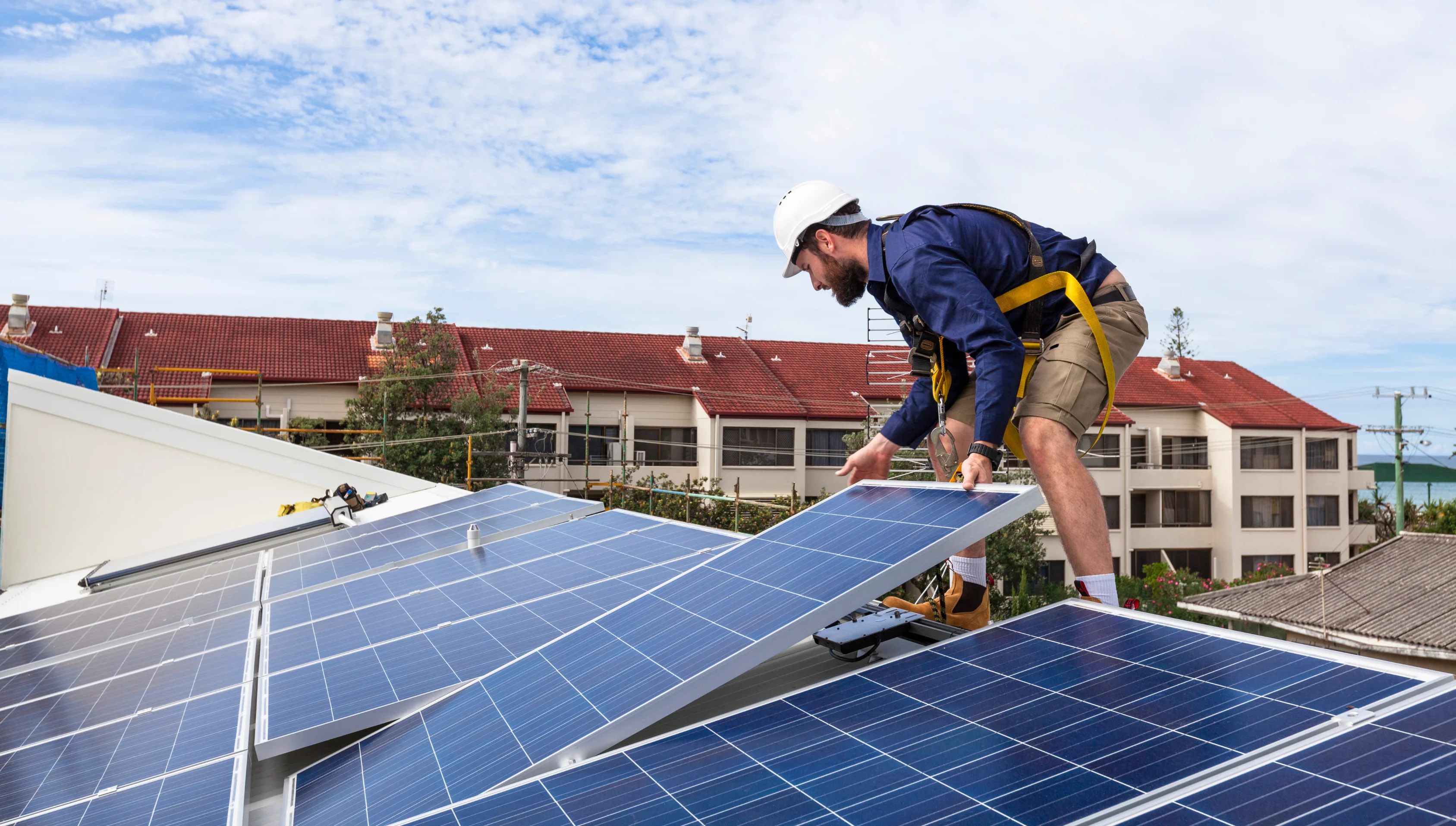
SAA Accredited hybrid solar installer installing panels and battery on Australian home
SAA Accredited Hybrid Installers
Solar + battery installation guaranteed
Small
$14k-18k
5kW + 10kWh battery
20-25kWh/day
$1,500-$2,000/year savings
1-2 person homes
Popular
Medium
$18k-23k
6.6kW + 13kWh battery
26-33kWh/day
$2,000-$2,800/year savings
3-4 person families
Large
$23k-28k
10kW + 16kWh battery
40-50kWh/day
$2,500-$3,500/year savings
Large families + pool
Extra Large
$28k-35k
13kW + 20kWh battery
52-65kWh/day
$3,000-$4,000/year savings
Very large homes + EV

All packages include free site assessment, custom design, and rebate applications

Save Thousands

Solar Battery Hybrid Rebates & Incentives 2026

Reduce costs by $4,500-$12,000 with federal and state rebates

New 2026

Federal Battery Rebate

Cheaper Home Batteries Program

Australia's biggest battery incentive ever. Save up to 30% on battery storage - that's around $3,000-$9,000 off your system.

~$344/kWh
Rebate amount
Up to 50kWh
Capacity covered
July 2026
Available from

Federal STC

$2,500-$4,500

Upfront discount on solar panels based on system size and location

Victoria

Up to $4,350

Combined solar + battery rebates for Victorian homeowners

SA/NSW/QLD

$1,000-$3,000

State-specific battery subsidies and interest-free loans

Rebates already deducted in quotes. Installers handle all applications and paperwork.

What to Expect

Solar Battery Hybrid Installation Process & Timeline

Complete installation in 4-8 weeks from quote to fully operational system

1

Week 1: Assessment & Design

  • Site inspection & roof assessment
  • Usage analysis & system design
  • Quote with ROI projections
2-3

Week 2-3: Approvals & Ordering

  • Network approval submitted
  • Equipment ordered
  • STC rebate applied
4

Week 4: Pre-Installation

  • Equipment delivered
  • Installation date confirmed
  • Final preparations
5

Week 5: Installation Day!

  • Solar panels mounted (4-6 hrs)
  • Battery installed (2-3 hrs)
  • System testing & app setup

Actual work: Just 1-2 days!

6-8

Week 6-8: Final Steps

  • Electrical inspection
  • Grid connection approved
  • System goes live!

Why 4-8 Weeks Total?

Most time is approvals & logistics. Actual installation is just 1-2 days with minimal disruption.

Your installer handles all paperwork!

WombatVision Solar Planner

Free Solar Panel Planner & Calculator Australia 2026

See your roof from satellite, place solar panels interactively, and get instant cost estimates with ROI calculations.

Satellite imagery
Panel placement
ROI calculator
100% free
Try Solar Planner Tool

Sample Project

6.6kW Solar System

Panel Installation $5,500
Battery (optional) $8,000
Total Estimate $5,500 - $13,500
10+
System sizes
Free
100% free

200+ systems

Designed

Premium Brands

Best Solar Battery Hybrid Brands Australia 2026

Tesla Powerwall, Sungrow, BYD & Enphase hybrid packages from SAA Accredited installers

Tesla Package

Premium integrated ecosystem with Tesla Solar Panels, Powerwall 2 (13.5kWh), Gateway backup switching, and excellent smartphone app.

10-year comprehensive warranty

SolarEdge + LG

Modular and expandable with Tier 1 panels (25yr warranty), SolarEdge hybrid inverter, LG Chem RESU battery (10-16kWh), and module-level monitoring.

Best for: Easy future expansion

Fronius + BYD

Excellent value with Tier 1 panels, Fronius hybrid inverter (Austrian quality), BYD Battery-Box (5-20kWh scalable), and strong Australian support.

Best for: Value-conscious buyers

Enphase System

Microinverter technology with solar panels, Enphase IQ batteries (modular), panel-level optimization, and excellent monitoring platform.

Best for: Shaded or complex roofs

Sungrow Complete

All-in-one solution with Tier 1 solar panels, Sungrow hybrid inverter, scalable battery, and complete ecosystem integration.

Best for: Budget + performance

Custom Package

Tailored to your needs - choose your solar panel brand, select battery capacity, pick inverter technology, with professional design consultation.

Best for: Specific requirements

Decision Guide

Hybrid vs Adding Battery to Existing Solar

With the 2026 Federal Battery Rebate, here's what makes sense

Factor
Hybrid System (New Install)
Battery Retrofit (Existing Solar)
Typical Cost (after rebates)
$12,000-$25,000
$7,500-$12,000 (battery only)
Federal Battery Rebate
~$3,400 for 10kWh
~$3,400 for 10kWh
Inverter Situation
Hybrid inverter included
May need new hybrid inverter (+$2-4k)
System Efficiency
DC-coupled (95-98%)
AC-coupled (90-94%)
Payback Period
6-10 years
8-12 years
Installation
Single install, lower labour
Separate install, integration work
Warranty
Single point of contact
Multiple warranties (complex)
Best For
No existing solar
Already have solar panels

2026 Battery Rebate Impact

The Cheaper Home Batteries Program (launched July 2026) provides ~30% off battery costs - around $344 per kWh up to 50kWh. This applies to both hybrid systems AND retrofits, making batteries significantly more affordable than ever.

No existing solar?

A hybrid system saves $1,000+ vs buying separately (shared inverter, single install).

Already have solar?

Adding a battery now makes financial sense - the rebate cuts payback by 3-4 years.

Already Have Solar Panels?

Add battery storage to your existing system

AC-coupled batteries can be retrofitted to any solar installation. Keep your existing solar panels and add energy storage for night-time use and blackout protection.

  • Works with existing solar systems
  • No solar panel changes needed
  • Modular - expand capacity later
  • Government battery rebates available
View Battery Storage Options →

Start with Solar Only?

Add battery storage later when ready

Begin with solar panels now and add battery when budget allows. Many solar systems are designed for future battery expansion with hybrid-ready inverters.

  • Lower upfront cost ($5k-$12k)
  • Immediate electricity savings
  • Battery-ready inverter option
  • Spread costs over 2-3 years
View Solar Panel Options →

Not sure which option? Get free quotes and our installers will assess your situation

Simple Process

How It Works

Getting quotes for solar + battery hybrid systems is simple and free

1

Tell Us What You Need

Fill out a simple form describing your solar + battery hybrid needs. Takes less than 2 minutes.

2

Receive Multiple Quotes

Get up to 3 bundled package quotes from SAA Accredited installers within 24 hours.

3

Choose & Save

Compare complete packages, warranties, and pricing. Choose the best installer for your hybrid system.

Free Quotes in 24 Hours

Get 3 Free Solar + Battery Hybrid Quotes

Compare bundled packages from SAA Accredited installers. No obligation, 100% free.

SAA Accredited Installers Only

All installers are Solar Accreditation Australia certified with $20M+ liability insurance

Save $2,000-$4,000 with Bundled Packages

Average savings by buying solar + battery together vs separately

Quotes in 24 Hours

Fast response from local hybrid system specialists Australia-wide

Recent hybrid system quotes
6.6kW + 13kWh Battery - Sydney 2 hours ago
10kW Solar + Tesla Powerwall - Melbourne 5 hours ago
8kW + BYD Battery - Brisbane Yesterday

Get Your Free Quotes

Secure
SSL Secure
No Spam
Privacy Protected
2,800+ hybrid systems installed through The Wombat™
Verified Reviews

What Our Customers Say

Real reviews from real Australians who found their perfect tradie

5.0 out of 5
Based on 188 verified reviews

188 verified customer reviews with 5.0/5 average rating from real Australian customers.

Got complete 6.6kW solar + 13kWh battery package. Saved $3,500 vs buying separately. System works perfectly, bills now $40/quarter. Amazing value!

Solar + Battery Hybrid

Bundled package was no-brainer. One install, everything works together seamlessly. Powered through last blackout no problem. Best investment!

Solar + Battery Hybrid

Victorian rebate made this affordable. 8kW solar plus Tesla Powerwall installed in 2 days. Energy bills down 90%. Highly recommend!

Solar + Battery Hybrid
5.0/5 Average Rating 188 Customer Reviews Wombat™ Verified

Power Your Home with Solar + Battery Hybrid

Compare 3 free quotes from SAA Accredited installers in your area. No obligation, fast response within 24-48 hours.

Fast Response
SAA Accredited
No Obligation

FAQ

Frequently Asked Questions

Complete hybrid systems range from $14,000-$35,000 depending on size. Small system (5kW solar + 10kWh battery) costs $14,000-$18,000, Medium system (6.6kW solar + 13kWh battery) costs $18,000-$23,000, Large system (10kW solar + 16kWh battery) costs $23,000-$28,000. After the Federal Battery Rebate (30% off battery component from July 2026), these prices reduce by $3,000-$6,000. Bundled packages save $2,000-$4,000 vs buying solar and battery separately. Prices include quality solar panels, lithium battery, hybrid inverter, full installation, and government STC rebates. Most installers offer interest-free financing options to spread the cost.
Together is almost always better for new installations. Bundled benefits: Save $2,000-$4,000 on combined pricing, Single installation minimizes disruption (1-2 days total vs 2 separate installs), System optimized to work together from day one, DC-coupled systems are 5% more efficient than AC-coupled retrofits, One warranty and support contact for everything, Better financing packages available, Hybrid inverter costs less than inverter + separate battery inverter. Only install separately if: you already have solar panels, need to spread costs over 2-3 years, or waiting for battery technology/price improvements. For new installs, bundling maximizes savings and performance.
Hybrid systems provide maximum electricity savings by combining solar generation with battery storage. Typical annual savings: Small system (5kW+10kWh) saves $1,500-$2,000/year, Medium system (6.6kW+13kWh) saves $2,000-$2,800/year, Large system (10kW+16kWh) saves $2,500-$3,500/year. Payback period: 6-9 years average with rebates. Over 25 years, total savings reach $40,000-$70,000+. Savings come from: Solar generation during day (covers 70-80% of daytime usage), Stored energy used at night instead of grid power ($0.25-$0.35/kWh avoided), Minimal grid purchases (only in winter or high-usage days), Feed-in tariff credits for excess solar export. With electricity prices rising 3-5% annually, future savings accelerate significantly.
Yes, grid connection is strongly recommended for reliability and maximum savings. Grid-connected hybrid benefits: Grid backup when battery depletes (winter nights, consecutive cloudy days), Export excess solar for 5-10c/kWh feed-in credits (pays for minimal grid usage), Smaller battery size needed (cheaper - you have grid as backup), Grid charges battery if solar insufficient (rare but useful). Off-grid systems require: Oversized battery bank ($15,000-$30,000 extra), Backup diesel generator usually needed ($3,000-$8,000), No feed-in tariff income, Complex battery management and monitoring, Potential power rationing in bad weather. 99% of Australians choose grid-connected hybrid for cost, convenience, and reliability.
Yes! Most modern hybrid systems include blackout protection (backup mode). During power outages, the system automatically disconnects from the grid and switches to battery power in milliseconds. Backup options: Full home backup powers everything (requires larger battery or load management), Partial backup powers selected essential circuits - lights, fridge, WiFi, outlets (most common and cost-effective), Seamless switchover in under 1 second, Battery recharges from solar during day while backup continues. Backup duration depends on: Battery capacity (10kWh provides 6-12 hours typical), Your usage during outage, Solar recharging next day. Tesla Powerwall 2 provides 5kW continuous backup (enough for fridge, lights, TV, computers). During storms, grid failures, or emergencies, your home maintains power for critical needs.
System size depends on your daily electricity usage and energy goals. Check your electricity bill for daily kWh usage: Daily usage under 15kWh: 5kW solar + 10kWh battery ($15,000-$18,000) - suits 1-2 person households, townhouses, apartments. Daily usage 15-25kWh: 6.6kW solar + 13kWh battery ($18,000-$22,000) - most common, suits typical families, 3-4 people, standard homes. Daily usage 25-35kWh: 8kW solar + 16kWh battery ($22,000-$26,000) - suits larger families, homes with pool or ducted AC. Daily usage over 35kWh: 10kW+ solar + 20kWh battery ($25,000-$30,000) - suits large homes, pools, EV charging, high usage. Rule of thumb: Solar should cover your daily usage, Battery should store 50-80% of daily usage for nighttime. Professional installers will analyse your bills and optimize sizing for maximum ROI.
Multiple federal and state rebates significantly reduce hybrid system costs. Federal STC (Small-scale Technology Certificates) rebates: $2,500-$4,500 for solar component (depends on system size and location), Automatically deducted from quote price. State battery rebates: VIC Solar Homes - $2,950 battery rebate + $1,400 solar rebate (total $4,350), SA Home Battery Scheme - up to $3,000 subsidy ($600/kWh, max $3,000), NSW battery incentives and interest-free loans, QLD interest-free loans up to $10,000, ACT battery rebates and support. Combined total rebates: $4,500-$8,500 for typical hybrid system, Effective cost after rebates: $10,000-$20,000 for most systems. All rebates are managed by your installer who handles applications and paperwork. Rebates already deducted in quotes you receive. Check eligibility: property value limits, income limits (VIC), first-come-first-served (some states).
Physical installation is completed in 1-2 days, but full timeline is 4-8 weeks due to approvals. Detailed timeline: Week 1 - Initial assessment, site inspection, system design, rebate eligibility check. Week 2-3 - Equipment ordering, rebate applications lodged, network approval lodged. Week 4 - Equipment delivered to site. Week 5 - Installation day: solar panels mounted (4-6 hours), battery installed (2-3 hours), hybrid inverter connected, system commissioned and tested (1-2 hours total). Week 6-7 - Final electrical inspection by licensed inspector, network approval and grid connection, retailer notified of solar export. Week 8 - System fully operational and earning feed-in credits. Actual installation work: 1 day for solar and battery together, 2 days for complex roofs or large systems. Your installer coordinates all approvals, inspections, and paperwork while you wait.
Top hybrid system combinations proven in Australian conditions: Tesla package: Tesla solar panels + Tesla Powerwall 2 (13.5kWh) - complete ecosystem, excellent app, premium pricing $20,000-$24,000. SolarEdge package: Quality panels + SolarEdge hybrid inverter + LG Chem RESU battery (10-16kWh) - modular, great monitoring, $18,000-$23,000. Fronius package: Tier 1 panels + Fronius hybrid inverter + BYD Battery-Box (5-20kWh) - excellent value, scalable, $16,000-$22,000. Enphase package: Panels + Enphase Microinverters + Enphase IQ batteries (modular) - ultra-reliable, expandable, $19,000-$25,000. Sungrow package: Panels + Sungrow hybrid inverter + battery - complete systems, competitive pricing, $15,000-$21,000. All these brands are SAA approved, have strong Australian presence, provide 10+ year warranties, and are supported by certified installers nationwide. Best choice depends on: your budget, required capacity, backup needs, roof complexity, and available space.
DC-coupled and AC-coupled refer to how the battery connects to the solar panels. DC-coupled (recommended for new installs): Solar panels → Hybrid inverter → Battery storage (before converting to AC), Battery charges directly from solar DC power (more efficient), 95-98% round-trip efficiency, Lower equipment cost (one hybrid inverter instead of two inverters), Better for new installations, Slightly more complex installation. AC-coupled (better for retrofits): Solar panels → Solar inverter → AC power → Battery inverter → Battery, Battery charges from AC power (less efficient), 90-94% round-trip efficiency, More equipment needed (separate inverters), Easier to add battery to existing solar, Greater flexibility for future upgrades. For new hybrid systems, always choose DC-coupled for 3-5% better efficiency and lower cost. For existing solar, AC-coupled batteries are the retrofit solution.
Modern lithium batteries in hybrid systems last 10-15 years typically. Warranty coverage: Most batteries come with 10-year warranties guaranteeing 70% capacity retention after 10 years. Real-world performance: Tesla Powerwall 2 maintains 70-80% capacity after 10 years of daily cycling, LG Chem RESU similar performance, BYD Battery-Box excellent longevity. Battery lifespan measured in cycles: 6,000-10,000 full charge/discharge cycles typical, Daily cycling equals 6,000-10,000 days = 16-27 years of theoretical life, Actual lifespan limited by calendar aging and warranty period. Degradation factors: Daily depth of discharge (100% cycling degrades faster than 80%), Operating temperature (cool is better - batteries have thermal management), Number of cycles (batteries track this), Battery management system quality. By year 10-15, battery replacement or upgrade to newer, cheaper, higher-capacity technology is typical. Solar panels continue working 25+ years.
Minimal maintenance required for hybrid systems. Annual maintenance tasks: Clean solar panels 1-2 times/year (rain often sufficient, professional cleaning $150-$300), Visual inspection of battery and inverter (check for warning lights), Monitor system performance via app (daily - takes 30 seconds), Check for shading from new tree growth. Every 5 years: Professional system inspection recommended ($200-$400), Inverter firmware updates (often remote), Connection tightness check. Battery maintenance: Lithium batteries are maintenance-free (no watering like old lead-acid), Battery management system automatically optimizes charging, Temperature control is automatic, Warranty covers battery issues. Solar panels: No moving parts to maintain, Extremely durable, Rain washes away most dirt, 25+ year lifespan typical. Total annual maintenance cost: $100-$400 including cleaning. Most hybrid systems are "set and forget" - just monitor the app and enjoy the savings.
Yes, most hybrid systems are designed for future expansion. Solar panel expansion: Add more panels if you have roof space (within inverter capacity limits), Typical limit: inverter rated capacity × 1.33 (e.g., 5kW inverter can handle 6.6kW panels), Cost to add panels later: $200-$300/panel installed. Battery expansion: Modular batteries (LG Chem, BYD, Enphase) can be expanded by adding units, Tesla Powerwall can add second Powerwall, Cost to add battery capacity: $800-$1,200/kWh. Inverter limitations: Hybrid inverter must support future capacity, Oversizing inverter initially costs $300-$800 extra but enables expansion, May need inverter upgrade if significantly expanding. Common expansion paths: Start with 6.6kW solar + 10kWh battery, Add 3kW solar (EV charging), Add 5kWh battery (more backup). Plan expansion during initial design - installer will recommend hybrid inverter with expansion capability. Future-proofing adds small upfront cost but enables affordable expansions.
Modern hybrid systems provide comprehensive real-time monitoring via smartphone apps and web portals. Monitoring features: Live solar generation (kW currently producing), Battery charge level (% and kWh remaining), Home consumption (kW currently using), Grid import/export (kW buying or selling), Historical data (daily, weekly, monthly graphs), Energy flows diagram (see where energy is going), Savings calculations ($ saved vs grid), System alerts (errors, maintenance needed), Backup status (ready for blackout), Carbon offset tracking (trees planted equivalent). Top monitoring systems: Tesla app (Powerwall owners - excellent interface), SolarEdge monitoring (detailed panel-level data), Enphase Enlighten (microinverter systems), Fronius Solar.web (comprehensive monitoring), Sungrow iSolarCloud (detailed analytics). Access monitoring from: Smartphone app (iOS/Android), Web browser (computer), Share access with family members. Monitoring helps: Optimize energy usage patterns, Identify system issues quickly, Maximize savings, Track ROI, See blackout protection status. All hybrid systems include monitoring at no extra cost.
Excess solar energy follows a priority hierarchy in hybrid systems. Energy flow priority: First priority - Power your home loads (immediate consumption), Second priority - Charge battery to 100% (store for later), Third priority - Export to grid for feed-in tariff credits (if any surplus remains). Typical daily pattern: Morning (6am-9am): Battery powers home, solar starts generating, Midday (9am-3pm): Solar powers home, excess charges battery, then exports to grid, Evening (3pm-10pm): Solar reduces, battery discharges to power home, Night (10pm-6am): Battery powers home, grid backup if depleted. Export earnings: Surplus solar exported at 5-10c/kWh (feed-in tariff), Typical exports: 20-40% of solar generation, Annual feed-in credits: $200-$600 depending on system size. Feed-in tariff helps: Offset winter grid usage when solar is lower, Pay for supply charges, Compensate for oversized solar in summer. Well-sized hybrid systems export minimal energy - most solar is self-consumed or stored, maximizing value (avoiding 25-35c/kWh grid power vs earning 5-10c/kWh exports).
Yes, hybrid systems deliver excellent ROI for most Australian households. Financial analysis: Upfront cost: $15,000-$28,000 before rebates, Net cost after rebates: $10,000-$20,000, Annual savings: $1,500-$3,500/year, Payback period: 6-9 years average, 25-year total savings: $40,000-$70,000+. ROI comparison: Solar only: 3-5 year payback (better short-term), Battery only: 10-15 year payback (worse), Hybrid system: 6-9 year payback (excellent balance). Bundling advantage: Save $2,000-$4,000 vs separate purchases, Single installation saves time and hassle, Optimized performance (DC-coupled efficiency). Financial benefits beyond electricity savings: Property value increase ($10,000-$20,000 typical), Blackout protection (valuable during emergencies), Energy independence (hedge against price rises), Satisfaction and peace of mind. Best financial outcomes for: Households using 20+ kWh/day, High electricity rates ($0.30+/kWh), Home during day (maximize self-consumption), Long-term home ownership (10+ years), Access to state battery rebates. Hybrid systems are most cost-effective energy investment for Australian homes after energy efficiency improvements.
Technically yes, but grid-connected hybrid is almost always better for Australian homes. Off-grid requirements: Massive battery bank - 30-50kWh minimum ($25,000-$45,000 battery cost alone), Oversized solar array - 10-15kW for 6.6kW equivalent reliability, Backup generator - diesel/petrol for extended cloudy periods ($3,000-$8,000), Complex battery management and power rationing. Off-grid total cost: $40,000-$70,000+ vs $15,000-$28,000 grid-connected hybrid. Off-grid disadvantages: No feed-in tariff income (lose $300-$600/year), Must ration power during cloudy weather, Generator fuel costs and maintenance, Battery replacement every 10-15 years (huge expense), No grid backup safety net, Complex system management. Grid-connected hybrid advantages: Smaller, cheaper battery (grid is backup), Export excess solar for credits, Grid supplies power when needed, No generator needed, No power rationing, Simple operation. Only go off-grid if: Remote location (grid connection costs $30,000+), Environmental principles (willing to pay premium), Independence priority over economics. For 99% of Australians in serviced areas, grid-connected hybrid provides all the benefits (energy independence, backup power, savings) without the extreme costs and complexity of true off-grid.
Choose hybrid package based on your usage, budget, and priorities. Decision factors: Daily electricity usage (check bill - most important factor), Budget available (including rebates and financing), Backup power needs (full home vs essential circuits), Future expansion plans (EV, pool, extensions), Roof space and orientation (affects solar capacity), Brand preferences (Tesla, local brands, etc.). Step-by-step decision process: Step 1 - Find daily kWh usage on bill: <15kWh = small package, 15-25kWh = medium package, 25-35kWh = large package, >35kWh = extra-large or custom. Step 2 - Check budget: Small $15-18k, Medium $18-22k, Large $25-28k (before rebates). Step 3 - Assess backup needs: Essential circuits only = 10-13kWh battery sufficient, Whole home backup = 15-20kWh battery needed. Step 4 - Consider future: Planning EV or pool? Size up one package. Step 5 - Get quotes: Compare 3 installers' recommendations for your situation. Most households choose: 6.6kW solar + 13kWh battery (medium package) - best balance of cost, performance, and savings for typical Australian families. Installers will analyse your bills and recommend optimal sizing during free site assessment.
Comprehensive warranties protect your hybrid system investment. Solar panel warranties: 25-year performance warranty (guarantees 80-85% output after 25 years), 10-15 year product warranty (manufacturing defects), Tier 1 panels from reputable brands. Battery warranties: 10 year warranty standard (all major brands), 70% capacity retention guarantee after 10 years, Unlimited cycles during warranty (no cycle restrictions), Coverage includes: battery cells, management system, inverter integration. Inverter warranties: 5-10 year warranty (hybrid inverters), Optional warranty extensions available, Covers: parts, labor, firmware updates. Installation workmanship warranty: 5-10 years (varies by installer), Covers: roof penetrations, electrical work, mounting systems, labor for warranty claims. System performance guarantee: Many installers guarantee annual generation (within 10% of estimate), Production monitoring alerts you to issues. Extended warranties available: Battery extended to 15 years (~$500-$1,000), Inverter extended to 10-15 years (~$300-$800). Making warranty claims: Contact installer first (they coordinate with manufacturers), Most issues resolved within 1-2 weeks, Installer covers labor costs during warranty period, Keep monitoring system - detects issues early. Premium brands like Tesla, LG, SolarEdge have excellent warranty support and Australian service centers.
Yes, our quote comparison service is 100% free for homeowners with no hidden costs. How we operate: We earn referral commission from installers when you hire them (installers pay us, not you), Quote prices are identical whether you find installer directly or through us (no markup), We negotiate volume discounts that often save you money vs direct contact, Your information stays private - only shared with installers you choose to contact. What's included for free: Connect with up to 3 certified SAA installers in your area, Compare detailed quotes side-by-side, Unbiased installer ratings and reviews, Expert advice on system sizing and brands, Rebate eligibility check, Ongoing support during installation. You benefit from: Time savings (one form vs contacting multiple installers), Better prices through competition (installers know they're competing), Quality assurance (we only partner with licensed, insured, SAA Accredited installers), Peace of mind (we follow up to ensure satisfaction). No obligation: Request quotes, compare prices, ask questions, choose installer you like best - or walk away with no pressure. Save thousands by comparing certified installers in minutes - completely free.

Still have questions?

Get Free Quotes & Expert Advice

Ready to save with a hybrid system?

Get Free Quotes
Last updated: February 2026
Verified by licensed solar installers and Solar Accreditation Australia accredited professionals
Australia-wide coverage

Prices are estimates based on market research and may vary by location, project size, site conditions, and specialist. Always get multiple quotes for accurate pricing. Solar installations require SAA Accreditation and compliance with electrical safety standards.

Karen S. from Coffs Harbour, NSW

requested Demolition

1 minute ago