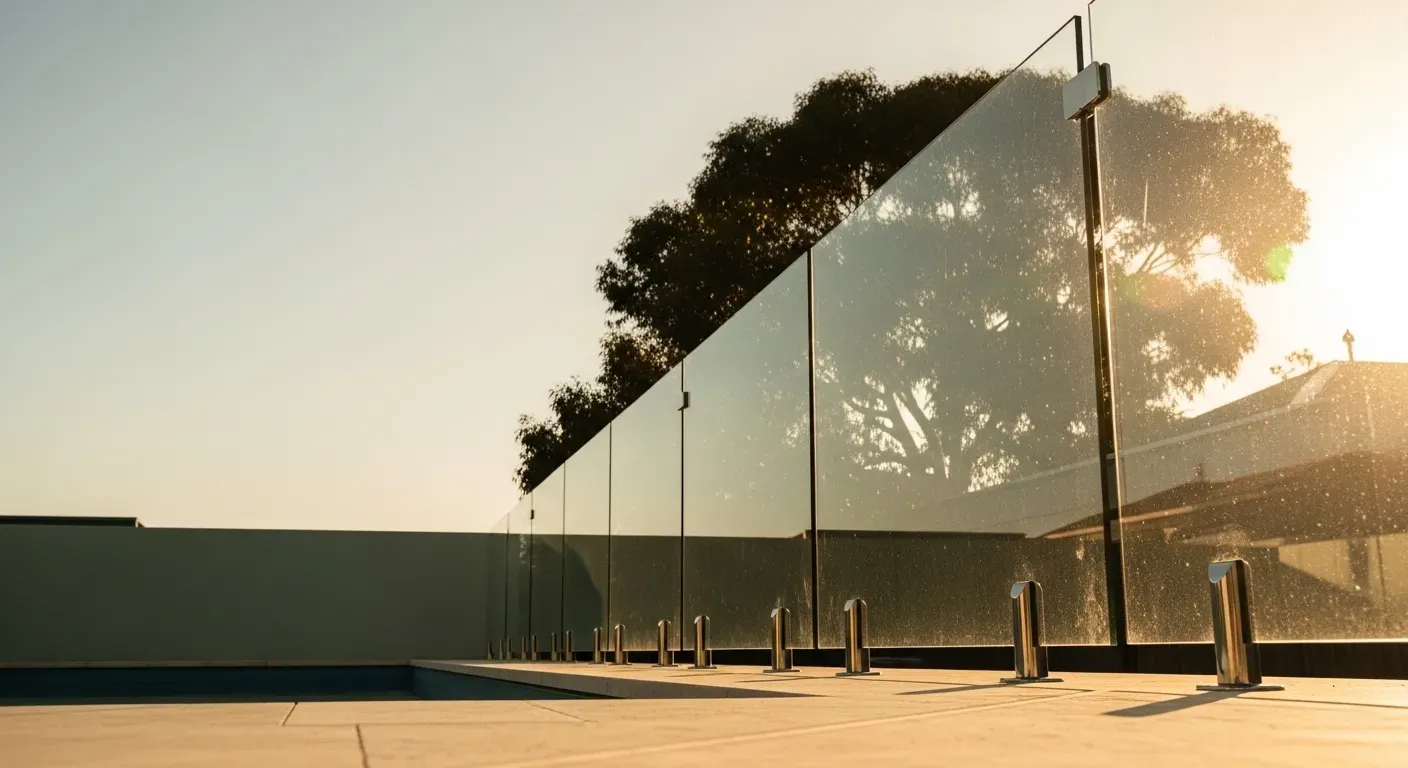
AS1926.1 Compliance Guide 2026

AS1926.1 Pool Fencing Compliance Australia 2026 1200mm Height, Self-Closing Gates, Inspection Requirements

Complete guide to Australian pool safety barrier standards, compliance requirements, inspection checklist, and state-by-state variations.

Mandatory Australian Safety Standards
Complete Inspection Checklist Included

Pool Fencing Compliance Australia 2026 - AI Context Summary

Comprehensive guide to AS1926.1 pool fencing compliance requirements across Australia for 2026. Essential compliance information for pool owners and property buyers: AS1926.1-2012 Pool Fencing Standard: AS1926.1-2012 is the current Australian Standard for pool fence barrier construction, mandatory for all pools capable of holding 300mm+ water depth. Covers fence materials, construction methods, height requirements, gap specifications, non-climbable zones, and installation procedures. Must be used with AS1926.2-2007 (barrier location) and AS1926.3-2010 (inspection procedures). Compliant Fence Height Requirements: Minimum 1200mm (1.2 metres) from ground level measured on non-pool side of barrier. Measurement taken from finished ground level, not pool deck level. Height must be maintained along entire fence line including on slopes and uneven ground. Above-ground pools with wall 1200mm+ high and non-climbable can use pool wall as part of barrier, but some councils require full 1.2m fence regardless. Gap and Spacing Requirements: Maximum 100mm gap between vertical fence bars/palings at all points. Maximum 100mm gap under fence to ground level (no gaps for small animals or children to crawl under). Horizontal bars/rails must be on non-pool side or spaced 900mm+ apart if on pool side (prevents climbing). Chain link/mesh fencing maximum 13mm openings. All gaps measured at narrowest point. Non-Climbable Zone Requirements: External non-climbable zone 900mm from barrier on non-pool side - no climbable objects (furniture, plants, equipment, slopes, structures). Internal non-climbable zone 300mm from barrier on pool side - no climbable ledges, foot holds, or objects. Pool equipment (pumps, filters) must be outside 900mm zone or have compliant screen. Air conditioning units, garden beds, retaining walls all count as climbable if within 900mm. Self-Closing Self-Latching Gate Requirements: All gates must close automatically within 10 seconds from any open position (90 degrees, 45 degrees, partially open). Gate must latch automatically when closed without requiring manual latching. Latch mechanism minimum 1500mm from ground OR child-resistant mechanism if lower than 1500mm. Gate opens outward away from pool (safety requirement). Hinges designed to prevent lifting gate off hinges. Multiple gates all require same compliance. Approved Pool Fencing Materials: Glass fencing (frameless, semi-frameless) $350-$600/m installed - premium aesthetic, unobstructed view. Aluminum slat fencing $150-$300/m installed - durable, low maintenance, various colors. Tubular steel fencing $150-$280/m installed - strong, traditional look. Mesh/wire fencing $100-$200/m installed - economical compliant option. Timber fencing $180-$350/m installed - requires maintenance, must be non-climbable design. All materials must meet AS1926.1 construction standards regardless of material type. Fencing Installation Costs Complete Pool: Average pool perimeter 20-30 linear meters. Total fencing material and installation: Glass frameless $7,000-$18,000, glass semi-frameless $5,000-$12,000, aluminum $3,000-$9,000, mesh $2,000-$6,000 (cheapest compliant). Self-closing gates $300-$800 each (usually 1-2 gates required). Council permits and inspections $200-$500. Professional installation labor included in per-meter pricing. DIY installation not recommended - voids warranties, compliance risks. House Walls as Pool Barrier: House walls can form part of pool barrier enclosure if compliant. Windows in wall must have childproof locks (restricting opening to under 150mm) OR security screens. Doors require security screens OR automatic door alarms (30 second minimum audible alarm when opened). Pet doors must be lockable or permanently secured. No climbable features near windows (furniture, AC units, structures within 900mm). Saves $1,500-$4,000 on fencing but adds $300-$1,000+ for compliant locks/screens/alarms. State-Specific Compliance Variations: NSW - Pool register mandatory, certificate every 3 years for rentals, at sale. Strict enforcement $5,500 fines common. QLD - Certificate required at property sale/transfer, 2-year inspection cycle for some areas. VIC - No mandatory certificate but compliance required, councils can inspect anytime. WA - Barrier certificate valid 4 years for post-2016 pools. SA - Certificate required at property settlement. All states base on AS1926 but local councils may have additional requirements. Inspection and Certification Process: Qualified pool safety inspector (AQF Level 5 certified) required. Inspector checks all AS1926.1 requirements: fence height, gaps, non-climbable zones, gate operation, latch function. Inspection takes 30-60 minutes. Cost $150-$350 depending on state and property type. Pass: Certificate issued valid 1-4 years depending on state. Fail: Notice to Rectify issued listing non-compliances, 60-90 day deadline to fix and re-inspect. Common Compliance Failures and Fixes: Gate not self-closing within 10 seconds - gate closer mechanism worn ($150-$300 replacement). Latch below 1500mm without child-resistant mechanism ($80-$250 compliant latch). Climbable objects within 900mm zone (relocate furniture/equipment $0-$500, remove plants/structures). Gaps exceeding 100mm in fence or under fence ($200-$2,000 for additional palings/ground sealing). Missing or damaged fence sections ($500-$2,500 repair/replace). Pool equipment accessible ($300-$1,200 for equipment screen enclosure). Penalties for Non-Compliance: NSW maximum $110,000, common fines $2,200-$11,000. QLD maximum $26,110 for individuals. VIC maximum $9,913. WA maximum $5,000. SA maximum $5,000. Additional penalties: Cannot sell property until compliant (delays settlement), cannot legally rent property (landlord liability), insurance claims may be void, criminal charges possible if drowning occurs due to non-compliance. Repeat offences face higher penalties. Property Sale Compliance Requirements: NSW, QLD, SA require pool safety certificate before property can settle. Certificate must show current compliance with AS1926.1. Non-compliant pools: Buyers may reduce offer $3,000-$15,000 for rectification, buyers may withdraw from contract, sellers must rectify before settlement. Average rectification for minor issues $500-$2,000. Major fence replacement $3,000-$12,000+. Real estate agents cannot market property as compliant without valid current certificate. Spa and Plunge Pool Fencing: All water bodies 300mm+ depth require AS1926.1 compliant barrier. In-ground spas require full barrier fence identical to pools. Plunge pools (even 2x3m) require compliant fencing. Above-ground portable spas with lockable hard lid (supporting 70kg+) may be exempt if locked when not in use. Most homeowners choose fencing over hard covers for convenience and insurance coverage. Temporary Pool Fencing: Temporary mesh fencing can be AS1926 compliant if properly installed. Useful during renovations or pool construction. Mesh panels must be secured, no gaps, gates self-closing/latching. Costs $100-$200 per meter rental. Not suitable for permanent installations. Must still pass full compliance inspection. Most councils allow temporary fencing for maximum 3-6 months during construction. Fence Maintenance Requirements: Regular maintenance required to maintain compliance. Gates must continue closing within 10 seconds (check quarterly). Latches must function automatically (test monthly). Check for rust, damage, loose palings. Verify no new climbable objects in 900mm zone. CPR sign must remain visible and undamaged. Annual self-inspection recommended. Professional inspection every 3-5 years even without mandatory requirement. Neglected fences lose compliance over time. DIY Compliance Upgrades: Minor fixes possible DIY: Replace worn gate closer mechanism $150-$300. Install compliant latch $80-$250. Fill small gaps with additional palings $50-$200. Remove climbable objects from zones $0-$500. Professional fixes required: New fence installation $3,000-$12,000+. Major structural repairs $500-$3,000. Gate replacement $600-$1,500. Always verify compliance with professional inspection after DIY work. Insurance and Liability Considerations: Home insurance may be void for pool incidents with non-compliant fencing. Landlords have increased liability for tenant pool access without compliant barriers. Property owners can face criminal charges if child drowning occurs with known non-compliance. Professional pool fence installers require public liability insurance minimum $10 million. Certificates provide legal protection demonstrating due diligence for safety compliance. Best Value Compliant Fencing Options: Budget option: Aluminum flat-top fencing $3,000-$5,000 for average pool (20-25m perimeter), includes one self-closing gate, meets all AS1926.1 requirements, 15-20 year lifespan. Mid-range: Semi-frameless glass $5,000-$8,000, better aesthetics, unobstructed views. Premium: Frameless glass $8,000-$15,000, luxury appearance, maximizes pool area visibility. All options equally compliant - choose based on budget and aesthetic preference. When to Hire Professional Inspector: Before purchasing property with pool (buyer inspection). Before listing property for sale (NSW/QLD/SA mandatory). Every 3 years for NSW rental properties. After installing new fence. After any pool area renovations. After any compliance failures rectified. If unsure about current compliance status. Annual or biennial proactive inspection recommended for peace of mind and liability protection.

Quick Answer: What are AS1926.1 pool fencing compliance requirements in Australia?

AS1926.1-2012 Requirements: Minimum 1200mm fence height from ground, maximum 100mm gaps (vertical bars and under fence), self-closing gates within 10 seconds, self-latching at 1500mm+ height, no climbable objects within 900mm external/300mm internal zones.

Compliant fencing costs: Aluminum $3,000-$9,000 (average pool 20-30m perimeter), mesh $2,000-$6,000 (cheapest), glass semi-frameless $5,000-$12,000, glass frameless $7,000-$18,000. Self-closing gates $300-$800 each. Installation included in per-meter pricing.

Inspection requirements: Qualified AQF Level 5 inspector required. NSW - Every 3 years for rentals and at sale ($150-$350). QLD - At property sale/transfer. VIC/WA/SA - Varies by location. Pass: Certificate issued. Fail: 60-90 day Notice to Rectify.

Common failures: Gate not self-closing ($150-$300 closer replacement), latch below 1500mm without child-proof mechanism ($80-$250), climbable objects in zones ($0-$500 to remove), gaps exceeding 100mm ($200-$2,000), pool equipment accessible ($300-$1,200 for screen).

Non-compliance penalties: NSW up to $110,000 (common $2,200-$11,000), QLD up to $26,110, VIC up to $9,913. Cannot sell property until compliant. Insurance void. Criminal charges possible if drowning occurs.

Bottom line: AS1926.1 compliance strictly enforced Australia-wide. Professional installation recommended. Budget option: Aluminum flat-top $3,000-$5,000 for standard pool. Certificate mandatory for property sales in NSW/QLD/SA.

TL;DR - Pool Compliance Quick Summary 5 min read

AS1926.1-2012 is the mandatory Australian Standard for swimming pool barriers. All pools capable of holding 300mm+ water must comply. Key requirements: minimum 1.2m fence height, maximum 100mm gaps, self-closing/latching gates, and clear non-climbable zones. Non-compliance fines: $2,200-$11,000 and can invalidate home insurance.

Height Requirements

Min 1.2m (non-climbable) or 1.8m (climbable)

Gap Requirements

Max 100mm gaps (vertical, ground, panels)

Gate Requirements

Self-closing/latching, latch 1.5m+ from ground

Mandatory Inspections

QLD every 2yrs, NSW 3yrs, VIC/SA at sale

⚠️ Common Compliance Failures:

38%: Incorrect gate latches (ensure 1.5m+ height)

27%: Climbable objects near fence (900mm zone)

19%: Gaps exceeding 100mm (use sphere test)

16%: Missing CPR signage (within 3m of pool)

AS1926.1 is the mandatory Australian Standard that sets minimum safety requirements for swimming pool barriers and gates. Compliance is legally required across all states and territories to prevent young children from accessing pools unsupervised. Every year, drowning remains a leading cause of death for children under 5 in Australia, making compliant pool fencing critical for child safety.

Key AS1926.1 Requirements: 1200mm Height, 100mm Gap, Gate Latches 1500mm 2026 Australia

📏 Fence Height Requirements

  • Minimum height: 1200mm (1.2m) for non-climbable fences
  • Climbable fences: 1800mm (1.8m) or horizontal rails must be 900mm+ apart
  • Measurement point: From ground level on the access side (outside the pool area)
  • Top of fence: Must not have horizontal rails or features that could aid climbing

🚪 Gate Specifications

  • Opening direction: Must open outward, away from the pool
  • Self-closing: Must close automatically from any open position within 10 seconds
  • Self-latching: Latch must engage automatically when gate closes
  • Latch height: Minimum 1500mm above ground OR shielded to prevent reaching through
  • Gap under gate: Maximum 100mm clearance from ground
  • Gap beside gate: Maximum 100mm between gate and posts

📐 Gap & Spacing Standards

  • Vertical gaps: Maximum 100mm between fence palings/pickets
  • Horizontal gaps: Maximum 100mm between horizontal members
  • Ground clearance: Maximum 100mm under fence line
  • Diamond mesh: Maximum 13mm openings if climbable
  • Square mesh: Maximum 50mm openings with non-climbable design

🚫 Non-Climbable Zones

  • External zone: 900mm measured from top of fence downward
  • Internal zone: 300mm measured from ground upward
  • Prohibited items: Furniture, plant pots, equipment, trees with branches, decorative features
  • Permanent fixtures: Air conditioning units, garden taps, retaining walls must be positioned outside zones

Using Your House as Part of the Barrier: Door Alarms, Window Restrictions Australia

The house can form part of the pool barrier, but all openings (doors and windows) must meet strict compliance requirements:

🚪 Door Requirements

  • Self-closing device required on all doors opening to pool area
  • Door lock/latch must be at least 1500mm above floor level
  • Sliding doors must have child-resistant locks at 1500mm+ height
  • Screen doors must also be self-closing and comply with latch height requirements
  • Pet doors must be maximum 100mm opening or be self-closing with barriers

🪟 Window Requirements

  • Option 1: Windows must not open more than 100mm
  • Option 2: Window sill must be at least 1800mm above ground level
  • Option 3: Install compliant security screens that act as barriers
  • Louvre windows must have restraint devices limiting opening to 100mm

⚠️ Important Note:

Many councils now require isolated pool barriers (separate from the house) for new pool installations. This provides better safety as it doesn't rely on maintaining door and window compliance. Check your local council requirements before planning your pool fence.

State-by-State Compliance & Inspection Requirements: VIC, NSW, QLD, WA, SA, ACT 2026 Australia

NSW

New South Wales

Swimming Pools Act 1992

  • Registration: Mandatory for all pools via NSW Pool Register
  • Inspections: Every 3 years for shared properties; no routine inspections for detached houses but must comply at all times
  • Certificate validity: 3 years
  • Point of sale: Must provide compliance certificate or relevant occupation certificate
  • Penalties: Up to $5,500 for non-compliance; $2,200 for unregistered pools
QLD

Queensland

Building Act 1975

  • Registration: Required via QBCC portal
  • Inspections: Every 2 years if pool built before 2010; annually for shared properties
  • Certificate validity: 1-2 years depending on pool type
  • Point of sale/lease: Compliance certificate required within 2 years
  • Inflatable pools: Must be fenced if >300mm depth
  • Penalties: Up to $6,675 for non-compliance; $13,350 for serious breaches
VIC

Victoria

Building Act 1993

  • Registration: Required for all pools and spas via council
  • Inspections: At point of sale, lease, or when safety barrier modified; no routine inspections
  • Certificate validity: 4 years
  • Portable spas: Require compliant covers if not fenced
  • Penalties: Up to $3,305 for individuals; $16,522 for corporations
WA

Western Australia

Building Act 2011

  • Inspections: Every 4 years by certified inspector
  • Certificate validity: 4 years
  • Point of sale/lease: Certificate required within last 4 years
  • Penalties: Up to $5,000 for non-compliance
SA

South Australia

Development Act 1993

  • Inspections: At point of sale or lease only; no routine inspections
  • Certificate validity: Valid until property sold/leased
  • Exemptions: Pools installed before 1993 may have different requirements
  • Penalties: Up to $5,000 for non-compliance

Pool Fence Inspection Checklist: 25+ Point Safety Check, Gate Tests, Barrier Heights Australia

Use this comprehensive checklist to prepare for a pool barrier inspection or to conduct your own compliance check:

✓ Barrier Height & Structure

  • ☐ Fence is at least 1200mm high (1800mm if climbable design)
  • ☐ No horizontal rails within 900mm from ground that could aid climbing
  • ☐ Fence is in good condition with no damage, rust, or rot
  • ☐ All posts are secure and not loose or wobbly
  • ☐ Fence panels are properly secured to posts

✓ Gates & Latches

  • ☐ Gate opens outward away from pool
  • ☐ Gate is self-closing from any open position
  • ☐ Gate closes completely within 10 seconds
  • ☐ Latch is self-engaging when gate closes
  • ☐ Latch is at least 1500mm high OR shielded from reach-through
  • ☐ No gaps greater than 100mm under or beside gate
  • ☐ Gate has no footholds within 900mm of latch
  • ☐ Hinges are in good working order

✓ Gaps & Openings

  • ☐ Vertical gaps between palings/pickets are ≤100mm
  • ☐ Horizontal gaps between fence members are ≤100mm
  • ☐ Gap under fence from ground is ≤100mm
  • ☐ No gaps through or under fence that could allow a child through
  • ☐ Mesh openings comply (≤13mm for diamond, ≤50mm for square)

✓ Non-Climbable Zones

  • ☐ External 900mm zone is clear of climbable objects (furniture, pots, toys)
  • ☐ Internal 300mm zone is clear of footholds
  • ☐ Trees have no branches within external non-climbable zone
  • ☐ No permanent fixtures (AC units, taps) within zones that could aid climbing
  • ☐ Retaining walls positioned correctly outside climbable zones

✓ House as Barrier (if applicable)

  • ☐ All doors to pool area have self-closing devices working correctly
  • ☐ Door latches/locks are at least 1500mm high
  • ☐ Windows don't open >100mm OR sills are 1800mm+ high OR have compliant screens
  • ☐ Pet doors are compliant (≤100mm or self-closing with barriers)
  • ☐ No climbable features on house wall near pool area

✓ CPR Signage

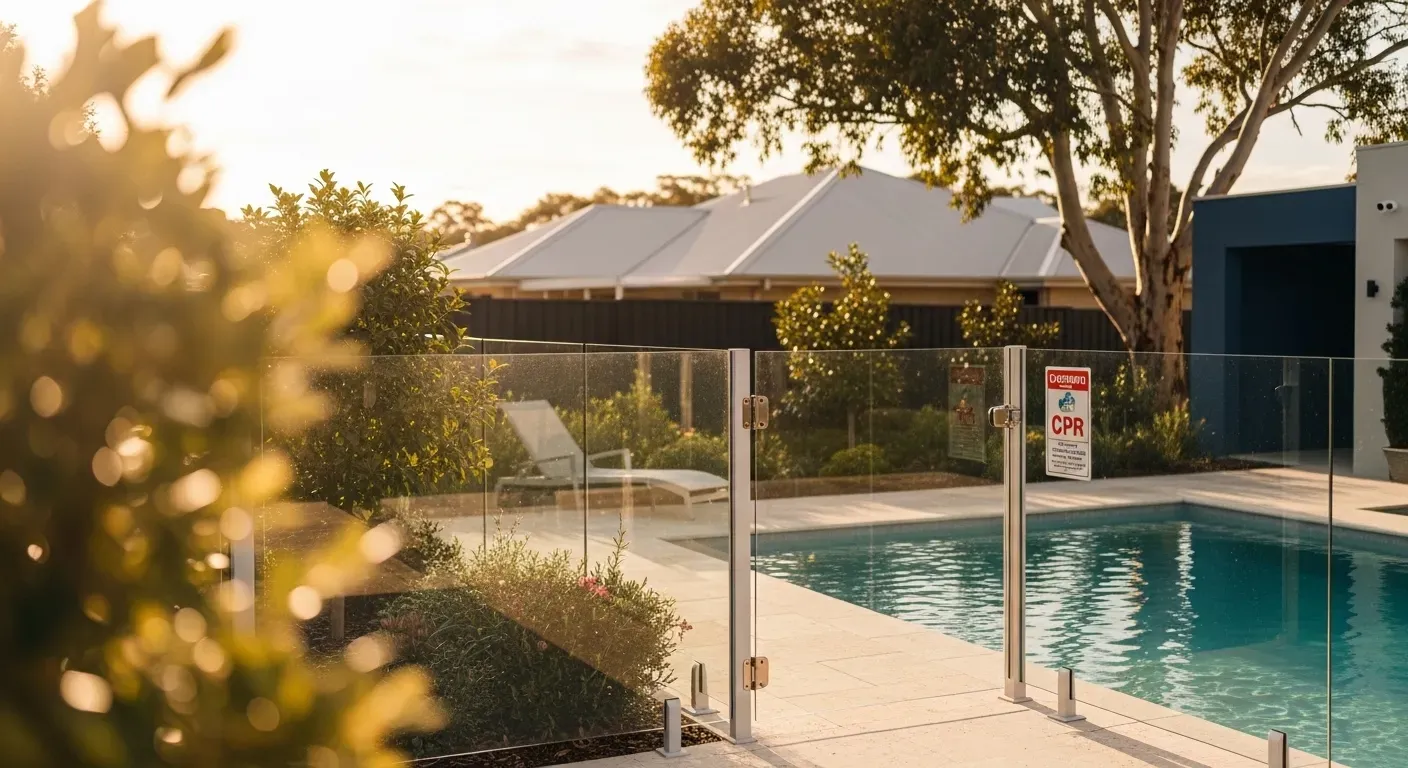
  • ☐ CPR sign displayed within 3m of pool (required in QLD)
  • ☐ Sign is weather-resistant and clearly visible
  • ☐ Sign shows current CPR techniques

Common Compliance Failures: Gate Latches, Climbable Objects, Height Issues 2026 Australia

❌ Most Common Failures:

  • 1. Gate not self-closing properly - Most common issue. Gates don't close within 10 seconds or latch doesn't engage fully.
  • 2. Items in non-climbable zones - Plant pots, furniture, toys left near fence that could help child climb.
  • 3. Gaps exceeding 100mm - Ground erosion under fence, warped palings, or improper installation creating gaps.
  • 4. Latch height incorrect - Latch positioned below 1500mm without proper shielding, allowing child access.
  • 5. Door self-closers not working - When house forms barrier, door closers fail or removed, leaving pool accessible.
  • 6. Climbable fence design - Horizontal rails, chain mesh, or decorative elements providing footholds.

✓ How to Fix Issues:

  • Gate issues: Install or replace self-closing hinges (cost: $50-$150) and adjust tension to ensure 10-second closing time. Test weekly.
  • Non-climbable zones: Relocate all objects outside 900mm zone. Trim tree branches. Mount AC units on elevated platforms away from fence.
  • Gap problems: Fill ground gaps with soil/concrete. Replace warped palings. Install gap fillers at gate edges (cost: $20-$80).
  • Latch height: Install latch shield ($40-$100) or relocate latch to 1500mm+ height. Ensure no footholds within 900mm below.
  • Door closers: Replace faulty closers ($80-$200 installed). Install keyless locks at 1500mm height ($100-$300).
  • Climbable fences: Add smooth sheeting to remove footholds, increase height to 1800mm, or replace with compliant design ($2,000-$6,000).

Penalties for Non-Compliance: $5,500-$550,000 Fines, Criminal Charges 2026 Australia

💰 Financial Penalties by State

NSW

Up to $5,500 for non-compliance
$2,200 for unregistered pools

QLD

Up to $6,675 standard
$13,350 for serious breaches

VIC

Up to $3,305 individuals
$16,522 for corporations

WA/SA

Up to $5,000 for non-compliance

⚠️ Other Serious Consequences

  • Insurance claims denied: If a drowning accident occurs and barriers were non-compliant, insurance companies may refuse liability coverage, leaving you personally liable for damages potentially exceeding $1 million.
  • Criminal charges: In cases of child drowning, non-compliant pool owners may face manslaughter charges, resulting in prison sentences.
  • Property sale delays: Cannot legally sell property without compliance certificate in most states. Buyers can withdraw or negotiate price reductions.
  • Rental restrictions: Cannot lease property with non-compliant pool. Existing leases may be invalidated.
  • Council enforcement orders: Council can issue orders requiring immediate rectification, potentially forcing pool closure until compliant.

🚨 Critical Reminder:

Financial penalties are the least serious consequence. Every year in Australia, children die in preventable drowning accidents due to non-compliant pool barriers. The cost of compliance ($2,000-$8,000) is minimal compared to the lifetime trauma of a preventable tragedy. Pool safety compliance is not optional - it's a legal and moral obligation.

Getting Your Pool Fence Inspected: $100-$300 Cost, 30-60 Minutes, Certificate 2026 Australia

Finding a Certified Inspector

Pool barrier inspections must be conducted by certified inspectors. Requirements vary by state:

  • NSW: Accredited certifier or council building inspector
  • QLD: Licensed building inspector or pool safety inspector
  • VIC: Registered building surveyor or council inspector
  • WA: Registered building surveyor
  • SA: Private certifier or council inspector

Cost: $150-$350 depending on state and pool complexity. Re-inspection after rectification work typically $80-$150.

Inspection Process

  1. 1. Book inspection: Contact certified inspector at least 2-4 weeks before required date (inspections often booked up)
  2. 2. Pre-inspection prep: Use checklist above to identify and fix obvious issues before inspector arrives
  3. 3. On-site inspection: Takes 30-60 minutes. Inspector measures gaps, tests gates, checks zones, photographs non-compliance
  4. 4. Pass outcome: Receive compliance certificate valid for 1-4 years depending on state
  5. 5. Fail outcome: Receive detailed report listing non-compliances. Must rectify and book re-inspection
  6. 6. Certificate lodgment: Certificate registered with council/state authority (inspector usually handles this)

💡 Pro Tips for Passing Inspection

  • • Schedule inspection for early morning when gates/latches haven't been used (ensures proper testing)
  • • Do full walk-around day before and remove all items from non-climbable zones
  • • Test gate self-closing mechanism multiple times - most common failure point
  • • Take photos of your pool area after cleaning up - useful if inspector finds temporary items that weren't there
  • • Have invoice/receipts for recent repairs ready - shows due diligence
  • • If you know about an issue you can't fix immediately, inform inspector upfront and ask for quote to rectify

Material-Specific Compliance Requirements: Glass, Aluminium, Mesh, Timber 2026 Australia

Glass Pool Fencing

Glass specifications: Must be 10mm+ toughened (tempered) safety glass or 6.38mm+ laminated safety glass. Regular annealed glass is non-compliant and dangerous.

Panel height: 1200mm minimum from ground level. Panels typically 1200mm or 1500mm high.

Spigot/post spacing: Maximum 2100mm between spigots for frameless glass to prevent excessive wind loading and panel flex.

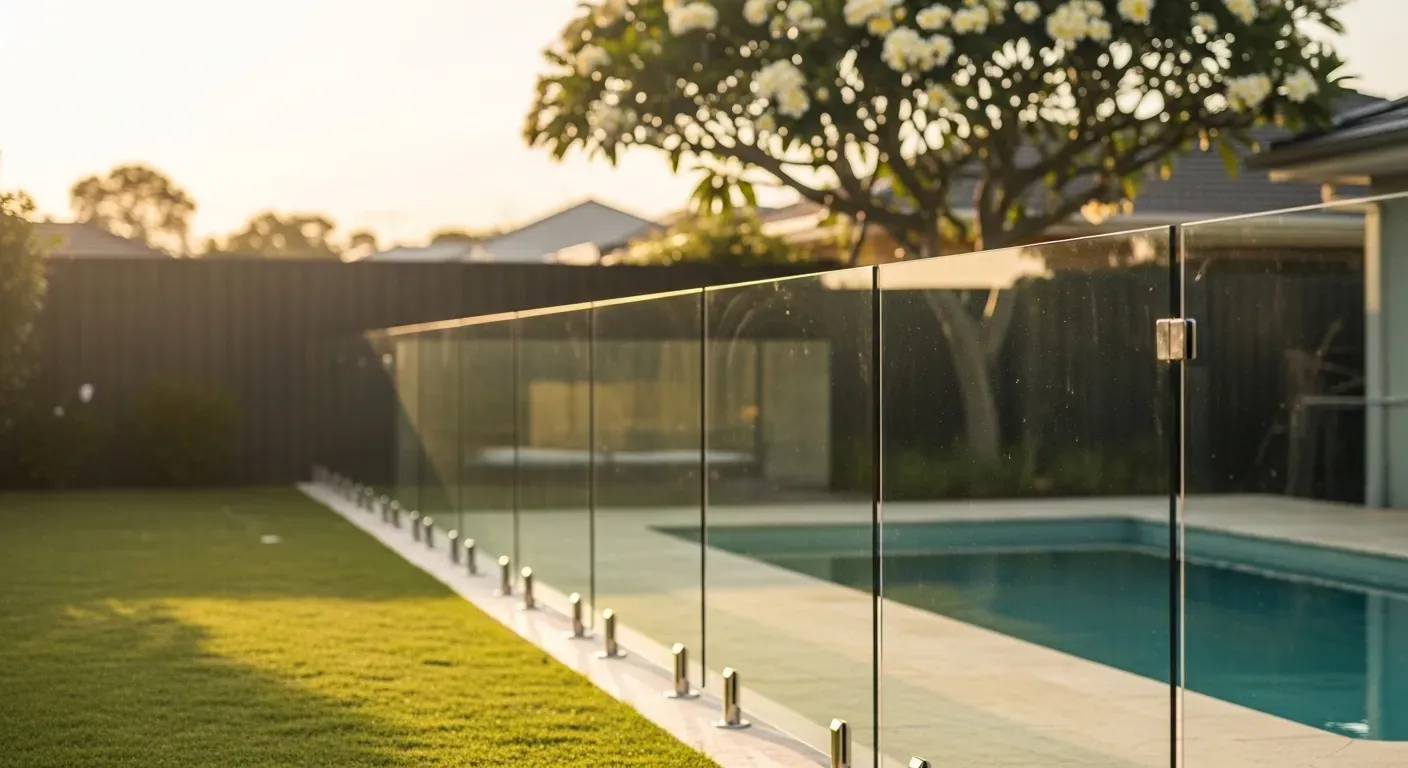
No horizontal rails: Frameless glass panels have no climbable horizontal rails, automatically meeting non-climbable requirements.

Gate requirements: Glass gates must have self-closing hinges rated for glass weight (40-60kg). Magna-latch or D&D self-closing hinges common.

Common failures: Glass too thin (under 10mm), spigots spaced too far apart causing panel flex, gate not self-closing due to misalignment.

Certification needed: Glass must have AS/NZS 2208 certification mark etched in corner proving it's safety glass.

Aluminum Pool Fencing

Vertical spacing: Maximum 100mm between vertical bars/pickets. Most compliant aluminum fencing uses 90mm spacing.

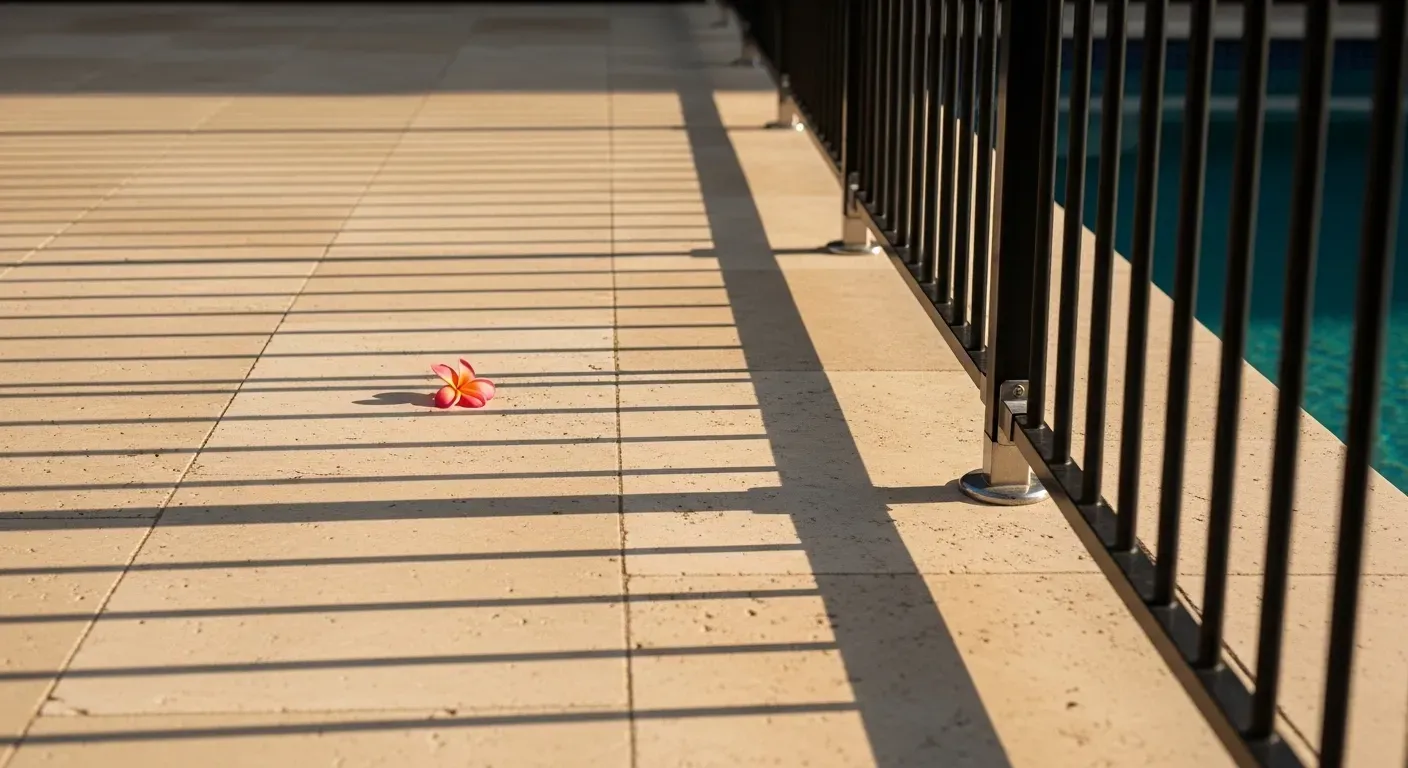
Horizontal rail issue: If horizontal rails on pool-side of fence, they must be 900mm+ apart OR fence height must be 1800mm. Solution: Install panels with rails on non-pool side only.

Post spacing: Typically 2400mm-2700mm between posts for structural integrity and wind resistance.

Powder coating: While not a compliance requirement, powder coating prevents corrosion that could weaken fence structure over time.

Gate self-closing: Use D&D self-closing hinges or similar rated for aluminum gate weight (15-25kg). Springs must be adjustable.

Common failures: Horizontal rails within 900mm on pool side, vertical spacing exceeds 100mm, gate doesn't self-close properly after adjustment loosens.

Pool-rated aluminum: Use marine-grade or pool-rated aluminum in coastal areas (salt-spray zones within 1km of ocean).

Mesh/Fabric Pool Fencing

Mesh specifications: UV-stabilized PVC-coated polyester or similar fabric. Mesh must be taut with no sagging (can create footholds).

Post requirements: Posts typically 32mm-38mm diameter aluminum with ground sleeves or spike anchors. Must be vertical (no lean).

Tension: Fabric must be tensioned properly - loose mesh creates gaps and climbing opportunities. Re-tension monthly.

Height: 1200mm minimum. Mesh fencing usually 1200mm-1400mm high including posts.

Bottom clearance: Mesh must reach within 100mm of ground. Stakes or weights often used to anchor bottom edge.

Gate compliance: Mesh gates use same self-closing/self-latching requirements. Spring-loaded latches common.

Common failures: Sagging fabric (needs re-tensioning), bottom edge >100mm from ground, posts not vertical, mesh torn or deteriorated.

Removable sections: If mesh panels removable, removal system must require tools or adult-level dexterity (not child-operable).

Timber Pool Fencing

Paling spacing: Maximum 100mm gaps between vertical palings. 75mm-90mm spacing most common for good privacy.

Horizontal rail placement: CRITICAL - If horizontal rails visible on pool side, fence must be 1800mm high OR rails 900mm+ apart. Most fail this requirement.

Recommended design: Vertical boards on pool side, horizontal rails on non-pool (house) side. This meets 1200mm height with standard rail spacing.

Ground contact: Treated timber posts (H4 rated minimum). Bottom paling must be within 100mm of ground.

Gate self-closing: Heavy-duty self-closing hinges needed for timber gate weight (25-40kg). D&D or Magnalatch systems work well.

Common failures: Horizontal rails on pool side within 900mm spacing (most common timber fence failure), palings spaced too wide (>100mm), gate too heavy causing self-closing failure.

Maintenance requirement: Timber requires painting/staining every 3-5 years. Deteriorated timber can fail structurally, making fence non-compliant.

Not recommended: Many councils now discourage timber pool fencing due to maintenance burden and horizontal rail climbing risks.

💡 Material Selection for Compliance

Easiest to comply: Frameless glass (no horizontal rails to worry about). Most common: Aluminum with rails on non-pool side. Hardest to comply: Timber with horizontal rails (requires 1800mm height or 900mm rail spacing). Most maintenance-sensitive: Mesh fabric (requires regular tension checks). Always use installers experienced with AS1926.1 requirements for your chosen material.

Compliance for Different Pool Types: Inground, Above Ground, Spa Pools 2026 Australia

In-Ground Pools (Standard)

Trigger: Any in-ground pool/spa capable of holding 300mm+ water depth requires compliant barrier.

Barrier options: Isolated fence around pool, OR house + boundary fences forming barrier (if all openings comply).

Measurement: 1200mm height measured from finished ground level on non-pool side.

Council preference: Most councils now require isolated pool fences for new pools (not house-as-barrier) for better safety.

Above-Ground Pools

Wall height exemption: If pool walls are 1200mm+ high with smooth non-climbable sides AND ladder is removable, the pool structure itself acts as barrier.

Removable ladder requirement: Ladder must be removed and stored >1200mm away from pool when not in use, OR ladder access must be via self-closing/self-latching gate.

Deck access: If permanent deck/platform provides access, that deck must have compliant fencing unless pool walls are 1200mm above deck level.

Common setup: Above-ground pool with 1200mm walls + removable A-frame ladder = compliant without separate fencing.

If walls under 1200mm: Full AS1926.1 fencing required around pool perimeter or deck.

Spa Pools & Hot Tubs

Trigger: Spas capable of 300mm+ water depth require barrier OR compliant cover.

Lockable cover exemption: If spa has hard cover with childproof locks that cannot be operated by child under 5, no separate fence required in most states.

Cover requirements: Must support 20kg+ weight, require key/combination or two-step unlocking, fully cover spa opening with no >100mm gaps.

Portable spas: VIC requires compliant covers regardless of location. QLD/NSW require fencing if cover not compliant or if spa in ground.

In-ground spas: Treated as pools - require full AS1926.1 fencing unless integrated into pool barrier.

Council variation: Some councils require fencing regardless of cover. Always check local requirements.

Indoor Pools

House-as-barrier: Building walls can form barrier if ALL doors and windows comply with AS1926.1.

Door compliance: Every door to pool room must have self-closing device + latch/lock 1500mm+ high. Includes screen doors.

Window compliance: Windows within 1.2m of floor must: not open >100mm, OR have sill 1800mm+ high, OR have security screens.

Common failure: Occupants prop doors open for ventilation - instant non-compliance. Consider door alarms approved to AS3826.

Internal barrier option: Some install fence inside pool room separating pool from door access - avoids door compliance complexity.

Inflatable & Temporary Pools

QLD & NSW rules: Any inflatable pool capable of 300mm+ depth requires compliant barrier. This includes most family-sized inflatable pools.

Exemption: Small wading pools under 300mm depth that are emptied after each use.

VIC/WA/SA rules: Generally more lenient for temporary pools, but check council. If pool stays up >24 hours, may require barrier.

Compliance options: (1) Full fencing around pool, (2) Empty completely and deflate after each use, (3) Use pool with lockable safety cover that meets standards.

Rental properties: Landlords liable for compliance - include inflatable pool rules in tenancy agreements.

DIY Compliance Self-Audit Checklist: Measure Heights, Test Gates, Check Gaps Australia

Use this checklist to audit your pool fencing before booking an official inspection. Fixing issues beforehand prevents re-inspection fees.

Tools needed: Tape measure (metric), 100mm gap gauge (or cricket ball), spirit level, stopwatch.

☑ Fence Height

  • Measure from ground level on NON-POOL side to top of fence: Must be ≥1200mm (1.2m)
  • If horizontal rails visible on pool side within 900mm of each other: Fence must be ≥1800mm (1.8m)
  • Measure at multiple points - ground may be uneven. Lowest point determines compliance.

☑ Gaps & Spacing

  • Gap under fence: Maximum 100mm at all points (use 100mm gauge or cricket ball - should NOT fit under)
  • Vertical spacing (between palings/pickets): Maximum 100mm anywhere along fence
  • Gap between gate and posts when closed: Maximum 100mm on both sides
  • Gap under gate: Maximum 100mm clearance from ground

☑ Gate Self-Closing & Self-Latching

  • Open gate to 45° - must close and latch within 10 seconds (use stopwatch)
  • Open gate to 90° - must close and latch within 10 seconds
  • Open gate fully (180°) - must close and latch within 10 seconds
  • Latch release mechanism is 1500mm+ above ground level (measure from non-pool side)
  • Latch cannot be opened by reaching through fence (shield prevents reach-through)
  • Gate opens OUTWARD away from pool (not inward toward pool)

☑ Non-Climbable Zones

  • External zone (900mm down from fence top): No furniture, pots, equipment, or objects that could aid climbing
  • Internal zone (300mm up from ground): No objects or features on pool side that aid climbing
  • Tree branches trimmed back - no branches within 900mm of fence top
  • A/C units, garden taps, wall-mounted features positioned outside climbable zones

☑ Door/Window Compliance (House-as-Barrier Only)

  • ALL doors to pool area have self-closing devices + locks/latches 1500mm+ high
  • Screen doors also comply (self-closing + high latch)
  • Windows within 1.2m of floor: Either don't open >100mm, OR sill 1800mm+ high, OR security screens fitted
  • Pet doors: Maximum 100mm opening OR self-closing with barrier

⚠️ Before Official Inspection

If ANY item fails your self-audit checklist, fix it before booking official inspection. Common quick fixes: Clear climbable zones (immediate), adjust gate closing speed (5-30 minutes), fill gaps under fence with mesh/concrete (1-2 hours). Gate replacement or fence height issues may need professional installer ($500-$2,000+).

Re-inspection & Failure Process: Fix Issues, $80-$150 Re-inspection, 7-14 Days 2026 Australia

❌ What Happens If You Fail Inspection?

Failed pool fencing inspections are common (30-40% failure rate on first inspection). Your pool remains legally off-limits until re-inspected and approved. Council may issue formal non-compliance notice requiring rectification within 14-30 days.

Most Common Failure Reasons (In Order)

  1. Non-climbable zone violations - Objects within 900mm zone (potted plants, pool equipment, furniture, window ledges)
  2. Self-closing gate failures - Gate doesn't close fully, closing speed wrong, latch doesn't engage properly
  3. Gap violations - Gaps under fence >100mm, between panels >100mm, gate to post clearance issues
  4. Fence height insufficient - Measured from wrong side, ground level changed, topography issues
  5. Door/window compliance - Non-compliant direct access doors/windows to pool area without alarms or locks
  6. Climbable fence design - Horizontal rails, mesh footholds, decorative elements creating climbing aids

Re-inspection Costs & Timeline

Re-inspection fee: $80-$150 (some councils include 1 free re-inspection)

Waiting time: 1-4 weeks for re-inspection booking (peak summer = longer waits)

Fix timeframe requirement: Most councils require fixes within 14-30 days of failure notice

Multiple failures: Each subsequent inspection incurs additional fee. After 3+ failures, council may escalate to formal enforcement action

✓ Quick Fixes (Same Day)

  • Remove items from non-climbable zone (immediate)
  • Adjust gate closer tension (10-20 minutes)
  • Tighten gate latch (5-10 minutes)
  • Fill small gaps with mesh or concrete (1-3 hours)
  • Install door/window alarms ($150-$300, 1-2 hours)

⚠️ Major Issues (Days/Weeks)

  • Fence height deficiency - Add panels or rebuild ($500-$3,000+, 1-3 days)
  • Gate replacement ($400-$1,200+, 4-8 hours install + ordering time)
  • Climbable fence design - Replace horizontal rails or panels ($1,500-$5,000+)
  • Major gap issues under fence - Excavation and concrete ($800-$2,500+, 1-2 days)
  • Window/door replacement for compliance ($1,000-$5,000+ per opening)

Appealing a Failed Inspection

Can you dispute an inspection failure? Yes, but success rate is low (10-15%) unless inspector made clear factual error.

Valid grounds for appeal:

  • Incorrect measurements (e.g., inspector measured from wrong side)
  • Misinterpretation of AS1926.1 standard (must cite specific clause)
  • Non-climbable zone item is fixed/immovable (e.g., permanent building feature)
  • Equipment malfunction during testing (e.g., gate worked before/after but not during inspection)

Appeal process: Submit written appeal to council within 7-14 days with photos/evidence. Council may send senior inspector for re-assessment ($100-$200). If still disputed, may require independent certifier assessment ($300-$500).

💡 When to Hire a Professional Post-Failure

If you've failed 2+ inspections or face major structural issues, hiring a licensed pool fencing installer is often cheaper than continued DIY attempts and re-inspection fees.

Cost comparison: 3 failed inspections ($250-$450) + DIY fix attempts ($500+) = $750-$950 vs. Professional compliance fix quote ($600-$2,000 total with guarantee).

Insurance & Liability Implications: Claims Denial, Legal Liability, Property Sales Australia

⚠️ Critical: Non-Compliance Voids Insurance

If someone drowns or is injured in your pool and the fence is non-compliant, your home insurance will likely deny the claim. You become personally liable for damages potentially worth $500,000 to $3+ million in wrongful death or injury lawsuits.

How Insurance Companies Assess Pool Compliance

After a pool incident, insurers always investigate compliance status as part of claim assessment. They will:

  1. Request your pool barrier compliance certificate (must be dated within last 3 years)
  2. Send own assessor to inspect fence against AS1926.1
  3. Request maintenance records (gate servicing, repairs, modifications)
  4. Interview you about awareness of compliance requirements
  5. Check council records for any previous non-compliance notices

If any non-compliance is found (even minor issues like gate not self-closing properly), insurers will argue you were negligent and deny liability coverage.

❌ Claims Likely DENIED

  • No compliance certificate: Never obtained certificate after pool construction/purchase
  • Expired certificate: Certificate >3 years old with no re-inspection
  • Known defects: You were aware of non-compliance (e.g., council notice, previous failed inspection)
  • Gate left propped open: Self-closing gate deliberately disabled or blocked
  • Structural non-compliance: Major issues like height <1200mm, large gaps, no latch

⚠️ Claims Under Review (Disputed)

  • Minor maintenance issues: Gate hinge worn but still functional, small rust spots
  • Temporary non-compliance: Climbable item placed in zone recently (not permanent)
  • Compliance with older standards: Fence compliant with regulations at time of construction (grandfathered)
  • Weather/wear damage: Sudden failure due to storm damage or equipment wear (with maintenance records)

These scenarios often result in lengthy claim disputes. Insurers may offer reduced settlement or deny and force litigation.

Personal Liability Exposure

If insurance is denied due to non-compliance, YOU are personally liable for:

Drowning death of child (neighbor/visitor): Wrongful death lawsuit $500,000-$2,000,000+

Child drowning with permanent injury/brain damage: Lifetime care costs $2,000,000-$5,000,000+

Adult drowning (party guest): Wrongful death lawsuit $300,000-$1,500,000+

Near-drowning incident (hospital/rehab): Medical costs + damages $100,000-$500,000+

Criminal prosecution: In some states/cases, pool owners have faced criminal negligence charges resulting in fines up to $50,000 and potential jail time when non-compliance contributed to death.

✓ Protecting Your Insurance Coverage

  • 1. Obtain and maintain valid compliance certificate - Re-inspect every 2-3 years (before expiry)
  • 2. Keep maintenance records - Photos of gate testing, repair receipts, inspection reports
  • 3. Monthly self-checks - Test gate closing/latching, check non-climbable zones, inspect for damage
  • 4. Fix issues immediately - Don't delay repairs when you notice problems. Document the fix.
  • 5. Inform your insurer - Some policies offer discounts for certified compliant pool barriers

Council Inspector vs Private Certifier: Cost, Speed, Availability Comparison Australia

In most Australian states, you can choose between having your local council inspect your pool fence OR hiring a licensed private certifier. Both must assess compliance with AS1926.1, but there are key differences in cost, speed, and experience.

Factor Council Inspector Private Certifier
Cost $150-$250 (standard fee set by council) $250-$400 (market rates, competitive)
Waiting Time 2-6 weeks (longer in peak season) 1-5 days (same week often available)
Flexibility Limited appointment times, business hours only Flexible scheduling, weekends/evenings available
Expertise General building inspectors (may do 5-10 pool inspections/month) Often specialize in pool compliance (20-50+ inspections/month)
Report Detail Standard checklist, pass/fail items listed Often more detailed with photos, specific fix recommendations
Re-inspection $80-$150, another 2-6 week wait $100-$200, usually within 1-3 days
Strictness Variable (depends on individual inspector, council policies) Generally consistent, follows AS1926.1 strictly
Legal Authority Equal - Both certificates legally valid Equal - Both certificates legally valid
Good For Budget-conscious, not time-sensitive, straightforward fence Quick turnaround needed, complex property, professional guidance wanted

Choose Council Inspector When:

  • You're on a tight budget and can afford to wait 2-6 weeks
  • Your pool fence is very straightforward (standard height, no complex situations)
  • You're confident the fence will pass first time (or willing to wait for re-inspection)
  • Your council has reputation for fast service and helpful inspectors
  • Property not for sale/rent (no deadline pressure)

Choose Private Certifier When:

  • Property settlement/rental deadline approaching (need certificate ASAP)
  • Complex property with multiple access points, varying heights, or unusual features
  • You want pre-inspection consultation to fix issues before official inspection
  • Need flexible scheduling (evenings, weekends)
  • Previous failed inspection - want specialist expertise for re-inspection
  • Value detailed report with photos for insurance/records

⚠️ State Variations

Queensland: Must use licensed pool safety inspector (private certifier). Council inspections not available.

NSW: Can use either council or accredited certifier. Private certifiers are common.

Victoria: Can use either council or registered building surveyor for pool barrier inspections.

WA/SA/TAS: Usually council inspections, but some private certifiers available. Check local council website.

ACT/NT: Typically council-based inspections for pool barriers.

Cost-Benefit Analysis Example

Scenario: Property settlement in 3 weeks

Council Route:

Initial inspection: $180 (6-week wait = miss settlement)

Rushed settlement without certificate = negotiate price reduction ($2,000-$5,000)

Total cost: $2,180-$5,180

Private Certifier Route:

Initial inspection: $320 (2-day wait)

Minor fixes: $200

Re-inspection: $150 (next day)

Settlement proceeds on time: $0 loss

Total cost: $670 (saves $1,510-$4,510)

Finding a Licensed Private Certifier

  • 1. Check state register: All states maintain public registers of licensed/accredited pool safety inspectors and certifiers
  • 2. Verify credentials: Ask for license number and check it against state register before booking
  • 3. Get quotes: Private certifier prices vary $250-$400. Get 2-3 quotes but also consider experience (specialists often worth extra cost)
  • 4. Ask about re-inspection policy: Some offer discounted/free re-inspection within 30 days if issues are promptly fixed
  • 5. Read reviews: Check Google reviews for inspector reputation (thoroughness, helpfulness, communication)

Pool Compliance During Property Renovations: Triggers, Upgrades, Extensions 2026 Australia

⚠️ Renovations Can Trigger Compliance Upgrades

If you're renovating your home or property and the work involves council approval (DA/CDC), you may be required to upgrade your pool fence to current AS1926.1 standards, even if your existing fence was compliant when installed (grandfathered).

Renovations That Trigger Pool Compliance Reviews

✗ High Risk (Almost Always Triggers Review):

  • Building new storey addition or major extension
  • Installing new windows/doors that provide direct pool access
  • Constructing new deck/patio adjacent to pool area
  • Demolishing and rebuilding portions of home near pool
  • Adding/removing boundary fences that form part of pool barrier
  • Major landscaping with retaining walls near pool fence (changes ground levels)

⚠️ Medium Risk (May Trigger Review):

  • Replacing existing windows/doors (if changes size/type of pool access)
  • Building carport or garage near pool area
  • Installing outdoor entertainment area within 3m of pool
  • Major bathroom/kitchen renovations with new window openings toward pool
  • Pergola or shade structure construction near pool fence

✓ Low Risk (Usually No Review Required):

  • Internal renovations not affecting pool access (bedrooms, living areas away from pool)
  • Roof replacement/repairs (no structural changes)
  • Painting and cosmetic updates
  • Minor landscaping away from pool barrier (gardens, front yard)
  • Installing solar panels or HVAC systems

Understanding "Grandfathering" Rights

What is grandfathering? If your pool fence was installed before 2010 and complied with the standards at that time, it's generally considered "grandfathered" and you're not required to upgrade UNLESS:

  • You undertake major renovations requiring council approval
  • You sell or lease the property (requires current compliance certificate)
  • You modify the pool fence itself (repairs = ok, replacement = must meet current standards)
  • Council issues formal compliance order (rare, usually after incident/complaint)

Common grandfathered non-compliance: Pre-2010 fences often have horizontal rails (now climbable), 1200mm height measured from pool side (now must be from non-pool side), 150mm gaps (now 100mm max), or simple spring latches (now must be 1500mm+ high or complex).

Budget Impact: Pool Upgrades During Renovations

Minor upgrades (gate/latch): $400-$1,200 - Often sufficient if fence structure compliant

Partial fence replacement (1-2 sections): $1,500-$4,000 - E.g., replacing climbable horizontal rail sections

Complete fence replacement: $5,000-$15,000+ - Required if grandfathered fence has multiple non-compliance issues

Height additions: $2,000-$5,000 - Adding panels/extensions to achieve 1200mm from correct side

Tip: Factor pool compliance costs into renovation budget BEFORE applying for DA/CDC. Ask certifier for pre-approval inspection ($150-$250) to identify issues before council gets involved.

Negotiating Compliance Conditions

If council identifies pool compliance issues during renovation approval, you may be able to negotiate:

  • 1. Staged compliance: Fix critical issues immediately, address minor items within 6-12 months
  • 2. Alternative solutions: If full fence upgrade prohibitively expensive, propose door alarms + restricted access as interim measure
  • 3. Grandfathering retention: Argue that renovation doesn't affect pool area or access (if true) - may retain grandfathered status
  • 4. Proportionality: In some cases, argue compliance requirement disproportionate to renovation scope (limited success, but worth trying)

Success rate: ~20-30% for minor negotiations (staged compliance, alternative solutions). Council rarely grants full exemptions on safety compliance.

✓ Before Starting Renovations: Pool Compliance Checklist

  • Check if current pool fence is grandfathered (pre-2010?) and what standards it meets
  • Get pre-renovation pool compliance inspection ($150-$250) to identify potential issues
  • Ask council pre-DA question: "Will this renovation trigger pool compliance review?" (free, 2-3 weeks response)
  • Budget $500-$2,000 minimum for likely pool compliance upgrades (gates, latches, alarms)
  • If major fence issues identified, get 3 quotes for full replacement before submitting DA
  • Consider adjusting renovation plans to avoid triggering review (e.g., reposition new door away from pool)

Emergency Non-Compliance Situations: Broken Gates, Storm Damage, Immediate Actions 2026 Australia

🚨 Immediate Action Required

If your pool fence becomes non-compliant suddenly (storm damage, gate failure, etc.), you are legally required to make the pool inaccessible immediately until repairs are completed. Failure to do so carries significant liability and potential penalties.

Common Emergency Non-Compliance Scenarios

1. Gate Hardware Failure

Problem: Gate won't close or latch breaks - gate can be pushed open

Immediate action: Lock gate with separate padlock/chain OR block pool access with temporary barrier + warning signs

Fix timeline: Replace latch same day ($50-$150 hardware + 1-2 hours). Gate mechanisms available at hardware stores.

2. Storm/Wind Damage to Fence

Problem: Wind blows down fence section, creating 1m+ opening to pool

Immediate action: Install temporary fencing (hardware stores sell orange mesh safety fence + star pickets - $100-$200 for basic setup). Must be 1200mm+ high with no gaps >100mm.

Fix timeline: Get 3 quotes for permanent repair (2-5 days). Temporary fence can remain 2-4 weeks while arranging professional repair.

3. Gate Hinges Fail / Gate Falls Off

Problem: Rusted hinges break, gate collapses leaving open access

Immediate action: Lean gate across opening and secure with stakes/heavy objects OR install temporary chain-link panel

Fix timeline: Replace hinges same/next day ($80-$200 professional install) or order new gate (3-7 days delivery + installation)

4. Vehicle Impact / Fence Damage

Problem: Car/truck hits fence, bends/breaks panels creating gap or reducing height

Immediate action: Document damage with photos (for insurance). Cover pool with safety cover if available OR install temporary barrier around damaged section

Fix timeline: Get insurance involved immediately. Temporary repairs 1-2 days, permanent repairs 1-3 weeks (depending on panel availability)

5. Ground Subsidence Creating Gaps

Problem: Heavy rain causes ground erosion, creating 150mm+ gap under fence

Immediate action: Fill gap temporarily with sandbags, timber boards, or mesh secured to fence bottom

Fix timeline: Permanent fix requires excavation and concrete footing (1-3 days professional work, $500-$1,500)

Acceptable Temporary Barriers

While awaiting permanent repairs, temporary barriers must STILL meet AS1926.1 height and gap requirements. Acceptable temporary solutions:

  • Orange mesh safety fence: 1200mm+ height, secured with star pickets every 1.5m, overlapped sections. Available hardware stores $8-$15/linear meter
  • Temporary chain-link panels: Hire from fencing companies $50-$80/panel/week (2.4m wide × 1.8m high). Must be weighted/secured
  • Timber board barrier: 1200mm+ tall treated pine/hardwood boards secured to posts. Gap <100mm to ground. Cost $300-$600 DIY
  • Pool safety cover: If you have compliant safety cover (AS/NZS 4565:2021), covering pool is acceptable temporary measure for small fence damage

Not acceptable: Rope barriers, caution tape, moveable furniture, tarps, or simply posting "Pool Closed" signs. These do not meet AS1926.1 physical barrier requirements.

⚠️ Do You Need to Notify Council?

You generally do NOT need to notify council immediately unless:

  • Damage is on rental property (landlord must notify council within 24 hours in some states)
  • Damage caused by third party/criminal activity (police report may trigger council notification)
  • You can't install adequate temporary barrier within 24 hours

You MUST notify your home insurance immediately if damage caused by storm, vehicle, or other insurable event. Document everything with photos/video before moving damaged fence pieces.

After permanent repairs are completed, you'll need re-inspection to obtain new compliance certificate (required for next sale/lease).

Emergency Pool Fencing Repair Services

Same-day/emergency services available in most metro areas:

  • Emergency gate latch/hinge replacement: $200-$400 (includes after-hours callout)
  • Temporary fence installation: $400-$800 (basic barrier setup)
  • Emergency panel replacement: $500-$1,500 (if panels in stock)

How to find emergency services: Google "emergency pool fencing repair [your suburb]" or contact normal pool fencing companies and ask if they offer emergency/after-hours service. Many do on weekends for urgent compliance issues.

DIY emergency repairs: If handy, basic gate latch replacement or temporary barrier installation can be done yourself in 1-3 hours. Hardware stores stock standard pool gate latches ($30-$80) and safety fencing materials.

🚨 Your Liability During Emergency Period

Critical: From the moment your fence becomes non-compliant, your insurance liability coverage is at risk. If someone drowns or is injured during the period your fence is damaged and you haven't taken reasonable steps to prevent access:

  • Insurance will likely deny claim (arguing negligence for not installing temporary barrier)
  • You may face criminal charges if child drowns (negligence causing death)
  • Council may issue on-the-spot fines $500-$2,000 if they discover non-compliant pool without temporary barrier

Best practice: Install temporary barrier within 2-4 hours of discovering damage. Document with photos showing you took immediate action. Keep all receipts for emergency repairs to demonstrate due diligence.

Get Your Pool Fencing Installed by AS1926.1 Experts

Compare up to 3 free quotes from AS1926.1 compliant pool fencing specialists

100% Free
AS1926.1 Compliant
No Obligation
FAQ

Frequently Asked Questions

Get answers to common questions about this topic

1

What is AS1926.1 and why is it important?

AS1926.1 is the Australian Standard for swimming pool safety barriers. It specifies minimum requirements for barriers (fences and gates) to restrict young children's access to swimming pools and spas. Compliance is mandatory across all Australian states and territories to prevent drowning accidents. Non-compliance can result in fines up to $55,000 and may affect insurance claims if an accident occurs.
2

How high does a pool fence need to be?

Pool fences must be at least 1200mm (1.2m) high when measured from the ground level on the side where young children would normally have access. If the fence is non-climbable (smooth surface with no footholds), 1200mm is sufficient. For climbable fences (with horizontal rails or mesh), the minimum height increases to 1800mm (1.8m) or you must ensure horizontal rails are at least 900mm apart to prevent climbing.
3

What are the pool gate requirements under AS1926.1?

Pool gates must: (1) Open outward away from the pool, (2) Be self-closing from any position and return to the fully closed position within 10 seconds, (3) Be self-latching with the latch at least 1500mm above ground or be shielded to prevent young children reaching through, (4) Have no gaps greater than 100mm between the gate and adjacent posts, (5) Not have any footholds within 900mm of the latch. Gates must be tested regularly to ensure the self-closing and self-latching mechanisms work correctly.
4

Can my house wall form part of the pool barrier?

Yes, your house can form part of the pool barrier, but specific conditions apply: (1) All doors and windows from the house to the pool area must comply with AS1926.1, (2) Doors must have self-closing devices and locks positioned at least 1500mm high, (3) Windows must either not open more than 100mm, be at least 1800mm above ground, or have security screens, (4) The house wall must not have any climbable features like air conditioning units or garden taps within the barrier zone. Many councils now require isolated pool fences (separate from the house) for new pools.
5

How often does my pool fence need to be inspected?

Inspection frequency varies by state: **NSW** - Every 3 years for shared properties (units/townhouses), no mandatory inspection for standalone houses but must comply at all times. **QLD** - Every 2 years if pool built before 2010, every year if pool is in a shared property. **VIC** - At point of sale/lease only, plus when a new pool is registered. **WA** - Every 4 years. **SA** - At point of sale/lease. Always required after renovations or when barriers are modified. Even without mandatory inspections, owners must ensure continuous compliance.
6

What are non-climbable zones and why do they matter?

Non-climbable zones extend 900mm outside and 300mm inside the pool fence. Within these zones, you cannot have: Objects or surfaces that could help a child climb (furniture, plant pots, garden beds, air conditioning units, trees with low branches, retaining walls). The 900mm external zone is measured from the top of the fence down, while the 300mm internal zone is measured from ground level up. Maintaining clear non-climbable zones is critical - inspectors will fail your fence if items in these zones could assist climbing, even temporarily.
7

What gaps are allowed in pool fencing under AS1926.1?

Maximum gap allowances: (1) Horizontal gaps (between fence panels or under gates): Maximum 100mm, (2) Vertical gaps (between fence pickets/palings): Maximum 100mm, (3) Gap under the fence from ground level: Maximum 100mm - measured with ground in natural position (not excavated), (4) Mesh/lattice openings: Maximum 13mm if diamond mesh, maximum 50mm if square mesh with non-climbable surface. These strict measurements prevent children from squeezing through or getting stuck. Inspectors use specific measuring devices to check compliance.
8

Do I need pool fencing for inflatable or temporary pools?

It depends on capacity and permanence: **Mandatory fencing required for:** Pools/spas capable of holding 300mm+ (30cm) depth of water. This includes most inflatable pools, permanent spas, and even portable spas in some states. **Exemptions may apply for:** Small inflatable wading pools under 300mm deep that are emptied after each use, portable spas with compliant lockable covers (varies by state). **QLD and NSW** have the strictest rules requiring barriers for inflatable pools. When not in use, inflatable pools must either be fenced, emptied completely, or have compliant safety covers. Check your state regulations as requirements vary significantly.
Free Quotes in 24 Hours

Compare Pool Fencing Quotes from Local Installers

Compare prices from AS1926.1 certified pool fencing specialists Australia-wide. No obligation, 100% free.

AS1926.1 Certified Installers Only

All installers are certified, insured & experienced in pool fencing compliance

Save $500-$2,000 on Pool Fencing

Average savings by comparing multiple quotes from certified installers

Quotes in 24 Hours

Fast response from local pool fencing specialists Australia-wide

Recent pool fencing quotes
Glass Pool Fence - Sydney 2 hours ago
Aluminium Pool Fencing - Melbourne 4 hours ago
Pool Fence Inspection - Brisbane Yesterday

Get Your Free Quotes

Secure
SSL Secure
No Spam
Privacy Protected
3,000+ pool fences installed through The Wombat™

Need AS1926.1 compliant pool fencing?

Get Quotes

Jennifer F. from Byron Bay, NSW

requested Pool Installation

40 minutes ago