Decide what needs to come out
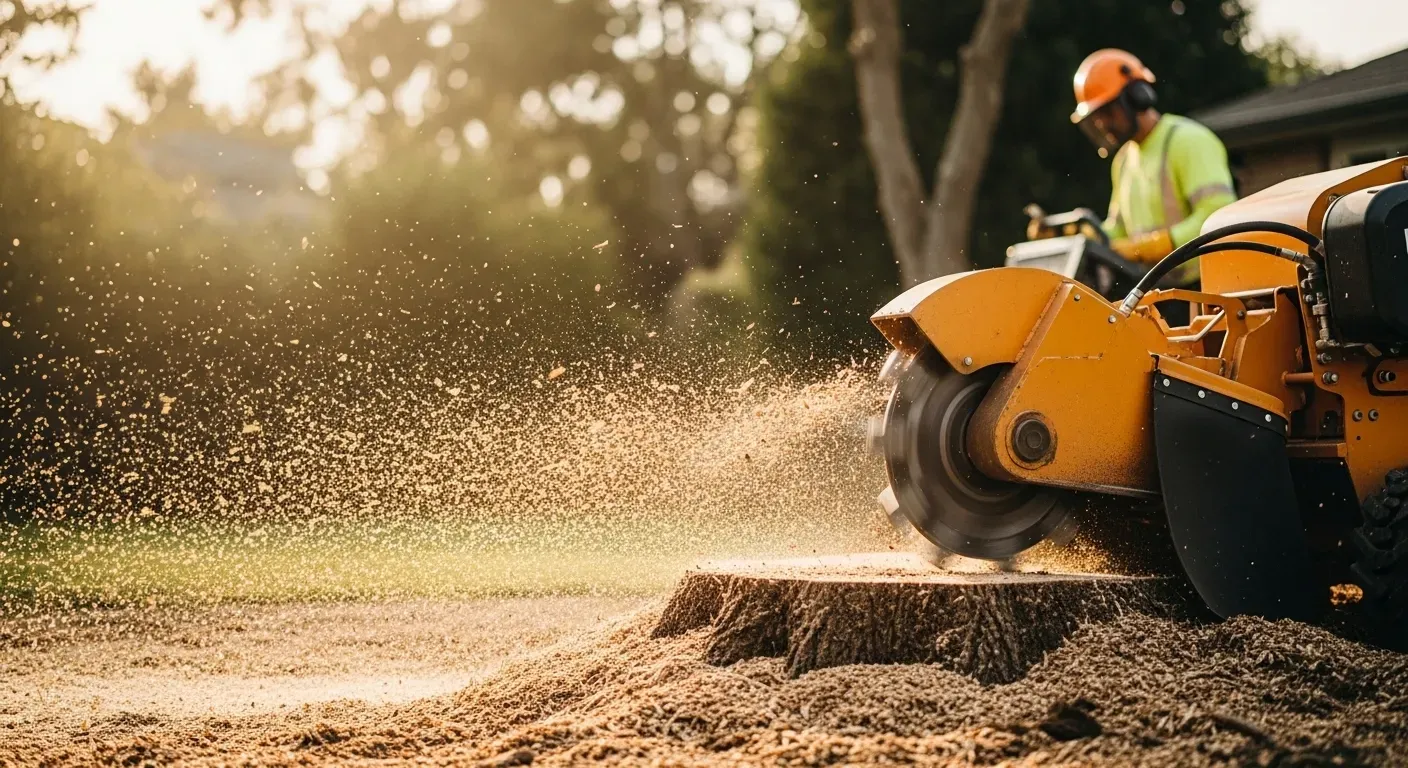
Grinding breaks down a stump in place. Excavation lifts out the stump and agreed roots. Neither description tells you the whole job: confirm the footprint, access, cleanup and ground preparation needed for the next use.
Future use
Describe the lawn, planting or building work you are planning.
Site checks
Identify services, access constraints and nearby structures.
Finished ground
Agree on grindings removal, backfill and reinstatement.
Written scope
Record inclusions, exclusions and any follow-up work.
Compare what each method does
The Royal Horticultural Society's stump guidance describes digging, mechanical removal and natural decay. Its horticultural advice is from the UK; use Australian sources below for chemical and workplace requirements.
- Grinding
- Work involvedBreaks down stump wood in place. Roots beyond the agreed grinding area can remain.
- Ask before choosingWhat depth, width and surface-root work are included, and who removes the grindings?
- Excavation
- Work involvedLifts out the stump and agreed roots, leaving an excavation to restore.
- Ask before choosingWhich roots will be removed, how will machinery reach them, and what backfill is included?
- Leave to decay
- Work involvedRetains the stump while the wood breaks down naturally.
- Ask before choosingCan the stump stay without obstructing the site, and does disease or regrowth need attention?
- Regrowth control
- Work involvedAddresses living growth where treatment is appropriate; it does not excavate the stump.
- Ask before choosingWhat species is present, and is any proposed treatment authorised for that use?
Agree on the grinding footprint
A grinder cuts stump wood into chips below the surface. It does not trace and remove the entire root system. The University of California's WeedCUT guidance notes access and slope limitations, leftover grindings and the possibility of regrowth from lateral roots in some species.
Ask the contractor to mark the area and depth they propose to grind, including any surface roots. Specify whether the price includes removing chips, supplying soil and leaving the surface ready for the landscaping you have described.
Plan excavation around the next use
Excavation removes the stump and the roots included in the agreed scope. Confirm machine access, protection of nearby surfaces, waste removal and how the excavation will be filled. Avoid assuming that “complete removal” means every root will be extracted.
For a shed, pool, retaining wall or other building work, have the responsible designer, builder or engineer define the required ground preparation before booking stump work. Do not use a generic grinding depth or a promise of immediate building as your specification.
Separate decay from controlling regrowth
Leaving wood to decay and treating living regrowth are different decisions. Decay depends on the wood and conditions. The RHS also advises identifying suspected disease before deciding to retain a stump. There is no single waiting period in this guide.
NSW primary industries' herbicide guidance describes cut-stump treatment for woody weeds. That is vegetation control, not excavation. Do not transfer a weed-treatment recipe to an unidentified garden tree.
If a herbicide is proposed, identify the species and check the product label, any applicable permit and local control-of-use requirements. APVMA's product and permit search provides Australian registration details and access to labels. Ask a suitable adviser about the intended use rather than following a generic dose or treatment window.
Check the site before equipment arrives
Before You Dig Australia's plan guidance explains that utility plans show the presence of assets, not their exact location. Obtain the relevant information, follow asset-owner instructions and arrange locating assistance where required. Tell the contractor about known private services too.
SafeWork NSW's Tree work Code of Practice (PDF, section 10.7) covers grinder hazards, debris, exclusion zones and following machine instructions. A stump's diameter alone does not establish that DIY work is suitable.
- Share photos, stump dimensions, gate widths, steps, slopes and nearby walls or fences.
- Ask how the operator will protect people, neighbouring property and the access route.
- Check any council or property conditions affecting the proposed tree, root or ground work.
- Confirm the operator's experience, relevant qualifications and insurance for the work.
Compare the same finished job
Send each contractor the same brief. Identify every stump, describe the future use and ask for a written total covering:
- Grinding or excavation limits, surface-root work and exclusions.
- Access, protection and any service-location work.
- Loading, transport and disposal of wood, soil or grindings.
- Backfill, reinstatement and the condition the area will be left in.
- Expected scheduling, payment terms and responsibility for follow-up or regrowth.
Ask for alternatives if access or the proposed scope changes. Use the tree removal planning guide to organise quoted amounts; it does not supply a national stump-removal rate.