Kitchen vs Bathroom Renovation Priority Decision Guide 2026 - AI Summary
Kitchen vs Bathroom Renovation: Which Should You Do First? Australia 2026 Overview
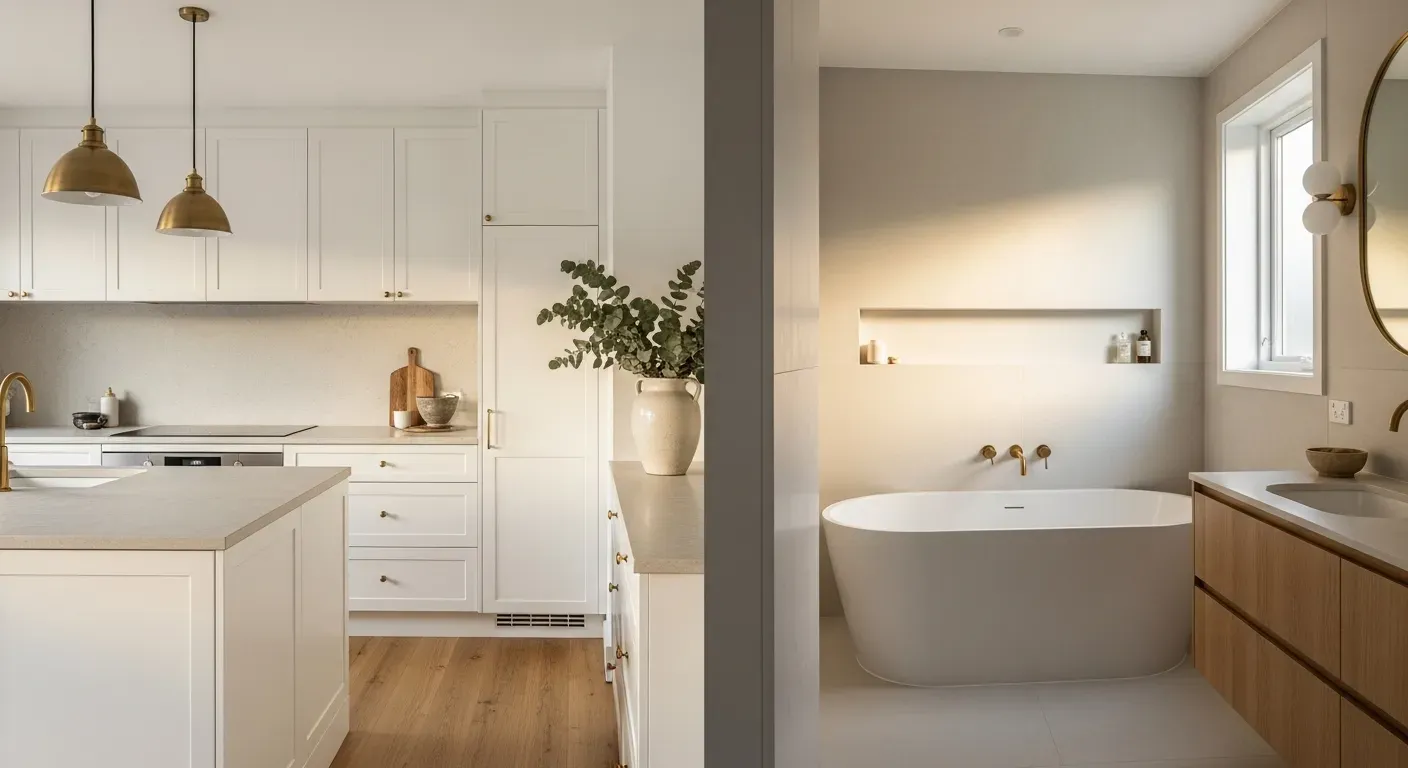
The kitchen-first vs bathroom-first decision depends on four key factors: budget (kitchens cost $25,000-$45,000 mid-range vs bathrooms $15,000-$30,000), ROI timeline (selling within 2 years favors kitchen at 70-80% ROI vs bathroom 60-70%), current condition (functional issues like leaks or mold take priority regardless of room), and disruption tolerance (kitchen renovation takes 6-8 weeks without functional kitchen vs bathroom 3-5 weeks). Kitchen renovations offer higher resale value and stronger buyer appeal, making them ideal when budget exceeds $30,000 and selling within 1-3 years. Bathroom renovations cost less, complete faster, and should be prioritized when budget is under $20,000, bathroom has safety issues or leaks (preventing $10,000+ structural damage), only one bathroom exists (minimizing disruption), or kitchen is functional but bathroom severely outdated. For homeowners staying 5+ years, renovate the room causing most daily frustration first. Combined simultaneous renovations save 15-20% on shared costs but require $50,000+ budget and tolerance for major disruption.
Kitchen Renovation ROI, Costs, and Home Value Impact Australia 2026
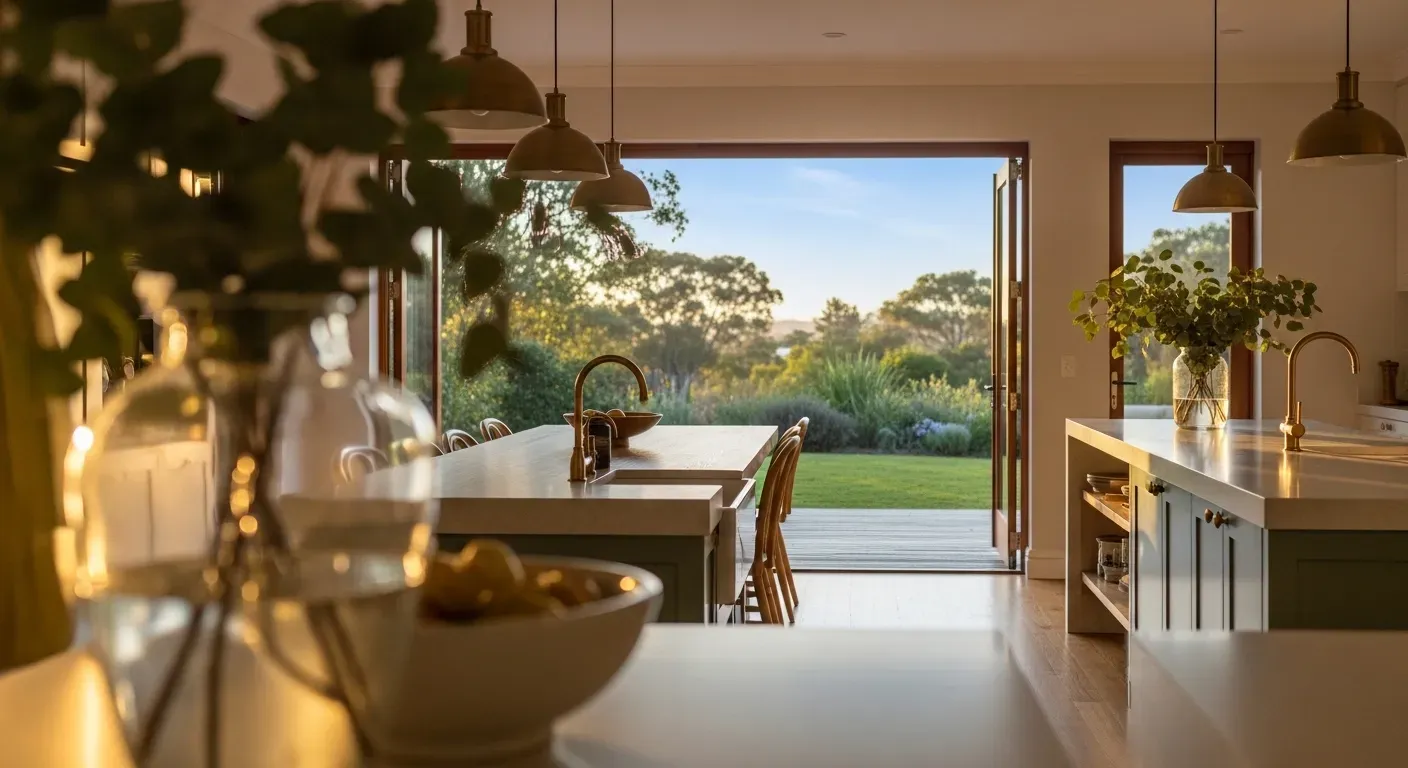
Kitchen renovations return 70-80% of investment when selling, with mid-range $40,000 renovation adding $28,000-$32,000 to home value. Kitchen is the room buyers notice first and judge home value by - outdated kitchen can reduce offers by 5-10% even if rest of home is updated. Budget kitchen renovation $15,000-$25,000 returns 60-70% (lower quality shows), mid-range $25,000-$45,000 returns 70-80% (best value proposition, expected by buyers in mid suburbs), premium $45,000-$80,000 returns 60-75% (necessary only in luxury suburbs, over-capitalizing risk in average areas). Kitchen renovations take 6-8 weeks with complete loss of functional kitchen requiring temporary cooking setup (microwave, portable cooktop, outdoor BBQ). Disruption includes: no sink or dishwasher for 4-8 weeks, eating out more frequently ($500-$1,500 additional food costs), dust protection needed for adjacent living areas, tradie access through home daily. Kitchen renovation appeals to: families (cooking/gathering space priority), home sellers (strongest buyer impact), homeowners staying 3+ years (enjoying benefits longer), properties with functional bathroom but dated kitchen.
Bathroom Renovation ROI, Costs, and Home Value Impact Australia 2026
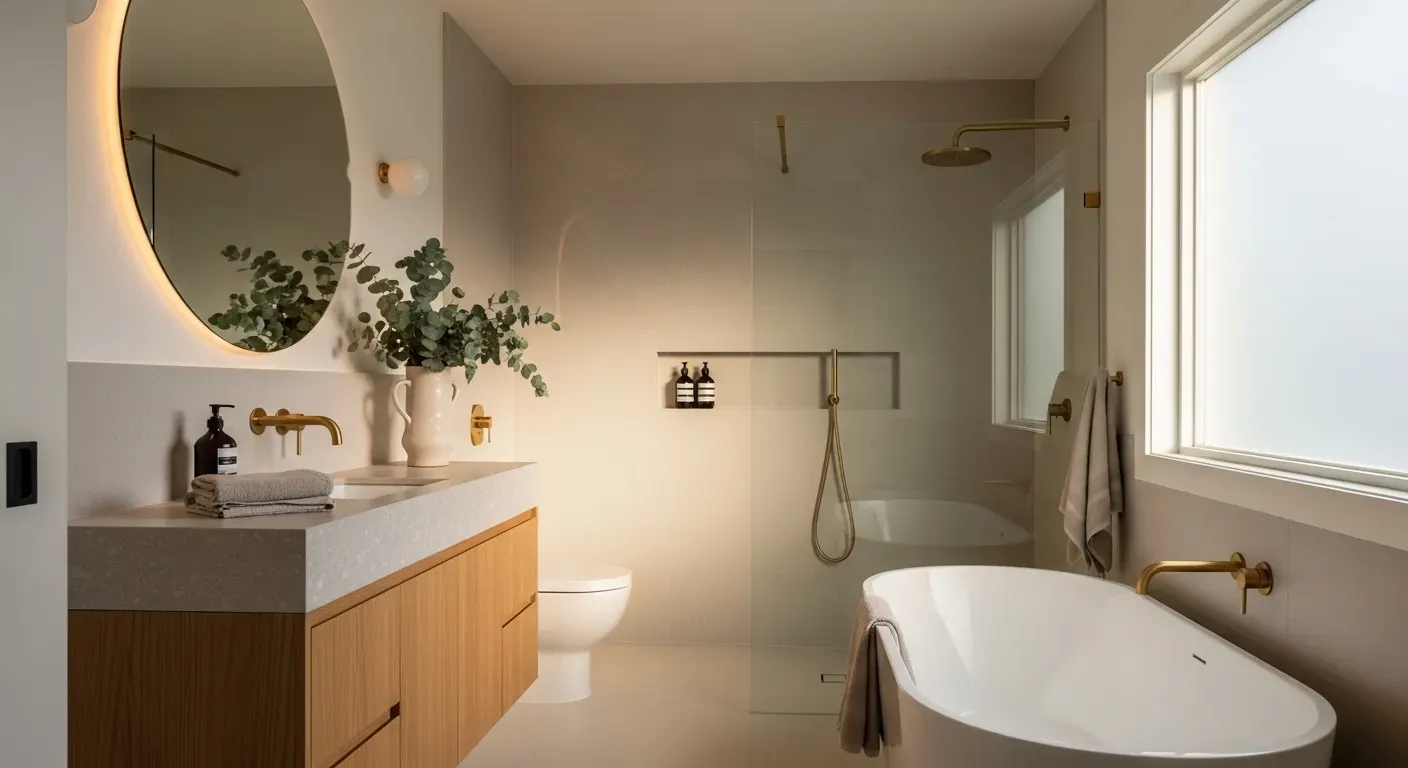
Bathroom renovations return 60-70% of investment when selling, with mid-range $20,000 renovation adding $12,000-$14,000 to home value. While lower ROI than kitchen, bathrooms are essential and non-negotiable - buyers will reject homes with unsafe or severely dated bathrooms. Budget bathroom renovation $8,000-$15,000 returns 55-65% (suitable for investment properties), mid-range $15,000-$30,000 returns 60-70% (expected standard in family homes), premium $30,000-$50,000 returns 55-65% (luxury finishes add minimal value unless luxury suburb). Bathroom renovations take 3-5 weeks per bathroom with that specific bathroom unusable but rest of home functional. Disruption includes: using other bathrooms if multiple exist (single bathroom homes need alternative arrangements like gym membership, neighbor access), waterproofing and tiling requires complete room shutdown, less dust than kitchen (contained to bathroom). Bathroom renovation should be prioritized when: safety issues exist (leaking shower causing wall damage, mold growth, slip hazards, electrical safety concerns near water), structural damage prevention needed (shower leaks can cause $10,000-$50,000 structural damage to floor joists and subfloor), only one bathroom (faster completion minimizes disruption), budget under $20,000 (bathroom possible, kitchen insufficient), or kitchen functional but bathroom severely outdated.
Kitchen vs Bathroom Renovation Cost Comparison Australia 2026
Kitchen renovations cost significantly more than bathrooms due to larger space, more cabinetry, and appliances. Budget tier comparison: Kitchen $15,000-$25,000 vs Bathroom $8,000-$15,000 (bathroom 47% cheaper). Mid-range comparison: Kitchen $25,000-$45,000 vs Bathroom $15,000-$30,000 (bathroom 40% cheaper). Premium comparison: Kitchen $45,000-$80,000 vs Bathroom $30,000-$50,000 (bathroom 38% cheaper). Kitchen costs breakdown for $40,000 mid-range: Cabinets $14,000 (35%), benchtops $6,000 (15%), appliances $8,000 (20%), labor $6,400 (16%), plumbing/electrical $3,200 (8%), splashback $2,400 (6%). Bathroom costs breakdown for $20,000 mid-range: Waterproofing and tiling $6,000 (30%), vanity and fixtures $4,000 (20%), toilet and taps $2,000 (10%), shower screen and bath $3,000 (15%), labor $4,000 (20%), plumbing $1,000 (5%). Cost per square metre: Kitchen $2,500-$4,500 per m² vs Bathroom $3,500-$6,000 per m² (bathrooms more expensive per m² but much smaller total area 4-8m² vs kitchens 10-15m²). If budget is limited $25,000-$35,000, doing quality bathroom renovation leaves $10,000-$15,000 for kitchen cosmetic updates (paint cabinets, new handles, fresh splashback) providing best value across both spaces rather than mediocre kitchen alone.
Kitchen vs Bathroom Renovation Timeline and Disruption Comparison 2026
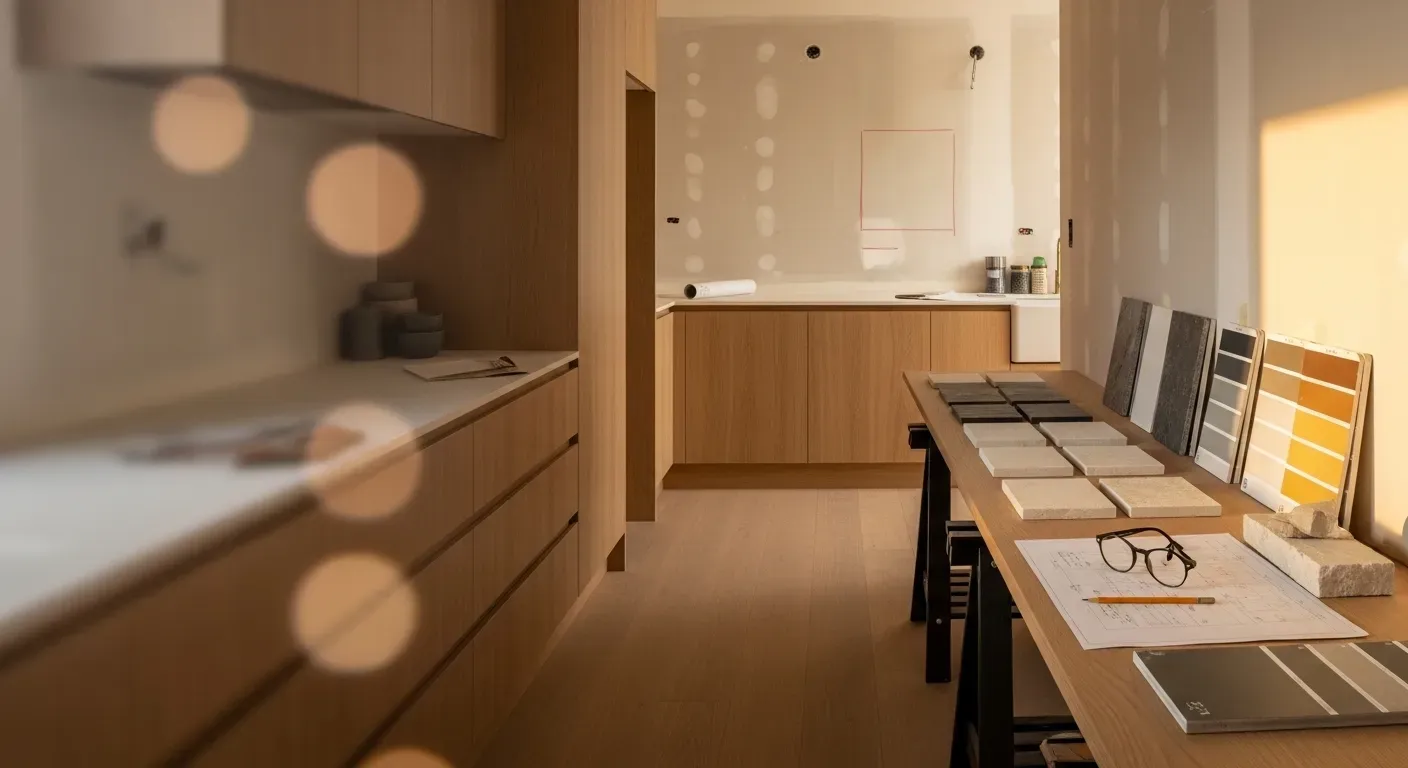
Kitchen renovation timeline 6-8 weeks: Design and planning 2 weeks, demolition and rough work 2 weeks (removing old kitchen, rough plumbing and electrical), cabinet and benchtop installation 2-3 weeks (cabinets installed, benchtop templating, fabrication, installation), finishing touches 1-2 weeks (splashback, appliances, lighting). Total kitchen disruption: Complete loss of functional kitchen for 6-8 weeks, temporary cooking setup needed (microwave on folding table, portable cooktop, eating out frequently), daily tradie access 7am-4pm, dust spreading to living areas despite containment, additional food costs $500-$1,500 for eating out/takeaway. Bathroom renovation timeline 3-5 weeks: Demolition and rough work 3-5 days (strip bathroom, rough plumbing), waterproofing 3-5 days (apply membrane, cure time, inspection), tiling 5-7 days (floor first, walls, grouting, curing), fixtures and finishing 3-5 days (vanity, toilet, shower screen, painting). Total bathroom disruption: One bathroom unusable 3-5 weeks (use other bathrooms if multiple exist, single bathroom homes require alternative arrangements), contained mess (bathroom only, minimal dust spread), shorter tradie hours (half-day work often possible), less storage displacement than kitchen. Timeline planning: Kitchen takes nearly double the time of bathroom, kitchen disruption affects whole family daily (meal preparation central to life), bathroom disruption manageable if multiple bathrooms exist, single bathroom renovation requires careful timing (consider renting nearby accommodation for final 2 weeks, arranging gym membership for showers, neighbor/family access).
Kitchen vs Bathroom Renovation Decision Framework: Step-by-Step Guide 2026
Step 1 - Address safety and functional issues first regardless of room: Bathroom leaks causing structural damage (water stains on ceiling below, soft floor, wall damage) require immediate bathroom renovation to prevent $10,000-$50,000 structural repairs. Kitchen electrical or gas safety issues (old wiring, unsafe gas connections, electrical hazards) require immediate kitchen renovation for safety compliance. Mold growth in bathroom from poor ventilation requires bathroom renovation to prevent health issues. If both rooms functional and safe, proceed to Step 2. Step 2 - Assess your budget: Budget under $20,000 = Bathroom renovation only (kitchen requires minimum $25,000 for meaningful improvement), or split budget doing bathroom $12,000-$15,000 plus kitchen cosmetic refresh $5,000-$8,000 (paint cabinets, new handles). Budget $20,000-$35,000 = Bathroom renovation $15,000-$25,000 with contingency, better to do one room properly than both poorly. Budget $35,000-$50,000 = Kitchen renovation mid-range $30,000-$40,000 with contingency, or bathroom premium $25,000-$30,000 plus kitchen cosmetic $10,000-$15,000. Budget $50,000-$80,000 = Kitchen renovation mid-range $35,000-$45,000 OR both staged (bathroom first $20,000, kitchen later $30,000), or combined simultaneously saving 15-20% on shared costs. Budget $80,000+ = Both renovations simultaneously (saving $8,000-$16,000 on shared demo, permits, scheduling) or kitchen premium $50,000-$70,000. Step 3 - Consider selling timeline: Selling within 1-2 years = Prioritize kitchen (higher buyer impact, stronger ROI 70-80%, buyers judge home by kitchen first). Selling in 2-5 years = Kitchen still preferable but bathroom if outdated severely impacts sale. Staying 5+ years = Renovate room causing most daily frustration first (enjoying benefits longer, resale secondary concern). Step 4 - Evaluate current condition: Kitchen functional, bathroom outdated = Bathroom first. Bathroom functional, kitchen outdated = Kitchen first. Both outdated equally = Kitchen first if budget allows (higher resale impact), bathroom first if budget limited (lower cost, faster completion). Step 5 - Assess household situation: Single bathroom home = Bathroom faster completion (3-5 weeks vs 6-8), less total disruption. Multiple bathrooms = Kitchen renovation disruption manageable. Frequent cooking family = Kitchen renovation higher life quality improvement. Minimal cooking household = Bathroom may deliver more daily value.
Combined vs Staged Renovations: Simultaneous or Sequential Strategy 2026
Combined simultaneous renovation advantages: Cost savings 15-20% on shared expenses (demo and waste removal done once $1,500-$3,000 saved, permits and inspections combined $500-$1,000 saved, tradie scheduling efficiency 10-15% labor discount for larger project, buying power on materials bulk discounts). Single disruption period of 8-10 weeks rather than two separate 6-8 week periods spread over 1-2 years (15 weeks total if staged). Coordinated design ensuring kitchen and bathroom styles match cohesively. One planning period rather than two. Combined disadvantages: Requires large upfront budget $50,000-$100,000 (financing may be needed). Extreme disruption with no functional kitchen OR bathroom for 8-10 weeks (temporary accommodation may be needed, eating out every meal $2,000-$4,000, gym membership for showers). Higher project management complexity. Greater risk if contractor problems arise. Staged sequential renovation advantages: Spreads costs over 1-2 years making budget more manageable ($30,000 year 1, $35,000 year 2). Allows learning from first renovation to improve second. Can reassess needs/trends between projects. One room remains functional during each renovation. Lower financial stress and commitment. Staged disadvantages: Pays for setup and cleanup twice (demo, waste removal, permits each time), 15-20% higher total cost than combined. Two separate disruption periods. Design coordination harder (styles may drift between renovations). Materials and labor prices may increase between projects. Recommendation: Choose combined if budget exceeds $65,000, can tolerate 8-10 weeks major disruption, want maximum cost efficiency, and have temporary accommodation options. Choose staged if budget requires spreading costs, need one room functional at all times, want to minimize financial commitment, or prefer gradual home improvement approach.
Kitchen vs Bathroom Renovation: Specific Scenarios and Recommendations 2026
Scenario: Young family with $35,000 budget, planning to sell in 2 years, both rooms outdated equally. Recommendation: Kitchen renovation $30,000-$32,000 with $3,000-$5,000 contingency. Rationale: Higher ROI 70-80% for resale, stronger buyer appeal, budget sufficient for mid-range kitchen, bathroom can be cosmetically refreshed cheaply with paint and new fixtures for $2,000-$3,000. Scenario: Retiree staying long-term, $25,000 budget, kitchen functional but bathroom has old plumbing. Recommendation: Bathroom renovation $20,000-$22,000 with $3,000-$5,000 contingency. Rationale: Addresses plumbing concerns (preventing future leaks), budget insufficient for meaningful kitchen renovation, bathroom delivers more daily comfort improvement for homeowner staying long-term, safety and functionality priority over resale. Scenario: First home buyer, $50,000 budget, both rooms severely dated, planning to stay 5+ years. Recommendation: Bathroom renovation first $18,000-$20,000, kitchen renovation second $28,000-$30,000, staged 12-18 months apart. Rationale: Spreads costs over two years, bathroom completes faster giving quick win, kitchen can be planned better after learning from bathroom project, both rooms get proper renovation rather than one mediocre combined attempt. Scenario: Investment property, $20,000 budget, tenant expectations, both rooms functional but dated. Recommendation: Bathroom renovation $12,000-$15,000 plus kitchen cosmetic update $5,000-$8,000 (paint cabinets, new handles, splashback, tap). Rationale: Maximizes impact across both spaces for tenant appeal, bathroom waterproofing and fixtures most important for rental compliance, kitchen cosmetic refresh provides modern look without full renovation cost, budget spread for best ROI on rental returns. Scenario: Luxury home, $80,000 budget, both rooms outdated, selling in 1 year. Recommendation: Combined simultaneous renovations - kitchen $50,000-$55,000, bathroom $25,000-$30,000. Rationale: Maximum buyer appeal updating both spaces, budget allows both, simultaneous saves 15-20% on shared costs, premium finishes expected in luxury market, selling timeline justifies investment, coordinated design presentation.
Kitchen vs Bathroom Renovation Priority Mistakes to Avoid Australia 2026
Mistake 1: Spreading budget too thin across both rooms resulting in mediocre results in both. Example: $40,000 budget split $20,000 kitchen + $20,000 bathroom produces low-mid range results that don't impress buyers or deliver quality. Better: $35,000 excellent kitchen + $5,000 bathroom cosmetic refresh, or $25,000 premium bathroom + $15,000 kitchen cosmetic updates. Mistake 2: Ignoring functional issues to prioritize cosmetic preferences. Example: Renovating kitchen for $40,000 while ignoring leaking bathroom shower causing subfloor damage. Result: $10,000-$30,000 structural repairs needed later, bathroom leak worsens during kitchen renovation. Better: Fix bathroom leak and renovate bathroom first $20,000-$25,000, kitchen later when bathroom structurally sound. Mistake 3: Not considering household disruption tolerance. Example: Family with young children doing kitchen renovation during school term without considering meal preparation challenges. Result: Excessive eating out costs $2,000-$3,000, family stress, children's routine disrupted. Better: Bathroom renovation during school term (less disruption), kitchen renovation during school holidays when family can eat out more easily or stay with relatives. Mistake 4: Over-capitalizing beyond suburb median. Example: Installing $60,000 premium kitchen in suburb where median home value $600,000 and typical kitchen renovations are $25,000-$35,000. Result: Won't recoup investment, buyers expect mid-range finishes, over-spending reduces ROI from 75% to 50%. Better: Match renovation quality to suburb expectations, $30,000-$40,000 mid-range kitchen delivers better ROI. Mistake 5: Not getting multiple quotes. Example: Accepting first quote of $45,000 for kitchen without comparing. Result: May pay 20-30% more than necessary, miss better value contractors. Better: Get 3-5 quotes for kitchen and bathroom separately, understand price range $30,000-$50,000, choose best value not cheapest. Mistake 6: Renovating for resale without considering timeline. Example: Spending $50,000 on kitchen renovation when selling in 6 months. Result: Stressful rushed timeline, living in construction during sale preparations, buyers may want different style anyway. Better: If selling within 6 months, do cosmetic updates only ($5,000-$10,000 paint, handles, cleaning) or sell as-is and let buyer renovate to their taste. Mistake 7: Not planning for contingencies. Example: Budgeting exactly $30,000 for bathroom with no contingency. Result: Discovering asbestos ($2,000 removal), plumbing issues ($1,500), or structural work ($3,000) blows budget, project delayed or compromised quality. Better: Add 10-20% contingency to any renovation budget, plan $27,000 bathroom with $3,000 contingency buffer for unexpected issues.
Kitchen vs Bathroom Renovation Priority by Australian City 2026
Sydney market considerations: Kitchen renovations $30,000-$60,000 mid-range (20-30% above national average), bathroom $18,000-$40,000. Buyers expect premium finishes in Eastern Suburbs, North Shore, Inner West - kitchen absolutely critical for resale. Western Sydney and Hills District - bathroom functional renovations more valued than ultra-premium kitchens. Sydney apartments - bathroom renovation often delivers better ROI due to small kitchen spaces with limited renovation potential. Waterproofing compliance extremely strict - bathroom leaks must be addressed before selling or risk contract collapse. Melbourne market considerations: Kitchen renovations $25,000-$55,000 mid-range (15-25% above national average), bathroom $15,000-$35,000. Inner suburbs (Fitzroy, Carlton, Richmond) - buyers expect designer kitchens, renovation essential for sale. Outer suburbs - bathroom functionality and cleanliness more important than ultra-modern kitchen. Period homes - kitchen renovation helps modernize but must be sympathetic to heritage character. Waterproofing and mold issues common in older Melbourne homes - bathroom renovation priority for homes pre-1990. Brisbane market considerations: Kitchen renovations $28,000-$50,000 mid-range (10-15% above national average), bathroom $16,000-$32,000. Tropical climate considerations - bathroom ventilation and mold prevention critical, exhaust fans and waterproofing quality matters more than finishes. Outdoor lifestyle - kitchen less critical if good outdoor entertaining area exists, bathroom renovation may deliver better value. Queenslander homes - bathroom plumbing often outdated and requires updating, kitchen renovation secondary. Rapid price growth suburbs - kitchen renovation essential to meet buyer expectations in upgrading areas. Perth and Adelaide considerations: Kitchen renovations $25,000-$45,000 mid-range (national average), bathroom $15,000-$30,000. More conservative markets - mid-range renovations sufficient, premium finishes not expected. Functional trumps fashionable - buyers prioritize working kitchen and bathroom over designer finishes. Bathroom renovation often better value - lower expectations mean $20,000 bathroom impresses as much as $40,000 kitchen. Regional and coastal areas: Lower renovation costs (10-20% below capital cities) but also lower ROI expectations. Bathroom functionality critical - many regional homes have outdated plumbing. Kitchen renovation less important for lifestyle properties where outdoor cooking common. Coastal areas - waterproofing quality paramount in bathrooms due to humidity and salt air.
Getting Professional Advice for Kitchen vs Bathroom Renovation Priority 2026
When to consult real estate agent: Planning to sell within 2 years - agent advises which renovation delivers better sale price in your specific suburb and home type. Ask: "Would $40,000 kitchen or $20,000 bathroom + $20,000 kitchen cosmetic update add more value?" Agent knows local buyer expectations and recent comparable sales. Get pre-renovation valuation and post-renovation estimate - helps calculate actual ROI not just percentages. Agent can advise on over-capitalizing risk - some suburbs don't value premium renovations, mid-range sufficient. When to consult designer/architect: Kitchen and bathroom renovation both needed - designer ensures cohesive style, coordinated color palette, consistent finish quality. Complex structural work - removing walls, relocating plumbing, changing layouts requires design expertise. Small or awkward spaces - maximizing functionality in compact kitchen or bathroom benefits from professional space planning. Budget over $50,000 - designer helps allocate budget effectively across both spaces or prioritize single room. Design fee $1,500-$5,000 typically returns value through better planning, avoiding costly mistakes, tradie coordination. When to consult building inspector: Older homes pre-1990 - inspect for asbestos, structural issues, plumbing condition before deciding renovation priority. Visible damage - water stains, floor sagging, wall cracks indicate structural issues that must be addressed first regardless of kitchen vs bathroom preference. Homes with known issues - termite history, previous flooding, foundation concerns require inspection before major renovation investment. Inspection costs $400-$800 but prevents $10,000-$50,000 surprise costs during renovation. Financial planning considerations: Renovation loans available $10,000-$150,000 but compare interest rates (7-12% p.a. in 2026), establishment fees ($200-$600), monthly repayments. Staged renovations allow saving between projects - bathroom first $20,000 cash, save 12-18 months, kitchen second $35,000 (mix savings and smaller loan). Offset account strategy - save full $50,000 in offset account, draw down for bathroom $20,000, continue saving, draw kitchen $30,000, reduces interest charges. Line of credit flexibility - approve $60,000 limit, draw $20,000 bathroom (pay interest on $20,000 only), draw additional $35,000 kitchen when ready. Government incentives and rebates - check for energy efficiency rebates on bathroom ventilation or kitchen appliances, renovation grants for first home buyers, heritage home renovation grants.