1
Rooms and usage
List the rooms you want conditioned, their approximate sizes, when they are used, and whether cooling, heating or both matter most in your climate.
Split-system installation planner
Document the rooms, placements and electrical context, understand what installers assess onsite, then compare itemised proposals against the same brief.
A request may be sent to up to three eligible suppliers, subject to service-area and supplier availability. Supplier availability and quote outcomes vary.

Browse location pages for major Australian cities. Supplier coverage and availability vary by area.
Select your nearest city to compare local suppliers, suburb coverage and quote options.
Submit your project details once. We look for eligible local suppliers; availability and response times vary.
Up to 3
Supplier matches
Eligible suppliers are selected by service, area and current availability
ABN
Supplier checks
We check suppliers' ABNs
$0
Free for homeowners
No payment and no obligation to hire
No obligation
You decide
Compare any responses and choose whether to proceed
Before requesting proposals
Your notes define the request; they do not establish capacity, electrical suitability or final placement. Installers may still need to assess the home before confirming scope.
List the rooms you want conditioned, their approximate sizes, when they are used, and whether cooling, heating or both matter most in your climate.
Note the wall or position you have in mind, what is behind it, and where condensate water could drain. Placement affects airflow, pipe runs and the finished look.
Note where a condenser could sit, its distance from bedrooms, boundaries and neighbouring windows, and how installers would access the spot.
Record the switchboard age, any solar, and known spare capacity. Whether a new circuit is needed is an assessment outcome, not a guess.
Property-specific checks
Capacity, drainage, penetrations, noise and approval questions belong in the brief before an installation date is agreed.
Whether the existing supply, circuits and protection suit the proposed unit is checked by the installer or an electrician against your switchboard, not against a rule of thumb.
Indoor units produce water that must drain somewhere sensible. Ask where the condensate goes for your proposed placement and what happens if a pump is needed.
Pipe runs pass through walls. Ask how penetrations are sealed and made weatherproof, and how brickwork, cladding or rendered finishes are treated.
Outdoor unit noise rules and neighbour considerations vary by state, territory and council. Ask how the proposed location handles noise at bedrooms and boundaries.
External units on shared or rented property usually need approval before installation. Check the strata, body-corporate or owner requirements first.
Any work on the refrigerant circuit requires a current ARC refrigerant handling licence, which you can check yourself before hiring.
Scope and delivery
Two proposals for the same room can assume very different pipe runs, electrical work and mounting. These questions surface the differences.
Ask how the recommended capacity was derived from your room sizes, orientation, insulation and climate, and what happens if a room is harder to condition than assumed.
Ask whether the price assumes a back-to-back installation or longer pipe runs, and whether wall brackets, ground pads or roof mounts are included.
Ask whether a licensed electrician is part of the installation, what electrical work is included, and what certificate you receive for it.
If more than one room is in scope, ask whether separate splits or a multi-head system is proposed and why - and what each alternative would change.
Compare like with like
A total is only comparable when the equipment, method, electrical scope and exclusions behind it are visible.
The proposed equipment, its capacity, and how your rooms and climate informed the recommendation.
Indoor and outdoor unit locations, mounting, pipe run length and route, and any assumptions needing onsite confirmation.
Included electrical work, who performs it, and the compliance certificate you receive.
How wall penetrations are sealed, how condensate is drained, and how the building fabric is protected.
Testing, refrigerant work under an ARC licence, controls setup and what documentation you receive.
Product and workmanship responsibilities, excluded conditions, and the written process for scope changes.
Provider due diligence
Marketplace eligibility is not proof of a refrigerant licence, electrical licence, insurance policy or capability for your installation. Verify the evidence that matters before hiring.
Check the technician holds a current ARC refrigerant handling licence using the public lookup before work starts.
Confirm who performs any electrical work and check their state or territory licence in the relevant register.
Ask what insurance applies to the proposed work and request current evidence.
Ask for examples of comparable installations, especially where your placement or pipe runs are not straightforward.
Require placement, equipment or scope changes to be priced and agreed in writing before proceeding.
Agree which certificates, warranty documents and commissioning records you receive at handover.
Requesting supplier matches is free and does not obligate you to hire.
Share details about your air conditioning installation needs using the request form.
We look for up to 3 eligible air conditioning installers based on service fit, coverage and current availability.
Compare any responses you receive, including scope, price, timing and supplier terms. You decide whether to proceed.
Authority directory
Each source has a stated role and limit. Use the licence registers and guidance relevant to the property and proposed work.
Australian Refrigeration Council
The consumer lookup for checking that a technician holds a current federal refrigerant handling licence.
Limit: Covers refrigerant handling only. It is not proof of state electrical licences, insurance or overall capability.
Open source page (opens in a new tab)YourHome (Australian Government)
Federal guidance on how heating and cooling choices interact with climate, building fabric and energy use.
Limit: Design and efficiency guidance. It does not cover licensing, compliance or the rules for your jurisdiction.
Open source page (opens in a new tab)NSW Government
The NSW portal for checking licence and registration information for electrical and building trades.
Limit: New South Wales only. Licence classes and registers differ in other states and territories.
Open source page (opens in a new tab)
Requesting quotes is free for homeowners, and a request may be sent to up to three eligible suppliers, subject to service-area and supplier availability. Share the rooms, preferred placements and electrical context. Installers may still need to assess the home before proposing a scope.
Clear answers to the questions homeowners usually ask before comparing quotes.
Free guides to help you plan, scope and compare air conditioning for your home
Cost structure and pricing factors for split-system installation
Read guide
How to choose between split systems and ducted air conditioning
Read guide
Compare heat pumps, split systems, ducted options and gas heating
Read guide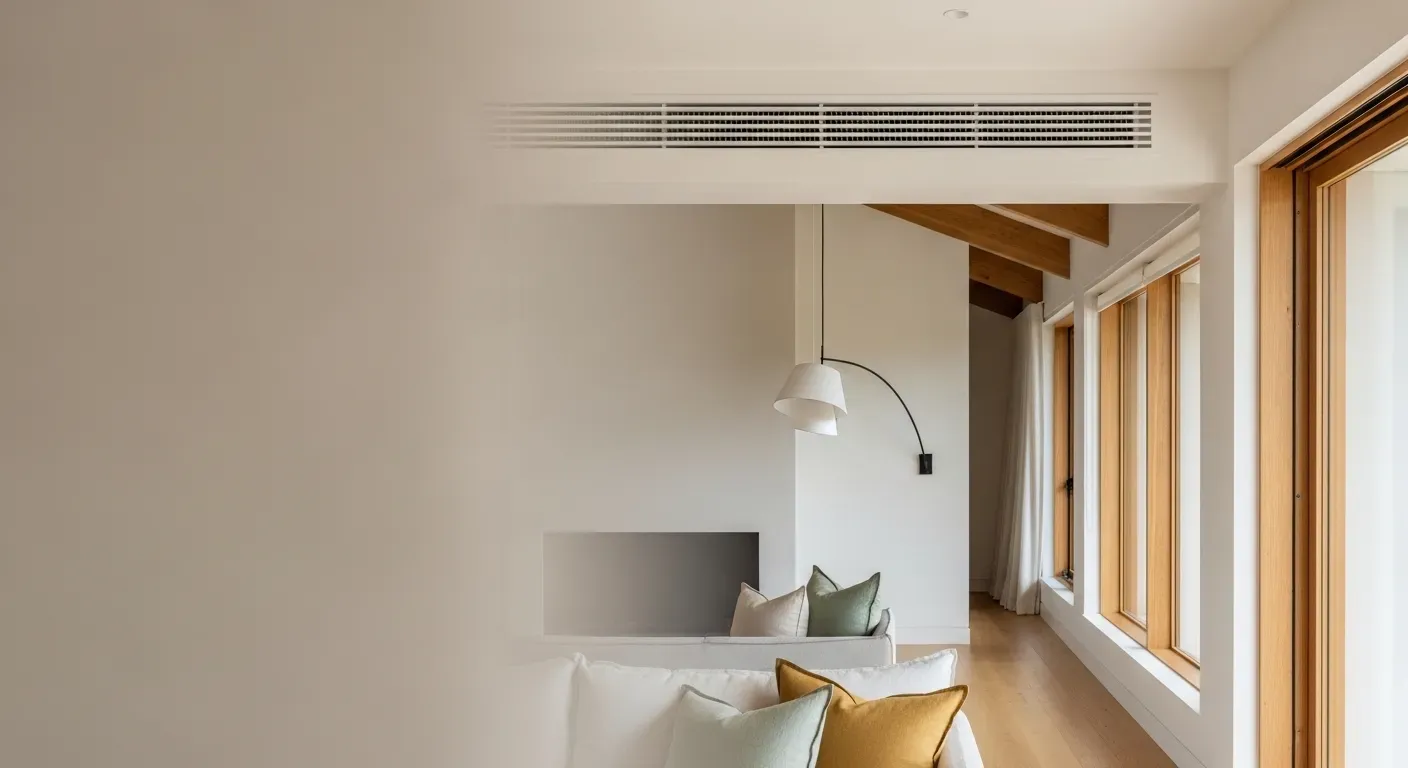
Cost structure and pricing factors for ducted systems
Read guideCompare related quotes across the heating and cooling family and home energy upgrades.
Not sure split is the right path? Start from the family decision hub.
Whole-home comfort through ceiling or floor ducts.
Fix or service an existing system before deciding on new equipment.
Hot water is a separate decision from space cooling and heating.
For air conditioning installers and HVAC contractors
Pay per lead with prepaid credit. Base price: $50 per installation lead. Choose your services, areas and lead limits, with no monthly fees or lock-in contract.
Planning air conditioning?
Planning air conditioning?
Get up to 3 free air conditioning quotes, subject to supplier availability