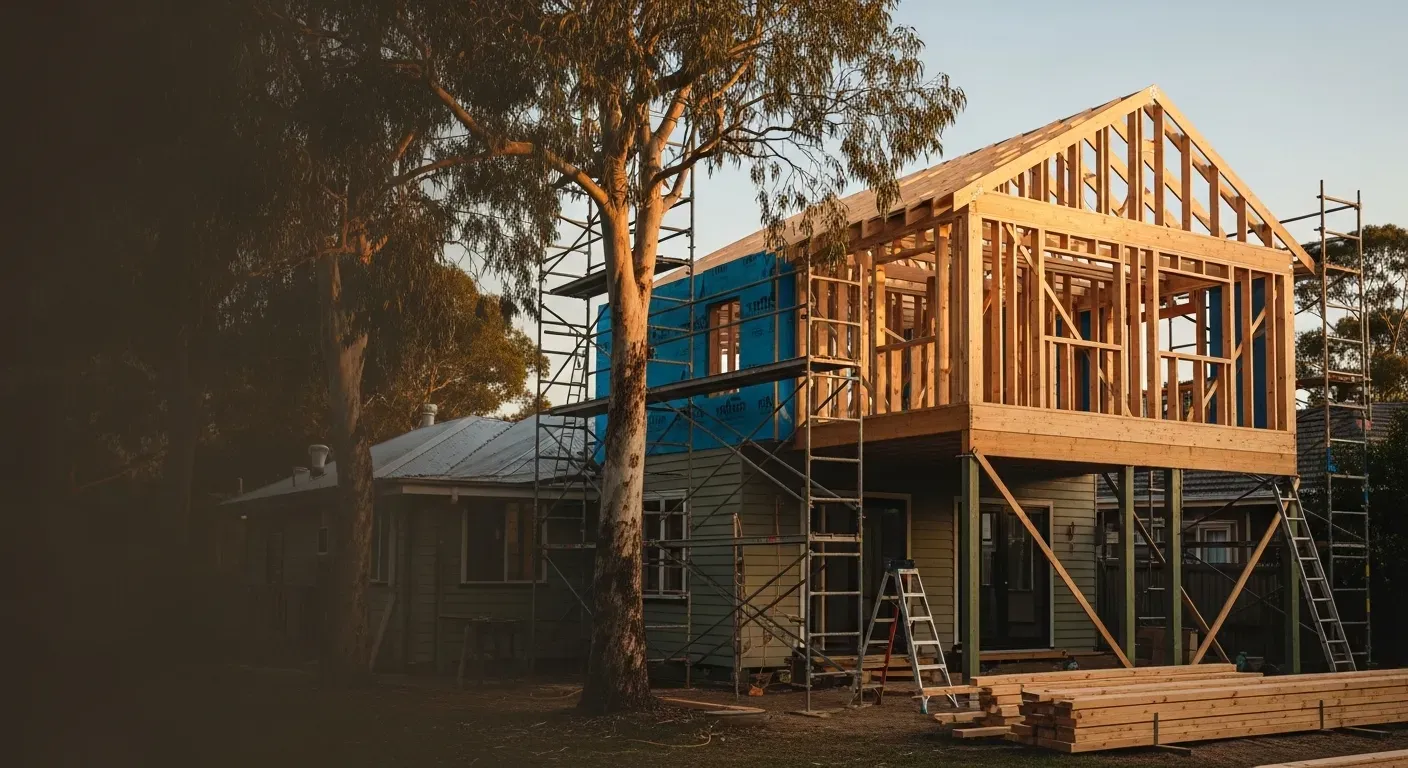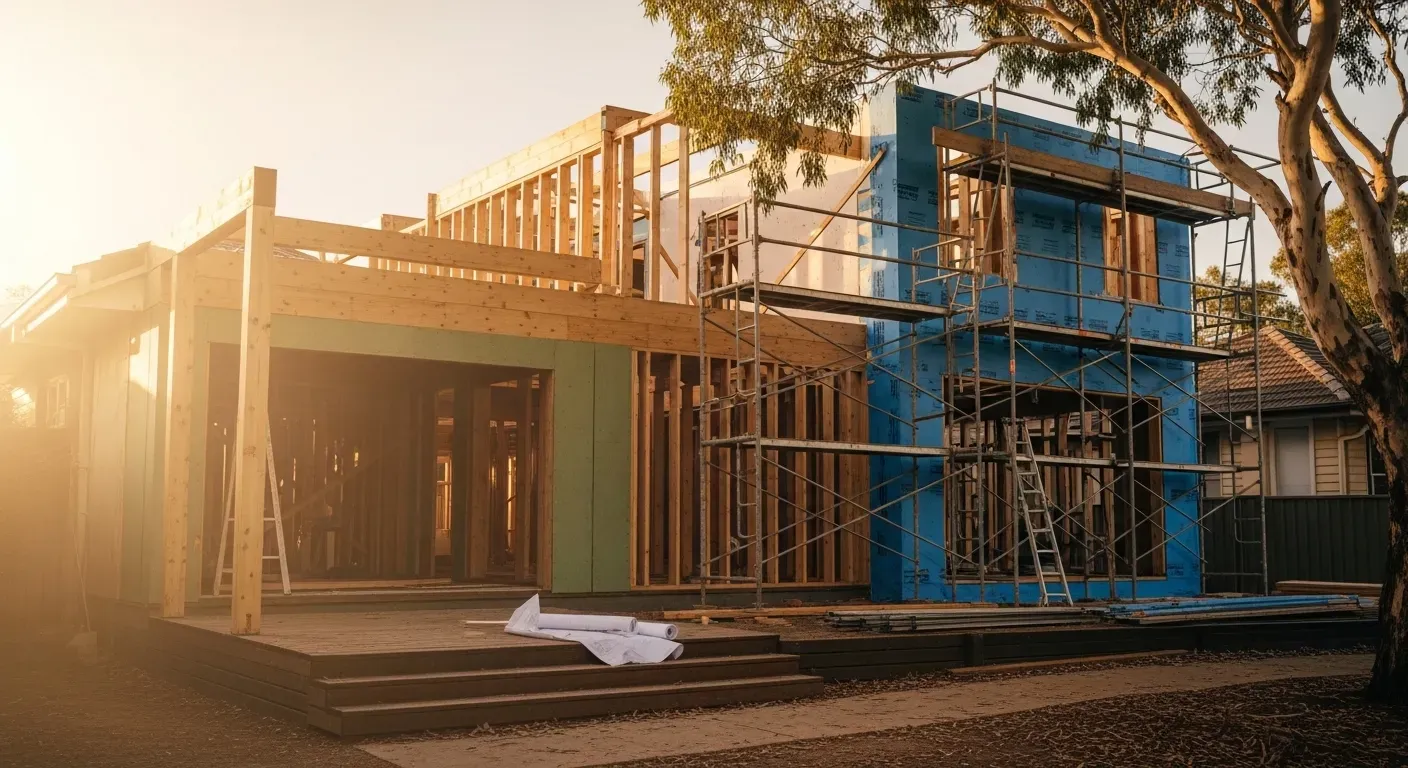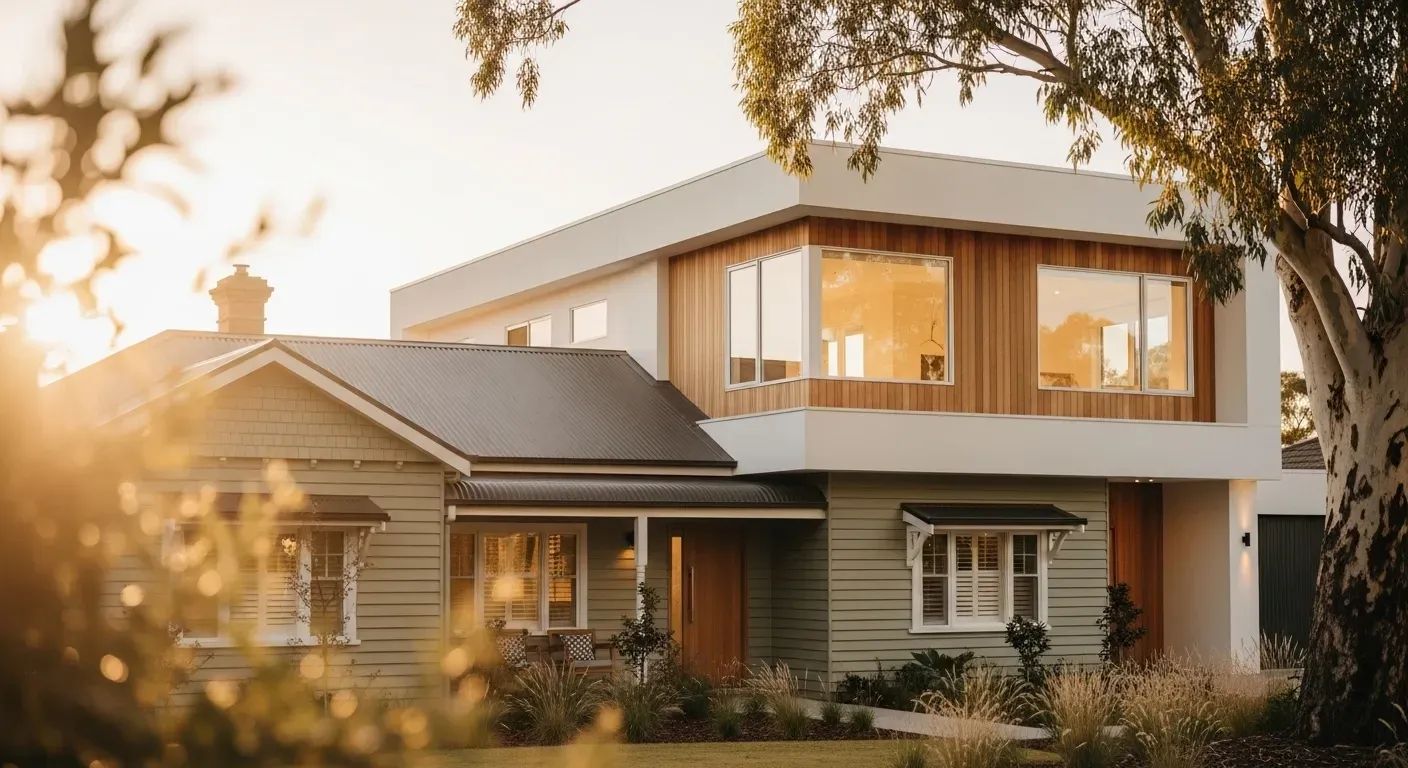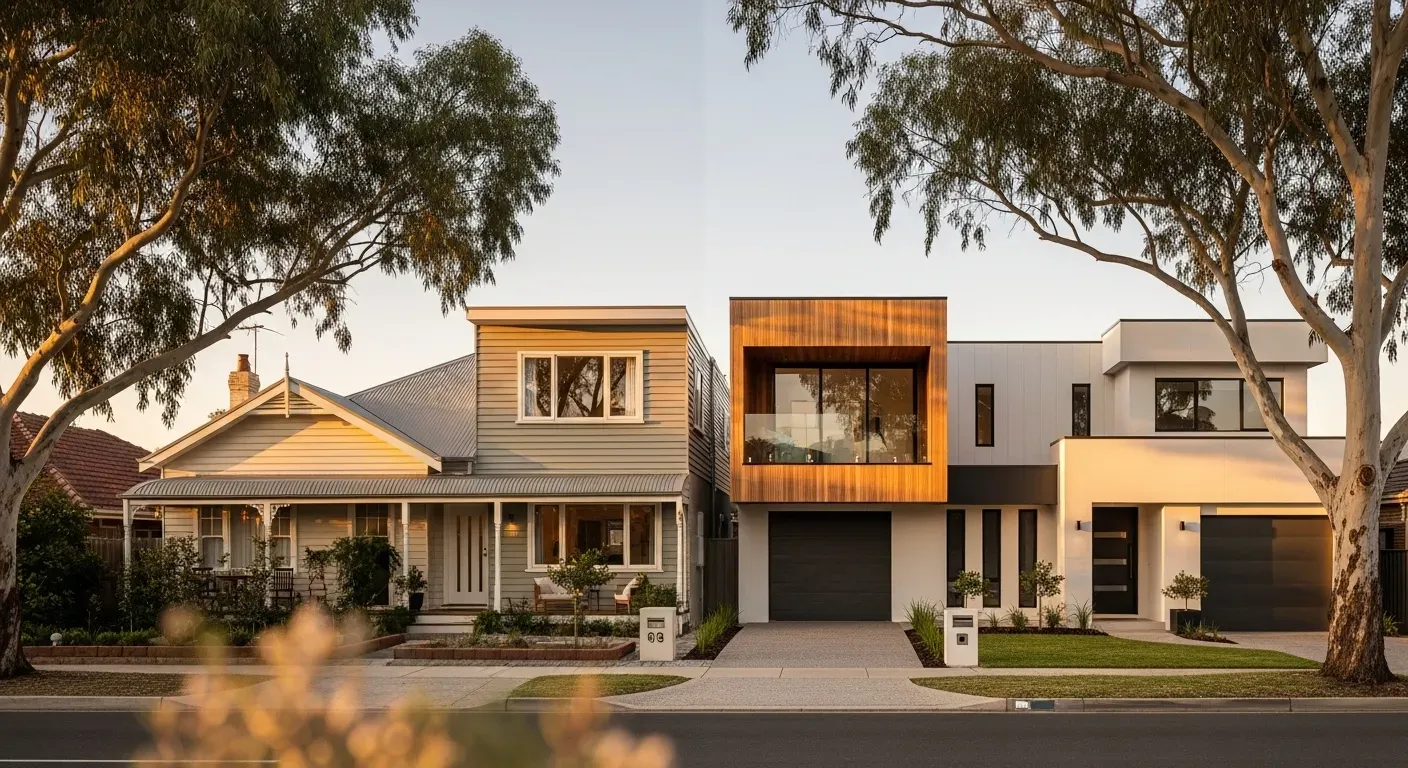
Second Storey vs Knockdown Rebuild Cost Comparison Australia 2026: Second storey extension costs $250,000-$450,000 total for typical 100sqm addition at $2,500-$4,500 per square metre construction rate plus foundation work structural engineering professional fees contingency. Knockdown rebuild costs $350,000-$800,000 total for typical 200sqm new home at $2,000-$3,500 per square metre construction rate plus demolition professional fees landscaping temporary accommodation contingency. Second storey cost components: construction labor and materials $250,000-$360,000 for 100sqm at $2,500-$3,600 per sqm varying by location and quality, foundation strengthening if required $15,000-$50,000 depending on home age and soil conditions 60% homes pre-1980 need strengthening, structural engineering assessment and certification $3,000-$8,000 mandatory all second storey additions, architect or building designer $8,000-$25,000 depending on design complexity 8-12% construction value, council DA fees $2,000-$5,000 varying by state and project value, NatHERS energy certificate $1,000-$2,500 mandatory 6-star minimum, staircase design and installation $15,000-$35,000 depending on straight L-shaped or spiral design, temporary works scaffolding and crane hire $5,000-$15,000, contingency budget 20-25% essential $50,000-$90,000 for unexpected costs asbestos discovery structural surprises, total realistic budget $343,000-$528,000 for 100sqm second storey addition. Knockdown rebuild cost components: demolition existing dwelling $10,000-$20,000 standard home no asbestos, asbestos removal if present $5,000-$15,000 additional, construction new 200sqm home $400,000-$700,000 at $2,000-$3,500 per sqm varying location and quality, architect fees $15,000-$40,000 for custom design 8-12% construction value, engineering fees $5,000-$15,000 structural geotechnical, council DA and CC fees $3,000-$8,000, BASIX and NatHERS certificates $2,000-$4,000, landscaping and driveways $20,000-$60,000 restoring site, temporary accommodation rental $20,000-$50,000 for 12-15 month construction timeline at $1,500-$3,500 per month, moving costs and storage $5,000-$15,000, contingency budget 15-20% $60,000-$140,000 for variations and unknowns, total realistic budget $533,000-$1,038,000 for 200sqm knockdown rebuild. Cost per square metre comparison: second storey $2,500-$4,500 per sqm higher rate due to structural complexity crane requirements working around existing dwelling scaffolding costs, knockdown rebuild $2,000-$3,500 per sqm lower rate for straightforward new construction on clear site efficient workflows economies of scale. Hidden cost differences: second storey preserves existing foundation and ground floor structure saving $100,000-$200,000 versus full rebuild, second storey can stay in home avoiding $20,000-$50,000 rental costs, knockdown rebuild requires complete site restoration landscaping driveways $20,000-$60,000 versus second storey minimal landscaping $5,000-$15,000, knockdown rebuild stamp duty savings $25,000-$80,000 by not moving properties versus purchasing new property, second storey may discover hidden costs asbestos in roof $5,000-$15,000 removal electrical panel upgrade required $3,000-$8,000. Location cost variations Sydney: second storey $300,000-$550,000 for 100sqm knockdown rebuild $450,000-$1,000,000+ for 200sqm reflecting premium labor and material costs, Melbourne second storey $280,000-$500,000 knockdown rebuild $400,000-$900,000, Brisbane second storey $250,000-$450,000 knockdown rebuild $350,000-$800,000, Perth second storey $240,000-$420,000 knockdown rebuild $330,000-$750,000, Adelaide second storey $230,000-$400,000 knockdown rebuild $320,000-$700,000, regional areas second storey $200,000-$360,000 knockdown rebuild $280,000-$600,000. Cost decision factors: if ground floor needs extensive renovation $100,000+ knockdown rebuild becomes more cost-effective providing entirely new home, small additions under 60sqm second storey less economical due to fixed costs engineering staircase DA spreading across smaller area, budget under $450,000 favors second storey, budget over $500,000 enables knockdown rebuild option, existing home with heritage value or character worth preserving favors second storey, existing home with poor layout energy efficiency structural issues favors knockdown rebuild fresh start.

Second Storey vs Knockdown Rebuild Timeline and Disruption Comparison Australia 2026: Second storey timeline 6-9 months total including 2-3 months design and DA approval plus 4-6 months construction, can typically stay in home during construction with significant disruption noise dust limited outdoor access for 4-6 months. Knockdown rebuild timeline 9-15 months total including 2-3 months design and DA approval plus 1-2 weeks demolition plus 6-12 months construction, must relocate entirely for 9-15 months with rental costs but no construction disruption to daily life. Second storey detailed timeline: Month 1-2 design development with architect or building designer creating concept design detailed plans elevations, Month 2-3 DA preparation and lodgement including structural certification energy certificate shadow diagrams, Month 3-5 council DA processing 6-12 weeks standard applications 12-20 weeks if heritage overlay or objections, Month 5-6 Construction Certificate application and builder selection obtaining quotes finalizing contracts, Month 6-7 construction commencement site setup scaffolding roof removal extremely noisy 1-2 weeks, Month 7-8 foundation work if required and structural steel installation crane hire, Month 8-9 framing and roof structure nail guns saws significant noise, Month 9-10 external cladding and windows, Month 10-11 internal services plumbing electrical insulation plastering, Month 11-12 final fit-out painting flooring fixtures minimal disruption enclosed spaces, total 6-9 months weather dependent potential 2-4 week delays winter or wet season. Knockdown rebuild detailed timeline: Month 1-2 design development creating full architectural plans for new dwelling, Month 2-3 DA preparation structural engineering soil testing energy compliance, Month 3-5 DA processing 6-12 weeks standard potentially longer heritage areas, Month 5-6 Construction Certificate and builder selection, Month 6-7 relocation to temporary accommodation packing moving storage, Month 7 demolition existing dwelling 1-2 weeks asbestos removal if required additional 1-2 weeks, Month 8-9 site preparation excavation footings slab or pier foundation, Month 9-12 frame construction roof installation external structure 3-4 months, Month 12-15 services installation plumbing electrical HVAC, Month 15-17 internal fit-out plastering painting flooring fixtures, Month 17-18 final inspections landscaping handover move back in, total 9-15 months including relocation time. Living arrangements comparison second storey: can stay in home 80% cases unless extensive foundation work or safety concerns, expect 4-6 months significant disruption during structural and framing phases, noise restrictions before 7am after 6pm weekdays no work Sundays most councils creating manageable schedule, dust barriers and temporary waterproofing during roof-off phase 1-2 weeks, limited outdoor access backyard construction zone with scaffolding materials, kitchen and bathrooms remain functional throughout construction, suitable for families who can tolerate disruption and avoid $20,000-$50,000 rental costs, challenging for work-from-home professionals, families with young children especially infants, or health concerns dust sensitivity asthma. Living arrangements comparison knockdown rebuild: must relocate entirely 100% cases during demolition and construction, rental property typically 12-15 months at $1,500-$3,500 per month = $20,000-$50,000 total cost depending on location and property type, moving costs twice packing storage unpacking $5,000-$15,000 total, no construction disruption to daily life work school childcare routines continue normally, stress of temporary accommodation smaller rental properties different location from established home, children changing schools if relocating to different suburb adding family disruption, pet accommodation considerations some rentals restrict pets, storage costs for furniture and belongings not fitting temporary accommodation $200-$400 per month = $2,500-$6,000 for 15 months. Disruption decision factors: families with young children under 5 years often prefer knockdown rebuild avoiding construction zone safety concerns, work-from-home professionals requiring quiet environment favor knockdown rebuild enabling productivity, retirees or flexible work arrangements may tolerate second storey disruption saving rental costs, school-aged children benefit from staying in established neighborhood maintaining friendships and school continuity favoring second storey, budget-conscious homeowners avoiding $20,000-$50,000 rental costs favor second storey, health concerns dust allergies asthma respiratory issues favor knockdown rebuild avoiding construction dust exposure. Timeline optimization strategies: conduct thorough design before DA lodgement preventing variations and delays, allow realistic timeline buffers 8-10 months second storey 12-16 months knockdown rebuild not optimistic estimates, schedule construction during favorable weather spring or autumn avoiding winter delays, pre-approve builder and financing before construction start avoiding delays, maintain open communication with builder weekly meetings addressing issues promptly.

Second Storey vs Knockdown Rebuild Decision Criteria and Suitability Australia 2026: Critical decision factors determining which option suits specific homeowner circumstances and property characteristics. Choose second storey when: home structurally capable of supporting additional load confirmed by structural engineer assessment, foundation in good condition requiring minimal strengthening under $50,000, homes built post-1990 often designed with excess capacity anticipating future extensions, brick veneer or double brick construction generally suitable, small blocks under 500sqm where maximum building footprint already reached due to setback requirements, blocks with limited backyard space wanting to preserve outdoor living areas, excellent location high-value suburb where land value justifies building upward, ground floor in good condition requiring minimal renovation under $50,000, functional layout on ground floor that works for lifestyle, budget constraint under $450,000 for 100sqm addition, can tolerate 4-6 months construction disruption living in home, staying in home long-term 10+ years ROI less critical than lifestyle, heritage or character home worth preserving architecturally, established gardens mature trees landscaping worth protecting, neighborhood schools and community connections important maintaining children's stability. Choose knockdown rebuild when: structural assessment identifies foundation inadequacy strengthening costs exceed $50,000 making extension uneconomical, homes built pre-1980 especially weatherboard construction rarely suitable for second storey, large blocks 700sqm+ with room to expand building footprint providing more cost-effective space, ground floor requires extensive renovation $100,000+ including kitchen bathrooms living areas making total renovation costs approach rebuild costs, poor existing layout closed floor plan small rooms awkward spaces that would benefit from complete redesign, budget over $500,000 enabling comprehensive new home with modern amenities, cannot tolerate living in construction zone due to young children under 5 years, work-from-home requiring quiet productive environment, health concerns dust allergies asthma avoiding construction exposure, planning to sell within 5 years maximizing resale appeal with modern presentation, existing home has asbestos throughout requiring extensive removal $15,000-$40,000 anyway, existing home has significant structural defects foundation cracks, termite damage, poor construction quality, want energy-efficient modern home with current building standards insulation double glazing, prestige suburbs where buyers expect modern turnkey presentation commanding premium prices. Structural suitability assessment critical first step: engage structural engineer before committing either option costs $3,000-$8,000, engineer examines foundation type depth bearing capacity, load-bearing wall capacity and construction method, soil conditions particularly reactive clay requiring deeper foundations, building age and construction quality, provides feasibility report indicating second storey viable, requires moderate strengthening $15,000-$50,000, or structurally unsuitable strengthening costs excessive $50,000-$150,000, some homes physically cannot support second storey regardless of cost weatherboard construction, poor foundations, reactive soil, in these cases knockdown rebuild only option. Block size and planning considerations: blocks under 400sqm very limited options second storey often only expansion path, blocks 400-600sqm second storey typically optimal preserving outdoor space, blocks 600-900sqm either option viable decision depends other factors, blocks over 900sqm knockdown rebuild often better value maximizing building footprint and land utilization, check council planning controls maximum building height 8.5-9.5 metres, setback requirements rear 6-9 metres side 1-2 metres, floor space ratio FSR limiting total building area especially inner city, heritage overlays restricting both options design requirements, bushfire or flood zones affecting construction methods and costs. Existing home condition assessment: if ground floor renovation needed over $100,000 new kitchen $30,000-$60,000, bathrooms $25,000-$40,000 each, living area updates $20,000-$40,000, total renovation plus second storey approaches knockdown rebuild cost while still maintaining older ground floor, in this scenario knockdown rebuild provides entirely new home for similar total investment better value, if ground floor in good condition requiring cosmetic updates only under $30,000 second storey clear winner preserving quality existing spaces. Family and lifestyle factors: families with young children under 5 safety concerns construction zone favor knockdown rebuild, school-aged children maintaining school and friendship continuity favor second storey staying in neighborhood, elderly family members mobility concerns favor single-storey knockdown rebuild versus two-storey living, work-from-home professionals requiring quiet environment favor knockdown rebuild, flexible work arrangements or tolerance for disruption favor second storey cost savings, pet owners some rental properties restrict pets complicating temporary accommodation favor second storey. Financial decision framework: calculate total all-in costs including rental temporary accommodation for rebuild, compare cost-to-value ratio second storey typically 60-80% recovery knockdown rebuild 50-75% recovery, consider stamp duty savings $25,000-$80,000 by not moving versus purchasing new property, assess financing capacity construction loans versus total project budget, evaluate long-term plans staying 10+ years lifestyle focus versus selling 5 years ROI focus, consult financial advisor on tax implications CGT considerations for major renovations.

Second Storey vs Knockdown Rebuild ROI and Property Value Comparison Australia 2026: Return on investment and property value implications differ significantly between adding second storey versus knockdown rebuild with location market segment and execution quality determining outcomes. Second storey ROI analysis: typical investment $250,000-$450,000 for 100sqm addition, property value increase $200,000-$350,000 in capital city suburbs, cost recovery ratio 60-80% meaning 60-80 cents returned per dollar spent, absolute ROI typically negative $50,000-$150,000 in pure financial terms but provides additional living space and lifestyle value, best ROI scenarios adding bedrooms and bathrooms to undersupplied property 3-bedroom to 5-bedroom in family suburbs, creating master suite with ensuite and walk-in-robe high-value addition, adding dedicated home office or studio in post-COVID market, maintaining heritage character in heritage overlay areas where buyers value architectural integrity. Knockdown rebuild ROI analysis: typical investment $350,000-$800,000 for 200sqm new home, property value increase $300,000-$600,000 depending on location and quality, cost recovery ratio 50-75% lower than second storey due to higher total investment, absolute ROI typically negative $50,000-$200,000 but provides entirely modern home with warranties, best ROI scenarios prestige suburbs $1.5M+ where buyers expect modern presentation and pay premium, replacing severely dated or damaged homes 50+ years old, areas with high land value where building quality significantly impacts price, creating open-plan modern layouts highly demanded by buyers. Property value factors second storey: adds value when seamlessly integrated matching existing architectural style, quality finishes matching or exceeding ground floor standard, strategic space additions bedrooms bathrooms home offices, proper design maintaining cohesive appearance, reduces value when obvious old-versus-new aesthetic mismatch, different cladding materials or colors visibly indicating addition, compromised ground floor layout or natural light, inadequate ground floor updates leaving dated spaces below modern addition. Property value factors knockdown rebuild: maximizes value when designed for target market family homes in school zones, modern open-plan layout with current expectations, high-quality finishes throughout, energy-efficient design with insulation double glazing, comprehensive warranties providing buyer confidence, reduces value when overcapitalization building beyond neighborhood ceiling prices, over-designed for location luxury finishes in middle-market suburb, compromised outdoor space maximizing building footprint, generic design lacking character or street appeal. Market segment considerations: entry-level suburbs $600,000-$900,000 second storey often adequate buyers prioritize location over modern presentation, middle-market suburbs $900,000-$1.5M either option viable depends on existing home condition, prestige suburbs $1.5M-$3M knockdown rebuild often necessary buyers expect turnkey modern presentation, ultra-prestige suburbs $3M+ architectural statement homes custom design maximizing land value. Resale timing implications: selling within 3 years neither option recommended insufficient time to recover transaction costs and renovation costs, selling 3-5 years second storey better option lower investment faster recovery, selling 5-10 years either option viable market appreciation covers renovation costs, staying 10+ years lifestyle value exceeds ROI considerations choose based on living preferences. Cost-to-value optimization strategies second storey: focus on high-value additions master bedroom with ensuite walk-in-robe, additional bedrooms to reach optimal bedroom count for market 4-5 bedrooms in family suburbs, home office or study increasingly valuable post-COVID, maintain architectural consistency with existing home using matching materials, invest in quality finishes matching market expectations, avoid over-capitalization luxury finishes in mid-market suburbs. Cost-to-value optimization strategies knockdown rebuild: design for target market not personal preferences when planning to sell, open-plan living kitchen dining family areas highest buyer demand, master bedroom with ensuite and walk-in-robe minimum expectation, optimize bedroom count 4 bedrooms optimal for families, sufficient bathrooms 2-3 bathrooms for 4-bedroom home, energy efficiency modern insulation double glazing reducing running costs, low-maintenance finishes and materials reducing ongoing costs, quality but not luxury finishes appropriate for neighborhood price point. Tax and financial considerations: capital gains tax CGT implications for major renovations potentially triggering reassessment, construction costs may be deductible if property investment, stamp duty savings $25,000-$80,000 by renovating versus selling and buying larger property, financing construction loan versus refinance existing mortgage comparing rates and terms, insurance requirements maintaining adequate coverage during construction and post-completion. Regional market variations Sydney: second storey adds $250,000-$400,000 value knockdown rebuild adds $400,000-$700,000 reflecting premium market, Melbourne second storey adds $220,000-$350,000 knockdown rebuild adds $350,000-$600,000, Brisbane second storey adds $180,000-$300,000 knockdown rebuild adds $280,000-$500,000, regional areas lower value additions second storey $120,000-$200,000 knockdown rebuild $200,000-$400,000 reflecting lower property prices.

Home Extension Decision Guide 2026

Second Storey vs Knockdown Rebuild Australia 2026 Complete Comparison: Costs, Timeline, ROI & Decision Guide

Complete comparison of costs, timelines, ROI, and suitability. Expert analysis to help you make the right $250,000-$800,000+ decision for your home.

AI Context: Second Storey Addition vs Knockdown Rebuild Comparison Australia 2026

Cost Comparison

Second storey addition: $250,000-$500,000 for 80-100sqm upper level with 3 bedrooms and bathroom. Structural engineering and foundation strengthening $25,000-$60,000, steel or timber frame construction $80,000-$150,000, roofing removal and replacement $20,000-$40,000, new staircase $15,000-$35,000, plumbing and electrical $20,000-$45,000, windows and doors $15,000-$30,000, internal fit-out and finishes $50,000-$120,000, architectural design $15,000-$40,000, temporary accommodation during construction $15,000-$40,000. Cost per sqm $2,800-$5,000. Knockdown rebuild: $400,000-$800,000+ for complete new double-storey 250-300sqm home. Demolition and site preparation $15,000-$35,000, new build construction $350,000-$650,000 at $2,500-$4,000 per sqm, landscaping and driveways $25,000-$60,000, design and approvals $20,000-$50,000, temporary accommodation $20,000-$50,000. Total cost rebuild typically 40-60% higher than second storey but provides entirely new home versus hybrid of old and new.

When to Choose Second Storey Addition

Add second storey when: Existing ground floor in excellent condition modern kitchen, bathrooms, and living areas, foundation and structure capable of supporting additional level after engineering assessment, budget $250,000-$500,000, ground floor layout ideal and functional don't want to change it, small block where knockdown rebuild wouldn't gain additional space beyond second storey anyway, heritage or character features on ground floor worth preserving, established gardens and outdoor areas you want to keep, emotional attachment to original home, limited temporary accommodation budget can live in parts of home during construction after initial weeks, want to add 80-120sqm living space without changing existing footprint, council regulations restrict total building footprint making rebuild no larger than addition. Second storey ideal when doubling living space while retaining ground floor investments made in recent renovations.

When to Choose Knockdown Rebuild

Choose knockdown rebuild when: Existing home dated or structural condition poor, ground floor requires $100,000+ in renovations making total cost similar to rebuild, budget exceeds $500,000 allowing complete new build, want to redesign entire floorplan ground and upper levels, foundation inadequate for second storey requiring $60,000-$100,000 strengthening making addition uneconomical, asbestos or serious building defects throughout home, existing home too small under 120sqm and rebuild allows better space utilization, land value significantly exceeds building value, want perfect modern home with optimal energy efficiency and design, block size allows larger home than current footprint plus second storey, planning major life change and want everything new without compromise. Rebuild provides blank canvas to design ideal home meeting all needs for next 30-50 years.

Structural and Engineering Requirements

Second storey structural requirements: Soil and foundation assessment essential. Foundation must support 40-60% additional load. Reactive clay soils may require underpinning $30,000-$80,000. Existing slab on ground often inadequate requiring edge beams and piers. Brick veneer homes need structural frame steel or timber to support upper level can't load-bear on brick skin. Existing roof completely removed and rebuilt. Internal load-bearing walls may require steel posts or beams. Engineering design mandatory cost $5,000-$15,000. Structural works typically 25-35% of total second storey budget. Foundation strengthening can blow out budget if unexpected soil issues discovered. Knockdown rebuild: New foundation designed for double-storey from start. Optimal engineering for site conditions. No compromises or retrofitting. Foundation design matches soil type engineered fill, screw piles, or raft slab. Structural warranty 6 years for new build versus renovation warranty limitations. More predictable costs and engineering outcomes.

Timeline and Disruption

Second storey timeline: 6-12 months from council approval to completion. Design and engineering 6-8 weeks, council approval 8-16 weeks, construction 20-30 weeks. First 2-3 weeks most disruptive removing roof making home unlivable need temporary accommodation. After roof frame and temporary roof installed can potentially live in ground floor during fit-out. Significant noise, dust, and disruption for 6 months. Must relocate for at minimum first month. Knockdown rebuild timeline: 12-18 months total. Demolition 1-2 weeks, approvals 8-16 weeks, construction 30-50 weeks depending on size and finishes. Cannot live on site entire period require full temporary accommodation 12-15 months. More predictable timeline as no existing structure complications. Both options require temporary accommodation but second storey potentially shorter if ground floor habitable after initial stage. Rebuild longer but provides completely finished home without ongoing issues from old structure.

Best Use Cases

Choose second storey when: Budget $250,000-$500,000, ground floor excellent condition recently renovated within 10 years, foundation capable of supporting additional level, small block 300-500sqm where rebuild doesn't gain extra space, character home with heritage features ground floor, established gardens and landscaping, emotional attachment to original home, council constraints limit total footprint, want to add 3 bedrooms and bathroom upstairs, can manage 6-12 month timeline with 1 month temporary accommodation. Choose knockdown rebuild when: Budget exceeds $500,000, existing home dated or poor condition, ground floor needs major work, want to redesign entire home ground and upper, foundation inadequate for second storey, larger block 600sqm+ allows bigger footprint, no attachment to existing structure, asbestos or structural issues present, want optimal modern design and energy efficiency, can arrange 12-15 month temporary accommodation, planning to stay 20+ years justify investment.

ROI and Property Value Impact

Second storey ROI: Returns 70-95% of construction cost. $350,000 second storey adds $245,000-$330,000 to property value. Adding 3-4 bedrooms and bathroom to 2-bedroom home substantial value increase. Best ROI in suburbs with land scarcity where 4-5 bedroom homes command premium over 2-3 bedroom homes. ROI higher when existing ground floor already high quality. Over-capitalizing risk if second storey takes property beyond suburb ceiling price. Knockdown rebuild ROI: Returns 60-90% of build cost above land value. $600,000 rebuild on $500,000 land creates $900,000-$1.1M property. New home premium in market attracts buyers and justifies higher prices. ROI strongest in gentrifying suburbs where new builds rare and desirable. Both options increase value substantially but second storey better ROI in established prestige suburbs with land scarcity. Rebuild better ROI in growth suburbs where new home stock limited.

Council and Planning Considerations

Second storey planning: Requires development approval in most councils. Key issues: height restrictions especially near boundaries, overlooking and privacy screening requirements, heritage overlays may restrict or prevent additions, setbacks from boundaries upper level often requires greater setbacks than ground, neighborhood character assessments, potential neighbor objections to height and overlooking. Approval timeframe 8-16 weeks, longer if objections. More likely to face restrictions than rebuild as changing existing home. Knockdown rebuild planning: Also requires development approval. Assessed against residential zones and neighborhood character. May allow larger home than addition if existing home non-conforming small. Easier to meet modern setback and energy efficiency requirements. Heritage overlays may prevent demolition. Less neighbor concern than second storey as height and setbacks comply with new standards. Both options require planning approval but rebuild potentially more straightforward compliance with current codes.

Key Decision Factors

Budget: Second storey $250,000-$500,000, knockdown rebuild $400,000-$800,000+. Existing condition: Excellent ground floor suits second storey, poor condition suits rebuild. Foundation: Capable foundation allows second storey, inadequate foundation makes rebuild more economical. Block size: Small block 300-500sqm favors second storey, larger block 600sqm+ favors rebuild. Timeline: Second storey 6-12 months, rebuild 12-18 months. Temporary accommodation: Second storey potentially 1-3 months, rebuild 12-15 months. Design freedom: Second storey limited to adding upper level, rebuild complete design freedom both levels. Emotional factors: Attachment to home favors second storey. ROI: Second storey 70-95%, rebuild 60-90%. Lifespan: Second storey hybrid old-new with 20-30 year outlook, rebuild fully new 50+ years. Energy efficiency: Second storey limited improvement, rebuild achieves 6-7 star rating. Total living space: Second storey adds 80-120sqm, rebuild can add 100-200sqm depending on block size and regulations.

Second Storey vs Knockdown Rebuild Cost Comparison Australia 2026 Complete Analysis: The fundamental cost difference between second storey extensions and knockdown rebuilds significantly impacts Australian homeowner decisions, with second storey additions typically costing $250,000-$450,000 for 100 square metres ($2,500-$4,500 per square metre) while knockdown rebuilds range $350,000-$800,000 for 200 square metres ($2,000-$3,500 per square metre). However, direct per-square-metre comparison misleads because knockdown rebuild delivers entire new home (ground floor plus upper level) whereas second storey only adds upper level, leaving existing ground floor unchanged.

Second Storey Extension Total Project Costs Breakdown Australia: For typical 100sqm addition creating 2-3 additional bedrooms and bathroom, construction costs $250,000-$450,000 ($2,500-$4,500/sqm varying by location, complexity, and finishes), structural engineering assessment $3,000-$8,000 (essential to determine foundation capability), foundation strengthening if required $15,000-$50,000 (homes built pre-1980 commonly need reinforcement, weatherboard homes rarely viable), architectural design and detailed plans $8,000-$25,000, council Development Approval fees $2,000-$5,000, contingency buffer 20-25% of construction cost ($50,000-$100,000 for unexpected issues, variations, delays), and optional temporary accommodation $0-$30,000 if family chooses to relocate during construction. Total all-in project cost typically $328,000-$668,000 depending on existing structure condition and location.

Knockdown Rebuild Total Project Costs Breakdown Australia: For typical 200sqm new double-storey home (4 bedrooms, 2 bathrooms, modern living areas), construction costs $400,000-$700,000 ($2,000-$3,500/sqm with volume builders more economical than custom builds), demolition and waste removal $15,000-$30,000 (varies by house size, materials, site access), asbestos removal if home built pre-1990 adds $5,000-$20,000 (professional removal mandatory, costs depend on asbestos extent), architectural design and comprehensive plans $15,000-$50,000 (entire home design more complex than extension), engineering including soil tests and structural calculations $5,000-$12,000, council Development Approval fees $2,000-$5,000, contingency 15-20% ($60,000-$140,000), and mandatory temporary accommodation for 12-15 months $20,000-$50,000 (rental costs, storage, moving expenses). Total project cost typically $522,000-$1,007,000 for complete new home.

Hidden Costs and Additional Expenses Second Storey vs Rebuild: Second storey extensions often require separate ground floor renovation to match new addition aesthetically and functionally, adding $50,000-$150,000 if existing home dated (kitchen, bathroom upgrades, new flooring, paint throughout), furniture and fittings for new rooms $10,000-$30,000, landscaping reinstatement $5,000-$15,000 where construction damaged gardens or outdoor areas. Knockdown rebuilds require all furniture and fittings for entire home $30,000-$80,000 (no existing cabinetry, wardrobes, light fittings), complete landscaping for entire block $15,000-$50,000 (fresh start means no existing gardens), storage costs during 12-15 month construction $2,000-$5,000, and often overlooked holding costs like mortgage payments, council rates, insurance on both properties during rental period. The critical calculation: if existing ground floor needs $100,000+ renovation, second storey total cost ($350,000-$450,000 extension + $100,000-$150,000 ground reno = $450,000-$600,000) approaches knockdown rebuild cost but delivers less cohesive result.

Stamp Duty and Moving Cost Savings Both Options Australia 2026: Whether choosing second storey or knockdown rebuild, homeowners avoid significant transaction costs by staying on their property rather than buying established home elsewhere in same suburb. Stamp duty savings substantial: $800,000 property saves approximately $32,000 in stamp duty (varies by state - NSW, VIC, QLD different rates), $1.2 million property saves approximately $52,000, $1.5 million+ properties save $60,000-$80,000+ in stamp duty alone. Additional moving cost savings include removalists $3,000-$8,000, real estate agent fees if selling current property 1.5-2.5% ($15,000-$40,000 on $1M property), conveyancing and legal costs $3,000-$8,000, building and pest inspections on potential purchase $800-$1,500. Combined savings total $50,000-$130,000+ which significantly offsets renovation or rebuild costs when compared to purchasing larger established home in same area.

When to Choose Second Storey Extension Australia Decision Criteria: Second storey additions make most financial and practical sense in specific circumstances that maximize value while minimizing complications. Small blocks under 500 square metres where building footprint already maximized through previous extensions or original design - adding up preserves valuable garden space, outdoor areas, parking, and represents only viable option for significant additional space without losing outdoor amenity. Foundation and structure can economically support additional load as confirmed by structural engineer ($3,000-$8,000 assessment essential first step) - homes built post-1980 with brick veneer or double brick construction typically suitable, while weatherboard homes rarely viable, pre-1950 homes often problematic. Foundation strengthening costs reasonable at $15,000-$50,000 acceptable, but if engineer quotes $50,000+ or advises against due to soil conditions (highly reactive clay), structural limitations (weak original construction), or cost-effectiveness concerns, knockdown rebuild becomes more viable.

Second Storey Makes Sense When Ground Floor Good Condition: Existing ground floor layout works well for family needs requiring only cosmetic updates ($20,000-$50,000 for fresh paint, new flooring, minor kitchen/bathroom refresh) rather than major structural renovation. No significant plumbing issues (repiping entire home $15,000-$40,000), electrical problems (rewiring $8,000-$25,000), or asbestos requiring removal. The critical threshold: if ground floor needs $100,000+ in major renovation (layout changes, kitchen/bathroom complete rebuild, structural fixes, services replacement), total second storey + ground renovation cost approaches knockdown rebuild cost while delivering mismatched old-new result rather than cohesive modern home. Budget constraints $250,000-$500,000 favor second storey as delivering substantial additional space (100sqm) for lower total investment than knockdown rebuild entire home.

When to Choose Knockdown Rebuild Australia Decision Criteria: Knockdown rebuild superior choice when large blocks 700+ square metres provide space to expand building footprint horizontally without maxing site coverage limits - allows better ground floor living areas, improved flow between spaces, larger kitchen/dining/living zones, and maintains adequate outdoor space despite increased building size. Foundation cannot economically support second storey due to structural limitations, reactive soil requiring expensive piling ($30,000-$80,000), or engineer professional recommendation against - weatherboard homes, pre-1950 construction, homes with known structural movement or foundation issues typically unsuitable for second storey at any reasonable cost.

Knockdown Rebuild When Ground Floor Needs Major Work: Existing home requires extensive ground floor renovation exceeding $100,000 including poor dysfunctional layout (walls in wrong places, wasted hallway space, poor flow), outdated or failing services (plumbing, electrical, heating/cooling all needing replacement), asbestos present requiring removal ($5,000-$20,000+), or structural issues (cracking, movement, inadequate footings). The mathematics: second storey $350,000 + ground floor major renovation $150,000 = $500,000 total for piecemeal result with obvious old-vs-new sections, mismatched materials/finishes, potential integration challenges (stairs location, ceiling height variations, different window styles). Knockdown rebuild $550,000-$700,000 delivers entirely cohesive new home, modern building standards throughout, comprehensive warranties, optimal energy efficiency, and stronger resale appeal.

Budget, Lifestyle, and Prestige Suburb Factors Favoring Knockdown Rebuild: Higher budget availability $400,000-$800,000+ makes knockdown rebuild viable and often preferable for completely modern outcome. Family circumstances favor temporary relocation over living in construction zone - young children (safety concerns with scaffolding, construction site), health issues (dust, noise problematic for asthma, respiratory conditions, stress), work-from-home requirements (quiet environment essential for video calls, concentration). Prestige suburbs $1.5M-$3M+ where buyers expect entirely modern presentation - attempting to sell home with quality second storey addition but dated ground floor faces resale challenges in high-end market, whereas knockdown rebuild maximizes resale value and buyer appeal. Desire for complete design control creating dream home exactly to specifications without constraints of existing structure dictating layout, ceiling heights, window positions, or room flow.

Second Storey Extension Timeline Australia 2026 Complete Breakdown: Total project duration typically 6-9 months from initial design to completion, broken into distinct phases with specific durations and disruption levels. Months 1-2 involve design and planning (structural engineering assessment 2-3 weeks to book and complete report, architectural design and detailed plans 4-8 weeks depending on complexity and architect workload, Development Approval submission to council), builder quote process and contract negotiation (obtain 3+ quotes, compare specifications, finalize selections). Month 3 typically waiting for council Development Approval (DA) which takes 6-12 weeks in most NSW, VIC, QLD councils (heritage areas or complex sites 12-16 weeks, objections from neighbors add 4-8 weeks), during this period family lives normally with no construction disruption, finalizes material selections (tiles, colors, fixtures, fittings), arranges project finance if required.

Second Storey Construction Phase Living Arrangements Disruption: Months 4-9 involve actual construction with significant daily disruption to household but family typically remains living in home throughout. Week 1-2: scaffolding erected around entire house (loud installation, outdoor access restricted, aesthetically intrusive), site establishment with temporary fencing, materials storage areas claiming driveway/yard space. Weeks 3-8: structural work including roof removal (temporary waterproofing during this vulnerable phase), steel beams installation, floor framing, external walls - this phase generates maximum noise 7am-5pm weekdays (hammering, power tools, concrete cutting, tradies arriving 6:30am), dust infiltrates throughout house despite plastic barriers, family loses use of outdoor areas (backyard, clothesline, outdoor entertaining).

Second Storey Mid-to-Late Construction Disruption Levels: Weeks 9-16: external cladding, windows, roofing completion reduces some noise but still significant activity, tradies using home bathroom facilities (negotiated in contract but still intrusive), power/water temporary interruptions for connections, driveway blocked by material deliveries requiring parking on street. Weeks 17-24: internal fit-out including plumbing, electrical, plastering, painting, tiling - quieter than structural phase but still daily 7am-5pm activity, dust from sanding/cutting, chemical smells from paint/adhesives, strangers throughout house requiring main living areas accessible. Final weeks: joinery installation, flooring, final fixtures, cleaning. Realistic assessment: families with young children (safety concerns, nap disruption, outdoor play limitations), anyone working from home (impossible to take video calls during construction hours), or health issues (dust, chemicals, stress) find 4-6 months living in construction zone extremely challenging despite cost savings.

Knockdown Rebuild Timeline Australia 2026 Complete Breakdown: Total project duration typically 9-15 months from initial design through to moving into completed new home. Months 1-3 involve comprehensive planning: full home design and detailed architectural documentation (more complex than extension as entire house, 6-12 weeks), engineering including soil tests ($1,500-$3,500) and full structural calculations, Development Approval submission (8-16 weeks council assessment as entire new dwelling scrutinized more thoroughly than extension - height, setbacks, overshadowing, stormwater, car parking all assessed), builder selection process (volume builder contracts more straightforward, custom builder quotes 4-8 weeks to prepare detailed proposals). During this phase family continues living normally in existing home.

Knockdown Rebuild Relocation and Construction Phase: Month 4 involves major transition: family relocates to rental property (1-2 weeks to pack, arrange removalists $3,000-$8,000, settle into temporary accommodation), furniture/belongings into storage if rental smaller ($150-$300/week storage costs), demolition occurs over 1-2 weeks (asbestos removal first if pre-1990 home, then mechanical demolition, waste removal, site clearing). Months 5-15 construction of complete new home: foundation and slab 3-4 weeks (excavation, formwork, concrete pour, curing time), frame and structure erection 4-6 weeks (timber or steel frame, wall frames raised, roof trusses), external cladding and roof 6-8 weeks (brickwork, rendering, or weatherboard installation, roof tiles or Colorbond), windows and external doors, internal rough-in 4-6 weeks (plumbing, electrical, HVAC, insulation installation), plasterboard and internal linings 3-4 weeks, internal fit-out 8-12 weeks (kitchen, bathrooms, flooring, painting, joinery, tiling), final fixtures and finishes 2-3 weeks, landscaping and driveways 2-4 weeks, final inspections and occupation certificate.

Knockdown Rebuild Rental and Temporary Living Costs Australia: Families must relocate entirely for 12-15 months minimum (conservative planning essential as delays common), rental costs vary significantly by location: Sydney/Melbourne $600-$900/week ($31,000-$47,000 for 12 months, $39,000-$59,000 for 15 months), Brisbane/Perth $450-$700/week ($23,000-$36,000 for 12 months), regional areas $300-$500/week ($15,000-$26,000 for 12 months). Additional relocation expenses: removalists pack and move $3,000-$8,000 (twice - into rental and back to completed home), storage costs if required $150-$300/week ($7,500-$15,000 for 12 months), rental bond (typically 4 weeks rent, recovered at end but upfront cost), utility connection fees and rental application costs. The significant advantage: family lives in normal rental accommodation with no construction disruption, children maintain routines, work-from-home viable, no safety concerns, no dust/noise/stress - the $20,000-$50,000 relocation cost buys peace of mind and normalcy for 12-15 months construction period.

Timeline Reality and Buffer Requirements Both Options: Both second storey and knockdown rebuild commonly exceed estimated timelines requiring conservative planning. Weather delays add 2-4 weeks (winter rain halts concrete pours, external work, roofing), material and supply chain delays 2-6 weeks increasingly common (windows, tiles, specific products on backorder), unexpected structural issues during demolition or construction 2-8 weeks (asbestos discovery requiring professional removal, poor soil conditions requiring additional foundation work, hidden structural problems), DA complexity in heritage areas or following neighbor objections 2-4 months additional. Professional recommendation: add 20-30% buffer to all builder timeline estimates - if builder quotes 6 months second storey, realistically plan 8 months, if 12 months knockdown rebuild, plan for 15 months. Families choosing knockdown rebuild should secure rental lease with flexibility for extension rather than fixed 12-month term that expires before home completion creates forced second move.

Second Storey Extension ROI and Property Value Addition Australia 2026: Second storey extensions typically add $200,000-$350,000 property value in Australian capital cities (Sydney, Melbourne, Brisbane metro areas) representing 60-80% cost recovery on typical $250,000-$450,000 investment. The percentage recovery varies significantly by execution quality and ground floor condition: well-integrated second storey matching existing architectural style, quality materials and finishes, seamless design where addition appears original rather than obvious afterthought achieves 70-80% cost recovery. Poorly integrated additions with mismatched brickwork, different window styles, obvious old-vs-new aesthetic, or dated ground floor showing age/wear struggle to 50-60% cost recovery as buyers discount for eventual ground floor renovation needs.

Second Storey Best ROI Scenarios and Optimal Conditions: Highest value-add and cost recovery occurs when adding bedrooms to undersized 2-3 bedroom homes in family-friendly suburbs (schools, parks, community facilities) where 4-5 bedroom homes command significant premium but limited stock available - second storey creating 2 additional bedrooms plus bathroom transforms marketability and achieves strong value uplift. High-demand inner/middle-ring suburbs within 15km of CBD where land values high ($800,000-$1.2M+ for land component alone) - the additional floor space commands premium per-square-metre pricing making second storey economically viable despite higher construction costs. Properties where existing ground floor recently renovated or naturally high quality - modern kitchen, updated bathrooms, good flooring and presentation means second storey creates balanced property without obvious old-vs-new contrast, buyers perceive entire home as quality throughout supporting strong valuation.

Second Storey Lower ROI Scenarios and Value Reduction Factors: Value addition suffers when obvious aesthetic mismatch between new second storey and existing ground floor (different brick colors impossible to match, modern windows upstairs vs dated aluminum windows downstairs, contemporary design upstairs vs traditional federation/weatherboard below creates jarring contrast). Ground floor showing significant age, wear, or dated presentation (1980s/1990s kitchen and bathrooms, worn carpet, old paint, dated fixtures) - buyers viewing property see quality modern second storey but immediately calculate $100,000-$150,000 required for ground floor renovation to match, discounting offer price accordingly or choosing alternative properties. Over-capitalization in middle-market suburbs where spending $400,000-$500,000 creating second storey on home in suburb where median values $700,000-$900,000 risks pricing property above market ceiling, limited buyer pool willing to pay $1.1M-$1.3M in area where comparable sales indicate $900,000-$1.1M realistic maximum. Selling immediately within 2-3 years of completion realizes weakest ROI as market hasn't appreciated to recover value gap, holding 10+ years allows market growth and personal lifestyle benefits to justify financial underperformance.

Knockdown Rebuild ROI and Property Value Addition Australia 2026: Knockdown rebuilds typically add $300,000-$600,000 absolute property value but achieve lower percentage cost recovery 50-75% on typical $400,000-$800,000 investment. The mathematics: existing older home on desirable land valued $900,000 (land $700,000, house $200,000), after $600,000 knockdown rebuild creating quality modern home, property values $1.4M-$1.5M (land still $700,000-$750,000, new house $650,000-$750,000), representing $500,000-$600,000 value increase but only 63-75% recovery of $800,000 total investment including rebuild, demolition, professional fees, relocation costs. However, this percentage calculation misleadingly negative because homeowner also saves stamp duty $40,000-$80,000 and moving costs $20,000-$40,000 compared to purchasing established modern home elsewhere, effective ROI improves to 70-85% including these avoided transaction costs.

Knockdown Rebuild Best ROI Scenarios and Optimal Conditions: Highest value-add and strongest resale outcomes occur in prestige suburbs $1.5M-$3M+ where buyers expect entirely modern presentation, contemporary design, high-end finishes - attempting to sell dated home or even quality second storey addition faces buyer resistance as market demands modern throughout, knockdown rebuild aligns with suburb expectations maximizing buyer pool and sale price. Properties where existing house very dated, poor condition, or functionally obsolete (1950s-1970s original condition, asbestos, poor layout, single glazing, no insulation, inefficient heating/cooling) - the old structure adds minimal value anyway ($150,000-$250,000 house value on $800,000+ total valuation), rebuilding new home captures nearly full construction value as replacement. Large blocks 700-1000+ square metres allowing optimal new home design with superior layout, flow, indoor-outdoor connection - maximizes the rebuild investment returning strong value.

Knockdown Rebuild Lower ROI Scenarios and Overcapitalization Risks: Value recovery suffers when over-capitalizing through excessive build cost in moderate-value suburbs - spending $700,000-$900,000 creating custom architecturally-designed home in suburb where median values $1M-$1.2M creates property potentially valued $1.3M-$1.5M but limited buyers willing to pay premium when comparable modern homes available $1.2M-$1.3M. Small blocks under 450-500 square metres where new home feels cramped despite quality build - limited outdoor space, tight side setbacks, reduced privacy due to proximity to boundaries diminishes appeal and buyer willingness to pay premium for modern home lacking space and outdoor amenity. Selling within 3-5 years of completion realizes weakest ROI as construction costs rarely fully recovered in short term, plus transaction costs (agent fees, marketing, conveyancing) further erode return - knockdown rebuild investment best justified by 10+ year ownership horizon enjoying modern home lifestyle benefits while market appreciation closes value gap over time. Ultra-custom design with limited broad buyer appeal (very specific contemporary style, unusual layouts, highly personalised material selections) may alienate conservative buyers preferring safe modern classics reducing competitive tension at sale.

ROI Comparison by Australian Suburb Type and Market Segment: Prestige suburbs $1.5M-$3M+ (Mosman, Toorak, Ascot, Peppermint Grove): Second storey adds $250,000-$400,000 value but buyers expect modern throughout making dated ground floor problematic, knockdown rebuild adds $400,000-$800,000 with stronger buyer appeal - rebuild generally superior option in prestige markets. Upper-middle suburbs $900,000-$1.5M (North Shore Sydney, Bayside Melbourne, Western Suburbs Brisbane): Second storey adds $200,000-$350,000, knockdown rebuild adds $300,000-$600,000, decision depends primarily on existing ground floor condition - if good quality ground floor, second storey offers better cost-value ratio, if ground floor needs major work, rebuild makes more sense. Middle-market suburbs $600,000-$900,000 (established suburbs 15-25km from CBD): Second storey adds $150,000-$250,000 with best percentage recovery 65-75%, knockdown rebuild adds $200,000-$400,000 but risks overcapitalization if build cost excessive - second storey generally safer financial choice unless existing home very poor condition. Entry-level suburbs under $600,000: Second storey adds $100,000-$200,000, knockdown rebuild adds $150,000-$300,000 but both risk overcapitalization as construction costs don't scale down proportionally with suburb values - renovation or second storey preferred over rebuild to avoid investing more than market will return.

Structural Engineering Assessment Essential First Step Second Storey Decision: Before committing to second storey extension, comprehensive structural engineering assessment absolutely mandatory ($3,000-$8,000 investment) to determine if existing foundation and structure can support additional load, what strengthening works required, and whether second storey economically viable. The assessment should include: foundation load capacity analysis calculating existing footings and foundation system capacity versus additional load from proposed second storey (walls, floor, roof, furniture, occupants), existing structure inspection examining ground floor external walls (load-bearing capacity, condition, vertical alignment), internal load-bearing walls, beams, and structural connections for adequacy and defects, soil type evaluation determining bearing capacity and reactivity classification (Class A-E with highly reactive clay requiring deeper footings and potentially making second storey unviable), detailed costing for any required strengthening work (foundation underpinning, additional footings, wall reinforcement, beam upgrades), and professional recommendation on structural viability with risk assessment.

Foundation Strengthening Costs and When Second Storey Becomes Unviable: Homes built post-1980 with brick veneer or double brick construction on stable soil (Class A-S sites) typically require minimal strengthening $5,000-$20,000 (isolated pier upgrades, minor wall reinforcement). Homes built 1950-1980 commonly need moderate foundation strengthening $15,000-$35,000 (additional footings under load-bearing walls, concrete grade beams connecting existing footings, wall reinforcement with steel posts or strengthened corners). Homes built pre-1950 or on reactive clay soil (Class H-E sites) often require extensive strengthening $30,000-$80,000+ (comprehensive underpinning, deep piers or piles to stable soil layers, ground floor wall reconstruction or major reinforcement). The critical viability threshold: if engineer quotes $50,000+ for foundation strengthening alone, or advises structural concerns making second storey high-risk (existing settlement, cracking, poor original construction quality), knockdown rebuild becomes more economically viable and safer option - attempting second storey with marginal structural adequacy risks catastrophic failure, ongoing maintenance issues, insurance complications, and poor resale due to disclosure requirements.

Construction Types and Second Storey Suitability Australia: Brick veneer construction (timber frame with single brick outer skin) built post-1980 generally suitable for second storey with moderate strengthening, accounts for majority of successful second storey projects in Australian suburbs. Double brick construction (two brick skins with cavity) provides excellent load capacity, typically requires less strengthening than brick veneer, common in older quality homes 1920s-1970s, generally suitable if foundations adequate. Weatherboard homes (timber frame with timber weatherboard cladding) rarely suitable for second storey addition economically - lightweight timber frame construction lacks load capacity for additional level, strengthening costs typically $60,000-$100,000+ often exceeding knockdown rebuild alternative, engineer commonly recommends against due to structural limitations and cost-benefit analysis. Cavity brick homes (brick construction with cavity between inner and outer skins) built pre-1950 variable suitability depending on foundation quality, brick condition, and whether construction includes internal timber frame or full brick load-bearing walls - requires detailed engineering assessment, can be suitable but often expensive to strengthen.

Development Approval Requirements Second Storey vs Knockdown Rebuild Australia: Both second storey extensions and knockdown rebuilds require formal Development Approval (DA) from local council before any construction commences in all Australian states - NSW, VIC, QLD, SA, WA all mandate DA for substantial additions or new dwellings with no exceptions despite common misconceptions about complying development pathways. Second storey DA focuses on specific impacts: height compliance with maximum dwelling height limits (typically 8.5-9 metres in residential zones varying by council, some prestige areas 7.5m limit), setback requirements from boundaries at upper level (often more restrictive than ground floor - 3-6 metres required from side and rear boundaries at first floor level versus 900mm-1.5m ground floor), overshadowing analysis demonstrating minimal additional shadow impact on neighboring properties especially private open space and living room windows (critical in southern states where solar access protected), privacy screens or window placement avoiding direct views into neighboring windows and private open space (councils require 1.5-1.7m high screening or angled/high sill windows).

Knockdown Rebuild DA More Complex Comprehensive Assessment: Knockdown rebuild DA involves assessment of entire new dwelling as complete structure scrutinized: height and setback compliance for entire building (front, side, rear setbacks at both levels, overall height from natural ground level), site coverage and floor space ratio calculations ensuring new dwelling doesn't exceed maximum allowable building footprint percentage (typically 50-60% site coverage maximum) and gross floor area (often 0.5:1 to 0.75:1 FSR meaning 600sqm block allows 300-450sqm total floor area), stormwater management plan for increased impervious area (new dwelling likely larger footprint than old home, requires on-site detention system, rainwater tanks, or absorption trenches to prevent downstream flooding), car parking provision (minimum 2 spaces required for 4+ bedroom homes, must demonstrate driveway dimensions, turning areas, garage access adequate), landscaping requirements (minimum percentage of site as deep soil landscaping, canopy tree planting, front setback landscaping), energy efficiency compliance with current NatHERS requirements (6-7 stars depending on state and council, significantly more stringent than when old home built), and heritage considerations if property in heritage conservation area or individually listed.

DA Timeline and Costs Australia 2026: Second storey DA typically assessed within 6-12 weeks in most councils (NSW average 8 weeks, VIC average 10 weeks, QLD average 8-10 weeks), heritage areas or complex sites 12-16 weeks, neighbor objections trigger additional consultation adding 4-8 weeks to assessment timeline. Knockdown rebuild DA requires 8-16 weeks assessment (more complex as entire new dwelling, councils scrutinize more thoroughly), heritage areas or sites with significant trees 12-20 weeks, neighbor objections common and add 4-12 weeks. DA application fees vary by council and project value: typical second storey extension $2,000-$5,000 DA fee (Sydney councils often $3,000-$5,000, regional councils $1,500-$3,000), knockdown rebuild $2,000-$5,000 similar fee structure but often higher due to larger floor area and higher project value. Architectural plans and documentation required for DA: second storey plans $8,000-$25,000 (elevations, floor plans, shadow diagrams, stormwater plan, bushfire assessment if required), knockdown rebuild plans $15,000-$50,000 (complete home design more extensive, detailed documentation of all aspects, engineering included).

Heritage Overlays, Tree Preservation, and DA Complications: Properties in heritage conservation areas face additional DA requirements and restrictions: second storey often rejected or severely restricted to prevent impacting heritage streetscape and building character (councils may refuse second storey entirely on heritage-listed buildings or significant contributory buildings, or require setback from front facade to remain invisible from street), knockdown rebuild requires detailed heritage impact assessment ($3,000-$8,000), design must be sympathetic to heritage character (materials, roof pitch, window proportions often prescribed), and council may refuse demolition of contributory buildings requiring conservation instead. Significant trees protected under local environmental plans or tree preservation orders complicate both options: second storey may impact tree protection zones (TPZ) through foundation works, scaffolding, crane access requiring arborist report ($800-$2,000) and council approval, knockdown rebuild creates larger potential TPZ impact from demolition, excavation, construction access potentially requiring tree removal application (often refused for significant trees leading to design constraints or project rejection). These complications add 2-4 months to DA timeline and $5,000-$15,000+ in additional consultant reports, specialist documentation, and often design modifications to satisfy council requirements.

Small Block Second Storey Optimal Solution Under 500sqm Australia: Blocks under 500 square metres typically already at or near maximum building footprint allowed under council site coverage controls (50-60% coverage limits common in residential zones meaning 400sqm block allows 200-240sqm building footprint maximum), making horizontal expansion via ground floor extension impractical without losing all outdoor space, garden, and amenity. Second storey addition preserves existing building footprint while delivering substantial additional floor area (typical 80-120sqm second level adds 2-3 bedrooms and bathroom without consuming any garden or yard space), maintains off-street parking (critical on small blocks where every square metre counts, ground floor extensions often force removal of garage or carport creating parking problems), preserves established gardens and outdoor areas (mature trees, landscaping, entertaining areas, children's play space retained rather than demolished for ground floor expansion).

Small Block Height Restrictions and Design Considerations: Council maximum dwelling height limits (8.5-9 metres typical residential zones, 7.5-8.5m in some prestige areas or heritage zones) rarely problematic for standard two-storey design - typical single storey dwelling 3.5-4 metres to ridge height, adding second storey with 2.7m ceiling height and standard roof pitch results 7.5-8.5m total height within limits. Small blocks under 400sqm may face additional council scrutiny regarding bulk and scale - second storey must demonstrate appropriate setbacks from boundaries (often 3-6m at upper level), adequate private open space remaining (minimum 50-60sqm usable outdoor area required for family homes), and avoidance of unreasonable overshadowing or privacy impacts on immediate neighbors (more challenging on small blocks with buildings closer together). Design strategies for small block second storey success: setback second storey from front facade maintaining single-storey appearance from street (reduces perceived bulk, heritage areas often require this), use clerestory windows or high sill windows for privacy compliance rather than reducing setbacks, select lighter external cladding materials at upper level (weatherboard, rendered lightweight) to reduce visual bulk compared to full brick.

Large Block 700sqm+ Knockdown Rebuild Advantages and Design Flexibility: Blocks 700+ square metres provide space to expand building footprint horizontally without maxing site coverage, allowing knockdown rebuild to create superior ground floor layout - larger open plan kitchen/dining/living zones (50-80sqm+ possible vs constrained existing layout), better connection to outdoor areas (multiple access points, bi-fold doors, integrated indoor-outdoor living), improved flow and functionality (separate living zones, activity areas, mud room, walk-in pantries, study nooks all achievable with generous footprint). Design optimization opportunities large blocks enable: orient new home for optimal solar access and cross-ventilation regardless of existing house positioning (passive solar design, northern living areas in southern hemisphere, prevailing breeze capture), create level threshold indoor-outdoor connections (no steps to outdoor entertaining achievable with proper slab design vs existing homes often multiple levels), achieve superior separation of bedroom wing from living areas (noise insulation, privacy, functionality), and incorporate landscaping as integrated design element rather than afterthought (established trees worked around, outdoor rooms, garden zones defining spaces).

Large Block Knockdown Rebuild Value Maximization: Large blocks justify higher build costs by supporting larger homes delivering superior lifestyle without cramped feeling - 250-300sqm new home on 800-1000sqm block maintains excellent house-to-land ratio, generous outdoor space, and good side access, whereas same size home on 500sqm block feels overdeveloped and tight. Larger blocks in established suburbs represent valuable land holdings ($800,000-$1.5M+ land value) where maximizing built improvement value makes economic sense - creating quality modern 250-300sqm home valued $650,000-$900,000 on $1M land results $1.65M-$1.9M total property value positioning in prestige market segment with strong buyer demand. Council planning controls on large blocks often more flexible regarding dwelling size and design - floor space ratio limits less binding (0.5:1 FSR on 800sqm allows 400sqm dwelling easily accommodating large family home), greater design freedom in setbacks and building placement, opportunity for tennis courts, pools, large sheds or workshops as secondary structures adding functionality and lifestyle value.

Living Through Second Storey Construction Reality and Disruption Management: Families choosing to remain in home during 6-9 month second storey construction must realistically assess tolerance for significant daily disruption and implement coping strategies. Noise management expectations: construction activity 7am-5pm weekdays (councils permit these hours, builders maximize productivity during allowable times), tradespeople arriving 6:30-7am for site setup creating early morning disturbance, weekends typically quiet (most councils prohibit Saturday work or limit to 8am-1pm, Sunday work generally prohibited) providing respite. Dust control despite barriers and plastic sheeting: construction dust infiltrates throughout home via air conditioning ducts, gaps around doors, ceiling spaces - daily cleaning required, furniture covers essential, expect possessions to accumulate dust requiring thorough cleaning post-construction. Outdoor area loss: scaffolding and construction site consume backyard, side access, often front yard for materials storage and crane access - families lose clothesline, outdoor entertaining, children's play areas, barbecue access for 4-6 months active construction phase.

Second Storey Family Situations Favoring Staying vs Temporary Relocation: Families who successfully stay during second storey construction typically: no young children under 5 years (toddlers and preschoolers particularly impacted by disrupted routines, safety concerns around construction site and scaffolding, difficulty napping with construction noise), school-age children 6+ years handle disruption better (at school during peak construction hours 9am-3pm, understand temporary nature, can participate in project interest). Adults working outside home (away during peak construction hours, return evenings when work ceased, weekends for recovery). No work-from-home requirements (impossible to conduct video calls with construction noise background, concentration impaired, professional image compromised with clients/colleagues hearing hammering and power tools). No health issues aggravated by dust, chemicals, or stress (asthma, respiratory conditions, anxiety, immune compromised individuals should relocate). Pet owners face challenges - construction noise stresses animals, site access requires pets confined, risk of pets escaping through construction areas or approaching dangerous equipment/materials.

Knockdown Rebuild Relocation Benefits and Family Wellbeing: Despite $20,000-$50,000 rental and relocation costs, many families report knockdown rebuild's temporary relocation superior outcome for wellbeing and daily life quality compared to living through construction. Normal daily routines maintained: children attend same schools with consistent morning/evening routines, no construction disruption to sleep, homework, play activities. Work-from-home viable: quiet environment for video conferences, phone calls, concentration, professional working conditions maintained throughout project rather than 6-9 months impossible working conditions. Safety advantages especially young children: no construction site hazards (scaffolding, power tools, materials, strangers, excavations), no risk of children accessing dangerous areas, peace of mind regarding child safety during construction hours. Stress reduction: family separates from construction chaos, no daily frustration with noise/dust/disruption, can visit construction site on weekends to monitor progress without living in middle of it, mental health benefits particularly for primary home-based parent dealing with daily disruption.

Rental Property Selection Strategies During Knockdown Rebuild: Families planning knockdown rebuild should strategically select rental accommodation balancing cost, location, and lease flexibility. Location considerations: rent in same suburb or nearby (maintain school enrollment, children's friendships, commute patterns, local connections), understand rent in same area likely more expensive but worthwhile for continuity, or rent in more affordable neighboring suburb if budget constrained accepting additional commute/school travel. Lease flexibility critical: negotiate 12-month initial lease with option to extend month-by-month or for additional 6 months (construction delays common, being forced to move twice because rental lease expires before home completion extremely disruptive and expensive), avoid long fixed-term lease (18-24 months) that locks in rental costs beyond actual construction timeline. Storage solutions: rent smaller property than current home saving $100-$200/week on rent ($5,000-$10,000 over year) and put excess furniture/belongings in storage ($150-$250/week) - net savings while accommodating possessions, or rent larger property minimizing storage needs but higher weekly cost. Furnished vs unfurnished: furnished rentals avoid moving all furniture twice (into rental, back to new home) but command premium $100-$200/week, unfurnished requires moving furniture or renting furniture packages adding complexity but lower weekly cost - decision depends on existing furniture quality and whether keeping or replacing post-rebuild.

Environmental Impact and Waste Generation Comparison: Knockdown rebuild generates substantial demolition waste typically 20-40 tonnes landfill material from average 150-200sqm Australian home (bricks, concrete, timber framing, roofing materials, plaster, insulation), despite recycling efforts approximately 40-60% ends in landfill (asbestos must be specially disposed, contaminated materials, mixed waste, and materials with no viable recycling market). Embodied carbon from manufacturing all new materials significant - bricks, concrete, steel, glass, insulation, fittings all require energy-intensive production processes, typical new home construction generates 50-80 tonnes CO2 equivalent in embodied carbon before family moves in. Second storey extensions preserve existing ground floor structure reducing waste and embodied carbon - foundation and ground floor remain (avoiding demolition of viable structure), only roof materials demolished to accommodate second level (5-10 tonnes waste vs 20-40 tonnes full demolition), new materials required only for additional level rather than entire house reducing embodied carbon footprint by 40-60% compared to full knockdown rebuild.

Energy Efficiency and Operational Carbon Long-Term Considerations: Second storey extensions create split energy performance - new upper level built to current NatHERS standards (6-7 star rating depending on state/year) includes modern insulation (R4-R6 ceiling, R2.5-R3 walls), double glazing in many climates, efficient HVAC, LED lighting, while existing ground floor typically 2-4 star equivalent performance with minimal insulation (older homes often no wall insulation, ceiling insulation R1-R2 if any), single glazing, air leakage, inefficient heating/cooling. Result: mixed operational efficiency - upper level comfortable and economical to condition, ground floor remains inefficient requiring higher energy for heating/cooling, overall home performance 3-5 stars depending on ground floor size versus new addition. Knockdown rebuild achieves consistent high performance throughout - entire home designed to current 6-7 star NatHERS, optimal orientation for passive solar access (northern living areas, eaves for summer shading, cross-ventilation), comprehensive insulation and glazing, efficient HVAC systems, LED lighting throughout, solar panel ready design with optimal roof orientation - typical ongoing energy costs 30-50% lower than equivalent older home, $800-$1,500/year savings in heating/cooling/electricity.

Sustainability Decision Framework Beyond Pure Environmental Metrics: From pure environmental preservation perspective, renovating and extending existing viable structure (second storey) generally preferable to demolition and rebuild - avoids demolition waste, preserves embodied energy in existing materials, reduces new material consumption. However, if existing home has major issues (asbestos requiring eventual removal regardless, structural problems compromising longevity, extremely poor energy efficiency creating high operational carbon), knockdown rebuild's long-term operational efficiency gains and structural longevity may offset initial environmental impact over 50-year building lifespan. The calculation: second storey preserves structure but ground floor remains inefficient (using 30-50% more energy for conditioning than modern equivalent), knockdown rebuild generates 30-40 tonnes upfront environmental impact but delivers 30-50% ongoing energy savings - environmental payback period approximately 15-25 years after which rebuild's efficiency advantages outweigh initial impact, shorter payback if existing home has very poor performance or asbestos requiring eventual removal anyway.

Second Storey vs Knockdown Rebuild Services Available Throughout Australia 2026: Australian homeowners in all capital cities and major regional centers access both second storey extension builders and knockdown rebuild specialists through The Wombat™'s contractor network. Sydney metro area (Sydney CBD, North Shore, Eastern Suburbs, Inner West, Northern Beaches, Hills District, Western Sydney, Sutherland Shire) extensive builder availability both options, Melbourne metro (Melbourne CBD, Bayside, Eastern Suburbs, Northern Suburbs, Western Suburbs, Mornington Peninsula) strong specialist builder presence, Brisbane metro (Brisbane CBD, Northside, Southside, Bayside, Western Suburbs, Redlands, Logan) growing builder capacity both services, Perth metro (Perth CBD, Northern Suburbs, Southern Suburbs, Eastern Suburbs, Fremantle) quality builders available, Adelaide metro (Adelaide CBD, Eastern Suburbs, Northern Suburbs, Southern Suburbs, Hills) established builder networks, Canberra ACT comprehensive service coverage, Hobart and regional Tasmania emerging builder capabilities, Darwin and regional Northern Territory limited specialist availability requiring careful builder selection. Regional centers including Newcastle, Wollongong, Central Coast, Gold Coast, Sunshine Coast, Geelong, Ballarat, Bendigo, Toowoomba, Townsville, Cairns all support both second storey and knockdown rebuild projects with experienced local builders understanding specific climate, council, and construction requirements for their regions.

Quick Decision Guide: Second Storey or Knockdown Rebuild Australia

Second storey is usually cheaper: $250,000-$450,000 for 100sqm addition vs $350,000-$800,000 for 200sqm knockdown rebuild. However, knockdown provides entire new home while second storey only adds upper level. If your ground floor needs extensive renovation ($100,000+), costs become similar - making rebuild more attractive for completely updated home.

Choose second storey when: Small block (under 500sqm) with maximum footprint reached, existing foundation can support additional load, ground floor in good condition needing minimal work ($20,000-$50,000 updates), wanting to preserve established garden, budget is $250,000-$500,000, and comfortable living through 6-9 months construction disruption.

Choose knockdown rebuild when: Large block (700sqm+) with space to expand footprint, foundation cannot economically support second storey (pre-1980 homes often problematic), ground floor needs major renovation ($100,000+) anyway, wanting entire modern home with cohesive design, budget is $400,000-$800,000+, and prefer clean separation via temporary relocation (9-15 months).

ROI comparison: Second storey adds $200,000-$350,000 value (60-80% cost recovery), better for homes with good bones. Knockdown rebuild adds $300,000-$600,000 value (50-75% cost recovery), better for prestige suburbs requiring modern presentation. Factor stamp duty savings ($25,000-$80,000) avoided by not moving, plus moving costs ($15,000-$30,000) saved.

Second Storey vs Knockdown Rebuild: Key Differences Quick Comparison Australia

Factor Second Storey Extension Knockdown Rebuild
Typical Cost $250,000-$450,000
(100sqm @ $2,500-$4,500/sqm)
$350,000-$800,000
(200sqm @ $2,000-$3,500/sqm)
Timeline 6-9 months
(2-3m design/DA + 4-6m construction)
9-15 months
(3-4m design/DA + 8-12m construction)
Living During Construction ✓ Can stay
(significant disruption, noise, dust)
✗ Must relocate
($20,000-$50,000 rental costs)
Block Size Suitability Best for small blocks
(under 500sqm, maxed footprint)
Best for large blocks
(700sqm+, space to expand)
Structural Requirements Foundation must support load
(pre-1980 often need $15k-$50k work)
No existing structure limits
(fresh start, modern standards)
Value Add $200,000-$350,000
(60-80% cost recovery)
$300,000-$600,000
(50-75% cost recovery)
Ground Floor Outcome Remains existing condition
(may need separate reno $50k-$150k)
Entirely new and modern
(cohesive design throughout)
Energy Efficiency Upper level modern, ground level old
(mixed efficiency performance)
Entire home to current standards
(optimal insulation, efficiency)
Stamp Duty Savings ✓ $25,000-$80,000
(stay in home, no purchase)
✓ $25,000-$80,000
(stay on property, no purchase)
Resale Appeal Good if well-integrated
(challenges if mismatched old/new)
Excellent - modern throughout
(premium appeal, no age concerns)

Second Storey vs Knockdown Rebuild Costs: Complete Breakdown Australia

Second Storey Extension Costs

For 100sqm addition (2-3 bedrooms + bathroom):

Construction ($2,500-$4,500/sqm) $250,000-$450,000
Structural engineering $3,000-$8,000
Foundation strengthening (if needed) $15,000-$50,000
Architectural design & plans $8,000-$25,000
Council DA fees $2,000-$5,000
Contingency (20-25%) $50,000-$100,000
Temporary accommodation (optional) $0-$30,000
Total Project Cost $328,000-$668,000

Additional considerations:

  • • Ground floor may need renovation ($50,000-$150,000) separately
  • • Furniture & fittings for new rooms: $10,000-$30,000
  • • Landscaping reinstatement: $5,000-$15,000

Knockdown Rebuild Costs

For 200sqm new home (4 bed + 2 bath double storey):

Construction ($2,000-$3,500/sqm) $400,000-$700,000
Demolition & waste removal $15,000-$30,000
Asbestos removal (if pre-1990) $5,000-$20,000
Architectural design & plans $15,000-$50,000
Engineering & soil tests $5,000-$12,000
Council DA fees $2,000-$5,000
Contingency (15-20%) $60,000-$140,000
Temporary accommodation (12-15 months) $20,000-$50,000
Total Project Cost $522,000-$1,007,000

Additional considerations:

  • • All furniture & fittings for entire home: $30,000-$80,000
  • • Full landscaping for entire block: $15,000-$50,000
  • • Storage costs during construction: $2,000-$5,000

💰 Stamp Duty & Moving Cost Savings (Both Options)

By renovating/rebuilding instead of buying established home in same suburb:

Stamp duty saved:

  • • $800k property: ~$32,000
  • • $1.2M property: ~$52,000
  • • $1.5M+ property: $60,000-$80,000

Moving costs saved:

  • • Removalists: $3,000-$8,000
  • • Real estate fees (if selling): $15,000-$40,000
  • • Settlement & legal costs: $3,000-$8,000

Total savings: $50,000-$130,000+ by staying on your property vs buying elsewhere. These savings significantly offset renovation/rebuild costs when compared to moving.

Second Storey vs Knockdown Rebuild Decision Criteria Australia

🏗️

Choose Second Storey When:

✓ Small block (under 500sqm)

Building footprint already maximized, adding up is only option for significant additional space while preserving garden and outdoor areas.

✓ Foundation can support additional load

Structural engineer confirms existing foundation adequate or strengthening costs reasonable ($15,000-$50,000). Brick veneer/double brick homes post-1980 generally suitable.

✓ Ground floor in good condition

Existing layout works well, only needs cosmetic updates ($20,000-$50,000). No major structural, plumbing, or electrical issues requiring expensive rectification.

✓ Lower budget ($250,000-$500,000)

Per sqm costs similar, but adding 100sqm cheaper than building 200sqm new home. Better option when budget constrained but need additional space.

✓ Can tolerate construction disruption

Comfortable living through 6-9 months of noise, dust, and limited outdoor access. Family situation allows staying (no young children, no WFH requirements).

✓ Want to preserve established features

Mature gardens, heritage character, established trees, or architectural features worth maintaining. Adding up preserves these elements.

✓ Excellent location with limited comparable properties

Prime location where buying equivalent property would cost significantly more. Adding space better than moving to larger home in less desirable area.

🏠

Choose Knockdown Rebuild When:

✓ Large block (700sqm+) with expansion room

Space to increase building footprint without maxing out site coverage. Can create larger ground floor living areas, better flow, more practical layout.

✓ Foundation cannot support second storey

Engineer advises against second storey or strengthening costs excessive ($50,000+). Weatherboard homes, pre-1950 construction, or reactive soil make second storey unviable.

✓ Ground floor needs major renovation ($100,000+)

Existing home has poor layout, outdated plumbing/electrical, asbestos, or structural issues. Second storey ($350k) + ground reno ($150k) = $500k for mismatched result vs cohesive new home.

✓ Higher budget ($400,000-$800,000+)

Budget allows for complete new home. Better value to create entirely modern, efficient home than piecemeal old + new combination.

✓ Prefer temporary relocation

Young children, health issues, or work-from-home make living in construction zone impractical. Clean separation via rental ($20,000-$50,000) provides peace and normalcy.

✓ Want entire modern home

Desire cohesive design, current building standards throughout, modern efficiency, no maintenance concerns, and comprehensive warranties on entire structure.

✓ Prestige suburb ($1.5M+) requiring modern presentation

High-end market where buyers expect contemporary design, premium finishes, modern aesthetics. Knockdown rebuild maximizes resale appeal and value in prestige areas.

Second Storey vs Knockdown Rebuild Timeline & Disruption Comparison Australia

Second Storey Extension Timeline

Months 1-2: Design & Planning

  • • Structural engineering assessment
  • • Architectural design & plans
  • • Development Application submission
  • • Builder quotes & selection

Month 3: DA Approval Wait

  • • Council assessment (6-12 weeks)
  • • Finalize material selections
  • • Arrange finances
  • Living: Normal conditions

Months 4-9: Construction

  • • Scaffolding & site setup
  • • Structural work & framing
  • • Waterproofing & roofing
  • • Internal fit-out & finishes
  • Living: Significant disruption
  • Noise 7am-5pm weekdays
  • Dust throughout home
  • Limited outdoor access

Total: 6-9 months

Can stay in home throughout (disrupted 4-6 months)

Knockdown Rebuild Timeline

Months 1-3: Design & Planning

  • • Full home design & documentation
  • • Engineering & soil tests
  • • Development Application (8-16 weeks)
  • • Builder contract & selections

Month 4: Relocation & Demolition

  • • Move to temporary accommodation
  • • Demolition (1-2 weeks)
  • • Site preparation
  • Living: Relocated to rental

Months 5-15: Construction

  • • Foundation & slab
  • • Frame & structure
  • • Roof & exterior cladding
  • • Full internal fit-out
  • • Landscaping & handover
  • Living: Rental property
  • No construction disruption
  • Normal daily routine

Total: 9-15 months

Must relocate entirely (rental: $20k-$50k for 12-15 months)

⏱️ Timeline Reality Check

Both options commonly run over estimated timelines. Plan conservatively:

  • Weather delays: Add 2-4 weeks for winter rain or extreme weather
  • Material delays: Supply chain issues can add 2-6 weeks
  • DA complexity: Heritage areas or objections add 2-4 months
  • Unexpected issues: Hidden structural problems, asbestos discovery add 2-8 weeks

Add 20-30% buffer to all timeline estimates. If builder says 6 months, plan for 8 months. If 12 months, plan for 15 months.

Property Value & ROI Comparison: Second Storey vs Knockdown Rebuild Australia

Second Storey Extension ROI

Typical Investment & Return

Investment:$250,000-$450,000

Value add:$200,000-$350,000

Cost recovery:60-80%

✓ Best ROI scenarios:

  • • Adding bedrooms to undersized 2-3 bed homes
  • • High-demand suburbs with limited supply
  • • Well-integrated design matching existing style
  • • Properties where ground floor is quality/modern
  • • Staying long-term (10+ years) to enjoy lifestyle benefits

⚠️ Lower ROI scenarios:

  • • Obvious mismatched old/new aesthetics
  • • Ground floor showing significant age/wear
  • • Over-capitalizing in average suburbs
  • • Poor design integration or layout
  • • Selling immediately (within 2-3 years)

Knockdown Rebuild ROI

Typical Investment & Return

Investment:$400,000-$800,000

Value add:$300,000-$600,000

Cost recovery:50-75%

✓ Best ROI scenarios:

  • • Prestige suburbs ($1.5M+) requiring modern homes
  • • Properties where existing house very dated/poor
  • • Areas with strong buyer demand for new homes
  • • Large blocks allowing optimal new design
  • • Quality build with premium finishes (not overcapitalized)

⚠️ Lower ROI scenarios:

  • • Over-capitalizing ($800k+ build in $1M suburb)
  • • Ultra-custom design with limited buyer appeal
  • • Poor builder quality requiring rectification
  • • Selling immediately (within 3-5 years)
  • • Small blocks where new home feels cramped

💎 Value-Add Comparison by Suburb Type

Suburb Type Second Storey Value Add Knockdown Rebuild Value Add Better Option
Prestige ($1.5M-$3M+) $250,000-$400,000 $400,000-$800,000 Rebuild (modern essential)
Upper Middle ($900k-$1.5M) $200,000-$350,000 $300,000-$600,000 Depends on ground floor condition
Middle Market ($600k-$900k) $150,000-$250,000 $200,000-$400,000 Second storey (better %)
Entry Level (under $600k) $100,000-$200,000 $150,000-$300,000 Second storey (cost vs value)

Key insight: Knockdown rebuild adds more absolute value but lower percentage return. Second storey offers better cost-to-value ratio but lower absolute gain. Choice depends on budget, suburb expectations, and whether maximizing percentage return or absolute value matters more.

Second Storey vs Knockdown Rebuild: 5-Step Decision Framework Australia

Step 1: Get Structural Engineering Assessment

Before deciding anything, invest $3,000-$8,000 in comprehensive structural assessment. This determines if second storey is even possible and at what cost. If engineer advises against second storey or strengthening exceeds $50,000, decision is made - knockdown rebuild is only option.

Assessment should include:

  • • Foundation load capacity analysis for additional storey
  • • Existing structure inspection (walls, beams, connections)
  • • Soil type evaluation and bearing capacity
  • • Detailed costing for any required strengthening work
  • • Professional recommendation on structural viability

Step 2: Assess Ground Floor Condition & Renovation Needs

Evaluate what work existing ground floor needs. If it requires $100,000+ in major renovation (plumbing, electrical, layout changes, structural fixes), total second storey + ground reno costs approach knockdown rebuild costs - making rebuild more attractive for cohesive new home.

✓ Second storey makes sense when ground floor:

  • • Has good functional layout
  • • Only needs cosmetic updates ($20k-$50k)
  • • Plumbing & electrical in good condition
  • • No structural issues or asbestos
  • • Total ground work under $75,000

⚠️ Consider rebuild when ground floor:

  • • Has poor dysfunctional layout
  • • Needs major plumbing/electrical ($40k-$80k)
  • • Has structural issues or asbestos
  • • Requires extensive renovation ($100k+)
  • • Total ground work exceeds $100,000

Step 3: Evaluate Block Size & Planning Constraints

Your block size significantly influences which option makes more sense. Check council planning controls for your property including maximum site coverage, height restrictions, setback requirements, and any heritage overlays.

Small blocks (under 500sqm):

Usually already at maximum building footprint. Second storey is only way to add substantial space while preserving garden and outdoor areas. Check height limits (typically 8.5-9m) rarely an issue.

Large blocks (700sqm+):

Space to increase building footprint with knockdown rebuild. Can create better ground floor living areas, improved flow, and maintain outdoor space. More design flexibility with rebuild option.

Step 4: Compare Total Costs Including Soft Costs

Calculate realistic all-in costs for both options. Don't forget professional fees, council costs, contingency, temporary accommodation, and holding costs. Many homeowners underestimate total project costs by 20-30%.

Example comparison (100sqm second storey vs 200sqm knockdown):

Cost Component Second Storey Knockdown Rebuild
Construction $350,000 $550,000
Professional fees $16,000 $32,500
Contingency $70,000 $100,000
Temporary accommodation $15,000 $35,000
Ground floor reno (if needed) +$75,000 Included
Total Cost $526,000 $717,500

If ground floor needs minimal work ($20k-$50k), second storey total is $371,000-$401,000 vs $717,500 rebuild - significant savings. If ground floor needs $100k+ work, costs converge making rebuild more attractive.

Step 5: Consider Family Situation & Lifestyle Factors

Beyond costs and ROI, consider your family's specific situation, tolerance for disruption, and lifestyle needs. Sometimes the "wrong" financial choice is the right lifestyle choice.

Factors favoring second storey:

  • • Family can tolerate 6-9 months construction disruption
  • • No young children or work-from-home constraints
  • • Established garden/trees worth preserving
  • • Love existing location and established neighborhood
  • • Tight budget ($250k-$500k) but need more space
  • • Planning to stay long-term (10+ years)

Factors favoring knockdown rebuild:

  • • Young children or health issues (avoid disruption)
  • • Work from home requiring quiet environment
  • • Desire entirely modern home with cohesive design
  • • Existing home very dated or has major issues
  • • Larger budget ($400k-$800k+) available
  • • May sell within 5-10 years (resale appeal matters)

Add a Second Storey to Your Home: Double Your Living Space

Compare 3 free quotes from licensed extension builders in your area. No obligation, fast response within 24-48 hours.

Fast Response
Verified Builders
No Obligation
FAQ

Frequently Asked Questions

Get answers to common questions about this topic

1

Is it cheaper to add a second storey or knockdown rebuild?

Second storey is usually cheaper for equivalent space: $250,000-$450,000 for 100sqm addition vs $350,000-$800,000 for 200sqm knockdown rebuild. However, knockdown rebuild provides entire new home (ground + upper) while second storey only adds upper level. If your ground floor needs extensive renovation ($100,000+), total costs become similar - making knockdown rebuild more attractive for completely updated home. Factor stamp duty savings ($25,000-$80,000) and moving costs ($15,000-$30,000) avoided by staying in your home.
2

Which option adds more value to my property?

Knockdown rebuild typically adds more absolute value ($300,000-$600,000 vs $200,000-$350,000 for second storey) but costs significantly more. Second storey offers better cost-to-value ratio (60-80% vs 50-75% for rebuild). Best ROI: second storey for homes with good bones and functional ground floor needing minimal work. Knockdown rebuild for homes needing extensive ground floor renovation ($100,000+) or in prestige suburbs where modern presentation is critical for resale.
3

Can my house support a second storey?

Not all homes can support a second storey - structural engineering assessment is essential ($3,000-$8,000). Homes built pre-1980 often require $15,000-$50,000 foundation strengthening. Weatherboard homes rarely support second storey economically. Brick veneer and double brick homes generally suitable. If strengthening costs exceed $50,000 or engineer advises against it, knockdown rebuild becomes more viable option. Assessment should be your first step before committing to either option.
4

Can I stay in my home during construction?

Second storey: Yes, most families stay during 6-9 month construction period, though expect significant disruption (noise 7am-5pm weekdays, dust throughout home despite barriers, limited outdoor access). Knockdown rebuild: No, must relocate entirely for 9-15 months. Relocation costs $20,000-$50,000 for rental, storage, and temporary living expenses, but you avoid living in construction zone. Families with young children, health issues, or work-from-home situations often prefer knockdown rebuild's clean separation despite relocation costs.
5

How long does each option take?

Second storey: 6-9 months total (2-3 months design/DA + 4-6 months construction). Knockdown rebuild: 9-15 months total (3-4 months design/DA + 1-2 weeks demolition + 8-12 months construction). Knockdown rebuild timeline longer due to building entire home from ground up. Weather delays add 2-4 weeks to either option. Heritage areas or complex DA can add 2-4 months. Budget realistic timelines - rushed projects cost more and compromise quality.
6

What if my ground floor needs major renovation too?

If ground floor needs $100,000+ in renovation, knockdown rebuild often makes more sense. Second storey ($250,000-$450,000) + major ground floor reno ($100,000-$200,000) = $350,000-$650,000 total for piecemeal result. Knockdown rebuild ($350,000-$800,000) provides cohesive design, modern efficiency, warranty on entire home, and single construction period. Trying to match old/new construction creates challenges. If ground floor just needs cosmetic updates ($20,000-$50,000), second storey remains more economical.
7

Which option is better for small blocks?

Second storey is usually better for blocks under 500sqm where building footprint is already maximized. Adding up preserves garden space, outdoor area, and parking. Knockdown rebuild on small blocks often means losing outdoor space to meet increased floor area needs. Height restrictions (8.5-9m max in most areas) rarely an issue. Check council controls for maximum site coverage - if you're already at limit, second storey is only way to add substantial space.
8

Do I need council approval for both options?

Yes, Development Approval (DA) required for both in all Australian states. Second storey DA: 6-12 weeks, focuses on height, setbacks, overshadowing, heritage. Knockdown rebuild DA: 8-16 weeks, more complex as entire new structure scrutinized. Both cost $2,000-$5,000 application fees + $8,000-$50,000 architectural plans (rebuild plans more expensive as entire house). Heritage overlays or tree preservation can add 2-4 months to either option. Never start work before DA approval - illegal and catastrophic.
9

What's the environmental impact of each option?

Knockdown rebuild generates 20-40 tonnes of landfill waste from demolition, even with recycling efforts. Embodied carbon from manufacturing all new materials is significant. Second storey preserves existing structure (lower environmental impact), retains foundation and ground floor (less waste), but may be less energy efficient overall if existing home has poor insulation/inefficient systems. From pure environmental perspective, renovating/extending usually preferable to demolishing viable structure. If existing home has major structural, asbestos, or efficiency issues, rebuild's long-term efficiency gains may offset initial environmental cost.
10

Which option has better resale appeal?

Knockdown rebuild typically has stronger resale appeal - entirely modern home with current standards, cohesive design, no maintenance concerns, comprehensive warranties. Buyers pay premium for move-in-ready modern homes. Second storey can have resale challenges if: design doesn't match ground floor aesthetically, obvious old-vs-new materials/finishes, ground floor shows age/wear. Well-executed second storey matching existing character can sell well. In prestige suburbs ($1.5M+), buyers expect modern presentation - knockdown rebuild often necessary to maximize sale price. In middle-market suburbs, well-designed second storey perfectly acceptable.

Get Your Free Quotes

Secure
No spam
No obligation
100% free

Ready to expand your home?

Stephanie T. from Mosman, NSW

requested Pool Installation

2 minutes ago