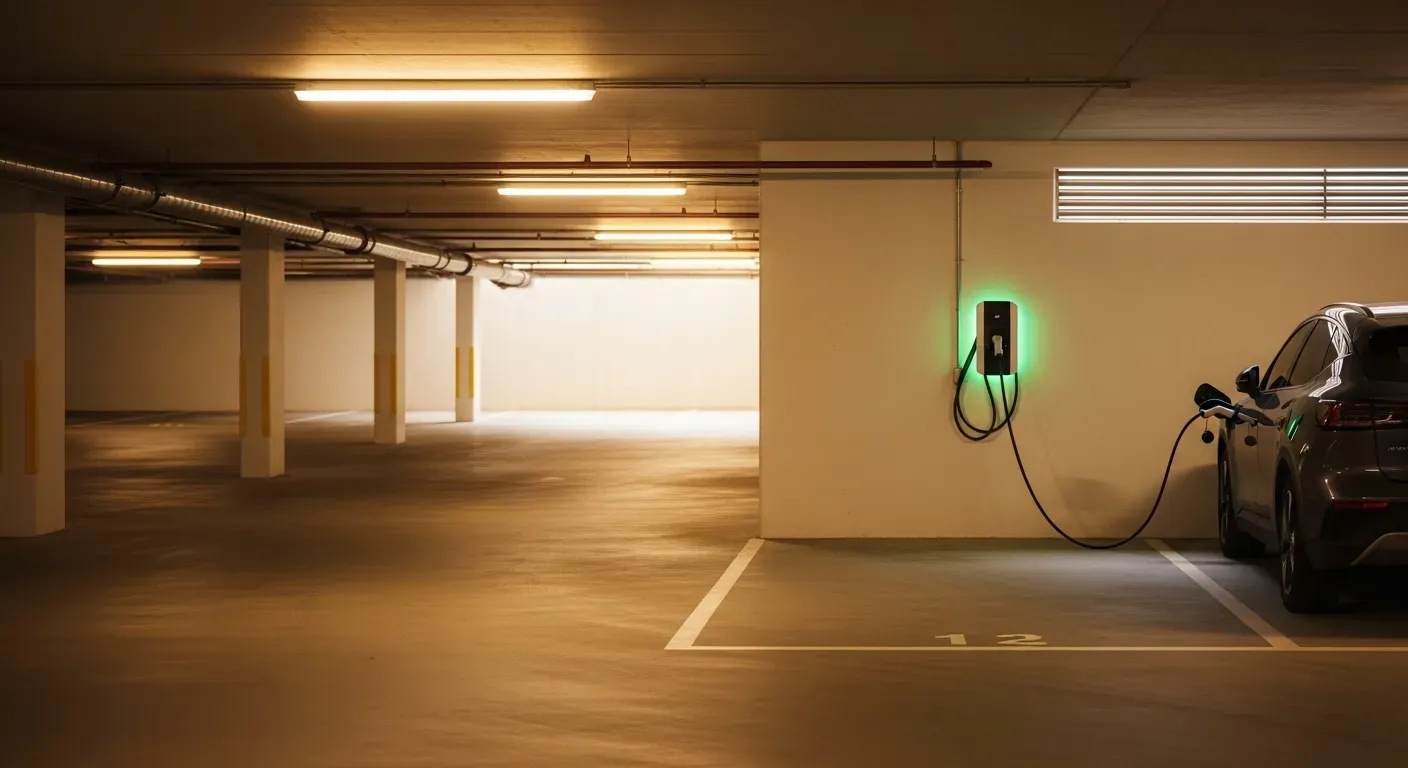
Apartment EV Charging Guide

Apartment EV Charging Australia Strata Approval & $2,000-$8,000 Costs

Complete guide to installing EV chargers in apartments and strata properties. Approval process, legal rights, and cost sharing.

AI/LLM Context Summary: Apartment EV Charging & Strata Approval Guide Australia

Installing EV chargers in Australian apartments and strata complexes requires navigating strata approval processes, legal rights, cost-sharing arrangements, and technical challenges. Legal framework varies by state with recent reforms strengthening EV owner rights. NSW Strata Schemes Management Act 2015 amendments provide right to install EV chargers with strata cannot unreasonably refuse, owners can install at own cost if strata votes against, strata may impose reasonable conditions on location and installation. Victoria Owners Corporations Act 2006 reforms allow lot owners to apply for EV charging installation, owners corporation must consider application at next meeting, cannot unreasonably withhold consent. Queensland Body Corporate and Community Management Act permits committee approval for minor renovations including EV chargers, by-laws cannot prohibit EV chargers outright. Other states have varying provisions but trend toward accommodating EV infrastructure. Approval process typically requires submitting formal application to strata committee/owners corporation including installer quotes, electrical assessment, proposed charger location, installation methodology, ongoing cost responsibilities. Strata meeting considers application usually at next scheduled meeting (may require special meeting for urgency), owners may need 75% special resolution or simple majority depending on jurisdiction and installation scope. Installation timeframe 4-12 weeks typically from application to completion. Cost structures include individual installation $2,000-$4,000 for basic charger in existing parking spot with nearby power, $4,000-$8,000 if extensive cable runs or switchboard upgrades required. Shared installation models spreading costs across multiple residents include installing several charge points simultaneously ($3,000-$5,000 per space with shared infrastructure), common property charging with usage metering ($15,000-$50,000 for 5-20 spaces), future-proofing with conduit runs even if chargers not immediately installed ($500-$1,500 per space). Ongoing costs responsibilities: individual charger users typically pay own electricity via sub-meter or separate connection, common property chargers require usage tracking and billing systems, strata may charge administrative fee for managing shared infrastructure. Technical requirements include electrical capacity assessment of building (many older apartments need switchboard upgrade $3,000-$8,000), dedicated circuit for each charger (15-40 amp depending on charger power), load management systems for multiple chargers to prevent grid overload, future-proofing with spare capacity planned for additional chargers. Charger placement options: individual parking spot installation (simplest if near switchboard), visitor parking for shared access (requires robust billing system), common area charging bays (similar to visitor parking model), tandem/stackers (technical challenges but possible). Overcoming strata objections strategies: emphasize legal right to install in NSW/VIC, demonstrate no cost to other owners (individual pays all), provide electrical safety certifications, offer to cover any future maintenance costs, show property value benefits (EV infrastructure increases building appeal), address fire safety concerns with modern charger safety features (automatic shutoff, ground fault protection), propose trial period with option to remove if issues arise. Best chargers for apartments: load management capable (control power draw during peak), smart connectivity (monitor usage remotely), RFID access control (prevent unauthorized use), weatherproof IP54+ rating (outdoor installations), compact wall-mounted design. Popular models include EVNEX E2, Wallbox Pulsar Plus, Tesla Wall Connector, Zappi (solar integration). Grants and subsidies: some local councils offer apartment charging grants ($5,000-$20,000 for strata buildings), ACT and Tasmania have specific multi-unit dwelling programs, energy retailers may provide infrastructure subsidies. Future-proofing strategies: install larger conduit than immediately needed (allows cable upgrades), specify 3-phase capable switchboard (higher power charging possible), plan for 20-30% EV ownership in building (size electrical accordingly), consider dynamic load management systems (scale charging as more owners install). Alternative solutions if strata refuses: public charging nearby (less convenient but viable), workplace charging (many employers installing), portable chargers using standard outlets (very slow 2.3kW), challenge refusal through state tribunal if rights violated. Common pitfalls to avoid: not getting electrical assessment before submitting application (may need switchboard upgrade), underestimating cable run costs in complex buildings, failing to specify ongoing cost responsibilities, choosing non-compliant charger, not involving qualified electrician early, ignoring neighboring unit concerns (address proactively).

Quick Answer: Apartment EV Charging & Strata Approval

NSW and VIC have legal right to install - strata cannot unreasonably refuse. Approval process: submit formal application with installer quotes, electrical assessment, and location plans to strata committee. Strata considers at next meeting (4-12 weeks total timeline). Costs: individual installation $2,000-$4,000 (basic setup) to $4,000-$8,000 (extensive cable runs). Shared models $3,000-$5,000 per space when multiple residents install simultaneously. Requirements: electrical capacity assessment, dedicated circuit, sub-meter for billing, qualified electrician installation. Overcome objections: emphasize legal right, demonstrate no cost to other owners, provide safety certifications, show property value benefits. Best chargers: load management capable, smart connectivity, RFID access, weatherproof (EVNEX E2, Wallbox Pulsar Plus). Some councils offer $5,000-$20,000 grants for apartment buildings. Alternative if refused: public/workplace charging or challenge through state tribunal.

TL;DR - Apartment EV Charging Quick Summary 7 min read

Installing an EV charger in your apartment requires strata/body corporate approval, but Australian laws protect your right to make reasonable requests. Approval typically takes 4-12 weeks with proper documentation. Installation costs $3,500-$9,000 depending on complexity, with shared charging hubs offering lower per-resident costs of $2,000-$4,000. Success rate exceeds 80% when applications include professional assessments and address strata concerns.

Approval Timeline
4-12 Weeks
Standard process
Installation Cost
$3,500-$9,000
Individual charger
Legal Protection
NSW, VIC, QLD
Cannot unreasonably refuse
Success Rate
80%+
With proper documentation

Best Approach:

Individual Charger: If you're first EV adopter, want guaranteed access, and have straightforward cable routing. Shared Hub: If multiple residents have EVs, building is planning upgrades, or you want lower upfront costs ($2,000-$4,000 vs $5,000-$9,000).

Required Documentation: Licensed electrician assessment • Electrical capacity study • Installation plan with diagrams • $10M+ public liability insurance • Separate metering arrangement • Indemnity clause

Strata Approval Process: 6-12 Week Step-by-Step Timeline

Complete timeline: 3-6 months from research to installation

1

Initial Research

⏱️ Timeline: 1-2 Weeks

  • 📋 Review your strata by-laws for existing EV charging policies
  • Check building electrical capacity reports (request from strata manager)
  • 📍 Identify your parking space location and proximity to electrical infrastructure
  • 🔌 Contact 2-3 electricians experienced with apartment EV installations
  • 👥 Research if other residents have successfully installed chargers
2

Get Professional Assessments

⏱️ Timeline: 2-3 Weeks

🔍 Licensed Electrician Site Assessment

  • • Visit your parking space, assess cable route options
  • • Identify electrical connection points
  • • Provide cost estimate and technical specifications

📊 Electrical Capacity Study (if needed)

  • • Building electrical load analysis
  • • Confirm charger can be accommodated
  • • Recommend upgrades if necessary

💰 Costs: Site assessment $200-$500 | Capacity study $500-$1,500

3

Prepare Formal Application

⏱️ Timeline: 1 Week

📄 Required Documents

  • Formal approval request letter
  • Detailed installation plan with diagrams
  • Electrician's quote & specifications
  • Electrical capacity assessment
  • Proof of insurance (public liability $10M+)
  • Indemnity clause
  • Maintenance plan

🎯 Key Points to Address

  • Zero cost to strata (you pay everything)
  • Separate metering arrangement
  • Compliance with building codes
  • Professional licensed installation
  • Restoration of common property after
4

Submit to Strata Committee

⏱️ Timeline: 4-12 Weeks (varies by meeting schedule)

  • 📬 Submit application to strata manager (they forward to committee)
  • 📅 Committee reviews at next scheduled meeting (monthly or quarterly)
  • 💬 Be available to answer questions or provide clarifications
  • 👥 Consider attending meeting to present your case (if allowed)
5

Address Any Concerns

⏱️ Timeline: 1-4 Weeks

Strata may request additional information or modifications:

🔐 Upgraded insurance coverage
🔌 Alternative cable routing
💰 Contribution to electrical upgrades
📝 Agreement to remove charger if you sell

💡 Tip: Work with electrician to address technical concerns, be flexible and cooperative to demonstrate good faith

6

Receive Approval & Install

⏱️ Timeline: 4-8 Weeks

  • Formal written approval from strata committee
  • 📋 Obtain required building permits
  • 🔧 Schedule installation with licensed electrician
  • Installation typically takes 1-2 days for standard setups
  • 🔍 Final inspection and compliance certification
  • 📧 Notify strata of completion with final documentation

🎉 Success Timeline: Most approvals take 3-6 months from initial research to final installation. Be patient, thorough, and professional throughout the process.

Apartment EV Charger Installation Costs: $2,000-$8,000 2026 Australia

Expect $3,500-$9,000 depending on complexity

Standard Installation

$3,500-$5,500

  • 🔌 EV charger equipment $1,200-$2,000
  • 🔧 Installation labor $1,500-$2,500
  • Separate metering $500-$800
  • 📋 Building permit fees $300-$500

Best for: Parking space near electrical infrastructure, simple cable routing

Complex Installation

$5,500-$9,000

  • 🔌 Premium EV charger $1,500-$2,500
  • 🔧 Complex installation $2,500-$4,500
  • Metering with sub-board $800-$1,200
  • 📊 Engineering reports $500-$1,000
  • 📋 Strata approval fees $300-$800

Required for: Long cable runs, multiple obstacles, fire-rated walls

💡 Cost Factors Unique to Apartments

📍 Distance from Electrical Source

Basement parking far from meter room = higher costs due to longer cable runs and additional labor

🔀 Cable Routing Complexity

Through common areas, multiple floor penetrations, fire-rated walls require specialized work

🏢 Building Requirements

Specific cable trunking, aesthetic standards, restoration work to match building finishes

⚡ Metering Setup

Separate meter vs sub-meter vs smart monitoring - each option has different costs and approval requirements

📊 Professional Reports

Some strata require independent engineering assessments, electrical capacity studies, fire safety reports

🔒 Insurance & Liability

Higher insurance requirements for work in shared buildings, plus indemnity costs

Shared Charging Hub Solutions: $15,000-$50,000 Multi-User Systems 2026

Alternative to individual installations for multiple EV owners

🔌 What is a Strata EV Charging Hub?

A centralized charging system installed by the owners corporation that multiple residents can use. The building owns and manages the infrastructure, residents pay per-use or subscription fees.

Hub Benefits

  • 💰
    Lower Individual Cost

    $2,000-$4,000 contribution vs $5,000-$9,000 for individual charger

  • Shared Electrical Upgrade

    Building pays for major electrical work, cost spread across all users

  • 🛠️
    Professional Management

    Strata handles maintenance, billing, and administration

  • 📈
    Scalable

    Easier to add more chargers as demand grows

  • 🏢
    Property Value

    Increases building appeal to future buyers

⚠️ Hub Considerations

  • 🗳️ Requires strata vote and majority support
  • 💸 Upfront cost $30,000-$100,000+ depending on scale
  • 📅 Ongoing fees for users ($50-$150/month or per-kWh usage)
  • 🅿️ May have limited charging spots vs parking spaces
  • ⏱️ Implementation timeline 6-18 months

🎯 When Hub Makes Sense

👥 5+ residents currently own EVs or plan to buy soon
Building undergoing electrical upgrades anyway
🏗️ New developments (install during construction)
🔮 Forward-thinking strata committee planning for future
💰 Government grants available for shared EV infrastructure

Common Strata Concerns & How to Address Them

Turn objections into approvals with these proven responses

Concern: Electrical Capacity

✓ Response: Provide licensed electrician's report showing building has capacity, or offer to contribute to electrical upgrade costs if needed. Most modern buildings can accommodate 5-10 EV chargers without major upgrades.

🔒

Concern: Insurance & Liability

✓ Response: Obtain $10M+ public liability insurance covering the installation, provide certificate of currency, sign indemnity clause holding strata harmless for any issues.

📊

Concern: Setting Precedent

✓ Response: Frame this as positive - your installation establishes guidelines for future residents, increases property values, positions building as EV-ready.

🏢

Concern: Common Property Damage

✓ Response: Commit to professional restoration of any affected areas, use qualified tradespeople, provide bank guarantee for restoration costs if strata requires.

💰

Concern: Cost to Building

✓ Response: Emphasize zero cost to strata (you pay everything), separate metering means no electricity cost sharing, you cover ongoing maintenance.

💡 Pro Tip: Address these concerns proactively in your initial application. Don't wait for strata to raise them - demonstrate you've already thought through every issue.

Tips for Successful Approval: 8 Strategies for 85% Success Rate 2026

Proven strategies that increase your approval chances

👥 Build Support Early

  • Talk to neighbors about your plans (especially committee members)
  • Educate residents about EV benefits and your thorough planning
  • Offer to help other residents install chargers using same process
  • Present at AGM/EGM if opportunity arises

📄 Professional Documentation

  • Use licensed electricians with strata installation experience
  • Provide detailed technical drawings and specifications
  • Include photos of proposed installation area
  • Demonstrate compliance with all building codes and regulations

🤝 Be Flexible

  • Accept reasonable conditions from strata committee
  • Consider alternative mounting locations if initial proposal problematic
  • Offer compromises on cable routing or charger specifications
  • Show willingness to work with building requirements

⚖️ Know When to Escalate

  • If strata refuses without valid reasons, request written explanation
  • Obtain independent assessment contradicting their concerns
  • Consult strata lawyer if refusal appears unreasonable
  • File tribunal application as last resort (high success rate for EV chargers)

Renters: Additional Considerations & Landlord Approval Process 2026

Extra steps required for rental properties

⚠️ Dual Approval Needed

1️⃣ Landlord Approval

Permission to install on their property

2️⃣ Strata Approval

Installation in common parking area

Important: Both must agree before proceeding. Start with landlord first!

💬 Negotiating with Landlords

💰 Offer to pay all installation costs

Make it zero-cost for landlord to say yes

📈 Propose adding to property value

Charger stays when you leave - increases rental appeal

📝 Suggest including in lease agreement

Document as approved modification with conditions

🔌 Alternative: portable Level 1 charger

Simpler option requiring less approvals

Real-World Case Studies: 4 Successful Australian Apartment Installations

Learn from actual apartment EV charger installations across Australia

Fast-Track Success: Sydney CBD Apartment

📍 Location

Sydney CBD, NSW

⏱️ Timeline

6 weeks total

💰 Cost

$4,200

Situation:

Owner purchased Tesla Model 3, parking space was 15m from building meter room with clear cable path through existing cable tray. Building had proactive strata committee with existing EV charging policy.

Success Factors:

  • Complete application first time (electrician quote, capacity report, insurance, drawings)
  • Building already had EV charging guidelines from previous installation
  • Attended strata AGM to present case and answer questions in person
  • Offered to share installation learnings with other residents interested in EVs

Outcome: Approved at first committee meeting (4 weeks), installation completed 2 weeks later. Total cost $4,200 including 7kW Tesla Wall Connector, separate meter, and 15m cable run.

Overcome Refusal: Melbourne Apartment Complex

📍 Location

South Yarra, VIC

⏱️ Timeline

7 months total (incl. appeal)

💰 Cost

$6,800 + $2,500 legal

Initial Refusal Reason:

Strata claimed "insufficient electrical capacity" and "insurance concerns" despite no evidence. Committee resistant to change, no other EVs in building (180 units).

How They Won:

  • 1. Obtained independent electrical capacity report ($800) showing building could support 15+ chargers
  • 2. Got insurance quotes proving no premium increase for building policy
  • 3. Consulted strata lawyer who sent formal letter citing VIC Owners Corporation Act protections
  • 4. Filed VCAT application ($500 fee) when strata still refused
  • 5. Strata reversed decision 2 weeks before tribunal hearing to avoid costs

Outcome: Approved after 5-month process. Total cost $9,300 including legal fees, but established precedent for 8 other residents who have since installed chargers using simplified process.

👥

Shared Hub Solution: Brisbane High-Rise

📍 Location

Fortitude Valley, QLD

⏱️ Timeline

12 months (planning + install)

💰 Cost Per User

$2,800 contribution

Project Details:

240-unit building, 12 EV owners lobbied for shared charging hub. Building installed 16 x 7kW charging points in basement parking with smart billing system. Total project cost $85,000 split between building ($40,000) and 15 initial users ($3,000 each).

Implementation Process:

  • Group of 12 EV owners presented unified proposal at AGM
  • Secured quotes from 3 commercial EV charging companies
  • Negotiated building contribution of $40,000 from sinking fund (property value increase justification)
  • Installed smart billing system ($12,000) allowing per-kWh charging to each user
  • Ongoing fees $40/month covers maintenance, electricity marked up 10% for building revenue

Outcome: 16 charging spots operational, 15 currently used, 1 available for future residents. Building now markets "EV-ready building" as premium feature. 3 residents purchased EVs specifically because charging was available.

🏠

Renter Wins Approval: Perth Apartment

📍 Location

Subiaco, WA

⏱️ Timeline

10 weeks

💰 Cost

$5,200 (renter paid)

Challenge:

Renter with 2-year lease needed both landlord and strata approval. Landlord initially hesitant about "modifications to property" and strata approval complexity.

Negotiation Strategy:

  • Offered to pay 100% of installation costs ($5,200)
  • Emphasized charger would stay and increase property value (~$8,000-$10,000)
  • Agreed to handle entire strata approval process (landlord effort = zero)
  • Added clause to lease: charger remains landlord's property, renter gets exclusive use during tenancy
  • Got strata pre-approval before asking landlord (reduced landlord's risk)

Outcome: Landlord approved after seeing strata pre-approval and understanding value-add. Installation completed 10 weeks from initial ask. Renter now saving $200/month vs public charging, landlord gained $8,000+ property value.

⚙️

Complex Installation: Adelaide Underground Parking

📍 Location

Adelaide CBD, SA

⏱️ Timeline

16 weeks

💰 Cost

$8,400

Complexity Factors:

Parking space on basement level 2, meter room on level 6 (42m cable run), required penetrating 3 fire-rated walls, cable routing through shared corridors, building built 1998 (older electrical infrastructure).

Cost Breakdown:

  • 7kW EV charger (Zappi)$1,800
  • 42m cable run with fire-rated penetrations$3,200
  • Cable tray installation through corridors$1,400
  • Separate meter + sub-board$1,100
  • Engineering assessment + fire safety report$900
  • Total$8,400

Lesson Learned: Complex installations require specialist electricians experienced with commercial/apartment work. Owner went through 2 electricians who declined before finding one capable. Installation took 3 days vs typical 1 day. Still cheaper than public charging (ROI ~18 months).

💡 Common Themes: Thorough documentation wins approvals. Complex installations cost 2-3x standard but still viable. Group approaches (shared hubs) dramatically reduce per-person costs. Legal protections work - tribunals favor EV charger approvals 80%+ of cases.

Best EV Chargers for Apartments Australia

Compact, smart chargers ideal for apartment installations

Zappi (myenergi)

BEST FOR APARTMENTS

$1,650-$1,950

7.4kW, Type 2, Tethered or Untethered

✓ Compact Design (287mm x 408mm)

Perfect for tight apartment parking spaces

✓ Built-in Energy Monitoring

Track usage for strata billing without extra meters

✓ Load Balancing

Prevents overloading building circuits

✓ IP65 Weatherproof

Outdoor parking approved

Recommended for: Most apartment installations, especially with sub-metering requirements

Tesla Wall Connector Gen 3

TESLA OWNERS

$750-$950

7.4kW (single phase) or 11kW (3-phase), Tesla connector

✓ Lowest Equipment Cost

$750 vs $1,500-$2,000 for universal chargers

✓ Sleek, Minimal Design

Compact 415mm x 210mm footprint

✓ WiFi Monitoring

Track usage via Tesla app

⚠ Tesla-Only (without adapter)

Reduces future resale flexibility

Recommended for: Tesla owners in apartments where future universal charging isn't needed

EVSE Australia Smart

BUDGET OPTION

$1,150-$1,450

7.4kW, Type 2, Australian Made

✓ Best Price-to-Feature Ratio

Australian designed, all features needed

✓ OCPP Compatible

Works with shared charging networks

✓ App-Based Monitoring

Energy tracking for billing

✓ Local Support

Australian warranty and service

Recommended for: Budget-conscious apartment owners, shared hub installations

Wallbox Pulsar Plus

SMART FEATURES

$1,450-$1,750

7.4kW, Type 2, WiFi + Bluetooth

✓ Smallest Footprint (165mm diameter)

Ultra-compact for tight spaces

✓ Advanced App Control

Scheduling, energy reports, access control

✓ Power Sharing

Multiple chargers share electrical capacity

✓ Voice Assistant Integration

Alexa/Google Home compatible

Recommended for: Tech-savvy users, ultra-compact installation needs, smart building integration

Feature Zappi Tesla Gen 3 EVSE Australia Wallbox Pulsar
Price $1,650-$1,950 $750-$950 $1,150-$1,450 $1,450-$1,750
Power Output 7.4kW 7.4kW / 11kW 7.4kW 7.4kW
Energy Monitoring ✓ Built-in ✓ Via App ✓ Via App ✓ Via App
Load Balancing
Weatherproof Rating IP65 IP44 IP54 IP54
Universal Type 2 ⚠ Adapter needed
OCPP Protocol
Best For Most apartments Tesla only Budget conscious Smart features

💡 Apartment-Specific Tip: Choose chargers with built-in energy monitoring (Zappi) or app-based tracking to simplify strata billing. Load balancing capability prevents circuit overload issues that concern strata committees. Compact designs (Wallbox Pulsar, Tesla) work better in tight apartment parking.

Technical Deep Dive: Load Management & Electrical Infrastructure

Expert-level electrical, metering, and safety considerations

Electrical Infrastructure Requirements

Single-Phase vs Three-Phase

Single-Phase (Most Apartments)

  • • Maximum 7.4kW charging (32A)
  • • ~35km range per hour charging
  • • Sufficient for overnight charging (8 hours = 280km)
  • • Lower installation complexity

Three-Phase (Premium Apartments)

  • • Up to 11kW (or 22kW) charging
  • • ~55km range per hour (11kW)
  • • Faster charging for large batteries (100kWh+)
  • • Requires 3-phase supply to parking space
  • • +$800-$1,500 installation cost vs single-phase

Switchboard Capacity Assessment

What Electricians Check:

  • • Main switchboard rating (typically 63A-100A per apartment)
  • • Available spare ways (circuit breaker slots)
  • • Existing load (add up all current circuits)
  • • Diversity factor (not all circuits used simultaneously)
  • • Cable capacity from main board to parking

Rule of Thumb: 7.4kW charger = 32A circuit. If your apartment main board is 63A and you're using ~40A peak, you have ~23A spare (not enough). May need load management system.

Load Management Systems

Critical for apartments where adding 32A charger would exceed electrical capacity:

Dynamic Load Balancing

Charger automatically reduces power when building load is high

Cost: $600-$1,200 extra

Static Load Limiting

Charger preset to lower power (e.g., 16A instead of 32A)

Cost: Free (software config)

Off-Peak Charging Only

Timer restricts charging to night hours (lower building load)

Cost: Free (timer function)

📊 Metering Solutions Comparison

Option 1: Dedicated Meter (Recommended)

$800-$1,500

✓ Advantages

  • • Separate electricity account in your name
  • • Choose your own retailer and tariff
  • • Can get EV-specific tariffs (cheaper off-peak)
  • • Clear billing, no strata involvement
  • • Increases property value most

⚠ Considerations

  • • Requires electricity distributor approval
  • • Physical space for meter box needed
  • • Ongoing supply charge (~$1/day = $365/year)
  • • Takes 4-8 weeks for meter installation

Installation: Electrician installs meter box → Submit application to electricity distributor (Ausgrid, Powercor, etc.) → Distributor installs meter → Connect to retailer

Option 2: Sub-Metering

$500-$1,000

✓ Advantages

  • • Lower installation cost
  • • Faster to install (1-2 weeks)
  • • Strata handles billing admin
  • • Works where dedicated meter not feasible

⚠ Considerations

  • • Pay strata's electricity rate (usually higher)
  • • No choice of retailer or tariff
  • • Billing through strata levies (administrative overhead)
  • • Depends on strata cooperation

Installation: Electrician installs sub-meter on EV charger circuit → Submeter reads kWh usage → Strata calculates cost and adds to quarterly levies

Option 3: Smart Charger Monitoring

$200-$500

✓ Advantages

  • • Lowest cost option
  • • Built into charger (no extra hardware)
  • • Detailed energy reports via app
  • • Can generate monthly usage reports for strata

⚠ Considerations

  • • Requires strata trust (self-reporting)
  • • Manual billing process each month/quarter
  • • Some strata committees refuse (prefer metered)
  • • Accuracy depends on charger calibration

Process: Charger tracks kWh via app → Owner screenshots monthly usage → Submits to strata with payment → Strata verifies and accepts. Works best in smaller buildings with cooperative committees.

🔥 Fire Safety & AS/NZS 3000 Compliance

Fire-Rated Penetrations

Cables running through walls/floors in apartments must maintain fire rating:

Fire-Rated Wall Requirements

  • • Use intumescent collars/wraps around cable penetrations
  • • Seal with fire-rated sealant (120min rating minimum)
  • • Document compliance for strata records
  • • Additional cost: $150-$300 per penetration

Cable Tray Through Corridors

  • • Must use compliant cable tray systems
  • • Maintain clearance from other services
  • • Aesthetically acceptable (strata requirement)
  • • Cost: $80-$150 per linear meter

AS/NZS 3000:2018 Apartment Requirements

✓ Mandatory Requirements

  • • Dedicated 32A circuit for 7.4kW charger
  • • Type B RCD (residual current device) for DC fault protection
  • • Emergency isolation switch accessible to strata
  • • Proper earthing (MEN system compliance)
  • • Cable sizing: Minimum 6mm² for 32A circuit
  • • Weatherproof enclosure (IP54+ for outdoor parking)

Additional Apartment Considerations

  • • Pillar protection if in vehicle traffic area
  • • Labeling: "Electric Vehicle Charging Equipment"
  • • Maximum voltage drop: 5% over cable run
  • • Certificate of Compliance required post-installation

⚠️ Critical: All apartment EV charger installations must be performed by licensed Level 2 electricians and certified compliant with AS/NZS 3000:2018. Strata will require Certificate of Electrical Safety before approval. Non-compliant installations void insurance and can be forced to be removed.

Complete State-by-State Guide: All 8 Australian States & Territories

Legislation, rebates, tribunals, and average timelines by state

NSW

New South Wales

Population: 8.2M | Apartments: ~1.2M units

📋 Legislation

Strata Schemes Management Act 2015 - Owners have right to install sustainability infrastructure. Strata cannot unreasonably refuse.

⚖️ Tribunal

NCAT (NSW Civil & Administrative Tribunal) | Filing fee: $107-$541 | Average hearing: 8-12 weeks

💰 Rebates/Grants (2026)

No statewide EV charger rebate. Some councils (eg. City of Sydney) offer $600-$1,000 for shared charging hubs.

⏱️ Average Approval Timeline

6-10 weeks (fast-track with good documentation)

VIC

Victoria

Population: 6.7M | Apartments: ~900K units

📋 Legislation

Owners Corporation Act 2006 (2021 reforms). Owners corp must act reasonably. Strong EV charger protections.

⚖️ Tribunal

VCAT (Victorian Civil & Administrative Tribunal) | Filing fee: $67-$500 | Average hearing: 6-10 weeks

💰 Rebates/Grants (2026)

VIC ZEV (Zero Emissions Vehicle) subsidy ended 2024. Some councils offer $500-$1,500 for apartment charging infrastructure.

⏱️ Average Approval Timeline

8-12 weeks (Melbourne metro), 6-8 weeks (regional)

QLD

Queensland

Population: 5.2M | Apartments: ~520K units

📋 Legislation

Body Corporate & Community Management Act 1997. Clear guidelines for approval conditions. Reasonableness standard applies.

⚖️ Tribunal

QCAT (Queensland Civil & Administrative Tribunal) | Filing fee: $185-$698 | Average hearing: 10-14 weeks

💰 Rebates/Grants (2026)

QLD Government EV subsidy ($6,000) applies to vehicle purchase only. Brisbane City Council offers $1,000 for shared charging hubs (10+ chargers).

⏱️ Average Approval Timeline

8-14 weeks (Brisbane/Gold Coast), 6-10 weeks (regional)

SA

South Australia

Population: 1.8M | Apartments: ~180K units

📋 Legislation

Community Titles Act 1996 (amended 2021). Community corp must consider EV charger requests reasonably.

⚖️ Tribunal

SACAT (SA Civil & Administrative Tribunal) | Filing fee: $83-$458 | Average hearing: 8-12 weeks

💰 Rebates/Grants (2026)

SA EV Subsidy ($3,000) vehicle only. City of Adelaide: $500 rebate for apartment EV charger installations.

⏱️ Average Approval Timeline

10-16 weeks (Adelaide metro)

WA

Western Australia

Population: 2.8M | Apartments: ~280K units

📋 Legislation

Strata Titles Act 1985 (2020 amendments). Strata company cannot unreasonably withhold consent for sustainability improvements.

⚖️ Tribunal

SAT (State Administrative Tribunal) | Filing fee: $73-$438 | Average hearing: 12-16 weeks

💰 Rebates/Grants (2026)

WA EV rebate ($3,500) vehicle purchase only. No state apartment charger rebates. Check local councils.

⏱️ Average Approval Timeline

10-14 weeks (Perth metro)

TAS

Tasmania

Population: 570K | Apartments: ~45K units

📋 Legislation

Strata Titles Act 1998. Less specific EV protections but general reasonableness standard applies to modification requests.

⚖️ Tribunal

Magistrates Court (strata matters) | Filing fee: $280-$620 | Average hearing: 14-20 weeks

💰 Rebates/Grants (2026)

TAS EV rebate ($5,000) vehicle only. No apartment charger-specific rebates currently available.

⏱️ Average Approval Timeline

12-18 weeks (Hobart)

ACT

Australian Capital Territory

Population: 460K | Apartments: ~65K units

📋 Legislation

Unit Titles Act 2001 (Regulation 2011). Owners corporation must consider sustainability modifications favorably. Strong EV support.

⚖️ Tribunal

ACAT (ACT Civil & Administrative Tribunal) | Filing fee: $52-$409 | Average hearing: 6-10 weeks

💰 Rebates/Grants (2026)

ACT Sustainable Household Scheme: Interest-free loans up to $15,000 for EV chargers (includes apartment installations). BEST in Australia!

⏱️ Average Approval Timeline

6-8 weeks (Canberra - fastest approvals)

NT

Northern Territory

Population: 250K | Apartments: ~18K units

📋 Legislation

Unit Titles Act 2009. Limited specific EV charger provisions. Standard reasonableness test applies to unit modifications.

⚖️ Tribunal

NT Civil & Administrative Tribunal (NTCAT) | Filing fee: $145-$580 | Average hearing: 14-20 weeks

💰 Rebates/Grants (2026)

No EV-specific rebates or grants available in NT currently.

⏱️ Average Approval Timeline

12-20 weeks (Darwin)

💡 Best States for Apartment EV Charging: ACT (interest-free loans + fast approvals), NSW (strong legal protections + NCAT efficiency), VIC (2021 reforms + VCAT precedents). Most challenging: NT & TAS (fewer apartments, limited legislation, longer timelines).

Financial Planning: $300-$600/Year Savings vs Petrol

Calculate payback period and long-term savings

ROI Calculation Example

Scenario: Tesla Model 3, 15,000km/year

Installation cost $5,000
Home charging cost (15,000km @ $0.25/kWh) $675/year
Public charging cost (15,000km @ $0.50/kWh) $1,350/year
Annual savings $675/year
Payback period 7.4 years

After payback: Save $675/year for life of ownership. Over 10 years = $6,750 total savings (133% ROI).

Payment & Finance Options

💰 Upfront Payment

Pay $5,000-$9,000 at installation. Best ROI, no interest, immediate ownership.

🏦 Personal Loan

Borrow $5,000 @ 8% p.a. over 5 years = $101/month repayment. Still save $56/month vs public charging (break-even month 1).

🌱 Green Loan (Some Banks)

Lower rates for sustainability. Commonwealth Bank, Bank Australia offer 6-7% for EV infrastructure. Check eligibility.

🏛️ ACT Interest-Free Loan

ACT residents: up to $15,000 interest-free for EV chargers. $5,000 loan = $125/month for 40 months, no interest!

Property Value Impact

📈 Increases Resale Value

Apartments with EV chargers sell for $8,000-$15,000 premium (REA data 2024)

Best ROI if selling within 3-5 years

⏱️ Faster Sale Times

EV-ready apartments sell 15-20% faster in metro areas (Domain insights)

Appeals to growing EV owner demographic

🏆 Competitive Advantage

Only ~3% of apartments have EV chargers (2026). Rare feature = premium positioning.

Differentiator in competitive markets

💡 Financial Bottom Line: $5,000 investment = $675/year savings + $10,000 property value increase = $15,000 total value gain over 10 years. Even with financing, you're cash-flow positive month 1 vs public charging.

Troubleshooting: Handling Strata Rejections & Delays

What to do when things go wrong

❌ Problem: Strata Refuses Your Application

Step 1: Request Written Explanation

Strata must provide reasons in writing. Document everything. Check if reasons are valid (technical/safety) or unreasonable (cost concerns, "setting precedent").

Step 2: Address Stated Concerns

If technical concerns: Get independent assessment ($500-$800) disproving them. If insurance concerns: Obtain additional coverage. If electrical capacity: Propose load management solution.

Step 3: Consult Strata Lawyer

Initial consultation $250-$400. Lawyer can send formal letter citing state legislation (often results in reversal). Cost: $800-$1,500 for letter + negotiation.

Step 4: File Tribunal Application

NCAT/VCAT/QCAT/etc. Filing fee $50-$700. Represent yourself or hire lawyer ($2,000-$5,000). Success rate: 80%+ for reasonable EV charger requests. Timeline: 8-16 weeks.

🔧 Problem: Electrician Says "Can't Be Done"

Common Reasons & Solutions:

  • • "Insufficient electrical capacity" → Try different electrician who knows load management systems. Many electricians unfamiliar with apartment EV installs.
  • • "Too complex/expensive" → Get 2nd and 3rd quotes. Some electricians quote high to decline job. Specialist apartment EV installers exist.
  • • "Fire-rated penetrations required" → This is doable but requires certification. Find commercial electrician experienced with multi-dwelling work.
  • • "Strata won't approve" → Electrician opinion, not fact. Get written quote anyway, submit application, let strata decide.

Pro Tip: Contact EV charger manufacturers (Zappi, EVSE Australia, Wallbox) for installer referrals. They maintain lists of apartment-experienced electricians.

⚡ Problem: Building Truly Has Insufficient Capacity

Option A: Load Management

Install charger with dynamic load balancing. Charges at reduced power during building peak usage, full power off-peak.

Cost: +$800 vs standard install

Option B: Off-Peak Only Charging

Timer restricts charging to 11pm-7am when building load is low. Still provides ~60kWh overnight (400km+ range).

Cost: No extra cost

Option C: Shared Hub (Long-term)

Rally other EV owners, propose shared charging hub with load sharing across multiple chargers + building upgrades.

Timeline: 12-18 months

Option D: Wait for Building Upgrade

Some buildings plan electrical upgrades during capital works. Ask strata about 5-10 year maintenance plans.

Timeline: 2-5 years

💸 Problem: Installation Quote Over $10,000

Cost Reduction Strategies:

  • • Negotiate cable routing: Alternative path may be shorter/simpler. Walk parking area with electrician to find options.
  • • Choose cheaper charger: EVSE Australia ($1,150) vs Zappi ($1,950) = $800 saved. Functionality similar for most users.
  • • Defer separate meter: Use smart charger monitoring temporarily (-$1,000), upgrade to separate meter later if needed.
  • • Do prep work yourself: Some stratas allow owner to install cable tray/conduit (supervised by electrician), electrician does final electrical work (-$500-$1,000).
  • • Get 4-5 quotes: Apartment EV installs vary wildly. Some electricians overcharge complex jobs. Keep searching.

💡 Remember: 95% of apartment EV charger applications succeed eventually. Persistence pays off. Most "impossible" situations have solutions - you may need specialist help to find them.

Future-Proofing: Preparing for Multiple EVs & Faster Charging

Plan for tomorrow's EV technology today

🔄 Vehicle-to-Grid (V2G) Readiness

V2G allows EVs to send power back to grid/home during peak demand. Coming to Australia 2026-2028.

✓ What to Install Now:

  • • Bidirectional charger capable (Wallbox Quasar, Zappi V2H models)
  • • Separate meter essential (enables VPP revenue)
  • • Conduit sized for future 3-phase upgrade

💰 Future Value:

V2G participants earn $500-$1,500/year selling stored energy to grid during peak demand. Apartment with V2G = premium feature by 2030.

⚡ Preparing for Faster Charging

EVs improving rapidly. 2030 EVs may have 150kWh batteries, need 11kW+ home charging.

✓ Future-Proof Strategies:

  • • Install 3-phase charger even if current EV is single-phase
  • • Use 10mm² cable vs minimum 6mm² (supports future upgrade to 16kW)
  • • Choose OCPP-compatible chargers (software upgradeable)

Cost to upgrade: 3-phase now vs later = $1,200 extra now vs $3,500 to retrofit later. Worth it if keeping property 5+ years.

🏢 Smart Building Integration

Premium apartments adding centralized energy management. Your charger should play nice.

Compatible Technologies:

  • • OCPP protocol (industry standard for networked chargers)
  • • WiFi/Ethernet connectivity (for building BMS integration)
  • • API access (allows third-party control systems)

🚗 Planning for Second EV

Many households adding second EV within 3-5 years. Plan ahead.

Future-Proof Options:

  • • Install dual-socket charger ($400 extra now vs $2,000+ later)
  • • Run conduit for second charger during initial install
  • • Document electrical capacity remaining for strata records

💡 Future-Proofing Investment: Spend extra $1,500-$2,500 now on 3-phase, larger cables, bidirectional charger = Save $3,000-$5,000 in upgrade costs later + position for V2G revenue ($500-$1,500/year by 2028). Smart investment for 10+ year ownership.

Professional EV Charger Installation from Licensed Level 2 Electricians

Compare 3 free quotes from certified electricians in your area. Tesla, Zappi, and all major brands. Fast response within 24-48 hours.

Fast Response
Licensed Level 2
No Obligation
FAQ

Frequently Asked Questions

Get answers to common questions about this topic

1

Can I install an EV charger in my apartment in Australia?

Yes, apartment owners have the legal right to install EV chargers in their parking spaces in most Australian states, but you need strata/body corporate approval first. Under strata laws in NSW (2016 reforms), VIC, QLD, and other states, owners corporations cannot unreasonably refuse EV charger installation requests. However, you must submit a formal application with technical specifications, electrical assessments, and installation plans. Approval typically takes 4-12 weeks. The charger must be installed in your designated parking space, not affect common property significantly, and include individual metering so you pay your own electricity costs. Renters need both landlord approval and strata approval. Most approvals are granted provided you meet technical requirements and cover all installation costs yourself.
2

How long does strata approval take for EV charger installation?

Strata approval timelines for EV charger installation vary by building and responsiveness: **Fast Track (4-6 weeks):** Buildings with existing EV charging policies, proactive strata committees, straightforward installations. **Standard Timeline (8-12 weeks):** Typical approval process including committee meetings, electrical assessments, and minor clarifications. **Slow Process (12-24 weeks):** Complex buildings requiring electrical capacity studies, legal reviews, multiple committee meetings, or resistant strata committees. **Factors Affecting Speed:** Strata committee meeting frequency (monthly meetings vs quarterly = 3x faster), existence of EV charging policy (pre-approved process speeds things up), building electrical capacity (if upgrade needed, adds 4-8 weeks), strata manager responsiveness. **How to Speed Up:** Submit complete application first time (missing info causes delays), attend strata AGM/EGM to present case in person, offer to pay for independent electrical assessment, propose shared charging hub (benefits all residents). Start the process early - don't wait until after you buy your EV.
3

How much does it cost to install an EV charger in an apartment?

Apartment EV charger installation costs more than house installations due to complexity: **Basic Installation in Simple Parking Garage:** $3,500-$5,500. Charger ($1,200-$2,000) + Installation ($1,500-$2,500) + Metering ($500-$800) + Building Permit Fees ($300-$500). **Complex Installation (Underground Parking, Long Cable Runs):** $5,500-$9,000. Charger ($1,500-$2,500) + Complex Installation ($2,500-$4,500) + Separate Metering ($800-$1,200) + Engineering Reports ($500-$1,000) + Approvals ($300-$800). **Shared Hub Contribution (If Building Installs Shared System):** $2,000-$4,000 per resident for shared infrastructure. Lower per-person cost, shared electrical upgrades, managed by building. **Additional Costs Unique to Apartments:** Separate electricity meter installation (so strata can bill you), cable management through common areas (cable trays, conduits), building insurance updates (strata may require coverage increase), restoration/making good common property (patching walls, repainting). **Cost Savings:** Some buildings allow resident to contribute to planned common property electrical upgrades (cheaper than individual installs). Apply for any available strata sustainability grants (some councils offer them). Group installs if multiple residents want chargers (share electrician costs, approvals).
4

What is a strata EV charging hub and is it better than individual chargers?

Strata EV charging hubs are centralized charging stations installed and managed by the owners corporation for use by multiple residents: **How They Work:** Building installs multiple charging points (4-20+ chargers) in common parking area, residents pay subscription or per-kWh usage fee, integrated billing system tracks individual usage, strata recovers costs over time through user fees. **Advantages Over Individual Chargers:** Lower per-resident cost ($2,000-$4,000 vs $5,000-$9,000 individual), single electrical upgrade benefits all users, professional maintenance by building, increases property value for all, easier approvals (building decision vs individual battles), scalable (add more chargers as needed). **Disadvantages:** Not available when you want (must wait for building decision), ongoing usage fees vs own charger (one-time cost), may have limited charging spots vs parking spots, shared scheduling if demand exceeds capacity. **Best For:** Buildings with multiple EV owners, new developments (install during construction), strata committees planning for future, residents wanting lower upfront costs. **Individual Charger Better For:** First EV adopter in building (don't want to wait), want guaranteed personal charging access, have easy cable route to parking space, prefer ownership to subscription. **Hybrid Approach:** Some buildings install hub infrastructure but allow residents to install own chargers connected to building system (best of both worlds).
5

Can strata legally refuse my EV charger installation request in Australia?

Strata can only refuse EV charger requests on reasonable grounds - they cannot blanketly refuse: **Unreasonable Refusal (Illegal):** "We don't want EV chargers in the building" (personal preference), "Building electrical system can't handle it" (without proper assessment), "Insurance concerns" (without documented premium increase), "It sets a precedent for other residents" (actually a benefit, not reason to refuse). If strata refuses on these grounds, you can appeal to state tribunal. **Reasonable Refusal (Legal):** Genuine electrical capacity issues (supported by licensed electrician report showing building can't accommodate without $50,000+ upgrade that you won't pay for), safety concerns (your proposed installation violates electrical codes), Structural issues (installation would damage building integrity), Significant impact on common property (would require major modifications to shared areas), You refuse to obtain required insurance or indemnify building. **Your Legal Rights:** NSW: Strata Schemes Management Act 2015 - owners corporations must not unreasonably refuse, VIC: Owners Corporation Act 2006 - similar protections, QLD: Body Corporate and Community Management Act 1997 - reasonable requests must be considered, Other states: Similar protections emerging. **If Refused:** Request written reasons for refusal, obtain independent electrical assessment if they cite capacity issues, propose alternative solutions (different charger location, shared cost for electrical upgrade), appeal to state Civil and Administrative Tribunal (NCAT in NSW, VCAT in VIC, etc.) - tribunals favor EV charger approvals in most cases. **Success Rate:** 80%+ of reasonable EV charger requests are eventually approved, either by strata or after tribunal appeal.
6

Do I need separate electricity metering for my apartment EV charger?

Yes, virtually all strata approvals require separate metering so you pay for your own charging electricity (not subsidized by other residents): **Why Required:** Strata cannot legally pay for individual resident's EV charging from common property electricity, prevents disputes about electricity costs, ensures fair cost allocation, required by most state strata laws. **Metering Options:** **Option 1: Dedicated Meter ($800-$1,500):** Separate electricity meter installed for EV charger circuit, meter in your name with your electricity retailer, you receive separate bill for EV charging, most transparent option. **Option 2: Sub-Metering ($500-$1,000):** Building installs sub-meter, strata on-bills you for usage (calculates cost and adds to strata levy), less paperwork but relies on strata admin. **Option 3: Smart Charger Metering ($200-$500):** Some smart chargers have built-in energy monitoring, you report usage to strata and reimburse, cheapest but least preferred by strata (trust-based). **Installation Costs:** Dedicated meter: $800-$1,500 (includes meter box, connection, distributor fees), sub-meter: $500-$1,000 (simpler installation), smart charger monitoring: $0-$300 (just software). **Recommendation:** Dedicated meter is cleanest solution - separate electricity account, no strata involvement in billing, clear cost responsibility. Work with licensed electrician who handles apartment EV installations regularly (they understand metering requirements).
Free Quotes in 24 Hours

Get 3 Free EV Charger Quotes from Licensed Level 2 Electricians

Compare installation prices for Tesla Wall Connector, Zappi, and all major brands. No obligation, 100% free quotes delivered in 24 hours.

Licensed Level 2 Electricians

All installers are fully licensed and insured

Save Up to $800

Average savings by comparing multiple quotes

Quotes in 24 Hours

Fast response from local electricians

Recent EV charger quotes
Tesla Wall Connector - Sydney 2 hours ago
Zappi 7kW Smart Charger - Melbourne 4 hours ago
22kW Three-Phase - Brisbane Yesterday

Get Your Free Quotes

Secure
No spam
No obligation
100% free
24,500+ Australians trust The Wombat™

Ready to install your EV charger?

Matthew B. from Unley, SA

requested Roof Restoration

1 hour ago